
by Elissa Field | Oct 8, 2026 | contest winner, flash fiction
Our father won’t want to die. But he is curious, and I will see it when he finds a seam while everyone is sleeping and slips through.
Our father won’t want to die, but there will be the time we are all called at four am, Traumahawk having scraped him from the road, and we will be told to rush fast as they’re not sure how long they can keep him alive. I will hold his swollen hand, gashes in his forehead, and hear him laughing. I will have sunk a foot deeper in earth, but he’ll have slipped past the paddles and intubation; he’ll have found out how to fly. Wide swaths of Canadian forest disappearing beneath his flight, some memory of a crossroads he could have done life differently: a fishing trip, the kind of man he might be.
And they will bring him back.
Our father won’t want to die, but he is curious. There will be the time post-surgery, the crash cart called. His mother asking if we’ll not be on time for dinner reservations at the club, while the codes called over the Tannoy will be her son dying. Peter Pan, slipping shadow, he’ll go just out for a walk. It will be touch and go – now he knows how to slip out and slip back. I’ll feel him fly through my house, dip down low to check on my sons. Hear his laugh, feel his laugh, his voice asking, Are you seeing this?
Bring him back and bring him back, they will.
Our father won’t want to die, but there are vestiges of the crash, of the cancer, of the chemo. Vertigo that makes him scared to keep up his job, having almost fallen off the gangplank bringing clients off a boat. Medical bills he sells his house to pay. Eviction that leaves all his belongings piled by the Sheriff on the street, in the rain. A year spent living in his car. The distance between the shelter where he can sleep and the shelter where he can get a sandwich; the choice of the gas it would cost. A month in jail when he steals the car back from the dealership, too proud to say homeless or cancer or closed traumatic brain injury to ask the judge for mitigation.
Our father won’t want to die. Will tether himself down. A love, a home again. Habits of places he wanted all his life to be, restaurants where they order the same things, where they call out his name from the bar. But he will look at me – say my name – and I’ll see it in his eyes. The fear. The forest. The flight. Me, a foot deeper in earth for each time I’ve lost him.
Our father won’t want to die, but I will see it while family make the calls all around – those even-toned calls, the call expected, finally. While paramedics nudge and transport, while his children book flights, while words like cremation are given prices. I’ll see him feeling on the other side. For the way back.
At first, he’ll be fascinated, dying for someone to tell it to. His world now glowing green, back room of the mortician, watching them work. Want to tell it to me the way he came back from every adventure, telling me about the way things are done around the world. Manufacturing. Sales. Racing. Sailors’ knots. Business loans. Yard beers. Oysters. Marriages. Now this strange, secret knowledge: how the hose and spigot work, how they clean the body.
I’ll hate that he will know, just like he will have known when he flew through low over my sons: I could see. I knew. And that it will be my voice, the one to tell him, Not this time, Fa. The seam closed. This last time, they won’t let him back through.
by Kim Magowan | Oct 5, 2026 | micro
Come, come. Sit beside me on this rock; it’s much more comfortable than it looks. Listen to me: all I want is to listen to you. Tell me everything: how you worry about losing your job, how your boss doesn’t appreciate your good ideas, how you worry about obsolescence, how you worry about aging, how you worry about your hair thinning, how you see clumps of hair in the shower drain so obviously this worry isn’t all in your head, how you have been Googling hair restoration products, how allegedly there’s a laser cap that you can charge up and then put on your head for twenty minutes a session, three times a week, that will revitalize your hair follicles and arrest hair loss, how you feel ridiculous because men aren’t supposed to worry about superficial things like hair loss, but I will never tease you or trivialize these concerns, they are all legitimate, and personally I would freak out if I started losing my hair, which second to my singing is pretty much my brand, and I mention this not to center my problems or anxieties, only to indicate that I empathize with and relate to your concerns, none of which are petty, and particularly in this youth-worshipping culture impact your livelihood, as displayed by your condescending project manager Phillip who is eleven years younger than you, wears expensive, slim-fitting designer jeans, and “jokingly” calls you a geezer. What I mean is, I get all your concerns; they are profound, they are real, and I am here to offer you relief from them. There’s no reason to keep exhausting yourself on that demoralizing hamster wheel, trying to keep up with all those adolescent tech bros flaunting their craft beers and Harvard MBAs and pickle ball trophies, when instead you can sit by me, sharing my flat rock, your head in my lap, confiding in me your dreams and fears, since not only am I double-jointed and thus extremely flexible and able to engage in any sexual position, but also, and more importantly, I find you so fascinating and manly, so vulnerable and authentic, so brilliant and unique.
by Patricia Q. Bidar | Oct 1, 2026 | flash fiction
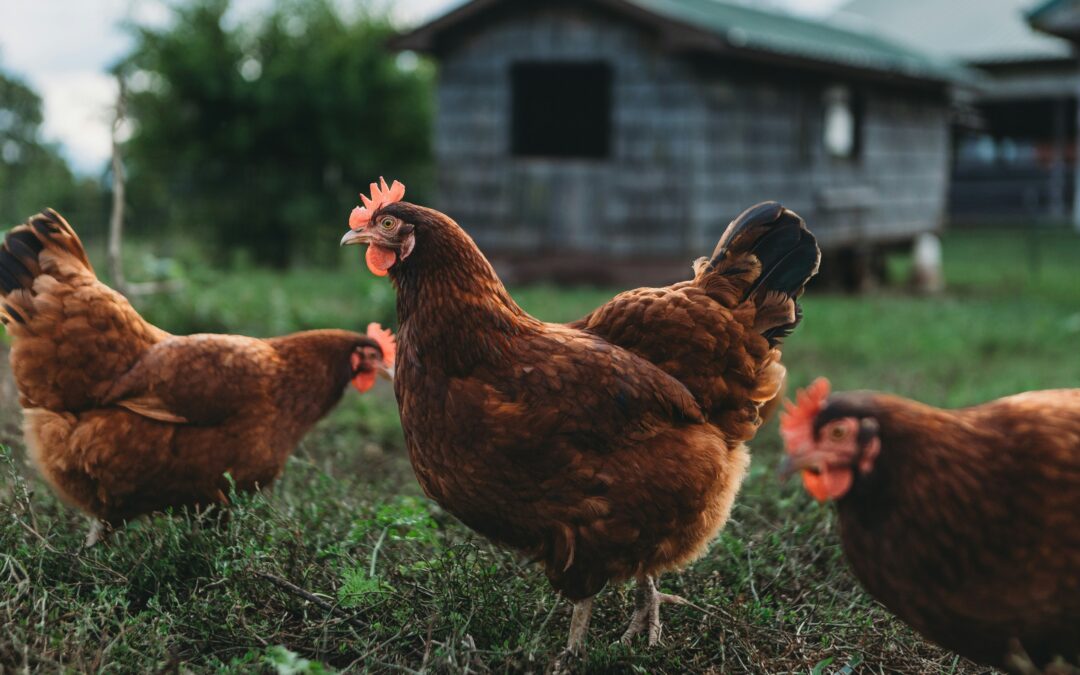
Bea makes her way down the back steps in Gerry’s old slippers, rag and bowl of warm water in hand. Among the lavender jacaranda petals step the three laying hens. The girls. Bea needs to check for signs of diarrhea. Wipe their chicken butts. Their Polly, home from college, fed them ham and leftover enchiladas. Bea hadn’t wanted another fight. But the liquid feces from the poor girls could draw a kind of parasite. Which Bea’d read online could make their way into the hens’ bodies. Actually consume them whole from the inside. It’s rare, but it could happen. Does happen. But the hens are fine, making their sweet chuckling noises and pecking the ground.
“You need to wean yourself from me,” Polly had pronounced last night, causing Bea to flee the TV room. This after Polly noting that the photos of her around the house were mostly from when she was ten and younger. ”Are you aware this is a sign of yearning for a time their kids were under their absolute control?”
Of all her friends’ daughters, Bea’s Polly had been the easy one, demonstrative and sweet. In bed, she’d fumed. Hell yes, she’d love to have sent Polly to her room, rather than being banished to her own. Gerry, half awake, drawled, “Girls and their mothers.”
All of this was natural. Polly was a kid; newly exposed to new ideas and readings. New people. Individuating. Still, Bea’s anxiety bubbled and flared, as if overtaken by lizard reflex. It had taken hours to doze off, ears pricked for sounds of Polly talking, Polly tapping at her phone, Polly harming herself, as Bea had read online that so many young women did.
This morning, Bea’s visual check reveals empty straw nests. Heritage breeds like these only lay a few eggs weekly. The woman who’d sold them to her had said that when the temps topped 100, a broody hen might sit in their poorly ventilated nestbox and never leave for water, which could end up making her overheat and die.
Bea upends the bowl into the big zinc tub. It’s 6 AM; the stillness in the air promises a blazing morning. Gerry will amble out, ask for coffee. The day will be interminable. Bea between editorial meetings, cleaning the counters and floorboards, cycling laundry, planning dinner. Watching for Polly; will she stay longer this time? Attuned to Polly and picking at Polly and digging for clues—to what? The endless doomscrolling makes it all worse. Bea knows she is pushing her daughter away, but helpless to act differently.
It will be another day where the house will gather the heat for hour upon hour upon broody hour. Hold heat in its rooms long after dark, hours after the yard has returned to freshness. Bea, remaining inside. Sweating. Ruminating. When all it would take for relief would be to step through her back door and stand silent in the cool air. Simply bear witness to the hens’ unassailability, the perfection of them.
by Mathieu Parsy | Sep 29, 2026 | micro
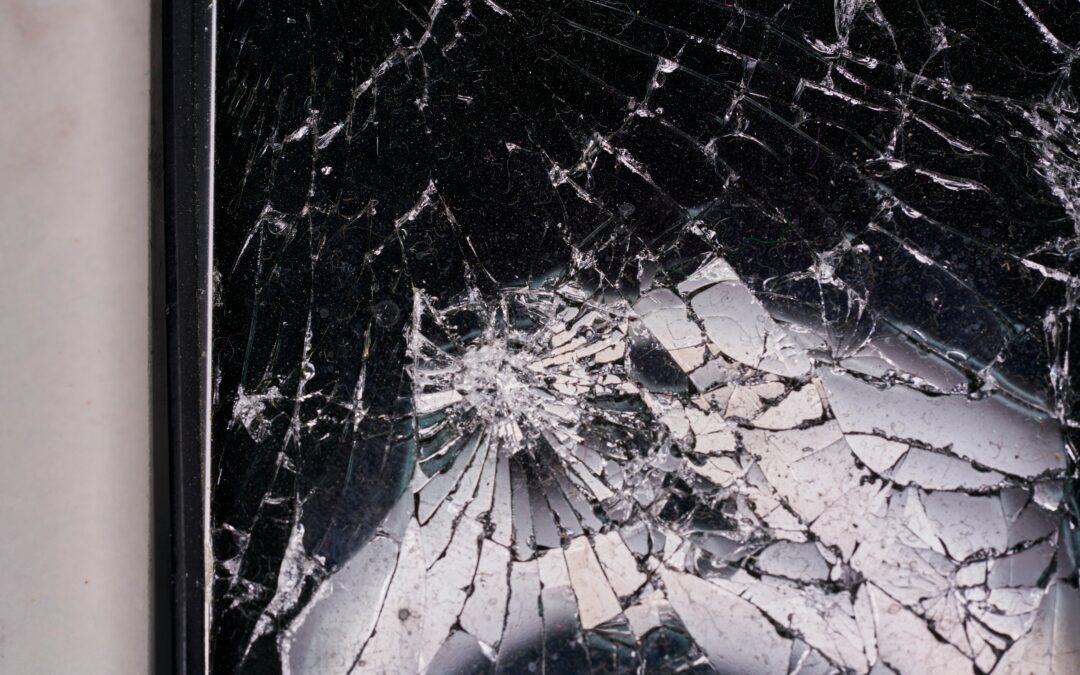
Your phone screen shatters on impact.
This is the first thing you think about. Not your collarbone, which has snapped clean; not the airbag’s chemical smell still burning inside your nose. The phone. You think: all those pictures.
The paramedic has your wrist. She keeps asking if you know where you are, and you say yes; you say the intersection, the name of the road, though what you mean is: I know exactly where I am. I have been here before. You have been in this particular dark for months. Since January. Since the hospital room where your father’s hands looked like something borrowed from another body — someone thicker, heavier, someone who still had time.
You had been, before the other car ran the light, composing a text to your sister.
How do I tell her the truth? You were thinking, one thumb over the keypad. The truth being: You haven’t cried yet. The truth being: You drove to his apartment on Tuesday and sat in the parking lot for forty minutes and drove home. The truth being: You think you have been in a crash for six months and you only just now felt the impact.
The paramedic says, Stay with me. She says it the way people have been saying it — at the funeral, at the dinners after, in the careful voices of friends who don’t know what a body is supposed to do with this much nothing. Stay with me. As if you might decide to leave.
Your collarbone is broken. Your phone is broken. The car is deformed.
Later, your sister will drive three hours and sit beside your hospital bed and not say the right thing and say the right thing. She will put her hand over yours the way your father put his hand over yours that last afternoon — as if you were a phone screen, already cracked, that he was afraid to press too hard.
You had been trying to reach her.
You had the words almost ready.

by Julie Mehta | Sep 24, 2026 | flash fiction
Mama says she must sleep for a long time. Her children do not understand. Her husband does not either, not completely. Of course the children have noticed how much Mama naps lately, how slowly she moves. How it’s been worse since the youngest one started school. When the three of them climb onto the school bus and wave goodbye to Mama through the dusty windows, she seems to stare off into the distance at someone they cannot see.
Now, as the children follow her to her room hours before their bedtime, Mama moves slower than ever, as if she is carrying all of them in her arms. She curls up on the unmade bed and pulls the blanket up to her chin. Her husband urges her to get the rest she needs and, one by one, they all kiss her goodnight. Mama closes her eyes, leaving them alone.
Nothing wakes her. Not the kids’ thundering footsteps as they play tag amid sharp edges that she cushioned with foam. Not their arguing over the last snickerdoodle she baked. Not even the wails when the youngest cannot find the fox she stayed up till dawn knitting for his last birthday.
At night, her husband tucks in the children after reassuring them that there is not the slightest gap between the closet door and the wall. He attempts to sing the lullaby Mama made up, but the children shush him. After he leaves, the younger ones climb into bed with the oldest, and they lie awake together.
Down the hall, their dad stands at the doorway watching Mama. Comforted by the rise and fall of her chest, he glances at the small silver box atop the chest of drawers. Inside are three slips of paper with due dates that never became birthdays. Every year, on one of those dates, his wife bakes an elaborate cake and lights three candles. She tells the children that it’s a bonus birthday cake. As they make wishes and blow out the candles, he interlaces his fingers with hers and squeezes tightly, trying to close the gaps between them.
But now, Mama is farther from him than ever. On a vast field of grass the color of twilight and slender trees reaching up to a still gray sky, three children wait. Mama recognizes them the way she recognizes her parents in old photographs. Here are the ones she thought lost forever.
They run to her, and she revels in their cool skin and messy hair, the eager crush of their embraces. The eldest, a girl nearly as tall as Mama, turns cartwheels so fast it leaves Mama breathless. The middle child, a boy, holds up a large green and orange bug she has never seen before, flashing her a dimpled smile that melts her fear. Mama’s heart hammers when the youngest child climbs so far up a tree she loses sight of him. He cries after his sister orders him down but erupts into boisterous laughter when Mama tickles under his ribs.
They grab her hands and pull her into a fort made of fallen logs and adorned with iridescent flowers. Inside, they jostle each other for a spot in her arms, snuggling so close they can see themselves in her eyes as she tells them stories. They try to imagine stars and scooters and what birthday cake tastes like. And they try to imagine the lucky ones who have always had Mama.
Those children want Mama back, but their father asks them not to wake her yet. He worries she may not be ready, may never be ready. He trims crusts off sandwiches, retrieves misplaced shoes, and tries to comb out tangles. The children doodle pictures of Mama in class and tape them to the refrigerator at home. The dinner table is too empty without her, so they eat their spaghetti from paper plates in separate corners of the house. And when no one else is looking, each of the children sneaks into the bedroom to curl up next to Mama’s chest and feel her slow breathing against their eyelids.
All the while, Mama chases her lost and found children, teaches them games, giggles at their nonsensical jokes. Finally spent, they curl up and lay their heads on her lap, and she sings them the lullaby that her living kids love. The weight that had pulled her to her bed is almost gone.
Distant voices call Mama. Her singing falters.
In the silence, Mama draws a deep breath. The three who have not left her for a moment since she arrived lie asleep. She gazes at each of them, trying to memorize every detail so she can tell her husband, and someday, her other kids. One by one, she kisses them goodnight.
Light floods Mama’s eyes as her living children clamber onto her body, their elbows finding their way into her tender spots. They cling to her like she’s a buoy and cover her with wet kisses. And a jolt of relief courses through her—the same relief she felt when each of them made it out of the recesses of her womb into the brightness of this world.
“Wake up, Mama, we’re here,” they say. “We’re here.”
***This story was originally published in Literary Mama.

by Fractured Lit | Sep 23, 2026 | news

Submissions open from October 1, 2026 through January 31, 2027.
Early bird deadline: November 30, 2026.
Add to Calendar
Discover New Art is launching a new prize for exceptional poetry and prose manuscripts-in-progress: two $25,000 awards, one in poetry and one in prose, with five additional $1,000 finalist awards in each genre.
For fifteen years, Discover New Art has championed the craft and careers of literary writers through its magazines and educational programs. The Discover New Art Prize builds on that work with a substantial financial award celebrating the impact and raises the commitment to removing barriers for writers and to push bold, new work across the finish line.
Submissions open October 1, 2026 through January 31, 2027. Writers may submit up to fifteen pages of a poetry manuscript or twenty-five pages of a prose manuscript.
How Fractured Lit is involved:
Fractured Lit is part of Discover New Art, a group of literary magazines with distinct editorial identities and shared values. Editors and readers from across DNA’s magazines are participating in the prize’s review process, with Discover New Art editors selecting the shortlist that will advance to the final judging panels. Please note that submissions are hosted on The Masters Review's Submittable.
Learn more about the prize, meet our esteemed panel of judges, and read the full submission guidelines at Discover New Art.
Add to Calendar
by Catherine Buck | Sep 23, 2026 | micro
I should like to collapse, right here on the bathroom floor, so thoroughly and completely that I bang my head, just enough for a noise, not a bleeding, not a concussion, but a thud declaring to the world: something is happening. Or at least, to my loved ones, who will rush me to the hospital where the doctors will run tests and tell them efficiently, brusquely, to stop their fussing; this moment is all about me.
The tests will reveal I am suffering under incomparable stress. It is a wonder, the doctors reveal, that I’ve lasted this long. It would have caught up to me eventually, but that last thing my loved ones said, that nag, that reminder, that smart but insensitive joke, was the poison that sent me over the edge.
The doctors will inquire over the state of my well being, my self care, as I lay there to all the world unconscious– but able to hear, of course.
“She worked very hard,” my friends will wail, my coworkers will nod, and my boss will hang his head in his hands.
“Too hard,” must say the doctor.
There will be no long-term repercussions of my collapse. It is not a terminal case, and because it has been caught when it has, it, like most things in this world, can be cured.
I will be prescribed three months by the sea, required, paid for by insurance, the same insurance that is covering my hospital stay without a rise in premium or any copays whatsoever. In this world where I collapse, such things have been eliminated.
In this world, I will tell my loved ones, “I could use a break.”
And they will say, “Why didn’t you tell us sooner?”
And I will reply.
by Maxwell Orsen | Sep 17, 2026 | contest winner, micro
Peter did not come home for the summer. We were dealing with it, his father and I. We knew how he felt about her, and we were happy. But the farm was too quiet. The kitchen was too clean and the handrails too polished, and most nights we could only talk of him and go off to bed.
Peter’s dog Lenny began sleeping on the porch then. One night I awoke to the shrill getaway of a car. I nudged Tom and asked if he heard, but he groaned. I couldn’t find my slippers, so I walked barefoot to the road. The gravel was cool on my feet. I squinted and saw the brown dog lying there, and I cried.
I yelled for Tom, but was sorry I did. I dug an old flashlight from the truck and whacked it on my hand to keep it going, but couldn’t see any wounds. He was too heavy to carry, so I pulled him to the field. I caught my breath and slid my hand along his stomach and felt the rip and cried again. I placed the flashlight in the grass and sat, and rubbed his head. No other cars came along, and it was quiet. It wasn’t a busy road.
Peter declared this place not busy enough for him during his last visit home. He said a young man required a city’s voltage to tingle his blood.
I rocked his dog and tried to keep him calm, and his breathing slowed. I told him why Peter wasn’t coming home, and about the girl, but then I didn’t know what to say. I was embarrassed. I stroked his ears and head, and I was tired. The ground was soggy on my legs.
The stories of our own lives, before Peter came, didn’t echo with him. He was twisting in a funnel of his own animation, collecting and discarding what he needed. We were happy to climb in, but understood on all counts we would be shot out.
I looked up at the sky, and it was splashed with stars. I saw a blinking light from an airplane floating to a city far away from our simple road, and I thought about the people inside. Breathing high above us. I removed Lenny’s collar, and we drew in beneath them, and the glow from the flashlight weakened and disappeared in the long, cool grass.

by Eileen Frankel Tomarchio | Sep 14, 2026 | contest winner, micro
I find one of your old contact lenses in the bath mat. Feel it under my big toe. A tiny ship. A coracle. Netted by some pubes and fibers. Has it really been that long since I shook out the mat? You hated its shag. Said it felt like stepping out of the bathtub onto oatmeal or guts. Like you were sinking. You’d wanted an outdoor rug instead. Something stabby and high-traffic, once your nerve endings were finally shot. I never got around to getting one, of course. But honestly, I liked that you had to grip my shoulder while we toweled you dry together, while you struggled to curl your toes into the pile to steady your wobbly legs, your beautiful rocking penis. I liked being your anchor.
The contact looks only a little puckered. I wonder if it can be rehydrated. ChatGPT probably says don’t even think of it.
Those last weeks when everything felt soaking wet to your touch. Sheets, gowns, foam foot wedges. You didn’t believe me when I told you to stop fretting; they were bone dry. I didn’t believe you when you said you could make me wet again, if I’d let you. Down to my bones, right there in room 204A. You insisted your muscle memory was still fully functional. “Come on board,” you said, patting the space beside you, but with an odd rebound, like the hospital bed was an ocean and you didn’t want to splash me too hard.
I hold up the contact to my eye with tweezers. Little glass-bottomed boat. I have an urge to insert it. See how you saw, for a few blinks, before it does damage. As it is, I wake up with barnacles crusting my eyes from crying in my sleep. As it is, I’m not hydrating enough. I’m losing faster than I’m replenishing.
I drop the lens in the toilet. Flush it down. Make a wish it sinks to some ocean floor and becomes a bed for a wee, layabout crustacean.
Before sleep, I remember your hand on the ball of my shoulder. The gear-stick pulses, small adjustments. The marvel of feeling your touch less where it was than where it traveled to.
I try to find my way to that spot now, like I do every night. Along the trenches my bones make, sightless and sluggish as a bottom dweller. Always almost there.
by Fractured Lit | Sep 14, 2026 | calendar, contests
2026 Fractured & Fused Prize
AWARDING $3,500 + PUBLICATION
JUDGED BY Richard Mirabella
September 21 to November 22, 2026
We welcome all of our submitters to return to the off-kilter in our second annual Fractured and Fused Prize, with submissions open from September 21, 2026, to November 22, 2026.
We want stories where things break, where characters get into trouble and make mistakes, and only a reckoning reveals their true natures. We want big stakes and small, conflicts that shake characters to their core. If it’s broken, find a narrative that fuses it back together; if it’s perfect, find the fissures and show us the cracks. We want to see opposites; we want tension to come from uneven power dynamics, with characters fighting for what they deserve, what they want, what they dream about, and what they’d do anything to have! Get messy with character, structure, language, and plot. Fractured and Fused, but for the better.
Guest Judge Richard Mirabella will choose three prize winners from a shortlist. We’re excited to offer the winner $3,000 and publication, while the second- and third-place winners will receive publication and $300 and $200, respectively. All entries will be considered for publication.
Guest Judge: Richard Mirabella
Flash fiction is a varied form, but the work I’m usually drawn to includes movement, someone or something enduring change, time pushing forward (or backward) in an interesting way. There’s a freedom inherent in this short form. To me, flash’s great-great-grandparent is the fairy or folk tale. Because the writer doesn’t have pages and pages, thousands of words, they can get away with the surreal or outrageous. The writer can satisfy the reader with a single moment, a single emotional shift, a disruption. Having said that, satisfying the reader is not always the point. Often, leaving the reader with questions, with feelings they can’t necessarily put into words, is the writer’s most powerful effect in the flash form.
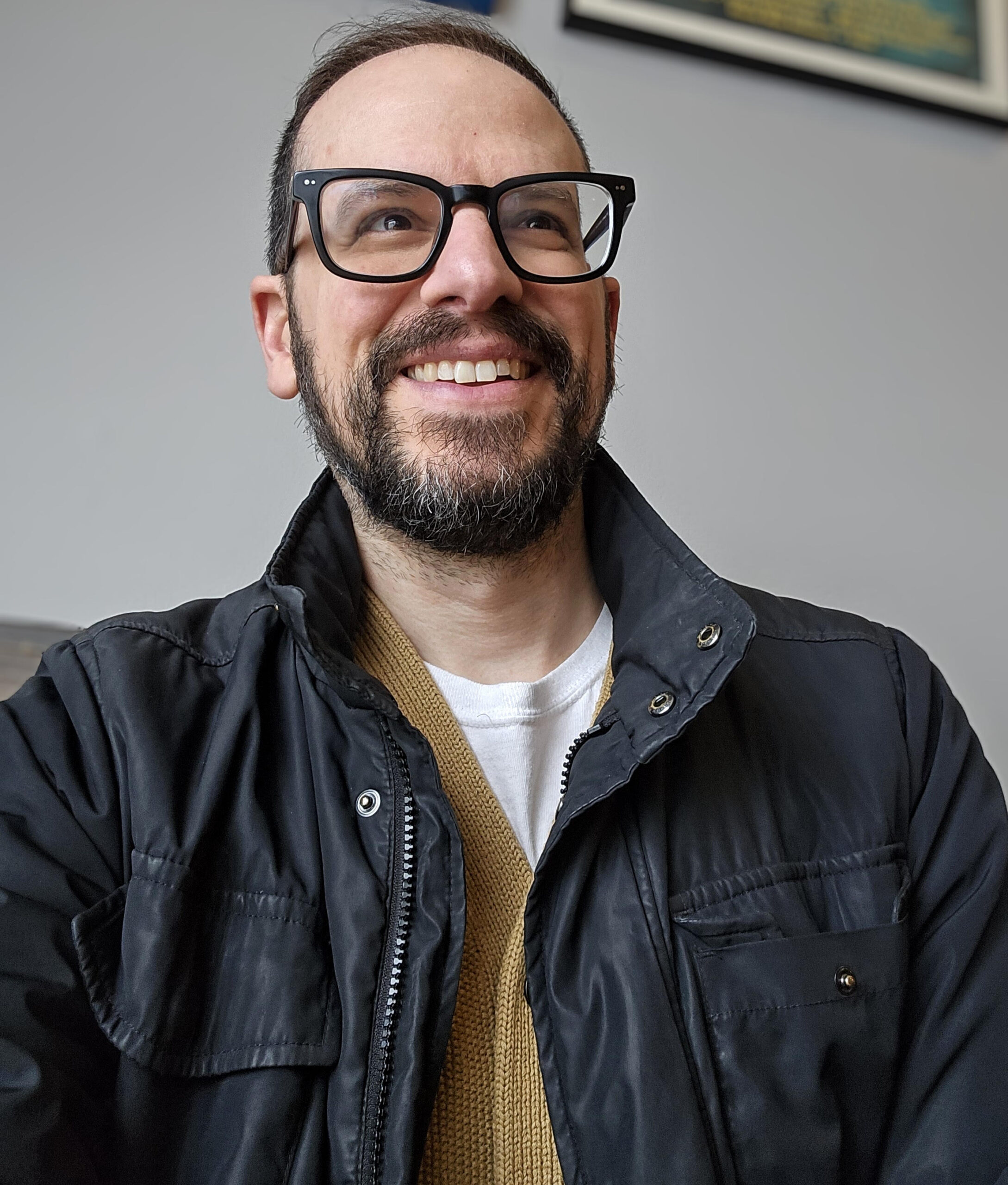
Richard Mirabella is the author of the novel Brother & Sister Enter the Forest, a New York Times Book Review Editor’s Choice and a nominee for the Lambda Literary Award for Gay Fiction. His short fiction has appeared in hex literary, Split Lip Magazine, Swamp Pink, American Short Fiction, and elsewhere. His flash fiction has been listed twice on the wigleaf Top 50.
The deadline for entry is November 22, 2026. We will announce the shortlist within twelve to fourteen weeks of the contest’s close. All writers will be notified when the results are final.
OPTIONAL EDITORIAL FEEDBACK:
You may choose to receive editorial feedback on your piece. In your cover letter, please let us know which piece you’d like your editor to focus their review on. We will provide a two-page global letter discussing the strengths of the writing and the recommended focus for revision. Our aim is to make our comments actionable and encouraging. These letters are written by editors and staff readers of Fractured Lit. Should your story win, no feedback will be offered, and your fee will be refunded.
Guidelines
-
- Your $20 reading fee allows up to two stories of 1,000 words or fewer each per entry—if submitting two stories, please put them both in a SINGLE document.
- We allow multiple submissions—each set of two flash stories should be submitted separately, accompanied by a reading fee.
- Writers from historically marginalized groups will be able to submit for free until we reach our cap of twenty-five free submissions. No additional fee waivers will be granted.
- Please send flash fiction only—1,000 word count maximum per story.
- We only consider unpublished work for contests—we do not review reprints, including self-published work (even on blogs and social media). Reprints will be automatically disqualified.
- Simultaneous submissions are okay—please notify us and withdraw your entry if you find another home for your writing.
- All entries will also be considered for publication in Fractured Lit.
- Double-space your submission and use Times New Roman 12 (or larger if needed).
- Please include a brief cover letter with your publication history (if applicable). In the cover letter, please include content warnings as well, to safeguard our reading staff.
- We only read work in English, though some code-switching/meshing is warmly welcomed.
- We do not require anonymous submissions. However, shortlisted stories are sent anonymously to the guest judge.
- AI-generated or -assisted submissions will be automatically disqualified.

Recent Comments