fbpx
Micro Prize Judged by Steve Almond Winners

Micro Prize Judged by Steve Almond Winners

We are finally back to present our long-awaited micro prize winners, picked by Steve Almond! Huge congratulations to our winners and thank you to everyone who participated!

First Place: No Voltage on a Quiet Road by Maxwell Orsen

Second Place: Burial at Sea by Eileen Tomarchio

Third Place: Makbara by Saumya Sharma

  1. Mothers Bake Pogácsas by Noémi Scheiring-Oláh
  2. My Father’s Orange Farm by Gabriella Paradis
  3. Quiet Survival by Kristina Kasparian
  4. In the Larchmont House by Daniel Burgess
  5. Loosed by Edie Chunn
  6. What It’s Like by Marie Watson
  7. Inheritance by Abhinav Caleb
  8. I’ll sew your socks if you stay by Steph Coelho
  9. Competitive Grieving by Tim Collyer
  10. Color Theory by Amanda Miska
  11. The Thing With Feathers by Christine Vines
  12. Lost girl found by Rachel Marston
  13. Doves by Katie Piper
  14. Girls Who Use Wheelchairs Don’t Climb Trees by Kara Kahnke
  15. We Are Mothers by Kellie Kreiss
  16. katsu. by Mitchell Ny
  17. Dad in his Elements by Tom Walsh
The Producer

The Producer

The 90-year-old producer had a hole in his heart. A shaky, unpatchable hole. He wanted me to fill it with kisses, candy, and jokes. I handed him a travel-sized Mars bar that I got on the plane.

“Only a monkey,” he said, “would offer this old sack of bones a gift from the red planet.”

He said this because of my newly red hair. He liked to run his skinny fingers through it. I called him ‘The Producer’ because he had always wanted to produce a movie. Sometimes he asked me to write one. Told me to create a character role just for him, and to make him younger, less shaky, without Parkinson’s, less married. That was easy, as I imagined him a younger person.

The nickname “Monkey” rubbed off on me. There was a gullible monkey on my shoulder, enjoying the stories he told me about his terrible home life. How his wife carried a loaded pistol around the house, even in her pjs.

“She never puts it away anymore,” he winked. What a horrible person she was, I told myself, kissing his shivery lips.

***

“That blouse is very flattering on you,” the producer said, his face half fallen. It was the same blouse I had worn every other night in the dining room. I wondered if he had had a mini stroke in his sleep. Half of his face looked younger than the other half, less perceptive. He gazed at me as if I alone provided gravity.

The hotels we stayed in had very good food. We would eat in the dining rooms and middle-aged businessmen would stare with disgusted expressions as the two of us nibbled appetizers and sipped rhubarb gin. They thought he had to be a great uncle or a grandfather, so why was I wearing such low-cut, decadent blouses? Why were his eyes gripping the rise of my cleavage as if he was pulling himself out of some brackish lake?

He’s the Producer, and I’m in love with him, I wanted to say. Give me a break, I didn’t have a dad! I wanted to scream. They would offer me a weak nod, as if to say, if he croaks tonight, I’m around.

***

My story is filled with love tragedies, and I told the producer all about them. “You should write a screenplay about them,” he said, and this cheered me up.

My strong young boyfriends would eventually say that they saw our relationship as a weakness. I never knew what they meant. Their muscular legs would take off for runs or bike rides in the early morning. They were running away from me, my mother once said, because often, they didn’t return.

For example, my young husband disappeared after going for a long, mindful ultra-run. “I like the look of that path,” he said, and I never saw him again. I knew there were mountain lions around, but they never found his bones. Thankfully I heard from him a few years later. He wrote me a postcard from Jakarta to say that his knees, hips, and spine had finally given out.

“That’s what unhappiness does,” he wrote.

By the time I turned 27, I was tired of the young ones, their perfect bodies and deeply unsatisfied souls.

***

When I first met the producer, I arrived at a hotel with my dog. I was still married, but my husband had been missing for a year. When the producer hugged me in the lobby of the hotel, I tried not to cry.

“You are tattered and shabby,” he said, or maybe I imagined it. His skin was yellowed, and fragile to the touch.

“I like your face,” I said.

“I like your dog,” he said.

We took the elevator up to his hotel room and he put a Lucinda Williams song on. He had an iPad that he didn’t know how to use. He said the one thing he was confident about was the music app. “Somehow, I can make it sing,” he said.

The song that plays in my head when I remember the producer is “Something About What Happens When We Talk.” I felt it was corny the first time he played it for me. But now that he is gone, I miss the talks we had, how much he liked my dog, and how it felt as if he was calling to me from someplace close but very far away.

***

The last time I saw him, he perched on the sofa of our hotel room as if he was ready to fly.

“We are not the same age,” he said. This seemed like an obvious fact, and one that might have been noted already.

“I am not worried about it,” I said. “Are you?”

I took his hand, and it was cold. I wanted to say, please don’t fret about nonsense. I yanked him off the sofa, and right into my arms. We danced to Lucinda Williams. I felt sad that he had said it and was shivering a bit. He held me tight as a 20-year-old but felt as light as a paper doll. So weightless, I could have carried him home in my arms.

***Originally published in The Northwest Review.***

Togetherness

Togetherness

It was like she’d gotten sober all over again; everything started to make sense after Daniel’s arrest. Like the occasional odd scent on his clothes that she’d always assumed was because of his commute, emerging from the train with the scent of every Bostonian on his shirt collar, as though he’d been having an affair with the city. It turned out that this smell had a name, although there was no way that Claudia was going to remember it; it was like being told the Latin name for a plant that had invaded her garden. She would only ever remember the word accelerant, and the way it felt when she’d been informed that Daniel liked to start fires. ‘What do you mean, liked?’ she’d asked the detective. Some kind of misunderstanding must have occurred, the wrong Daniel Grady had to have been caught, a zebra mistaken for a tiger. Claudia felt like she was back in speech and debate, dissecting every word and phrase for a possible exodus from other people’s contexts. Words were like traffic circles: you didn’t always enter and exit the same point as someone else. The detective had to have been wrong, and she didn’t appreciate the accusation, and she wanted Daniel to come home. ‘He does something with advertising,’ she explained. ‘Or marketing.’ But he had been captured on camera, timestamped, with ample evidence, too. She asked for the dates, and as he reeled off information, she looked at the calendar on her phone. What he divulged, and what she could see in front of her, were like two broken plate halves coming together to form a whole one, complete but scarred. And she thought about what her friend Marcy had told her after recently going through a divorce: that the most devastating thing was being forced to view your partner in a way you never expected. Like seeing them from a distance and they don’t know that you’re watching and you look at them and you think, If you’re not who I think you are, then who are you? By the time Claudia brought herself to visit Daniel, he looked so different from the husband she remembered, now nothing more than jail stubble growing on the face of the stranger talking to her about lawyers and psychologists and court dates. When it was her turn to say something, she asked him, ‘So who was it I was trying to start a family with?’ He looked down and said, ‘Me,’ as though he had intoned the name of someone impossible. She drove home, parked her Jeep next to Daniel’s Nissan, and dropped her keys in the teak bowl next to his keys, and the sound of her footsteps echoed back his absence. She walked throughout their house and imagined having to live in it without him, and she stopped at the fireplace, where Daniel had hung the watercolor they’d bought at his insistence on their most recent visit to the Cape. It showed a coastline ablaze at sunset, the outline of the fishing huts and cedar-shingled buildings sizzling in the last rays of the day, the horizon line cutting the shore in two. One half only made sense with the other.

Hubcap

Hubcap

I hold on so tightly I lose my grip. The hubcap clatters to the floor like a platter thrown during a lovers’ spat.

“Go to hell!” I yell, then, “I’m sorry. I didn’t mean it.”

I pull on a pair of gray sweats and a dirty white T-shirt. Four red lines bleed through the front of the shirt. I grab my battered leather jacket and huff out the door.

Streetlights flicker a dozen blocks ahead, but where I walk bullets rule. I know I am taking a chance, but I am angry. And more than lonely. Three nights before, I thought my life had turned a corner when I found the hubcap in the slush of a spring snow squall. I bent down and scooped black snow out of the deeper dents before I tucked it inside my jacket.

“You’re cold,” I said. “My bed is warm.” The hubcap shivered the whole walk home.

Inside, I laid the hubcap on my mattress in the middle of the floor. I layered flannel sheets, a quilt, and a comforter on top. I warmed some soup on the stove, but by the time it was heated, the hubcap had already fallen asleep. I set the soup on the floor and slid slowly, quietly beneath the flannel sheets, quilt, and comforter.

It was the dream I had that night that gave me hope. I had fallen in dreams before, but I had never been caught. This time, I settled into a lover’s palm the way the smoke of burning leaves settles into valleys. The longer I lay there, the more my skin glowed. All night I slept as a pearl held in the palm of a lover.

The next morning, I awoke spooned by the hubcap. The day unfolded slowly, naturally. The hubcap thanked me by listening—through the morning, the early afternoon, and into the evening—to all of my problems, all of my stories of failed loves and regrets.

When the sky began to darken outside my blinded windows, I interrupted my own lengthy history. “You probably have to go.” I tilted my head toward the window. When the hubcap did not reply, I asked, “Are you sure?” then continued unburdening myself until we both drifted off to sleep.

Again, I fell through my dream, and again I landed in the lover’s palm. I knew the dream was telling me I was falling in love. I didn’t want to listen. Who would believe me? It couldn’t be true. How could I explain any of this? A man cannot love a hubcap if he does not first love himself.

The second day was quiet, almost silent. I had nothing left to explain, and the hubcap never did have any explaining to do. We spoke through touch. I ran my stubby fingers around the hubcap’s rippled rim, caressed its dents, rubbed it until it almost shone.

When I fell again that night, I landed with a bone-jarring jolt in the center of a paw that was cold and rough and sharp at the edges. I struggled to pull away, but honed claws needled into my skin and wouldn’t let go.

Pain pricked open my eyes, and I awoke to find the badly bent and dented hubcap clinging to my chest. I wrestled with it over the flannel sheets, quilt, and comforter. When I finally ripped it off, four cuts bled down my stomach. I jumped to my feet and backed away. The hubcap clattered to the floor.

Outside, I light a cigarette and hold it at arm’s length against the sky in the place where the moon should hang. “It’s not enough,” I say as smoke nooses around my neck. I snuff the butt after only a few puffs, then turn east toward the lights to search my dark and empty street.

**This story was originally published in Beloit Fiction Journal.

Last Light

Last Light

The setting sun made a fire deep in the amber of its eye, unblinking and somehow changed. Blood shone like tree sap inside a dark nostril. The body lay on its side. The older of the two boys grabbed one leg and the younger the other, and with heels digging and slipping in the red earth, they dragged it to a crop of mallee near the fence line of the paddock. The older boy gathered what he could find to cover it and did so with the gentlest of care.

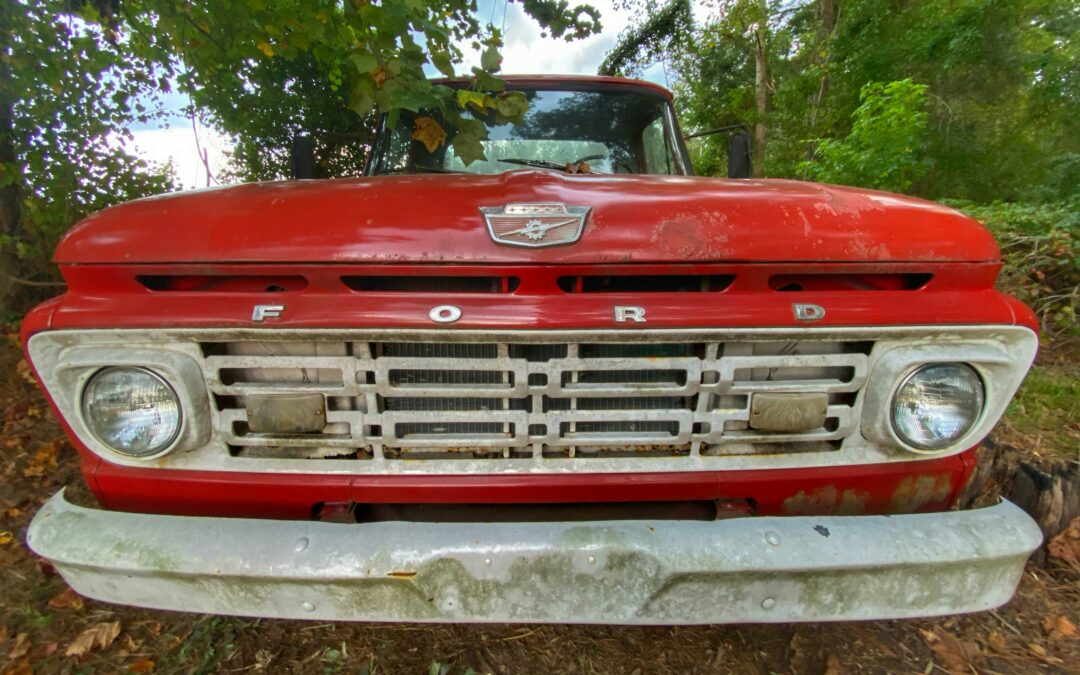
Inside the beat-up Ford they drove home, much slower, over the fallow. Cain, five years younger than his brother, sat bug-eyed, neck strained, craning to see over the dash. Joel would not look at him. All excitement from before – the spinning wheels, arses bouncing off the bench seat – had now been replaced by a sobering dread. Joel, though tall for his fourteen years, sat on the edge of his seat and drove intently with his chest to the steering wheel. Cain focused on his reflection in the glass and did not recognise the look that he saw. Bodies memorised the impact. And the sound. It appeared in front of them like a cut-out in a pop-up book when the tab was yanked.

Outside the back gate that led to their yard, Joel pressed his face up against the access hole and eyed the light of the kitchen window that glowed yellow in the cool light around it. He watched their mother moving about the kitchen, from the stove to the sink and back again. They lingered. Their father would arrive home soon, and they would have to go in to eat when their mother called.

‘Can’t we just go in?’ Cain thought about the sandwich in his lunchbox, buried in the bag on his floor. Joel came down like a clanking drawbridge.

‘That is what you get.’ He picked up a stone and hurled it down the dirt driveway toward the corrugated iron carport where they had parked the old Ford.

‘She’ll know.’ Joel simmered.

It was wrong of him to have asked Joel to go faster, Cain thought. And now he should starve. He watched his older brother squat in the middle of the dirt road and thought Joel might be looking for another stone, but there were plenty. After a moment, Joel turned from Cain and pulled the front of his shirt up over his face, dragging it back down over stained cheeks. Joel stood and snorted back tears.

‘He’ll never let us take it out again.’ Joel steeled himself, spat into the dirt the unpleasantness of vulnerability, and turned to the house. He had only cracked the gate an inch to enter the yard when the yawn from it made their mother pause at the window, looking out.

They found sanctuary in the coop, in shadows, surrounded by dark gnarled branches and dense fruit trees charged with insect hum. They squatted in the stillness and waning light, their boots noiseless in the muck and feathers. There were whispers of mice in the wheat bin; one of the dogs barked, then the other, and another someplace far off.

‘That one is looking at us like it knows.’ Cain stared at one of the hens.

Joel had had enough. He scratched at his scalp to release what was building up in him, prickling, burning him there. He snatched up a brush and began scrubbing algae from the chicken’s clay water basin. Joel nodded toward the hens.

‘You better get them eggs.’

Cain reached under one of the birds but, with a start, pulled back an empty hand at the sound of their mother’s voice.

‘Boys!’

She stood outside the coop with the scrap bucket, and the resounding crack it made when she dropped it to the concrete sent Cain bolt upright.

He went to her obediently to fetch the bucket. Joel attempted to get a hold of his brother’s shirt, but was too late. He watched him from the coop. Their mother wore a look of disapproval. Cain could think of few things she approved of.

‘What time do you call this?’

The arms of her youngest son hung down at his sides, and his hands opened and closed as though he might find the right words in the air there. He looked to the coop where he knew his brother hid behind shadows. His mother studied him as though he were in pieces. Her eyes drifted to his hair, much coarser and darker than Joel’s, barrel-chested and stocky, with dirty legs covered in golden down. Cain fidgeted under her gaze. An eternity passed as he waited for some instruction. Her hand shot out.

‘And this?’

Cain readied himself for a scolding, but he was not prepared for her tenderness. She held his face up out of the shadows to inspect his chin. A fleshy egg was forming there. He remembered connecting with the dashboard when his brother had hit the brake. And the sound. Immediately, his mother’s eyes went to Joel, who crouched behind the wire.

Undone by her gentleness, her thumb caressing where it stung to see if it were indeed a blackening bruise or smudge, Cain emitted a tiny sound, the mewl of a kitten. Then, in great gasps, he fell into her, sobbing, breathing in the smell of his dinner on her hands. She looked to Joel, and the sound of his name was a warning.

A calamity of cockatoos and car wheels sounded up the long dirt driveway. Cain shook with a type of relief. He turned from his mother and found Joel beside him with the look of someone who knows what is coming.

At the back gate, their father appeared like some apparition, pale in the last light and dust from the harvester, a shovel in his white fist, and just visible in the back of the Ute was the silken, still hide of the calf.

Ghost, Fable, and Fairy Tales Prize Judged by Melissa Llanes Brownlee Shortlist

Ghost, Fable, and Fairy Tales Prize Judged by Melissa Llanes Brownlee Shortlist

Back from our journeys yet again to present the shortlist, which will be judged by Melissa Llanes Brownlee! We’re so excited to see who the three prize winners will be! Congrats to all our finalists, and thank you to everyone who submitted!

  1. Wooden Wolf
  2. The Changeling Girl
  3. The Red Balloon
  4. The Cherry Tree
  5. Wildflowers
  6. Mute Swan
  7. Six Different Ways to Lose a Brother
  8. Green
  9. Dolly Builds her Brother out of Butter in the Room her Mother Grew
  10. Afterglow
  11. There Was An Old Lady Who Swallowed A Fly
  12. Man or Bear
  13. Eulogy for Fa
  14. Stay Warm
  15. If I Disappear
  16. Hair
  17. The Bell That Never Rang
  18. The Queen Can Fly
  19. Unawakening
  20. An Ageing Ghost
  21. Her Name
  22. The Weight of Things That Don’t Leave
  23. Neck
The Lower Nobility

The Lower Nobility

When we were just teenagers, this friend of mine bought a suit of armor. To get it, he worked an extra job and saved every penny. And he could talk of nothing else. Before I ever saw it, I knew how thick the plating would be, how the various pieces would connect and hold together, how much it would weigh and how that weight would be distributed. I learned that he would wear a layer of chain mail beneath the armor, something he called a hauberk. And I learned a few things about who wore armor, on what occasions, and for how long. When I asked what happened if a knight needed to relieve himself, my friend watched me to make sure I really wanted an answer, and then he showed me by drawing on a piece of paper. When I asked why he wanted the armor in the first place, he said it was his heritage and that it was something he’d always wanted, and I didn’t see reason to push back. The armor was made by a company that made nothing else, and I wondered how high demand could really be, but I kept that question to myself. When the armor came, packed inside a massive crate, my friend invited a few of us over to watch him open it. His mother greeted me at the door that night. She said my name as though she liked the sound of it and thanked me for coming. She was wearing perfume. Something floral that was, at once, both old-fashioned and new. She showed me to the living room where a couple of other kids waited shoelessly. The lush carpet was vacuumed into a perfect pattern of light and dark triangles, and it felt almost offensive to walk there. On the far side of the room, near the China hutch, I could see the crate that held the armor. It was industrial-looking and dirty, and it gave me an odd sense of shame. My friend’s mother offered us crackers and lemonade and said how exciting it was that the armor was finally here. She was tall and moved with the elegance of a movie star. When it was time, my friend asked for our attention as he took a prybar to the crate and began to open it, his mother collecting the nails and staples as he removed them. With the crate fully opened and the layers of packing material gently placed to the side, my friend began to remove pieces, describing the helmet, the breastplate, the vambrace, the spaulders, the faulds. We didn’t know many of these words, but on the floor before us, a knight was taking shape, and we couldn’t deny the thrill of it. When it came time for our friend to wear the armor, though, things started to go wrong. It was too big in the chest, too low in the waist, too broad in some places, too narrow in others. With most of it on, he tried to walk a few steps, but could hardly keep his balance. Throughout this disappointment, our friend’s mother held her delicate hand over her delicate mouth. Like me, she didn’t know what to say. Inside the ill-fitting armor, our friend was drenched in sweat, and he needed our help disentangling himself. After that, I knew it was pointless to stay. At the door, my friend’s mother placed a hand on my shoulder as though to say that none of this was my fault. In the months that followed, my friend tried to get the armor company to fix what needed fixing, but they told him their product was more decorative than practical and they couldn’t or wouldn’t help him. When he tried to get his money back, they didn’t respond. And so, before long, that suit of armor was just a piece of furniture in my friend’s house. It stayed in his bedroom for a while before moving to the garage, where it sat in a corner and gathered dust. Later, I think he sold it at a yard sale. I lost touch with my friend after we graduated, as I went off to one college and he to another. A few years after that, I heard he’d died in a car accident on a cold Thanksgiving morning. Each time I go home, I plan to stop at my friend’s house, thinking I might tell his mother that I’m sorry for her loss. I might drive by that house half a dozen times, trying to work up the courage, but I can’t bring myself to do it. Would she even know who I am? Would she remember my name? Could she once again make me feel that I was the most important person in the world?

Sweetie’s a Mess

Sweetie’s a Mess

It’s a deer in the weeds at the side of the road, or maybe a golden lab? Something that makes sense of all that yellow in the late-afternoon sun. Too late, my brain trips over the bright blue shirt, and I’m already down the highway when I take my foot off the gas.

A child.

A farm kid, taking a rest on the way home from town?

Except there is no town, not for miles. I drive this stretch every day, from Freedom to the Save 4 in Shalersville and back: cows and corn, combines deep in a field, farm houses with gravel driveways long as roads. Not even a church to break up all the nothing.

How is she out here alone, not even a bike or a dog?

I pull the car sharp to the right and then crank it left and circle back, because that’s what you do when it’s a kid. A little blonde girl, could be anyone’s, could be mine.

Could be lost. Could be trying to hitch.

Could’a been hit.

I pull onto the shoulder next to her, facing traffic, and roll the window down. “Sweetie?”

Sweetie’s head rears up from the grass, and then she scrambles to her feet.

Not hit.

Or not so you could see it: no blood. All her parts in place.

But Sweetie’s a mess, her shorts damp, something greasy smeared across the belly of her t-shirt. Tear streaks, runny nose. Bad haircut, bangs running catawampus from a side-part. Looks about 8, but could be a runty 9, even 10.

Pretty thing, though. Eyes like blueberries, like her dirty shirt.

I lean out the window so she can see I’m not scary. “Sweetie,” I say. “You okay?”

Sweetie draws her head back, mouth twitching like she’s about to talk.

But she doesn’t.

I’ve got pork and milk and ice cream in the backseat, and I’m already late to start supper, but I can’t help it. If my kid were out here on the side of the road, I’d want me to get my butt out of my car to help.

Before someone gets theirs out of theirs, to hurt.

I open the door to swing my foot to the ground, and Sweetie waves her arms. “No!” she says. “I don’t want you!”

Not gonna lie: this stings a little, especially after the stuff with Marcus last night. But Sweetie doesn’t know that. She’s just upset.

I try again. “Where’s your folks, Sweetie? Want me to run you home?”

“I live here,” Sweetie says, after a minute. She jerks her thumb at the field behind her. “That’s my corn.”

I try not to laugh. She’s a weird little thing.

I put my hand to my head and pretend to look around, but I know this road. “Okay,” I say, “so where’s your house?”

“I have to go now,” Sweetie says, and she turns around and marches straight into a ditch. Her arms fly up when she falls in, and I jump right out of my car.

“Wait!” I yell. “I’m coming!” I’d changed out of my work shoes at the end of my shift, and now my Candies throw me off balance, one ankle turning in, trying to sprain itself.

Sweetie climbs out the other side of the ditch and turns to face me, even filthier now. There’s grass in her bad haircut, dirt or maybe a cut on her chin. Her eyes are wild.

She’s scared of something, and she thinks it’s me.

“My dad has a gun,” she says.

I can’t help it: I laugh. She’s like a feral kitten, full of hiss.

“Oh my goodness! I’m not gonna hurt you,” I say. I’m on the near side of the ditch by now, teetering in my heels, and I stretch out my hand to her.

I’ll take her home and clean her up. Cut her bangs straight. Fix her some pork chops followed by ice cream. I got the good kind, Neopolitan, thick stripes of pink and white and brown.

 “Fuck off, fuckbrain!” Sweetie says. Then she sprints into the cornfield, leaving me with a new word I’ll use later tonight on Marcus, if he tells me again he’s not ready, we’re not ready, kids are so much goddamn work.

But they’re worth it, fuckbrain, I’ll say.

Too late, I won’t yet say.

But I am.

Two weeks today. Boobs feeling bruised when I sling them into my bra.

Sweetie’s hair blends in with the cornsilk, but her shirt doesn’t. I see her moving a few rows in, flash of blue flash of blue flash of blue.

I get in my car when she reaches the end of a row, knowing she’s not coming out if I don’t leave. I detasseled from middle school to graduation, and I know the feel of it in there: the bugs; the corn sweat; the stalks closing in.

I rev the engine a tick, just to let her know I’m going. I get about a mile away before I turn around and creep back.

A station wagon’s already there, back passenger door swinging shut.

In the driver’s seat, a woman bows her head on the steering wheel. It doesn’t take a genius to guess she’s crying. In the back seat window is a boy looking as much like Sweetie as a little boy could. Nothing happens for a while, until someone reaches over from the passenger side and touches the driver’s shoulder, and she lifts her head and starts the car.

When I get home, Marcus tells me I’m late.

“I am,” I say.

For a minute—just a minute—I think: but there’s still time.

“You hungry?” I ask.

He is, of course. He’s always hungry.

The grocery bag splits open when I set it on the counter, spilling out the milk, the pork, the carton of ice cream drooling pink and white, but mostly brown.


Ghost, Fable, and Fairy Tales Prize Judged by Melissa Llanes Brownlee Longlist

Ghost, Fable, and Fairy Tales Prize Judged by Melissa Llanes Brownlee Longlist

We looked for stories of ghosts, fables, and fractured fairy tales and were transported from the here and now to a new land of discovery. And now we’re back from our journeys to present you with the longlist for this contest! Be back soon with the shortlist!

  1. Evening Tea
  2. Lady Nemesis
  3. Wooden Wolf
  4. The Feeling
  5. The Changeling Girl
  6. The Red Balloon
  7. The Consequence of Looking
  8. The Cherry Tree
  9. Something Good to Eat
  10. Wildflowers
  11. Mute Swan
  12. Ghost in a Jar
  13. Six Different Ways to Lose a Brother
  14. Werewolf
  15. Green
  16. Dolly Builds her Brother out of Butter in the Room her Mother Grew
  17. Afterglow
  18. Neck
  19. There Was An Old Lady Who Swallowed A Fly
  20. Yarn Craft
  21. Rarefied
  22. Snug
  23. Man or Bear
  24. Will Have Been
  25. Eulogy for Fa
  26. Stay Warm
  27. If I Disappear
  28. Hair
  29. The House That Tried To Silence Her
  30. Fast as You Can
  31. Briarheart
  32. The Bell That Never Rang
  33. The Dead Fairy
  34. Klabautermanns
  35. The Broken Shell Phone
  36. Deep Under The Ocean
  37. And Go On In My Own Way
  38. The Queen Can Fly
  39. Keating Solid
  40. Unawakening
  41. Hunger
  42. An Ageing Ghost
  43. Her Name
  44. Nothing Happens
  45. The Weight of Things That Don’t Leave
Barbie Girls

Barbie Girls

When we saw the hot pink Barbie-branded Corvette sitting in our neighbor’s trash pile, we hesitated. Aggie and Tim were our summertime neighbors, kids who lived next door three months out of the year with their grandma, our full-time neighbor. Aggie liked to say their parents re-homed them, first to boarding school and then to our little slice of nowhere nothing.  They came from Boston, and, to them, everything was wicked cool or wicked rude or just plain wicked. Tim tended to start fist fights, and Aggie was a nihilist. Ask her what she was up to, and you’d get a reply like, “re-uptaking my inhibitors.” She was always flaunting her recent diagnosis, psychiatrist, and prescription.

Two and a half seconds were spent speed-thinking through potential pitfalls when I saw my little sister’s tanned forearm shoot out and grab the Corvette by the windshield. “Let’s go,” she said, and we went fast up through the trees lining the divide between our houses and behind our concrete patio.  Beth, that’s my sister, put the Corvette down between us in the mud. “Careful!” I said, pulling up some grass and laying it down to give the car a cushion so it wouldn’t get all dirty the same minute it was in our possession. Beth never thought about consequences. That’s a big sister’s job. She ran inside to grab our Target bag full of dolls, and I checked out the specs. This was the kind of car I could see myself in a few years down the road with my future boyfriend and future best friend on the way to a party or fancy dinner or maybe even my job as a nurse or flight attendant or, hell, what else does Barbie do? Maybe a mother. But probably not. We didn’t have the Dream House, and neither did Aggie and Tim. Their grandmother’s basement was full of slot machines, maybe a dozen of them. We used to have sleepovers there with bags full of quarters, but that was last summer. Beth didn’t feel comfortable sleeping there anymore, but I missed dreaming of grapes and cherries. “James wants to ride shotgun,” Beth said, pulling our K-Mart version of Ken from the bag and accidentally pantsing him in the process. “Be decent,” I said, re-adjusting his lime green trousers. We changed him into a gold mesh crop top, which seemed sporty for a ride in the convertible.

I heard it before I felt it. A rubber band pulled back, sharp snapping against my shoulder. Tim had ambushed us and was hurling accusations about us being thieves. “I know you’re poor as shit, Meatosaurus, but stealing our grandmother’s trash is wicked degenerate. I’m calling the cops.” Meatosaurus, Boneless Chicken, Vegorama Vag – all nicknames I’d acquired after bragging to Tim that Tuesdays were Domino’s Pizza nights in our household. He pulled the rubber band back again and snapped Beth’s arm. “It’s not even yours unless you’re telling me right now you play with dollies,” Beth said. “In my bedroom, I’ve got a brand-new BB gun. Think now’s a good time to test how far it can shoot.” “I’m gonna tell Aggie you said that,” I said. “And?” Tim said, “Lotta good it’ll do you with a BB in your ass.” Beth charged him with both hands, pushing him to the grass. “That’s for threatening my sister,” she said before side-swiping him with her fist, “and that’s for what you said about me when I warned you to stop coming into our yard.” Weeks earlier, he’d called her the c-word. I didn’t defend her because I didn’t know what it meant. I had to check the dictionary, which embarrassed me because I’m older and should know more than Beth, who obviously knew good and well what it meant.

Beth looked down at his big, scared, stupid eyes and let her drool hang down long and sticky and slop onto his face. Tim’s eyes shifted from scared and stupid to animal. I ran up the concrete patio, perched on the railing, lifted the Corvette above my head and threw it, not at Tim, but on the ground by Tim. Then I jumped off the railing like a wrestler and stomped it like the big boys stomp in WWE. The plastic flew, and a little piece of pink side-mirror cracked off and hurtled straight down Tim’s throat. He gasped, and he made the universal sign for choking, and he swung at me, but he couldn’t catch me because I was fast. I was at the age where girls are faster than boys, and Beth was even faster than me because she was superior to me in every way, still is, and we ran away laughing, and we let him crawl home. He was fine; the doctor extracted the mirror, and he was on solids again in no time. But we shamed him bad, and shame is something that doesn’t have such an easy fix.

That night, while he was still in the ER, we took some Wite-Out and Sharpies and wrote “TIM = BUNT” on his skateboard. We figured bunt for the boy version of the c-word. Aggie saw us do it and she side-smiled. “Are you gonna tell,” we asked through the smoke rings she blew at us. “This,” she laughed, “has me approaching anti-depressed.” What a weirdo, we thought, but she did have a pissant brother who couldn’t be making her day-to-day life a joy ride. “Hey, Aggie,” Beth said, “why’d you throw out such a cool toy?” “Cause I knew you bitches would put it to good use,” she said. I’d never been called a bitch before. I didn’t know how I felt about it, but I looked to Beth, and she was grinning, so I took it in stride. Aggie gathered her hair into a rubber band, flashing us her earrings, which I saw for the first time were silver sequined Barbie heels. “Wicked,” I said before I grabbed Beth’s hand and we dashed.