fbpx
Grief is a Noose Around My Neck.

Grief is a Noose Around My Neck.

The dumb bomb that dropped on my mother’s house did not explode. Instead, it flattened the dinner table and severed the left leg of my uncle. He had just finished eating a bowl of chè đậu trắng, my favourite dessert, when the roof caved in on them. It was not an uncommon occurrence for bombs to be in the predicted weather forecast in 1968. But usually, air-raid sirens would shriek through the neighbourhood, alerting everyone of their fated arrival. It was a high-pitched siren, the rising and falling wail of an infant in need. Only then, would people leave everything they had behind to hide, hip bone to hip bone, in a makeshift bomb shelter underneath their homes.

My mother animates with her hands when she speaks. Her fingers dance through the air, sometimes waving in sporadic, top-dizzy circles when she speaks about her past. She’s doing that now, sitting on the chaise lounge by the window, while I start the kettle. It’s beginning to snow outside, and I’m tempted to draw the blinds before she begs me to take her out there.

“And there was no siren,” she says. “There is always a siren.”

I come to sit by her, and I take her hands into mine. My thumbs glide over her arthritic fingers. The doctors said that it was normal for her to get like this sometimes. Her body still. Her eyes glazed over. Her soul somewhere far away from here.

“I know, Mama. I know.”

There are many things that she can no longer remember. Sometimes it’s her name, or where she is, or the day of the week. Sometimes it’s the street she lives on, or when her birthday is. Sometimes she’ll look at me with a tilted head, trying to place me, and I’ll hold my breath and grip the counter, knuckles white, waiting for her to remember the face of her daughter. There are many things that she can no longer remember. But the death of her big brother lives within her like a parasite.

“I left him there,” she whispers out into the open air, and I try not to let the sudden stillness of my body catch her off guard. My mother has told me many stories about her past. They are stories of resilience and of desperate survival. They are stories of death and deep loss. But this story, she has never told me to completion.

My mother turns to me, and in her eyes is a version of herself that I have never seen before. She looks young and afraid. Her eyes are frantic, and her fingers have my hands in a vice grip.

“It was too heavy, anh trai, it was too heavy.” She speaks to me directly, and then I see her. My mother, the little girl, trying to push and shove a 500-pound bomb off her big brother. I see her, my mother, the little girl, running into the rural streets of Vietnam, screaming for help. But nobody comes because the siren has started to wail. I see her there, little hands scraping and shoving handfuls of blood back into the near corpse of her sole guardian. I see her, my mother. I see her there.

She speaks quickly and frenzied, like she doesn’t have much time.

“What do I do, anh trai?”

The kettle whistles, and the burden of guilt living too long in my mother’s chest detonates. She weeps into me, and I cradle her into my chest. Her cries are moans of agony, and she calls out for her brother.

“I didn’t mean to leave you. I didn’t mean to.”

When my mother tells me stories about her past, she speaks them out to me like straightforward facts. Like how boarding onto a boat that may not make it to shore was as simple as catching the bus. Or how pulling her neighbours out from underneath layers of rubble and dust was as painless as harvesting potatoes from her garden. I often wonder how she heals and if she has at all. And I often wonder how much of her trauma I have inherited into the deep bones of my genetic makeup. But I see her now. I see the lineage of our collective losses. I see the noose of grief that lives around her neck and mine.

“I didn’t mean to leave you, my con yêu. I’m sorry.”

Something inside me cracks. And maybe this is what it means to heal.

“I know, Mama. I know,” I tell her. “It’s not your fault.”

When the debris settles, and her shaking subsides to small aftershocks of breaths, she looks up at me, and she is my mother again. Her eyes are swollen, and her mouth is in an upturned smile. I put my forehead down to hers.

“Are you making tea?”

There’s a moment of pause between us, and I laugh at the absurdity while the kettle screams out. I rise to move it away from the heat, and I see her staring out the window. Her finger tracing the melted snowflakes landing on the windowpane.

“You know, your birth caused a snowstorm like this.”

The story of my birth is my mother’s favourite. She tells it to everyone she knows, even to the people she has just met. A blizzard in the middle of July, coming down with the wail of a newborn baby girl. The Earth was covered in a blanket of white, and she brought me out there to touch the whispers of magic falling from the sky. 

I grab our coats from the rack, and I head towards the door.

“Mama, would you like to go outside?”

Being

Being

What did the octopus know? Each day at work, when Alice fed it or cleaned its tank or gave it some item to keep it busy—a rubber dog toy, a teething ring—she wondered. She watched its eight roving arms moving around the enclosure, all independent from whatever was happening in its big, globular head, constantly probing the edges of its existence. Sometimes, as she was going about her day, she caught sight of a limb above the water, reaching out.

“This is my colleague,” Alice would joke, showing off pictures of this alien she spent her days caring for. There had been many octopuses since Alice started at the aquarium. They only lived a few years, so she tried not to get too attached. It helped, at least, that they died predictably. Fading from this world into the next.

Each new octopus came from the wild, collected and shipped to her to live in a grey, windowed box before it went out on exhibit. That was the part she hated most. She wanted to tell it, somehow, that she knew this wasn’t fair, that she would do everything she could to make up for it. But the octopus just stared at her, narrowed eyes accusing her in all that was happening.

It had been two weeks since Alice had been in. She was grateful to the other aquarists who covered for her while she was away. The time off had been unexpected. The morning it happened, she had been alone in the back. It had started as a sharp cramp and, soon, there was blood seeping through her khaki uniform shorts.

In the bathroom, she stuffed her underwear full of flimsy toilet paper. She called her husband and told him to meet her at the hospital. Alice hadn’t been far along, but she had begun to imagine—a wisp of curly hair, two moon-shaped eyes, tiny fingers wrapped around one of her own.

As she walked up to the door, she smiled at the security guy who always let her in before opening. What would she have told him if he’d asked where she’d been? She didn’t want to explain, and she didn’t want apologies. What had happened wasn’t anyone’s fault.

“Hey, Jeremy,” Alice greeted her co-worker as she set down her things at her station. Everything was just how she left it, the notebook still open to her to-do list from that morning and the days on her calendar left un-crossed off. She caught up, with Jeremy’s help, on what she’d missed.

“Before I forget,” Jeremy said, as Alice followed him around, taking stock of what needed doing. “The octopus laid eggs.”

Alice felt her breath catch in her throat. “Oh, fuck,” she said. “I mean, yeah, wow.” The eggs would become nothing. She saw them there in her mind, clusters swaying like willows in the wind.

Senescence, the winding down of life. Here’s where it started. In the weeks that remained, they would let the octopus care for its would-be brood, spending what energy it had left to protect them. When the end was near and the octopus began to look grim, greyed and still, they would move it behind the scenes until it passed.

“I’ll miss her,” Jeremy said with a small shrug. “She was a good one.”

“Yeah,” Alice said. “She is.”

She spent the morning avoiding the octopus’s tank. Alice didn’t want to think about what was happening, so she did her best to ignore it.

Finally, she couldn’t put it off any longer. She had to feed it. Alice leaned over the tank, looking down at the octopus far below.

“Hi,” she said toward it, resting her hand on the water’s surface. They could remember faces, Alice had read once. Have favorites, hold grudges. She watched as it clocked her presence, changing its color, shape.

Alice stuck her hand deeper into the cold water, and the octopus started to climb, reaching its way toward her. When it grabbed her arm, she felt, like she always did, a flash of surprise. It was always so much stronger than she was prepared for, latching on and refusing to let go.

This time, instead of carefully plucking off each sucker, wrestling its eight arms with her two, she let it keep going. It coiled itself around her, pulling with all its might. Alice thought, if she let it, the octopus would take her under. She scooped it up with both hands.

It filled her arms as she cradled it closer to her chest. She felt the octopus’s weight, its slimy, writhing, deflated body, and all its contradictions. She wondered how she might extricate herself or explain. But Alice knew then; they both understood.

“You’re okay,” she said, standing there soaking wet, first to herself and then to the octopus, again and again and again.

Beatriu the Builder

Beatriu the Builder

She arrived at the ragged edge of the sea with four canvas totes. One for herself, and three for the children. Each bag sang faintly when it shifted, as if full of seashells or bones.

The townsfolk watched her climb toward the old house on the hill. They thought she was only tired. They didn’t see the trails of dark water escaping from the seams, runoff from the storm that once wore a man’s voice.

The house had a workshop; its air sweet with damp sawdust. Salt gathered on the windowsills where the ocean spray blew up from the shore below. Beatriu unpacked the bags. Inside were ribs slick with regret, a sliver of heartbreak, and the half-formed thoughts that once belonged to her daughter.

A thumbnail, a tear, a heart still beating faintly in a small brass box. When she lifted the box, it trembled, remembering the hand that had struck it down. Her own pieces she left for later. She would rebuild the children first.

Morning light pooled through the cracked window like frosted milk. She laid the fragments across the table. The children watched with solemn eyes as she fitted their parts together, flesh to flesh, memory to memory. The joints sometimes wept apart before the glue could set.

We are not broken things, she whispered, eyes flaring wide. We are blueprints waiting to be reimagined! The children laughed with shared excitement.

At night, she built herself, by herself. Quietly, by low light. Her hands shook as she pressed the edges of her hips together, smoothed the line of her throat, and tried to anchor her despair where a voice once rested. She turned too fast, and a piece fell to the floor; cracked into more parts. She heard the black hammer in her sleep, the voice that had said her name before it fell. Absolute and certain. Each time she woke, another piece had come loose, as if he were still finding her, undoing her from afar.

Days blurred: salt, sawdust, laughter bleeding together. Beatriu stopped tracking the hours, the weeks, the years. All that mattered was each new build. She understood now that they were made of many things, sensation, history, experience, and that the sacred act of putting the pieces back together was her grace: to shape and reshape, infinitely.

Her eldest, Melecia, with those deep brown eyes, learned to concentrate without splintering. Her daughter, Orosina, with her dark golden hair, painted the cracks in her arms with melted wax and crushed mica. Her son, Ferran, with his proud gaze, learned to run along the walls of the workshop, bright with the stubborn will to appear unbroken before any watching eye.

Each evening, when they slept, Beatriu searched the workshop floor for what she had lost. Things so small they had gotten misplaced when she unpacked her bag. A pinky finger here, long hairs hiding in the boards. She found her reflection, dulled and dusty, beneath the table saw. A small shard of her voice glinting in the rafters. She kept them in her pocket until she knew just how to set them back together.

From the window, she watched the sea. The tide moved like a serpent, calling to her. She wondered if she might one day walk the shore again. But the wind would tear at her seams. She wasn’t yet strong enough for the sea’s regard, its terrible honesty.

Still, she dreamed of salt on her lips. Of the horizon stitched from many tomorrows. Perhaps I was always meant to be rebuilt, she thought.

Her children grew stronger. Melecia’s mischief climbed the beams as they painted a scene of silver and green; in its echo, Beatriu discovered her missing hunger. Orosina stitched a golden weave across her brother’s back; in the center, Beatriu found her lost eye. Ferran raced through the doorway shouting his mother’s name; his footprints in the dust gave Beatriu back her spine.

She placed each piece within herself, and they locked together like questions quietly answered. For all the pieces she had already placed; there had been three holes. The puzzle shapes unformed until her children had been patched back together.

The faultlines glowed. The room thrummed, as if the sea were murmuring her name through the walls.

One morning, the wind rose early. The children begged to go outside. Beatriu hesitated, then nodded. They walked to the beach. Their bodies shimmered in the wind, seams alight with survival: gold, silver, copper. The sea roared, a sound of jubilant welcome. The wind pulled at them, testing.

Orosina laughed, a bright, uncracked sound, as her body swayed with the wind’s pull. “Mama! Look! I am a web, see how I flex but do not break!”

But the wind picked up, and she dropped a piece of herself in the sand, a small bright triangle of something part-flesh, part-light. She dropped to her knees, defeated in the moment. Beatriu knelt beside her, cupped the piece in her hands. Together they pressed it back into place, and Orosina smiled.

“You are in a new shape now, stronger than before. But what’s most important to remember, my love, is that even when you break, we can put you back together.” Beatriu’s dark eyes shone with a clarity for herself as much as her child. “And that is the beauty of our fragile life, the joy we find in placing the puzzle back together. No matter how many times the hammer once struck.”

The wind surged. Their hair whipped like banners. They held each other, the sea shining before them, the cracks alive and joyous.

That night, the workshop stood empty. The house was full of warmth and the sound of the tide moving through the dark, and the faint, steady whisper of things once broken, still holding.

Resurrection in Clay

Resurrection in Clay

I ask the boys to send me pictures, and then I build their faces.

They show me family portraits in parlors, hair slicked from severe center partings, and military snapshots in uniforms brown and crisp as paper packages. They come into my shop, and I lay paint upon their cheeks (or their arms, if they have no cheeks) until I match their skin tone, and snip pieces of their hair if they wish me to add a mustache.

Then I take plaster casts of the gashes and craters that were once their faces, so I may fill them with new ones.

But Alistair Webb did not have any photos. He sent only a thick package filled with pages of writing, and eight £10 notes.

“Dear Miss Everdeen,” the first page read, “my home was destroyed by a Zeppelin bomb in 1916. My face then encountered an HE shell in 1918. The war swept away all I once was, even my photos. I have heard your skill is incomparable. I therefore enclose all that is left of me: the stories that once made me whole.”

What followed was a catalog of a life in body parts. Each missing piece was given its own packet: ten pages on his left cheek, twenty on his nose, forty-two on his mouth.

It was early morning when I began, and the clay was cold. I kneaded it in my hands until it was soft and warm as skin. Then I pressed it against the wooden mannequin I keep for wounds so complete I cannot make a plaster cast. Under the strokes of my fingers, clay caked into my lifeline and heartline, his face took shape.

When I was eleven, a cricket ball hit me between the eyes, breaking my nose. The ball was wet, as it was raining, and smelled of leather and grass. My mother mopped the blood with her linen handkerchief—it smelled of lemons and carbolic soap—and sutured my wound with her sewing needle while my father held me down. Be sure, then, to make my nose crooked—in a leather and grass, lemon and rain sort of way.

With a flat blade, I shaped the planes; with a ribbon tool, I carved the nostrils; with my fingers, I blended and smoothed. I did not so much carve as grow it: bones and cartilage, skin and hair.

That first feature took six days. I kept my shop locked with a sign in the window.

My left ear is slightly larger than my right, and more deaf—this is the ear I’d press against the flared horn of our gramophone, feeling it quiver as the music poured out. Be sure you shape it with the molten gold of Enrico Caruso and the shimmering silver of Nellie Melba. It should remember, too, the sound of Ragtime: boots and heels two-stepping and cakewalking.                                

With a wire I shaved down the right ear, and began to hear a faint vibrato, thumping shoes and swishing skirts, percussive piano and crowing trumpets.

Time slipped too quickly between the shop and my flat; to keep it still, I slept at my desk. In the mornings, I woke with clay still warm in my hands.

My left cheek is more freckled than my right, because it faced the sun in the mornings when I read on the porch swing. It has a dimpled scar from a tree branch; be sure to show that the tree grew red apples, and stood before the kitchen window.

I felt the sun on my back, smelled the bark and leaves and ripe, red fruit.

My mouth speaks Italian from my father, sings tenor, loves the feel of fizzy sherbet, plays the trumpet, laughs staccato, and has known the kisses of twelve women.

It was warm against my lips.

My eye has seen the Matterhorn and Mont Blanc, the ocean and the Black Sea; it never tires of reading Hardy, watching cricket, looking at the moon between apple tree branches, watching my father swing my mother to the “Dill Pickles Rag.” It is dark green, and my eyelashes are pale. I never cry.

With a single horsehair brush, I painted a tiny woman in a square of light I placed in the pupil’s center.

She has my face.

It has been eight months: Alistair Webb is seated in my fitting chair. I have written to tell him the work is finished.

He is a large man, with thick brown hair falling in waves over his forehead. He wears a clean linen bandage around his face; it obscures everything but one eye.

I know that eye. I have painted its double—so perfectly that one cannot tell them apart. I know the scar that lies between his eyebrows, shaped like the stitching of a cricket ball. I know everything that lies beneath.

Easily, as though it is not warm and soft and glowing with life, I take the mask from my desk and hold it up to him. His body jolts backward as though he’s been struck, but no sound comes from him. After all, I hold his mouth.

Very carefully, I unwind his bandage. Around and around I go, until the end of the cloth falls away, and I am left seeing, between a thick slice of forehead and a sliver of jaw… a hole.

A yawning absence. A life erased.

Alistair Webb is looking up at me; his green eye is wide and frightened.

Very slowly, I place my hands over his wound. My palms are along his jawline, my fingertips against his brows. And then I lean forward and place a kiss on the scar above his nose, and I close my eyes to remember because he may not let me do this again, he may walk out of my store forever, he may have a wife, she may be sitting at home by a window near an apple tree, waiting for his new mouth.

Then I place his mask upon his face.

Whalefall

Whalefall

WHALEFALL

Lorenza is honest in therapy about everything except the whales.

She tells Dr. Adams a purgatory of bland truths: her hands shake, jelly seismic activity, when she walks outside and the world is small and real and people look at her with pupils that dilate too fast under the glow of a baleen-toothed sun; she cried this morning because the woman waiting at the bus stop across the street with the purple streak in her hair did not smile back.

She scratches at her eczema and avoids her reflection in the mirror. Can whales see their

reflection in tanks? Stupid whales. Throw a ball, and they’ll catch it like a dog, sing like a bird

underwater. What’s an IQ to a whale?

She can’t remember the diagnosis Dr. Adams gave her, only the whalesong that poured out of his mouth like sound was a prophecy delivered by angels with wings made of blubber.

It starts with a vowel, she thinks.

***

Breathe, she tells herself, and she applies the topical lotion to her skin. She is going outside. Think about sweet corn and hydrogen peroxide and the dust bunnies hosting afternoon tea underneath your green velvet couch.

She got that couch off the side of the road. Dr. Adams told her not to because it was upholstered. He believes in bed bugs. She believes in vacuums.

What’s a little more itching when her skin is already in tatters and burns like it stole all the sun the angler fish never got.

***

Dr. Adams has a leather couch in his office. She doesn’t trust his opinions on interior design.

***

She tells Dr. Adams that moving to a new city is scary, and she isn’t very brave when it comes to large things, because she knows this has enough glass fragments of trauma response sticking out of it to make Dr. Adams grin. When Dr. Adams smiles she can count his cavities, see which of his molars have sucrose rot gnawing into the insides of his bones, exposing the nerves and roots of him to the open air, like a whale breach in the middle of an empty ocean.

That’s what it’s like to move to a new city, she tells him, a cavity. She does not tell him about the whales.

***

Ever since Lorenza stepped across the clear grey air of invisible geography, ever since she found herself tumbling with the car tires over state lines to a patch of land that met up with the ocean along its collarbones, she has heard whalesong. It lives in her now. She is 70% whalesong like she is 70% water, like she is percent enough water for a whale to swim in her, a whole pod of them, like they made their homes in her lovely sternum.

A whalefall is a burst of life in the underground crevices, a spark of joy in the places so deep the fish never learned to weep at how sunlight warms the skin in gentle, reassuring particles.

She wishes she had heard blobfish instead of whales. They’re trendy.

***

Moving to New York from Kansas brings out an algal bloom of rashes on her skin. Rashes she hasn’t had since she was a baby. It’s like being born again. When she was a kid, she would pick every dandelion she saw and wish for the sick gold frogs in Panama to win the battle against extinction. Nowadays, if she had a dandelion, she’d wish for better lotion or for the bodega near her apartment to be empty whenever she needs to buy US Weekly and tampons.

***

Agoraphobic, her doctor called her, but she couldn’t hear him over the whales.

***

When a whale in captivity dies, it cannot be reborn into the phytoplankton and the bottom

feeders. It cannot find new life in the nitrogen cycle. It is only a tragedy of dead matter.

Over the chatter of a living city, she hears their overwhelming vibration, swears the sky must be an ocean full of whales. Dumb fucks, she thinks. Too big. Too gentle. Salty-eyed luminaries. The noise bleeds her brain dry as landfall. Oh the whales, she thinks, oh what a bright and fearsome tragedy it must be, to be so cold, to live in water but breathe air, to communicate pain by singing.

2026 ghost, fable, and fairytales prize: February 16, 2026 to April 19, 2026

2026 ghost, fable, and fairytales prize: February 16, 2026 to April 19, 2026

Ghost, Fable, and Fairy Tales Prize

AWARDING $3,500 + PUBLICATION

JUDGED BY

MELISSA LLANES BROWNLEE

February 16, 2026, to April 19, 2026


This contest is now closed. Thank you to everyone who submitted. We’re excited to read your stories! 

We invite writers to submit to the Fractured Lit Ghost, Fable, and Fractured Fairy Tales Prize from February 16, 2026, to April 19, 2026. 

Fractured Lit is looking for stories of ghosts, fables, and fractured fairy tales in 1,000 words or fewer. Whichever tradition you choose, make sure you find a new way to approach it, to twist and discombobulate it, to push us away from the mundane and into the strange or uncanny. Transport us from the here and now to a new land of discovery, where specific characters take on unique challenges inspired by these tropes. This contest produces some of the most imaginative submissions each year, and we look forward to reading your creations!

Guest Judge Melissa Llanes Brownlee will choose three prize winners from a shortlist. We’re excited to offer the winner of this prize $3,000 and publication, while the second- and third-place winners will receive publication and $300 and $200, respectively. All entries will be considered for publication.

Good luck and happy writing!

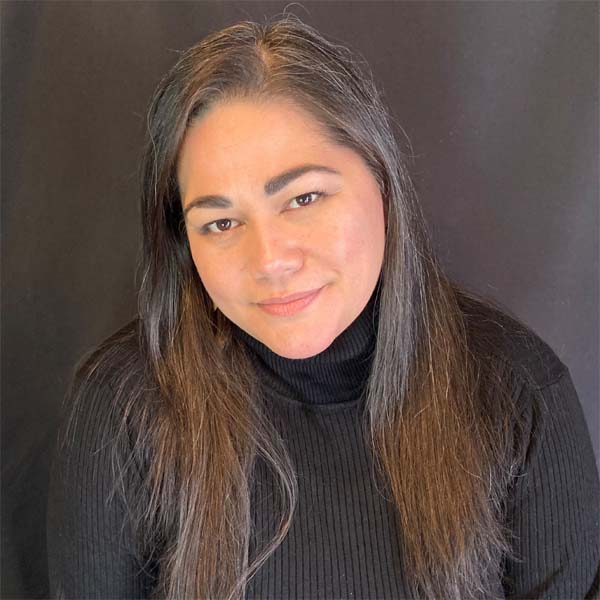
Guest Judge: Melissa Llanes Brownlee

Bring me home with you. Show me your ghosts: in your mother’s broken tea set, your father’s worn wallet, your sister’s half-eaten candy necklace. Or better yet, teach me the fables and fairy tales of your childhood, the ones that warn me to never stray from the path, that advise me to listen to my elders, that preach to me never trust a stranger. Send me into the dark with only a winking flashlight, a fluttering torch, a dying smartphone. Give me fear. Give me love. Keep me reading, and rereading, your labyrinth of sentences, of images, flashy lengths of strings to find my way.

Melissa Llanes Brownlee (she/her), a native Hawaiian writer living in Japan, has work published and forthcoming in Prairie Schooner, Redivider, and Moon City Review. Read Hard Skin (2022), Kahi and Lua (2022), and check out her new collection, Bitter over Sweet (2025) from Santa Fe Writers Project. She tweets @lumchanmfa and talks story at melissallanesbrownlee.com.

The deadline for contest entry is April 19, 2026. We will announce the shortlist within twelve to fourteen weeks of the contest’s close. All writers will be notified when the results are final. 

OPTIONAL EDITORIAL FEEDBACK:
You may choose to receive editorial feedback on your piece. In your cover letter, please let us know which piece you’d like your editor to focus their review on. We will provide a two-page global letter discussing the strengths of the writing and the recommended focus for revision. Our aim is to make our comments actionable and encouraging. These letters are written by editors and staff readers of Fractured Lit. Should your story win, no feedback will be offered, and your fee will be refunded.

Guidelines
      • Your $20 reading fee allows up to two stories of 1,000 words or fewer each per entry—if submitting two stories, please put them both in a SINGLE document.
      • We allow multiple submissions—each set of two flash/sudden stories should have a separate submission accompanied by a reading fee.
      • Writers from historically marginalized groups will be able to submit for free until we reach our cap of 25 free submissions. No additional fee waivers will be granted. NOTE: Cap has been met.
      • Please send flash fiction only—1,000 word count maximum per story.
      • We only consider unpublished work for contests—we do not review reprints, including self-published work (even on blogs and social media). Reprints will be automatically disqualified.
      • Simultaneous submissions are okay—please notify us and withdraw your entry if you find another home for your writing.
      • All entries will also be considered for publication in Fractured Lit.
      • Double-space your submission and use Times New Roman 12 (or larger if needed).
      • Please include a brief cover letter with your publication history (if applicable). In the cover letter, please include content warnings as well, to safeguard our reading staff.
      • We only read work in English, though some code-switching/meshing is warmly welcomed.
      • We do not read anonymous submissions. However, shortlisted stories are sent anonymously to the judge.
      • All AI-generated work will be automatically disqualified.

Some Submittable Hot Tips:

Please be sure to whitelist/add this address to your contacts, so notifications do not get filtered as spam/junk: notifications@email.submittable.com

If you realize you sent the wrong version of your piece: It happens. Please DO NOT withdraw the piece and resubmit. Submittable collects a nonrefundable fee each time. Please DO message us from within the submission to request that we open the entry for editing, which will allow you to fix everything from typos in your cover letter to uploading a new draft. The only time we will not allow a change is if the piece is already under review by a reader.

My Shadow Feeds the Birds

My Shadow Feeds the Birds

I hang my shadow on the clothesline like a sheer, limp solar panel. After dancing beside me all night long, it needs a sun-washed nap. The steel-colored version of me descends into dreams slowly, like that violin quartet that played on, as the Titanic French kissed the sea. My shadow wakes and lies on the grass, makes grass angels, and lets the clouds flicker over it, changing its tones to a muted version of whatever it touches. Then, the songbirds arrive in a flock, like they do in Cinderella to make her a beautiful gown, and they pick up my shadow by its edges, and it flies like an important piece of newspaper. Read All About It! Darkness Can Be Food! The birds fly my shadow to their nest, where they nibble it up, a tuft at a time, like a loaf of braided bread fresh from the oven.

The Search

The Search

I wrote tenderness on a sticky note and stuck it on my computer monitor. The next person who wandered by my cubicle, I tried to hug. Their arms flailed like ribbons. I was fired.

So that wasn’t it.

At home, I made a cake, and my wife made a list: sugar, fat, calories, carbohydrates, and, again, sugar. I ate it alone in a shaft of sunlight. To the sunlight I said, “Teach me.” It burned a perfect angle of red skin on my cheek.

“What will you do?” my wife spoke into the dark.

We were in bed, and no one had touched no one.

“I will work again,” my mouth said, but not me.

“Good,” my wife said. “We just bought that car after all, and there’s this purse I’ve been eyeing—”

“I used to draw as a child,” I told her.

“Yes, you’ve said.”

“I was very good.”

She deflated the room with her sigh. In the morning, though, the room was not empty, and neither was I.

That day, I hugged all the life that could not resist me. Dogs, cats, trees, grass, flowers. To hug a flower, lightly press a sunburned cheek to its petal.

When my wife came home, she said, “You’re still in your robe.”

“Hold me.” I don’t think I’d ever asked.

She laughed and put me in charge of dinner.

“Potatoes were once alive,” I told her over the music of our forks.

She was the bass clarinet when she said, “What the hell is wrong with you?”

“I got a job,” I lied.

She transformed back into an ambitious girl. “That’s better.”

Out under the stars, middle of the night, the moon wet my eyelashes.

“Hey,” a smoky voice said from the other side of the fence.

“Hey,” I said.

“Look here.” There was a knock near a penny-sized hole in the fence.

I did as I was told. “The Moon,” I said, “helps.”

“Right?”

“But no thank you.”

“Oh, no,” the man said with a chuckle. “I only wanted to show you.”

I felt sick.

Inside, my wife was uncovered and had rolled into the center of the bed.

The next day, after she left for work, I got in my car and drove. I touched my own cheek. I ran fingers through my own hair. I took the car out into the hills, sped up the inclines to feel my belly squeeze itself when the car crested and fell. I could go on like this forever, I thought. Excited by the prospect, I took a hill even faster and came upon stopped traffic.

I did not die.

Instead, for months, the nurses called parts of me tender. This is tender and that is tender and your poor tender bones.

“You’re a steak,” my wife joked, her new purse like a sleeping child in her lap.

“Meat,” I said with no teeth, so it just sounded like me.

2026 Ekphrastic Hopper Challenge: April 27, 2026 to May 10, 2026

2026 Ekphrastic Hopper Challenge: April 27, 2026 to May 10, 2026

2026 Ekphrastic Hopper Challenge

AWARDING $500 + PUBLICATION

JUDGED BY Fractured Lit Editors

April 27 to May 10, 2026

This contest is now closed. Thank you to everyone who submitted! We’re eager to read your stories!


Sometimes we just need a prompt to free us from our fear of the blank page. That’s why we’re challenging writers to create new stories of up to 1,000 words based on the artwork of Edward Hopper. While Hopper is best known for his masterpiece, Nighthawks, we want writers not only to draw on the striking images and characters from any of his works, but also to be inspired by his use of light and dark, his sense of constructed tableaus, and his unnamed characters. We ask writers to interrupt these themes widely and at a slant, to develop stories that defy our sense of normalcy. We want stories that play in the shadows, that aren’t afraid to show us the forgotten worlds, both real and imaginary. Take these scenes to new heights with precise language and unique characters. Create something amazingly weird and poignant. Flash fiction is all about augmenting the rules while still creating a sense of story and consequence, of velocity and depth, of something we won’t forget.

You’re invited to submit to the Fractured Lit Ekphrastic Hopper Challenge from April 27 to May 10, 2026.

Here are some great places to get inspired by Hopper’s works:

Smithsonian American Art Museum

Art Institute of Chicago

The Walker Art Center

*Works by Hopper are not limited to the ones on these websites*

We‘re excited to offer the winner of this prize $500 and publication. All entries will be considered for publication at our regular rate of $75/$50, depending on length.

The deadline for entry is May 10, 2026. We will announce the shortlist within twelve to fourteen weeks of the contest’s close. All writers will be notified when the results are final.

OPTIONAL EDITORIAL FEEDBACK:
You may choose to receive editorial feedback on your piece. In your cover letter, please let us know which piece you’d like your editor to focus their review on. We will provide a two-page global letter discussing the strengths of the writing and the recommended focus for revision. Our aim is to make our comments actionable and encouraging. These letters are written by editors and staff readers of Fractured Lit. Should your story win, no feedback will be offered, and your fee will be refunded.

Guidelines
    • Your $20 reading fee allows up to two stories of 1,000 words or fewer each per entry—if submitting two stories, please put them both in a SINGLE document.
    • We allow multiple submissions—each set of two flash stories should be a separate submission accompanied by a reading fee.
    • Please send micro/flash fiction only—1,000 word count maximum per story.
    • We only consider unpublished work for challenges—we do not review reprints, including self-published work (even on blogs and social media). Reprints will be automatically disqualified.
    • Simultaneous submissions are okay—please notify us and withdraw your entry if you find another home for your writing.
    • All entries will also be considered for general publication in Fractured Lit.
    • Double-space your submission and use Times New Roman 12 (or larger if needed).
    • Please include a brief cover letter with your publication history and a third-person point-of-view bio (if applicable).
    • We only read work in English, though some code-switching/meshing is warmly welcomed.
    • Work generated by AI will be automatically disqualified.

Some Submittable Hot Tips:

Please be sure to whitelist/add this address to your contacts, so notifications do not get filtered as spam/junk: notifications@email.submittable.com

If you realize you sent the wrong version of your piece: It happens. Please DO NOT withdraw the piece and resubmit. Submittable collects a nonrefundable fee each time. Please DO message us from within the submission to request that we open the entry for editing, which will allow you to fix everything from typos in your cover letter to uploading a new draft. The only time we will not allow a change is if the piece is already under review by a reader.

Fractured and Fused Prize Judged by Sherrie Flick Winners and Shortlisted Writers

Fractured and Fused Prize Judged by Sherrie Flick Winners and Shortlisted Writers

We absolutely loved reading the stories from this unique and inspiring contest! We love seeing how different writers approach our prompts, and we found some fresh and exciting stories from this prize! Congrats to everyone on the shortlist and big congrats to our winners!

First Place: Beyond Salt and Wings by Rostislava (Ronnie) Pankova-Karadjova

Second Place: Grief is a Noose Around My Neck by Micaela Taing

Third Place: Being by Jamie Burke

Also publishing: Whalefall by Cheyenne Mann, Resurrection in Clay by Ali McLafferty, and Beatriu the Builder by E. G. Ware

  1. Grief is a Noose Around My Neck by Micaela Taing
  2. Flower Arranging by Amy Y.Q. Lin
  3. Being by Jamie Burke
  4. Ephemera by Pallavi Wakharkar
  5. Unsung Lullaby by Christine Guidry Law
  6. After Six by David Alexander
  7. Queen Angelfish by Nanette Gordon
  8. Beyond Salt and Wings by Rostislava (Ronnie) Pankova-Karadjova
  9. Pier Pressure by Dan Hass
  10. But I Don’t Say It by Sarah
  11. Buoy by Dawn McCombs
  12. Heirloom by Austin Miles
  13. Carla with the long black hair by Natasha Roberts
  14. Wedding China by Mary Leighton
  15. Falling Slowly by Tracy Fahey
  16. Resurrection in Clay by Ali McLafferty
  17. Beatriu the Builder by E. G. Ware
  18. Whalefall by Cheyenne Mann
  19. Doe by Aldona Dziedziejko
  20. Preservation by Melissa Bowers
  21. Rehearsal for the End of the World by Kristen Reece