
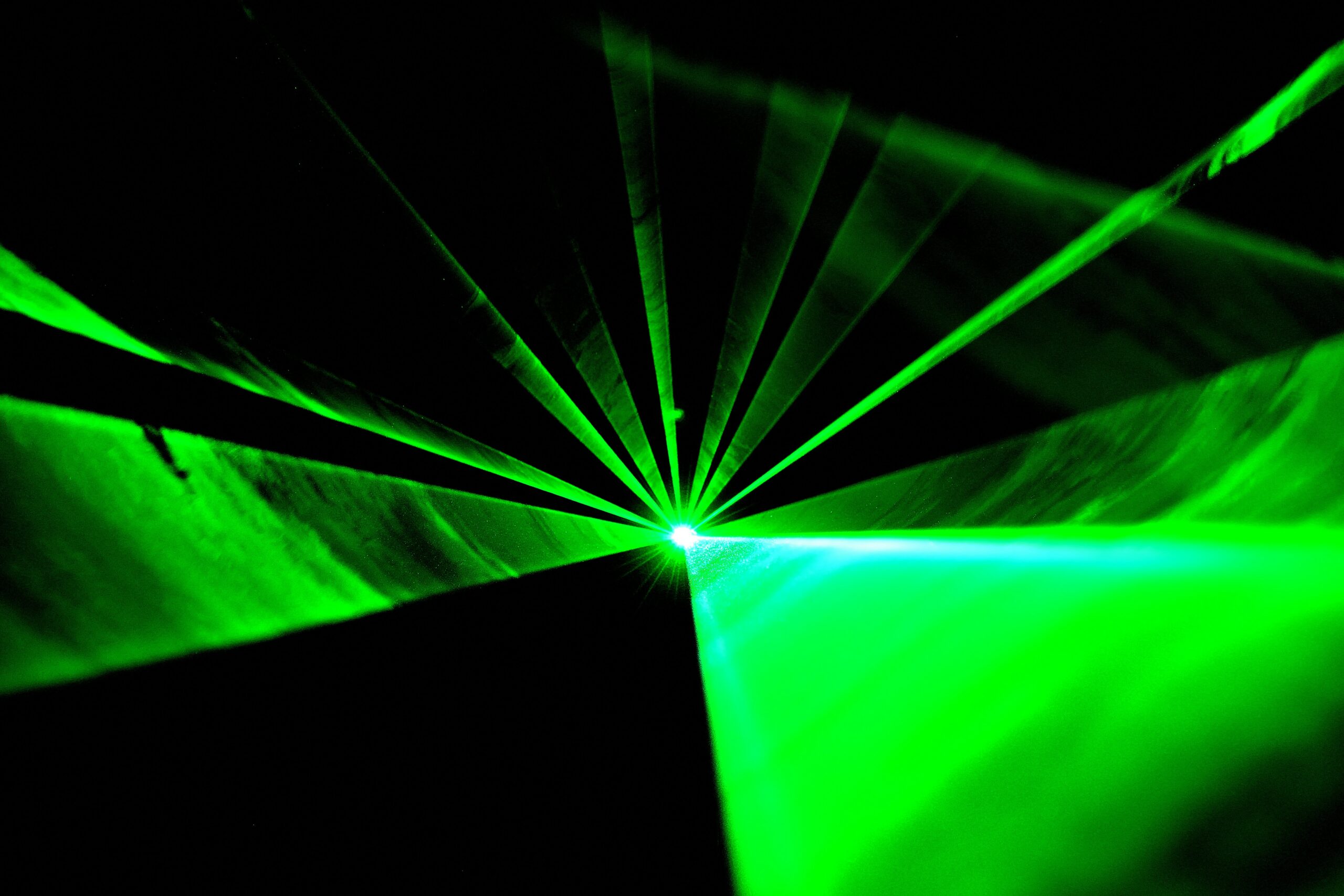
The light that glowed through Lisa’s bedroom window was a radiant thing. So radiant, in fact, that Lisa’s mother disappeared within it. There was no sound, no physical indication that her mother was taken. Lisa simply recalls her mother there, and then not there. Another change, besides Lisa’s mother’s disappearance into brilliance, is Lisa’s vision.
The girl can no longer see during the day.
Sometimes she’ll see a blur of some sort, and explains it as a sensation similar to when light flashes by when your eyelids are closed.
“It’s okay,” she tells her Aunt. “The aliens must have a good reason for this.”
They, Lisa and her mother, were watching alien and science fiction movies before the abduction. Lisa thinks they must have caught their attention somehow, perhaps shot out a misplaced brainwave. Lisa’s Aunt doesn’t argue, but Lisa knows she doesn’t like to talk about the aliens. Lisa thinks it scares her. When she’s in her room, she’ll hear her Aunt occasionally speaking to someone. She thinks it’s the police officer who came the day after the abduction, one of her Aunt’s friends. She overhears a man’s name come up often. “Her father.” She’s never met her father. Honestly, she believes the aliens most likely abducted him as well before all this.
“We can’t prove anything—”
Her Aunt drinks after the conversations with her friend, the police officer. When she does, she falls asleep deeply, in a way Lisa doesn’t like. But it keeps her from waking up and stopping Lisa from sneaking out at night to see.
At night, the world is truly split into two sections: light and dark. The rats that skirted by her feet as she passed an alley could see in both, she thinks. But she could only see in the dark.
Underneath a honeyed street lamp, she could see a couple on a bench intertwined like slugs. A man walking home slips into both realities with each step, carved by the streetlights he crosses beneath. A drunk passed out in the park is barely visible in the halo of frail garden lights surrounding him on the ground.
The world is diluted into the suggestion of shapes, harsh shadows blurring away the details and territories of an arm, a leg, a torso.
She wonders why the aliens took her vision during the day. That’s when she spends most of her time wondering. She wonders mostly about her vision rather than her mother. She assumes she’ll be taken eventually; perhaps her sight was their attempt, but they only had energy for her mother. She isn’t sure. Maybe it’s how they saw reality, too.
Her Aunt doesn’t allow her to watch alien movies anymore, so she only does rarely now, at night with the volume muted and closed captions littering the bottom of the screen.
Horrible Mutilations—
Invasive Experimentation—
But those felt wrong. The aliens, or at least, her aliens, were only a blinding light. There was no violence to them, no horror.
During her escapes, she always comes home early, stumbles quietly through her window, and locks it tight, just as it was before, but this time is different. She knows it the moment she sees her window from the outside.
The light is on.
She freezes, and before she can make a decision, the front door opens to reveal her Aunt, wrapped in a pink bathrobe. The flickering porch bug zapper attracts fat mosquitoes that sizzle and pop as they land.
“Titi—”
“Inside. Now.”
Her Aunt smells of alcohol as she yells. It makes Lisa scrunch her nose.
“I don’t know how many times I have to say this, but it isn’t aliens. You need to get over this, Lisa—”
“You don’t understand.”
Her Aunt walks around her, tugging at her bathrobe this way and that, as Lisa sits on a kitchen chair, hands squeezing the sides until her knuckles turn white.
“That stupid, stupid bastard took her, I just know it—”
Lisa watches her Aunt pacing, then glances towards the living room window. She imagines the blinding light, her aliens, shining through, coming to get her. We didn’t forget you, they’ll say as she’s finally taken. I’ve missed you, her mother will say, once she’s part of the light. She blinks. She starts to cry.
“Why are you crying?”
“I want to be with her,” Lisa cracks. “Let me go be with her.”
“Who?” her Aunt asks, mean. “Your mother? Where is she? Do you know where she is?”
“I do—”
She shakes her head, the loose hair frantically framing her face swaying.
“If you say those aliens again, Lisa, I swear.”
“You don’t understand!”
“No,” her Aunt says. “You don’t understand. My sister is gone. Gone—”
Lisa stands up from the chair, shoving her Aunt. She sprints for the door.
“Lisa!” her Aunt shouts. “Lisa!”
Shadows and light blur into streaks as Lisa runs. Her chest heaves as she pants, rushing through the city. The bench with the interlaced couple is empty. The streetlights the man walked under illuminate no one, and the drunk passed out in the garden left an imprint of flattened flowers and an empty bottle. Lisa sobs.
“Lisa,” her Aunt calls from somewhere behind her, distant. “Lisa, please—”
Above her, dawn starts to soften the night sky into slate, and her vision begins to darken to black.