
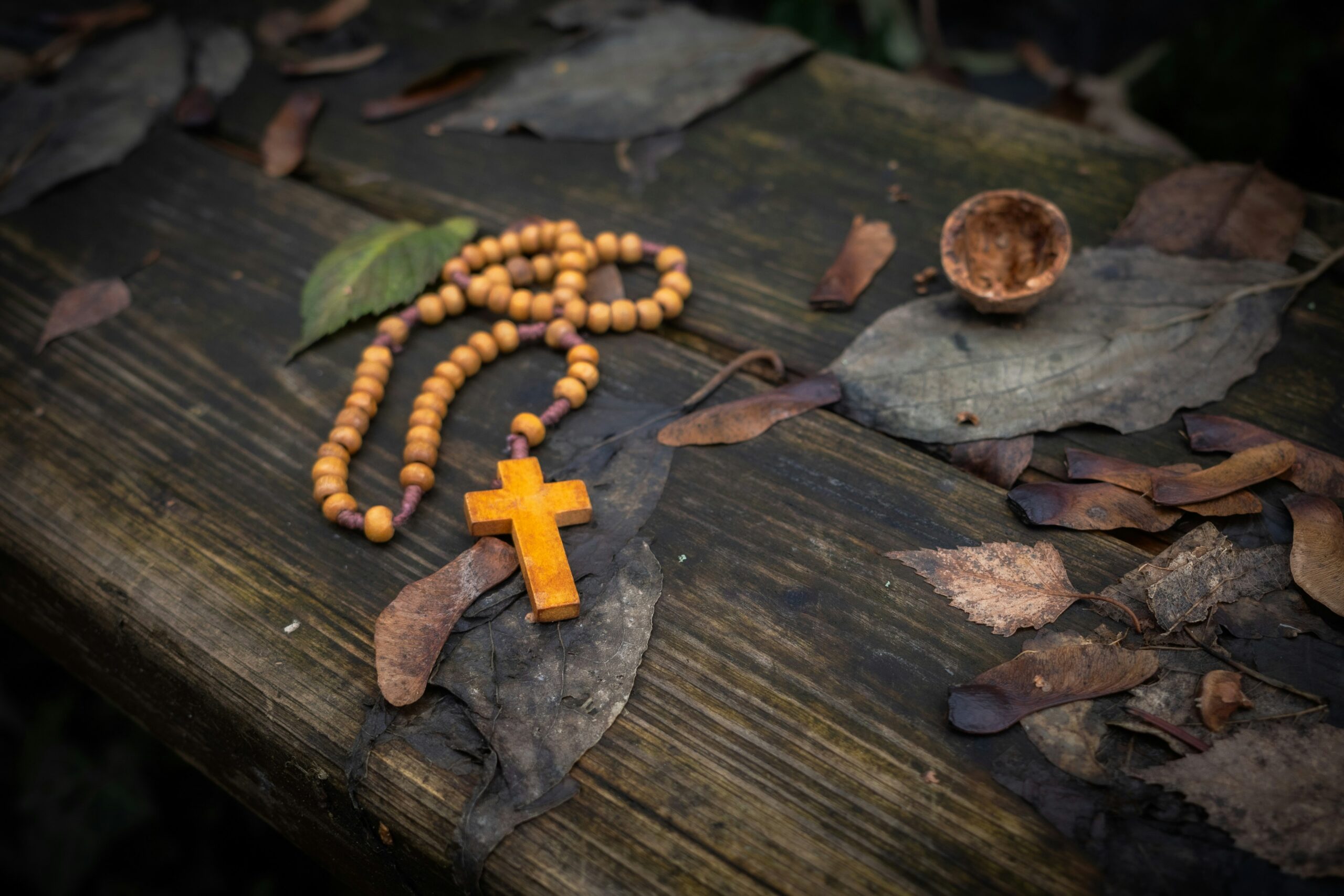
She finds the rosary tangled in the bottom drawer of his dresser, amid balled socks and a single cufflink shaped like a compass rose. The beads are wooden—olive pits carved smooth by generations of thumbs. The crucifix hangs crooked, silver worn thin at the corpus, the face rubbed away. She lifts it out, lets it uncoil in her palm.
Outside, snow falls in fat flakes. The backyard is a white sheet pulled tight over the garden beds where he planted tomatoes every May, even after the doctor said no more heavy lifting. The bird feeder swings empty from the maple branch. The bag of seed sits unopened in the garage.
He died on a Tuesday, mid-sentence, fork halfway to his mouth. “Pass the—” and then the slump, the clatter. The paramedics were kind but efficient; they did not linger.
She threads the rosary through her fingers, bead by bead. The first Hail Mary catches in her throat—full of grace—but she presses on. Her voice is small against the radiator’s hiss. She reaches the Glory Be, pauses at the Fatima prayer he always skipped, calling it superstitious fluff. She skips it, too.
Forty-seven years they shared this drawer, though it was nominally his. She kept her own things tidy in the nightstand: reading glasses, lip balm, a dog-eared copy of The Joy of Cooking with his marginal notes in pencil—too much salt, try thyme. She digs deeper: a matchbook from their honeymoon hotel in Niagara, cover faded to pink; a ticket stub from the opera where he proposed, Puccini smudged by rain; a lock of her hair, tied with faded ribbon, from the night they met at a parish dance.
The window whitens. She stands at the window, rosary dangling from her fist. The neighbor’s dog barks once, muffled, then falls silent. She thinks of the wake tomorrow: black dresses, covered dishes, the practiced phrases. She will nod, accept hugs that smell of perfume and casserole, say thank you until the words go flat.
She slips the rosary over her head, lets it settle against her collarbone. The wood is cool at first, then warms. She walks to the kitchen, fills the kettle, sets it on the stove. While it heats, she opens the back door. Cold rushes in. She steps onto the porch in sock feet, feels the snow melt through wool to skin.
In the yard, she kneels where the tomatoes once grew. The ground is frozen. She digs with bare hands—nails scraping ice—until a small hole appears, ragged, no deeper than a teacup. She removes the rosary, holds it a moment. If it stays above ground, she will pray. She places it in the hole and covers it with snow-damp earth. Her palms come away black, streaked white.
Back inside, the kettle whistles. She pours water over tea leaves in his favorite mug—the one with the chip from that argument in ’92. The steam rises, curls, dissipates. She sips once, sets it down.
Upstairs, she strips the bed. Sheets into the hamper, pillows fluffed and recentered. She opens his closet, runs her hand along the row of shirts: flannel, cotton, the silk one he wore to weddings. She selects the blue button-down, lays it flat on the mattress. From the drawer, she retrieves the cufflink and fastens it to the left sleeve, though the right is empty.
She lies down beside it and curls her body around the fabric. The house settles: creaks in the joists, wind against the eaves. She closes her eyes, listens for the rhythm of his breath that is no longer there.
Morning comes gray. She rises, makes coffee strong and black. The bird feeder still swings empty. She fills it now—sunflower seeds scattering across the snow. A chickadee lands almost immediately, pecks once, twice, then flies off.
At the wake, she stands straight-backed beside the casket. Friends file past, touch her arm. He was a good man, they say. She nods. When it’s over, she drives home alone, the radio off.
That night, she opens the drawer again. It is empty now, save for dust and a single olive pit she must have missed. She rolls it between thumb and forefinger, feels the faint grooves where prayers once wore paths.
She places it on her tongue and swallows it whole. It lodges somewhere deep, a small hard seed.
Later, she stands at the kitchen window and looks out at the yard. The feeder is empty again. The tracks in the snow are small, precise—bird feet, nothing more. She walks to the buried spot and kneels once. No digging this time. Just her palm flat against the ground, feeling for anything that might answer.
There is none.
She stands, brushes snow from her knees, turns back toward the house. Inside, the kettle waits. She fills it, strikes a match from the old book, lights the stove.
The flame catches blue, steady.