
by Patricia Q. Bidar | Feb 10, 2022 | flash fiction
She calls herself Rat Girl, but she looks like a little Swiss doll. Now in the Chapel, she is singing round-eyed over our heads and serpentine-ing her head in the shape of infinity as she always does. Her arms are sinewy, pounding at her guitar; bracketing small breasts in a tiny pink t-shirt.
Now she is reading from her book, about that time when she was hit by a car. How afterward she saw her reflection in a Good Samaritan’s mirrored sunglasses. How she saw her own blazing eyes in a bloody mass of meat. Then she puts the book away and the sound of her singing tears the air between us again.
All four of us are standing at the side of the sanctuary-turned-performance space. It’s me, Trinidad, Blaze, and Michael. All of us are old fans. Because of Rat Girl’s wiseacre patter, the intimacy of her lyrics, and her frankness in interviews, people feel they know her well. She is small and bright-eyed and has suffered many hardships, so thousands of people over the land would like to take care of her. I myself am a middle-aged married woman who wishes to lick her biceps, strum her neck tendons. “Get in line, Mama Cat,” I imagine her saying in that cactus dirt rasp.
Michael brings more drinks, and Rat Girl sings about the notion of spurning. What am I spurning by scribbling notes on the backs of business cards during this performance in this room its shipbottom ceiling illumined by purple light? Why push Rat Girl away by snapping a blurry photo with my cell phone? On my third glass of vodka, dulling her potency? She is too strong for me. The details of her life too dark.
Rat Girl’s husband has recently left her, I know. She has endured dissociative disorder, the kidnapping of one of her children by his father, the suicide of her best friend. She tours constantly, like any brilliant artist without a record contract. Her lyrics are crystalline. Members of the audience shut their eyes, overcome.
What happens after you realize the members of your support group are dead? Rat Girl asks us near the end of the show. Do you keep yearning for them, or do you dig in where you are? Her eyes are still bright. She makes these questions sound wry rather than tragic. Maybe that is why she is so beloved.
The show is over. Thank you very much, Rat Girl says, and while it does not sound earnest, she is a 100% earnest woman and the real deal. She reads a little more from the book she wrote, this time about a bus ride that turned into a crime scene when she was “a hundred years pregnant.” She swears to all of us it’s a pretty funny book, and that she doesn’t die in the end. Then she adds that she hopes she isn’t spoiling it.
After the concert, we walk with Blaze and Michael to 16th street BART. The iron Day of the Dead tree grates have all been installed on steel and glass Valencia Street. But Mission looks exactly the same to me as when I lived in this neighborhood years ago.
Perhaps inspired by Rat Girl, Michael tells a story about almost losing his arm. It seems that earlier this month, he contracted some kind of flesh-eating bacteria, which led to a terrible infection. We are passing that liquor store that sells cards and dice. It is on the corner, and if you were to walk straight forward through the door, you would ram into a pillar. Then the Roxie Theatre, then Esta Noche, that drag bar where Michael’s friend used to perform as Diana Ross.
The night is crisp. Trinidad crooks his arm, and I take it. The red brick 16th and Mission Plaza are lined with sleeping people. Blaze and Michael are laughing their asses off about the flesh-eating bacteria, so we laugh, too. Inside, we laugh and laugh, avoiding looking at our middle-aged selves in the white-lit subway car. Across San Francisco, under the Bay, and back to our warm apartments and humming appliances and fitfully dozing pets who come alive at the sound of our keys in the lock.
Rat Girl originally appeared in Sou’wester Review, Spring 2019
by Julián Esteban Torres López | Feb 7, 2022 | micro
Like a toddler lost in a laundry basket full of dirty towels, the Argentine music dances.
Cuts through the candlelit fog by the lake. Hip-checks the couple swinging in the hammock
from making out—still in their bathing suits from earlier that afternoon.
They fall.
The freshly cut grass sticks to their bodies as they continue to caress … as if fate ordered them
to drop like apples.
Above their heads—nailed to the tree—the cross and Jesus painfully hang. Forced to watch.
But the Argentine music keeps dancing. Finds the shirtless, sweaty young men making and taking bets for the cockfight about to begin, and rubs shoulders with three of them.
They ignore her.
Tear the bottle of Aguardiente from each other’s hands and turn their heads to the rooster being brought out from the barn by the mayor’s sixteen-year-old daughter.
One may say Jesus was trying to turn his head and close his eyes but would have sinned if he had done so.
And through all this the Argentine music dances … no longer in the background, but in front of me.
Trips over my foot from not looking where she was going as she blessed herself trying to wipe the tear from Jesus’ cheek while walking past the cross nailed to the tree.
I offered her my hand but she slapped it aside, smiled, offered me hers, and asked me to join her.
by mandira pattnaik | Feb 4, 2022 | news
Here’s something I want to confess: I’ve stopped trying.
A curvier-beaked whale dies with a lump of plastic in its belly. Evidence of the levels of marine pollution. I want to write about it. Writing about a subject that rattles me, simultaneously about a field of study and understanding that is inadequate for me, limited only to the scope of an article, is a delicate business. I stopped trying.
Here’s something I want to confess: I’ve stopped trying.
To put words out in the world is to feel urgent, vulnerable, and to use that feeling to catapult experience onto pages and screens. Beyond the life and times, there are notions to be addressed, rules to be followed and complexities understood. When the entire hillside of a popular tourist-station nearer home fell crashing down one morning, the result of irresponsible construction, it was a news piece I did not let go of. I stopped trying to ignore. I wrote a prose poem.
Here’s something I want to confess: I’ve stopped trying.
No denying the overwhelming pressure to fit in. Perhaps in a cubicle or slot where your selfhood perfectly fits in. Amidst record unemployment across the world, I thought of a flash piece on the theme, with Hoopoe birds as central characters, stressed and underpaid, finally retrenched. Joblessness is a subject rarely explored in flash-length works, and the piece received excellent responses from editors and readers. I stopped trying to squeeze in. I refused to fit into a slotted hole that I disliked. I published a story.
So long story short, writing can be venting. It is talent, art, but also acquired skill. And it won’t be ‘acquired’ if you quit!
As diverse writers, coming from backgrounds where English is a “taught” subject, I suggest moving back and forth to observe your core areas of strength. Learning to pay attention to voice. This trait may be acquired with patience because it is like going against the grain of our current times in that our attention spans and levels are clearly declining. If it helps, try and figure out the basics: what subjects really pump you up to say something unique, what is the depth of your immersive experiences/knowledge in the matter, did you observe the details, and is the chosen form (poetry, flash or short story) the best vehicle to carry it?
Here’s a simple trick: Construct a language and image palette that uses punctuation to good effect. In the brief scope of a flash piece, imagistic vivid descriptions bring the subject alive, like this story by Shareen Murayama in Fractured Lit. Notice the immediacy and emotional pull placed alternately, expertly enhancing the overall effect. Bits and pieces of memory and summation of parts is also a great technique, like this micro by Sudha Balagopal, also in Fractured Lit. Read the pieces to see how these writers of color showcase their talent via excellent imagery and how the narrative exudes the personal styles of the writers.
In George Orwell’s essay “Shooting the Elephant”, he writes about an experience in Burma, in undivided India, concluding with this line: “I often wondered whether any of the others grasped that I had done it solely to avoid looking like a fool.” Consider this line as an expression where he offers his vulnerability. The writing of a unique experience is sure to resonate when the reader can identify with all the flaws and tensions in the story. Writing should be earnest and compelling, mined from personal experiences and observations, but always striving to answer that abstract question at the outset, “Would I stop trying and quit?”
by Dipika Mukherjee | Feb 3, 2022 | micro
1.
She collects seashells, three in a row. One domed, a Buddhist stupa; another hugs the ground, an earthworm after spring rain, seeking damp earth to nuzzle. The third is halved, amputated, an orange tongue searching a mate.
A shell on land is life made nomad, seeking home.
She wants to live again in that house on stilts, taste the sharpness of anchovies dried on bamboo vines.
2
His pursuit of her, once, had thrummed like sleeplessness within the covers of a great book.
He is a purveyor of words, chipping at monuments, stupas of the ancients swarm his brain. Her needs tire him. The small talk, he is afraid of hours wasted, knowledge of giants undecoded.
A memory of wild hair, evenings satiny and humid. She comes from a land where women stand over rice pots, incanting the moon.
He looks at her crouched, collecting seashells, and sees. The bend of her neck lifting, marking the way home.
by Mandana Chaffa | Jan 31, 2022 | flash fiction
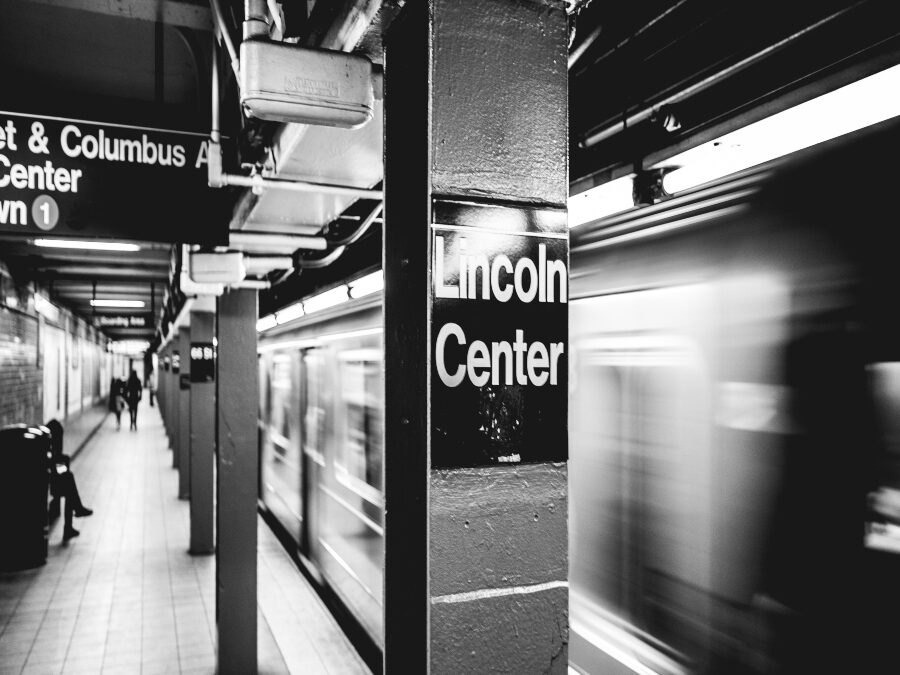
The Marys—mothers, daughters, whores, saints, queens and killers—meet every Thursday afternoon in Riverside Park during the spring and summer months. In inclement weather they go to the New York Public Library on 67th Street, between the firehouse and Lincoln Center, across from sharpened condominiums that obliterate history. Some prefer the park, where they can bring doctored tea and smoke on the sly. In the library, they have to dress to recede, to invisible visible among the stacks.
A foursome plays Mah Jongg. One Mary plays fast, annoyed that Marie giggles girlishly, takes her time, flips her curls (who would believe a woman her age has skin or hair like that without professional assistance), and despite her utter stupidity, wins often. Another Mary wonders what Universe could have made them both queens, and if the beheading was the cause of such vapidity, or perhaps the powder inadvertently inhaled when they fumigated her wigs. For this Mary, her own towering exile still seems a particularly vicious vengeance, though ultimately it pales against other losses, ones which divested the soul, and split sacred covenants.
(A minor Mary in striped stockings sits cross-legged at a yellow children’s table, ignoring reading hour—the recent Dora the Explorer—to carefully exterminate paper dolls instead: each so cleverly, so pitilessly, so neatly, so unobserved.)
The writers and philosophers generally prefer the library to the park; peeking at their reproduced words a never-ending thrill, even shoved into overflowing shelves, still smothered by the patriarchy who muted them in the first place. “I am. I am. Here, I am.” Lived in perpetuity via paper and ink. Sometimes sneaking from these academic pursuits to watch New York’s Bravest—those who rose from the ash—polish engines, shine chrome, meticulously prepare for the next sirened hurtle into the scorching void. They titter and swoon over sharp deltoids, biceps and abdominals framed by snug navy FDNY t-shirts, and ogle to their hearts’ content, bluestockings with tight corsets and hidden desires.
Mary toys with a barely embered cigarette, weary of being mother to this dysfunctional chorus. She’s walking east on 72nd Street to purchase Triple Ginger Cookies at Trader Joe’s for someone’s anxious stomach, a nascent drizzle pinning her blue robes. None notice her, childless, barren, as she turns right on Broadway. Children with too-large backpacks and fragile bodies trudge slightly behind parents tethered to electronica instead of offspring. “Hold their hands,” she thinks. “Keep them close. There is a reckoning on their heads…” But she says nothing, while lesser Marys shadow her, arms pleated, a silent guard.
Originally published in Corium Magazine
by Corey Farrenkopf | Jan 27, 2022 | flash fiction
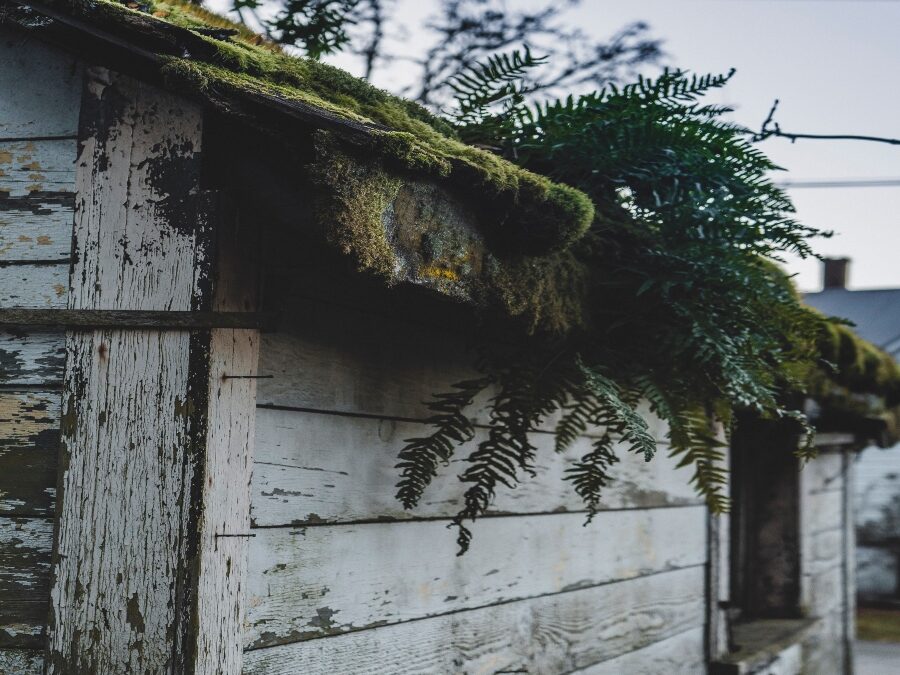
The rookery is disguised as a shed. I keep a lawnmower and a pair of hedge trimmers for the sake of camouflage, stowed beneath nesting shelves. The nests are woven of straw, pet hair, and twigs pulled from local woodlands. Fifteen ravens, oil black. A single fledgling, bleach white.
I only let my birds out after sundown. I don’t understand the legality of the situation, nor do I want my neighbors knowing they’re being watched.
The white raven alone stays with me, perched by the fireplace, gazing out the window to the pin-pricked night.
We both wait for the flock’s return.
I train them, each flying to nearby homes, returning with a message in the form of an object. Happy/Sad? The color of the item they drop on my doorstep indicates the household’s level of contentment or sorrow.
Blue bottle caps. Single-use forks. Feathers from other birds. False teeth.
I don’t understand how to be happy on my own, so observing well-adjusted neighbors is my only education.
My therapist suggests I haven’t had the right modeling, the distance I feel in adulthood cemented during youth.
***
While my rooks sleep, I walk the neighborhood, pausing before houses of happy people, determining what makes them happy, composing a checklist, one I can replicate in my own life. Single. Divorced. Still in love. Widowed. There are no commonalities. Neither is there a bearing on wealth. Most have enough money to avoid leaky roofs or sagging gutters, but the largest houses rarely yield a Blue Jay feather or porcelain canine.
***
Years ago, my therapist suggested bird watching.
It did little to calm my mind.
Instead, I decided to have the birds do the watching. Ravens, corvus in general, are the smartest avians. Humans failed to teach me how to be good at humanity. Bipedal teachers, therapists included, have fallen short. I hoped the birds would communicate what the rest couldn’t, some missed detail, a puzzle piece overlooked.
***
I doze in my chair.
Only the caw of my white companion wakes me. Out the window, flames dance about the shed, pulling through the eaves. Smoke weeps from the doorway. My flock hasn’t returned from their scavenging yet, so there will be no blackened skeletons to sift from the rubble.
I had thought I was getting close to a breakthrough, an understanding.
Now, without a home, my ravens will leave.
“You’re only allowed two eyes,” a man with a flaming broom shouts when I step onto my porch.
“We don’t send birds to your windows,” a woman calls, candles blazing in each palm.
I want to tell them they are lucky they don’t rely on another’s flock, that they can depend on their own senses. They don’t understand. I am not trying to take advantage, to pull ahead in life, or possess their secrets. I only want comprehension, level ground beneath my feet, the ghost sensation of happiness.
I want to make them understand, but the only words I can produce are:
Sorry, sorry, I’m so sorry…
One of the only things I’ve ever been comfortable with is an apology. I don’t need ravens for that.
The gathered crowd extinguishes their makeshift torches. They walk down the driveway as my birds circle above, cawing, having left their nightly deposits at my feet
I can’t look at the objects.
There is nothing to learn.
***
The ravens fall asleep in the pines. I wonder what my therapist would say about sleeping beside them? What analysis could be applied to finding comfort in non-human companions? The bark is rough against my skin, wind cool on my neck, sap slicking palms. There are enough low lying branches to make it to the crown. I curve my spine into a notch beside my birds, doing my best imitation of tucking my head beneath my wing, keeping the plume of ash out of my face, the shed still smoldering below.
by Rachel Lachmansingh | Jan 24, 2022 | flash fiction
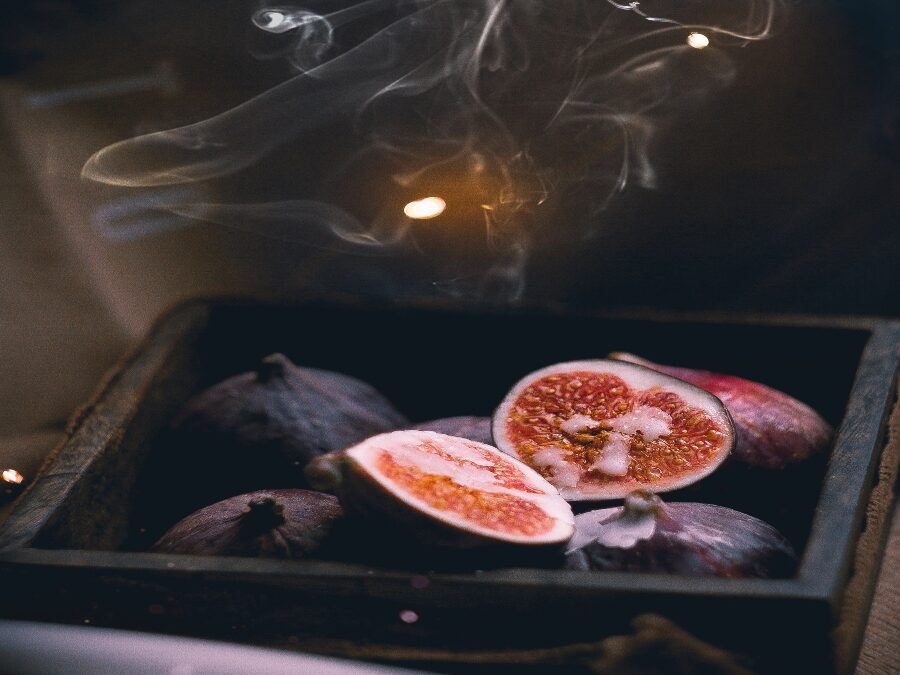
For breakfast, Zip and I will eat a rancid jar of olives, a brittle feather from the windowsill, and a single dehydrated fig. Good pickings, rich pickings, delicacies. We will start light, first the olives, then the feather, and finally the fig which has been confined to this apartment for as long as we have. This meal is celebration.
We move with humid routine: Zip rattles the soup tins we use as teacups from the highest cupboard and I dust off the man’s atlas to use as a coffee table. Zip nearly overfills our teacups with rainwater. I plate our feast with my steadiest hands in a decade.
Zip and I were told we are sisters, or cousins, or maybe even neighbours. There is no point in remembering life before the man, before this apartment, before Zip. We fit each other like keys which is why I love her. Her pinkie the perfect size for my belly button, my littlest toe the exact gauge of her nostril, her canine teeth slottable between my molars. I know the places her body receives mine seamlessly, the exact concaves of her skin that fit my skin. I know her laugh and how to mimic it and know she trembles when nervous and that her fear smells like oranges. This morning, Zip is jittering citrus.
“Stick your tongue out,” I say as her bones fritz like the strings of a piano under pressure. Dawn highlights a streak of blood on her forearm, still damp when I stroke it. She stares dully at our feast and rests her chin on her knees. “Zip, stick your tongue out.”
“Shouldn’t we wash him?” She nibbles on her fingernails that have already been stripped clean. Her knees twitch, and she struggles not to look at what is now the forbidden place, our only rule, to keep our eyes off the television nook.
“Stick your tongue out.”
When she does, I place an olive in her mouth, and then one into mine, and before we swallow, we kiss good luck on the lips, like we always do. One by one, the olives melt on our tongues, sour with vinegar, and one by one, we kiss good luck, our upper lips salted with sweat and brine.
“He should have a burial,” she says. Her face is guarded in shadow, positioned toward the forbidden place again. Her knees begin to totter.
Zip is unwell. It seems she has been unwell for a decade. She is the colour of oatmeal, her skin ripe with acne from poor washing up. Her eyes are swollen, lilac around the edges. I reach her face with a tatter of my skirt and wipe a lattice of blood from her jaw. She is cadaverous, her limbs knotty and scratched with bruises. No amount of wiping will take them away. But we have agreed to get healthy, to eat our good pickings/rich pickings/delicacies like we always do, even now that things are different. We have agreed it’s better to keep routine. So, we eat together between kisses until the jar of olives is empty. And when her knees still tremble, I lift the feather from our table and comb it along the back of her hands. Gooseflesh sprouts on her arm, and I don’t stop until her knees still.
“Good protein,” I say, and twist the feather in my hands until it breaks in two. I pass her half and peck her mouth before slurping my serving.
“He should go back to the earth,” she says, feather spooling from her lips as she chews.
I lift our fig from the table and rip it in two. One piece comes out larger than the other, and I hand her one with my eyes closed so I don’t have to accept guilt for giving her the smaller half.
She doesn’t look at it. It sits, sticky, warming in her palm, sinewy at the tear.
“Eat your fig,” I say.
“Everyone deserves a burial.”
She doesn’t jump when I swat her palm, but the fig does. It nearly rolls off her hand and onto the floor but not before I catch it. Zip is unwell as the fig melds onto my skin, Zip is unwell as I pull my half up to hers and compare their tears, Zip is unwell as I fit them back together.
“This is a celebration,” I say, lifting the fig to her eyes. I feel inclined to bite her. Even when I shift an inch from her nose, she looks at the ground, her eyes trailing to the forbidden place; she is the negative charge, it is the positive. “Today is a good day.” And it is—today, I no longer share her. She is mine and I am hers and we are one and unsplittable.
But something in my voice unsettles her because she nearly cries. Zip balloons like a blackberry when she’s close to crying, her eyes plummy with irritation. She is my sister, my best friend, my roommate, my cousin, my own, unshared thing. My celebration. We know nothing more than each other, than this apartment, than the man who can no longer keep us forever. The broken-unbroken fig swells with my sweat like her eyes do, gummy and germy and things we are used to being. It is only instinct to take her hand within my own, our fingers becoming one finger, our skin the same skin, roll the fig in our palm, and catapult it at the forbidden place.
We do not hear it land and will not check. Our hands sticky and figless. Our knees a single, jittering knee. Our mouths one mouth. We are bound forever.
by Fractured Lit | Jan 21, 2022 | micro, news
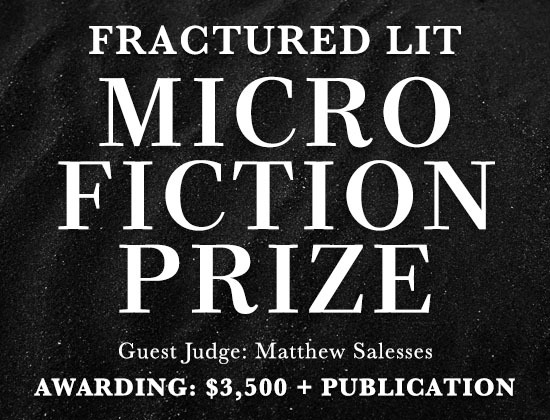
Huge thank you to judge Matthew Salesses for reading and choosing the winners. This was definitely one of our most competitive contests and we expect these shortlisted stories will find excellent homes very soon!
1st Place: “mi corazón quiere cantar así” by jj pena
“The way this story uses sound makes it stand out from the bunch. Gunshots, dance beats, and the beat of a heart combine and intensify.” Matthew Salesses
2nd Place: “freedom fighters” by aureleo sans
“ I like a story in which the sentences take interesting turns. Flash fiction often relies on the turn of a sentence over a turn in the plot.” Matthew Salesses
3rd Place: “Not interested” by Catherine Gammon
“Not Interested” is a list story that takes advantage of the way lists can quickly build worlds around what a character knows or notices.” Matthew Salesses
Short List:
How to Take Care (of the Environment) by Yvanna Vien Tica
Four Words for Pink by Juliana Rappaport
Dorothy Paints Poppies From Memory by Barbara Diehl
An Instructional Guide on Making Your Cloud Bleed by Fedja Celebic
Afterwards by Barbara Ford
Offerings by Karen Jones
impossible things that might come true by Helena Fox
How To Leave Your First Husband by Amanda Hadlock
genealogy of red by Caroline Fleischauer
When I Stole All the Streets that Weren’t Streets by Todd Seabrook
Name the Fish in the River by Danielle Harms
One Morning in Maine by Rita Ciresi
What My Grandmother HIdes by Debra Daniel
Brain Food by Ellen Ziegler
Week Six on the Day Ward by Marie Gethins
Things the sun told me while waiting for your forgiveness by Melanie Maggard
Tangerine by Allison Field Bell
Baby Hearts by Ashton Russell
Physical Touch is My Love Language by Eli D’Albora
Tag-along by Christina Toman
Boto by Amy Marques
The Zen Garden by Mariel Masque
When You Come Home From Nashville by Patricia Q. Bidar
by Lindy Biller | Jan 20, 2022 | contest winner, flash fiction
The ghosts have come looking for my maid, but the maid is not here. The maid is out back in the alley with crusts of bread and apricot pits and chicken bones. The maid looked hard at me when I put her outside. Her eyes black and round as new moons. My whole body crackles with the unfairness of it. We have kept her alive. Doesn’t that count? They say we shouldn’t be feeding her, and still, we feed her. They say she is dangerous and they are right. Our maid can subsist on anything. She eats lamb in large bites, her mouth open, bloody clumps falling out. She picks her teeth with the splinters of the boat that washed up on the mountain. She slurps up our grandparents, and the soapy aftertaste doesn’t bother her, or the fuzz on their chins. The maid eats our words before we can hear ourselves speak. She eats entire olive trees, the bark and leaves included. How can this be forgiven? She begs with her eyes, so loud we all must cover our ears, and still her hunger echoes, echoes, echoes.
The maid is a poison and ever since we took her in, we have all been getting sicker. We crawl from our beds to the kitchen, we search the cupboards for medicine, we read the numbers on her wrist for aftercare instructions. There is no medicine, the maid says, not with her voice, but with the ghosts whistling through the hole in her cheek. There are no instructions. Her face looks crowded, even though all of its parts are so small. My husband has not risen from bed in ten days. A film of ash covers him. The maid doesn’t fetch the duster, doesn’t wet a cloth, doesn’t even wipe his forehead with her thumb. Not much of a maid, my neighbor says, dripping locusts, as she sips the coffee I have made for us, and when my neighbor leaves, the maid gathers the locusts from the rug, from the chair, from inside the coffee cups. She stores them in a jar and places it on a shelf with the other plagues, each one of them labeled.
The maid is seven years old, but this isn’t why she is no good at cleaning. She is no good at cleaning because what’s the point when everything will just keep getting dirty? The maid has other uses. She applies ointment to the blister on my heel and she uncoils my son from around my pinched lungs and she kneads life back into me. I refuse to love her. The maid eats our words and we are all shouting at each other from inches away, frantic to be heard.
You are nothing like my mother, the maid tells me.
But her mother is dead. Her mother died in a tent in the desert and the maid woke up and someone dragged her away, and this is when she bit the hole through her cheek. I know this about her the same way she knows about my blistered heel, and the scales on my son’s belly, and the daughters I had before she came to us. My daughters were beautiful. They fell from my hair when I combed it, like dandruff. I sheared off all my hair in grief but it was too late. Now the maid sits on the rug with the ghosts of my daughters and teaches them games: with apricot pits, with snail shells, with ducks they have stolen from the pond and ponds they have stolen from somewhere far away. They flip the ducks, read the numbers on their slick bottom feathers, gather their prizes, and let the ducks go. When the maid smiles, the hole in her cheek rattles. Sometimes I think I could love her. But my son is a snake and my husband is a heap of ash and my other children don’t know how to eat raw lamb or olive bark or the souls of their grandparents, they can only eat bread. This is another reason they will die.
They will die, the maid echoes, with harvest moon eyes.
So I drag her through the house, I put her out in the alley, and I’m not sorry. The maid is shaking all over. What does she have to be afraid of? The dogs won’t kill her, and neither will the hunger because there are still her children’s children’s children to contend with—there is still the fairground with the plastic ducks, each of them numbered. Blinking lights, a pool with scalloped edges. Someday her children will assault each other with the story of us—how we took her in, saved her life, starved her, turned her into Cinderella, how their mother’s hands shook when she told them about the dogs in the alley—a maid and a nanny at age seven, can you imagine?
In the morning I will go out to fetch my maid, and she will look hard at me, and the blister on my heel will begin to bleed.
You are nothing like my mother, she tells me, with waning crescent eyes.
I am nothing like your mother, I agree. She is crying. We are both crying. I want to hold her to my breast and bury my face in her long, unshorn hair. I want to tell her that everything will be okay, that it will end. That everything will be okay in the end. But soon she will move on from us, and the ghosts of my daughters will stop coming, and the only thing I’ll have left is an altar of feathers and snail shells and apricot pits. I step over my son’s coiled body. I lay down on my husband’s ashes. I dream of my maid, the hole in her cheek. I curl up inside it and sleep.
by Jasmine Sawers | Jan 18, 2022 | contest winner, flash fiction
Blonde girls at school seek to become blonder. Blonde girls arrive with new highlights, preening at the way their faces are framed by golden honey. Blonde girls say, “I put sun in,” and blonde girls ooh and ahh. Blonde girls coo and comfort when the results are less than ideal: chunky streaks of orange hidden by hoodies, tracks of mascara announcing tragedy. Blonde girls pass the bottle around so everyone can get a good spray in but pause when they reach Asian-black hair with Irish-sea waves, and regard the possibility cockeyed. Blonde girls say, “Maybe not you.” Blonde girls say, “Won’t you look weird?” Blonde girls say, “Maybe your leg hair though, if your mom really won’t let you shave it.” Blonde girls spritz Sun-In generous and slick on brown legs and march them out into the courtyard at lunchtime. Blonde girls say, “Lie down in the sun for fifteen minutes and then turn over for another fifteen.” Blonde girls say, “Let’s try bleach next time.” Blonde girls say, “Oh, I wish I could get your tan.”
Blonde girls asleep under the bed. Blonde girls waited patiently on the shelf in a line of hot pink boxes for someone’s mother to pick them out and make them some blonde girl’s best friend. Blonde girls landed here instead, where they were dismembered and disfigured, parts sorted into four shoeboxes and secreted away. Blonde girls’ limbs all a-jumble in one box, feet forever en pointe, awaiting the relief of slipping into heels. Blonde girls’ torsos piled up high in another, scars in the shape of toothmarks littering their chests where their tits used to be. Blonde girls’ heads lolling together, shorn close to their plasticine scalps until they resembled beleaguered electroshock patients. Blonde hair filling its box to the brim, taken out to be stroked and savored until it tangled into anxious knots too ruined to salvage. Blonde girls, good girls, punished for being exactly as they were made.
Blonde girls as yearly gifts, no matter how lukewarm their reception. Blonde girls as ceramic statuettes bearing gilded numbers for every age, liberated from a Hallmark box as an old cassette warbles out “happy birthday” in Thai-accented English. Blonde girls when there are Black girls in the same boxes, the same dresses, the same poses at the same stores. Blonde girls because, “You’re not Black.” Blonde girls because, “You’re half white.” Blonde girls ever-multiplying, their averted gazes, open palms, and tilted heads singing their submission to anyone who might wish to gaze upon them. Blonde girls knocked over by brown limbs flailing in the night. Blonde girls with arms broken off and numbers chipped and heads knocked clean into the oblivion of the bedroom mess. Blonde girls put back to rights every morning by long-suffering Ma. Blonde girls starring in “self-portrait as everything you’re not.” Blonde girls rendered brunette boys in dresses by the magic of Sculpey clay. Blonde girls dubbed, “Lucky Pierre, best of both worlds.”
Brown girl in the mirror, brown boy behind the eyes. Brown girl lifts the shears and brown boy emerges from under hair falling like ashes. Brown girl with the electric razor, brown boy with the nice round skull and the stubble sharp as sunlight. Brown girl with chemical burns melting a Dali painting into each leg, brown boy with triumphant battle scars. Brown girl gathers all the hair up and unearths the old Barbie hair box. Brown boy sinks hands into the soft flaxen mess of it one last time.

Recent Comments