
by Fractured Lit | Jun 20, 2022 | flash fiction, micro
Faye says she doesn’t believe in coincidence, but the day she burns the last of the cows, two women hurl themselves from dizzying heights like deadweight dropped into the sea.
In the autumnal air, clotted yellow with ash, Faye claims a sudden lightness—a tug of going as sharp and instant as an umbrella yanked in the wind.
Her sisters grasp at the hem of her skirt, chant incantations of keeping, but Faye wrenches free from their hands. She slips her mother’s locket around her neck and flies.
What remains of the farm—fields pocked with rain and sucking mud and charred embers —pulls away in Faye’s sight, smaller and farther, as she rises. The surrounding woods—smoldering snake tails. The long gravel drive, black and buried.
The place she knew as a girl was gone. Half the houses, vacant or ruined. Half the plants, too. Even the animals, scant and skittish, understood; no one wanted to stay.
This would be her escape—by feather.
She would fly, turning slowly in the wind. The coins in her pocket would fall, spinning metallic glints.
The sky breathes Faye in. Voices, heavy with need and obligation, call to her. Doubt flickers through her, and fear. She hesitates there, on the cusp of her escape, caught between sky and charred earth. Below, she sees a rooftop, gray shingles blackened and curled at the edges. The skeleton of a burned oak reaches for her.
Then the others begin to sing. Her sisters and the two women who jumped, yes, but now there are more. Women, feathered creatures rising from the smoking debris of lives spent, firebirds singing a song of flight.
Faye can’t say how she knows the rhythm of this music, but it is there, inside her, a memory reignited. She turns from her earthbound burdens, circles higher with the hollowing of her bones, welcomes the breath of the sky in her wings.
Aloft on the warm current that bears her west, she spies an airborne sister falter and fall, the ghost-calling of her old world’s false promises too strong to resist. Faye sheds a feather in pity and tribute, and surges on. The only way out is up.
And here they are. A massive V, still forming, welcoming all who swoop in to the safety of its tailing ends. This V of victors and voices and no-longer-victims flies toward shards of lightning amidst swirling clouds that obscure the distant view. No matter. They vow that their strength, united, can outrun the devastation left behind and overcome the challenges that surely await them.
High above the rooftops, she wants to stop for nothing and no one, but a sharp glimmer from the west catches her eye. She lifts her wing and signals to the flock a turn to the burnished bronze sun’s fading light. There again, as if back from the dead, the roof of the house where Faye was borne from trauma’s ashes. Jagged edges and cracked sides hide the heart of a hateful man. The roof sinks as the sisters land and Faye knows what they are asking her to do: Remove the last vestige of captivity.
Faye flutters down from the roof to the ledge of his large bedroom window, motions for her sisters to wait for her signal. Her wings ache. They nod, reaffirming their trust in her—the same innocent trust they had in their mother when she screamed for them to run, saving their lives. Faye strains her neck to peer in through the rain-spotted glass. Beyond the heavy velvet curtain, he sits in that expansive leather recliner, the entrails of his pipe smoke lifting up. The sweet smell of the apple-laden tobacco reminds Faye that not everything was horrible under his roof, in his yard. But she cannot forget how viciously he brought about her mother’s death.
Faye shakes her head to clear her thoughts. Her eyes can no longer make sense of stone, flesh, or earth. She reels, backward, into an old world: wings clipped, feet untethered. Once-defined shapes bleeding together as one. The roof’s right angles swimming towards wormy earth, fruity pipe smoke curling into a blade of stiff grass, knotty tree trunks leaping from a pillowy sky. Even the well-worn leather of his chair, the darkening eyes of her sisters, the scent of sour skin, her mother’s smile in a memory—all of it made up of the same tiny particles, molecules in millions inextricably linked. And then, too, a new sense came upon her—knowing. That which brought her to this wet window on this slippery roof to seek retribution—all of this anger, hate, and fear—was also what had killed her mother.
Her mother jumped from this window on an overcast day. They say a stream of scarlet flowed from her cracked skull into the roots of the rose bush. The red roses with bright yellow centers nod to her, and Faye presses her locket against her heart. She reads the poem inside: the hurt of her father’s perfidies and her mother’s heartbreaks burnt onto the page. Faye pecks at the earth under the rosebush, buries the poem.
She lifts her powerful wings, following the song of the fully-fledged flock of women ahead, and soars.
Written by: MM Bailey Myna Chang Sara Siddiqui Chansarkar Marcy Dilworth Sara Hills Ariel M. Goldenthal Meagan Johanson Ellen Weeren
A Note about the Process:
Our writing group, which has been meeting virtually since August 2020, approached this exquisite corpse as an exercise in creativity and collaboration. Writers selected the order in which they wanted to write and then each writer was given 3-4 days to write their section, which was to be about 125 words long. We created a spreadsheet of nouns, adjectives, and tone descriptors that we wanted to employ throughout our piece (e.g. scorned, metallic). Our first writer used the spreadsheet to prompt her writing and other writers used it to keep the pieces thematically linked. In order to keep the spirit of the exquisite corpse game, each writer was only permitted to view the work of the person who wrote the section immediately before her in the piece. Only after all eight writers completed their sections were they able to read the full version. We met on Zoom to edit the final draft, making sure that we hadn’t accidentally changed character names, verb tense, or other details that would distract the reader. Finally, we all proposed possible titles and then voted to choose the one that best suited the theme and tone of our work: The Hollowing of Her Bones. During this process, our Corpse Master, Ariel, tracked the group’s process (she was cc-ed each time a writer sent her section to the next person), created the schedule, compiled the final draft, and managed the title-voting.
by Vincent Anioke | Jun 9, 2022 | flash fiction
I like my men close, their arms like shelter. Yours pull me into your sternum as we roll around a twin-size bed. The headboard creaks against curtain-darkened windows. Noon out, but in this sticky heat, warm air sandwiched between marijuana and days-old wasabi, we live in the cavity of midnight. Drink each other’s mouths to quench the drought, the nooks between teeth a safe space. A warm memory.
Like my fifteenth birthday at Uncle’s house in Ikoyi Island. And my fourteenth. And my thirteenth. His house was the kind with two levels and squiggly-line paintings and a roof-pinned satellite dish, a sanctuary from the dreariness of Pa’s mudbrick hut. Uncle, always smiling his Nido-Milk smile, always handing me an envelope burgeoning with naira notes, always saying “buy something sweet,” so confidently too, like the world could never run out of honey. I used the cash to purchase sachet yogurts from the mallam truck parked outside my secondary school gates, a skinny man with gleaming-hope eyes waiting for the final bell’s clang to unlatch his windows. Hands full, I met Bisi and Hakeem by the old cargo port. We sucked liquid strawberries from torn paper edges, wiggled sunlight between our dusty toes.
With you, every new motion is measured, self-conscious. I match your arc with my eyes closed, catch your drool on my curved back. Afterward, we repose our lego-block arms in each other’s armpits. There’s a finality to our tangle as if we will never rise from bed. What a thing to rise at all, hopeful and audacious: the world awaits us. This must be what Pastor Kanu of Saint Mary’s Church meant by faith–to believe without seeing. To be seven was to latch onto the bass of his speaker-boosted proclamations: look at the stars; find an angel in each dotted light. I rediscover them in light’s absence, my fingers skittering across bed linen until they find yours.**
I like my men distant, their eyes full of secrets.
Yours avoid mine after your lamp-string tug floods two bulbs with warmth. The bed sighs when you rise. I suppose I must rise too, must seek the things awaiting me. Today, your toilet, where the bowl is brown-stained, the towels warm with moisture. Tomorrow, the basement cubicle of Danlade Daily, infested by clacking printers and the buzzing wings of gnats. And on Tuesday night, palm-wine bars with soccer TVs. The glow of green glass catches on the faces around my table, faces glimpsed for years now but no less foreign. It amazes me how they can talk for hours without saying anything, how they can wring dry every molecule from weather forecasts, presidential predictions, bullshitting referees. If I injected our facade with the tiniest, most unremarkable truth–I like my men–their skins would catch fire, their dinner knives would rise. It was never this hard around Bisi, was it? We haven’t spoken since secondary school graduation, but I often think of her. Of Dragon Hakeem too, back when we could be anything, everything, his tail swirling from atop a rusty boxcar, fire lashing at Bisi and me from his fanged and laughing mouth.
“To our mattresses now,” a Tuesday night table-face will say after the soccer game ends and the bar lights dim. He is half-right; there is a mattress, but it is not mine. Not yours either. After today, I will call once; you will not answer. I will take the hour-long bridge path to the newest mattress’s condo. A plane passing overhead will flicker my eyes starward. No angels anymore, only the pinprick corpses of gas giants.
I almost ask you what you believe, but you are marching wordlessly into your living room. There is a spiral-shaped tattoo the size of my thumb on your lower back. And a story there I will never know.**
I like my men damaged, their cracks like mirrors. Keep away the corporate lawyers with even temperaments and seven-figure fathers. They eventually find salvation in a permanent North American visa, a flight ticket, a social media post with 10,000 likes and 10 synonyms for authentic–in that order. We are the ones they leave behind. Give me vodka-colored vomit to sponge clean, my bruised knees taut against chipping tiles. Or, a request made with a downcast face (as if I could ever say no) while shirts and shorts are reattached: one week on your couch, two tops, just until payday. Or, a man who converts his anger into jetliner fists, my bedroom mirror shattering; he tells me about childhood ghosts while I bandage the cuts on his flesh.
Your crack glints in the kitchen when you open your fridge and suddenly shiver in its light. It is uncontrollable, spit dribbling down your mouth. I guide you back to bed. Your forehead glides across the threadbare pillows in a seismic wave. Your arms twitch as if conquering a grand piano or directing the pattering rain starting outside—this way to the parched farmlands, a promise, that way to the windowless houses, a plague. Fuck, you whimper, don’t look. You turn your back to ensure this, but I spread my hen-wing arms and cocoon you until the spasms stop. I do not care about the cause, although I suspect pharmaceuticals. All that matters is your breathing, ragged at first. I know how air can turn the throat into a motor. There is a vibrating over-serious growl in Uncle’s voice when he calls on birthday nights and asks when I’m bringing a woman home. She can even be Yoruba, he allows, as if he is expanding rather than defining the bounds of my existence. As if he doesn’t suspect that there will never be a woman, even a Yoruba woman. There will never be anything but this briefly infinite moment, your breathing slowing to a rhythm in my grip, my stomach marking the grooves of your spine.
by Chelsea Stickle | Jun 6, 2022 | micro
After Edgar Degas’ “Dance Rehearsal, 1874”
People say ballet theaters are haunted by the dancers who died tragically young, but that’s not true. Theaters are haunted by bored ghost girls. They’ve spooked everyone worth spooking. Wandered Paris, Rome, Tokyo. Lasted lifetimes in ineffectual transparent bodies. Now they strive for perfection, unity, grace. All the things they didn’t have time to achieve when alive. So they plié and jeté and pirouette in formation. They don’t sweat or stink or strain muscles. They can’t turn on music, so they hum along to whatever song they all know, usually Beethoven’s “Moonlight Sonata.” When they dance, they don’t think about their deaths or their final moments or all the fluids that creep out of an unattended dead body. In the darkness, the world is black and cold except their glowing grey bodies and tutus. Again! the tallest ghost girl demands. They race to their marks, afraid for the first time in decades that they might miss something. While their feet sprint across the stage they thank the tall ghost girl for imposing order, for asking anything of them, for giving them something to think about. All their remaining life force has to go somewhere, and they had a half century of juice still in them—stymied life like AAA batteries that leak battery acid. Their transparent bodies pulse bolder—becoming almost visible to the living—on stage until the janitor backs in wearing big headphones blasting The Notorious B.I.G., flicks on the light and kills the magic. Until the next night.
by Slawka G. Scarso | Jun 2, 2022 | micro
When we were fourteen, Tessa, Gina, and I used to laugh at Mrs. Meade, our history teacher, who always came to class like she had dressed in a rush, her hair always boringly tied, her wedding finger always covered in soap, stuck to her wedding band and we wondered how come she didn’t know the trick we knew, of removing the rings when washing our hands, which we did every time with our enamel, and wood, and silver-plated rings – only Gina having a gold ring among us, a present from her Grandma – and we told Mrs. Meade about the soap and the ring, one day, giggling all the while, and she said Hahaha and Aren’t you funny, and Why don’t we talk about it when you also have four children to look after at home and then twenty, forty, sixty more children to look after at work, and Yes, I mean you too, and then, when Tessa got pregnant, twelve months later, we thought Mrs. Meade would go and check her rings for soap too, but Tessa had no wedding band, and when Mrs. Meade went to visit her, in the evenings, it was not to laugh at her, but to help her out with the baby, and her history classes because she said that no matter what, she couldn’t let life slip out of her hands. Like soap.
by Kristina Saccone | May 31, 2022 | micro
I wished it on my 16th birthday candles. The school counselor said to believe in myself, so I did. It turned out the junior class at Bellingham High had been waiting for a teenage vampire.
First they stopped sitting with me at lunch. Jesse from homeroom said they didn’t want to watch me drink blood. I had to keep it credible, so I left my tray untouched, even though mac-n-cheese is my favorite. My calculus teacher said I looked a little pale that afternoon.
I used it as an excuse to skip P.E. “I’m just really drained today,” I told Coach Martin. “I should probably get out of the sun.” I moved to the shadiest tree and pretended to perch like a bat in its shadows.
Mrs. Miller must have heard the kids talking about it on the school bus because when I stepped off, she said with a smirk: “It’s spooky I can’t see you in the rearview mirror.” The twins from the cul-de-sac gave me a look, and just for effect, I swigged some fruit punch Kool Aid from my Nalgene.
I felt like I was practically floating down the sidewalk. By the time I got home, my mother rolled her eyes, holding the door with one arm, pointing to the couch with the other. “Jesse’s mom called. I can’t believe you sometimes.”
I slouched off my backpack, kicked back in the Lazy Boy, and smiled. “It turns out this self-confidence thing really works, Mom.”
by James Palmer | May 31, 2022 | micro
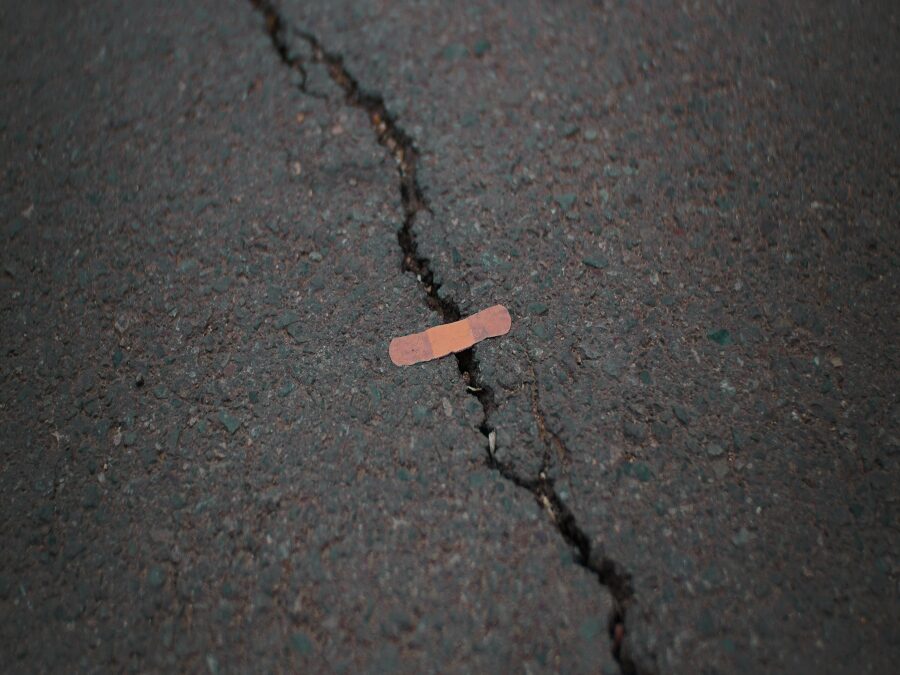
She has a small scar behind her left earlobe and I wonder if she knows that I’m aware of it. I’ve always wondered how it became to be and I used to make up stories in my head. Stories involving nipping puppies, or a renegade fishing pole cast when she was 13. Then came college and being on and off again and separated by an ocean. Then the marriage and children and parental responsibilities and less and less time for ourselves. There was no time to talk, no time to think about the scar. There was no time anymore. Then there was the separation, but I still had hope until I was handed the bundle of paperwork one day at my door. I nearly dropped my drink. All these years, memories, placed into legally formatted documents with spots for my signature. Now I have nothing but time to think, nothing but time for another person. I’m sitting here at my kitchen table wondering if her next lover will notice the small scar behind her left earlobe. I fear they might. I fear they may ask what it is from. I fear that she may tell them.
by Fractured Lit | May 24, 2022 | contests

fast flash challenge
judged by fractured lit editors
Round B Closes on December 1, 2022
submit
This challenge is going to be a bit different: we’ll have two Rounds, and you can submit to both.
Each round will have it’s own prompt, and after both are complete, we’ll select the top 20 writers from each to enter the Finals (no additional fee). In the Finals, you’ll receive a brand new prompt and have another two weeks to write your best new story.
It is not required to submit to both Rounds! Once you’ve submitted to Round A, you’ll have the same chances as anyone who submits to Round B. Each will have their own reading fee as well, and you are welcome to submit to both to double your chances to earn a spot in the Finals.
We’re excited to offer the winner of this prize $2000 and publication of both stories, while the 2nd and 3rd place winners will receive $300 and $200 each and publication of their stories. All entries will be considered for publication. The winning stories will be chosen from the final round.
For this challenge, we want stories based on the theme of “Hauntings”. We want writers to tell us stories of characters who can’t let go, who reach into the depths of themselves and the world around them. Show us metaphorical ghosts and illusions, show us desires gone wrong, relationships splintered but never forgotten. Consider new ways of putting your characters into situations where they fight with the past, where secrets are revealed, and hearts are turned cold. The stories don’t have to include ghosts or the word haunting!
- You write some micro stories! 300 words or fewer for each story, and make sure it utilizes the prompt above. Every submission should be written and original within this 2 week window.
- You send us your stories! Each submission into the challenge of 3 stories or less has a $20 reading fee. Make sure to put all the stories into a single document. Double-space your submission and use Times New Roman 12 pt font, in English only please. Every story will be considered for publication in our regular issue as well.
- In January, the Finals Round begins! We’ll announce 40 finalists and will give them a new unique prompt and a new 2 week window to submit 3 more 300 word stories. (No new fee required.)
- In February 2023, we’ll announce the resulting winners from the new stories! $2,000 to the winner with the best 300 word story, and $300 and $200 to second and third place, and all three will have their selected stories published on Fractured Lit.
Using the prompt above please remember that we’re searching for flash that investigates the mysteries of being human, the sorrow, and the joy of connecting to the diverse population around us. We want something new. Something that scares as much as it resonates; stories that help us discover the roots of desire and conflict, that shimmer on the page, that keep us reading, and wondering long after the last period on the page. Transport us from the here and now to a new land of discovery, a new way of being terrified, a new way of embracing all of the ways we show our humanness. Fractured Lit is a flash fiction-centered place for all writers of any background and experience.
Best,
Tommy and the Fractured Team
guidelines
-
-
- Your $20 reading fee allows up to three stories of 300 words or fewer each per entry-if submitting three stories, please put them both in a SINGLE document
- We allow multiple submissions-each set of three flash stories should have a separate submission accompanied by a reading fee
- Flash/Micro Fiction only-300 word count maximum
- Simultaneous submissions are okay-please notify us and withdraw your entry if you find another home for your writing
- All entries will also be considered for publication in Fractured Lit
- Double-space your submission and use Times New Roman 12 pt font
- Please include a brief cover letter with your publication history (if applicable)
- We only read work in English
- We do not read blind.
- Some Submittable hot tips: – Please be sure to whitelist/add to contacts so notifications do not get filtered as spam/junk: notifications@email.submittable.com– If you realize you sent the wrong version of your piece: it happens. Please DO NOT withdraw the piece and resubmit. Submittable collects a non-refundable fee each time. Please DO message us from within the submission to request that we open the entry for editing, which will allow you to fix everything from typos in your cover letter to uploading a new draft. The only time we will not allow a change is if the piece is already under review by a reader.
submit
by Margaret MacInnis | May 24, 2022 | micro
Her first love stands in the doorway, a lanky licorice stick of a boy, all words and high tops, sweet and chewy, palms touching the door frame. Insomnia carries him to her, a sleepless offering for bare feet pacing a hardwood floor. If she lingers too long in this doorway, she fears she may vanish like rub my thigh and make a wish.
While awake in the dark, memory performs, so she says no to the orange pill her Magus doctor of a husband promises abracadabra delivers sleep. She prefers to feel the hardened sweet pea of memory beneath her mattress. She prefers to wander the hardwood night draped in gauze with a kernel trapped in her back teeth, wedged too deep to extract. Wedged in that tight spot between crags where spaghetti-strapped nymphs exposing crescent breast moons catch their salty breath. When she yawns, so do these girls, her students in the daylight hours, greedy fledglings in the nest, beaks open, begging.
Dropping the orange pill into the toilet, she sees her reflection in the torrent of the flush. Some nights she considers waking the Magus doctor husband. But instead she follows the licorice path to the backyard flower beds and lies down eyes closed, barking back at the neighborhood dogs, barking so quietly that she cannot hear the rainfall. Abracadabra, she opens her eyes to the Magus standing over her opening his umbrella.
by Fractured Lit | May 19, 2022 | flash fiction, micro, news
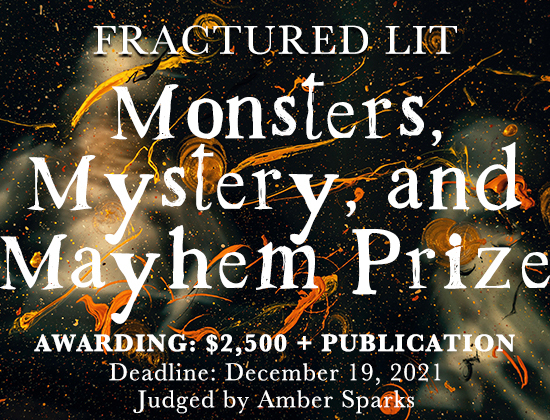
1st: Place: At the Bottom of the Well is a Home by Laur Freymiller
2nd Place: My Brother, Named and Unnamed by Steven Sherrill
3rd Place: Hair, Teeth by Josiah Nelson
Shortlisted Titles and Writers
A Modern Fairytale by Amy Wang
Double the Fun by Ryder Collins
Monster Diary by Pedro Ponce
Bottom of the Food Chain by Kristina Saccone
a woman, the mother, the bird by Michelle Templeton
Omigaa by Chip Houser
Escapologist by Susan Wigmore
Breathing Room by KC Mead-Brewer
Flesh and Blood by Ellee Achten
Tribute by Timothy Boudreau
Selkie Wife by Roo Hocking
Hypnos and the Mother by Lyndsie Manusos
Princess Pea of Sangankallu by Rosaleen Lynch
Blood Honey by Shannon Ratliff
A Love Story by Jen Knox
You Ain’t Heard of the Buffalo Man by Jacob Martinez
Vampires in the Basement by Adam Hunter
by Nathan Alling Long | May 19, 2022 | micro
Sara’s building tiny huts made of mud that she hollows out with her thumbs and then covers with sticks from the wood chip pile at the edge of the playground. She’s trying to create the village like the one she’s seen in pictures from the National Geographic that rests on the coffee table in her living room.
Jason is squatting next to Sara, helping, which means doing nothing but telling her the village looks great. Now and then, he glances over at the boys playing king of the hill on the chip pile, wishing they’d let him join, then he looks back at the huts and thinks how it must feel inside them, dark and quiet, like his room at home.
Arnie stands on top of the chip pile, beats his chest, and roars like a lion, for no one appears to be able to knock him over without getting knocked over himself. He thinks of himself like his father, a police officer, looking over the playground, keeping everything in order.
While Jackie, the only girl on the pile, pushes her way up the hill, undeterred when the other boys gang up on her, as though the pile of chips is theirs alone to fight for. She looks at Arnie and thinks of her father, who is always correcting her, always telling her no, then calculates her move, how if she grabs Arnie’s ankles and pulls just right, he’ll tumble down and she will rise up.

Recent Comments