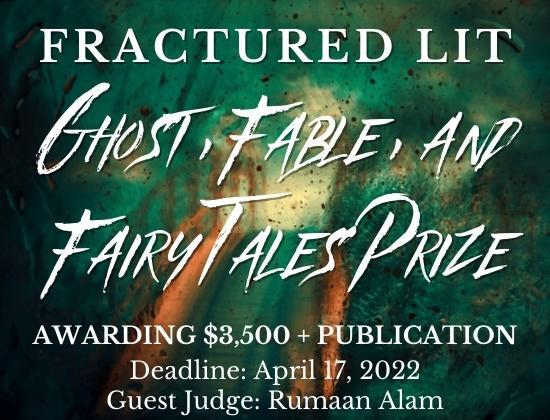
by Fractured Lit | Jul 19, 2022 | news
- Missing
- Cracked
- They Are the Wild Ones
- A Ghost Story
- How to Stitch the Emperor’s New Clothes
- We Sleep Within the Vast Sadness of the Mountain
- A Visit from the Park
- Salty Feet
- The Painter
- Dark Crescent
- How Boys Get Their Wings
- A Son’s Visit
- Level 7
- Lair
- YETTA AND THE OLD
- Fish Folk
- MY ANALOG
- Found
- Ma’at
- The Waking Spell
- Home Remedies Or: A Guide for the Afflicted
- Fusion
- Hobgoblins
- the silk farmer
- Nettles
- Skin Beetles
- Goldie and Bear
- Ghost Sweat
- It’s Still There
- Cold Comfort
- The Extractions
- Mimma and Rocco
- Lost Continent
- The Lioness In Winter
- Stop/Motion
- My Desert Child
- The Matchstick Girl
- In Spirit
- Man-Made
- Tell Us Everything You Remember About Mosquito Creek
by Annie Frazier | Jul 18, 2022 | flash fiction
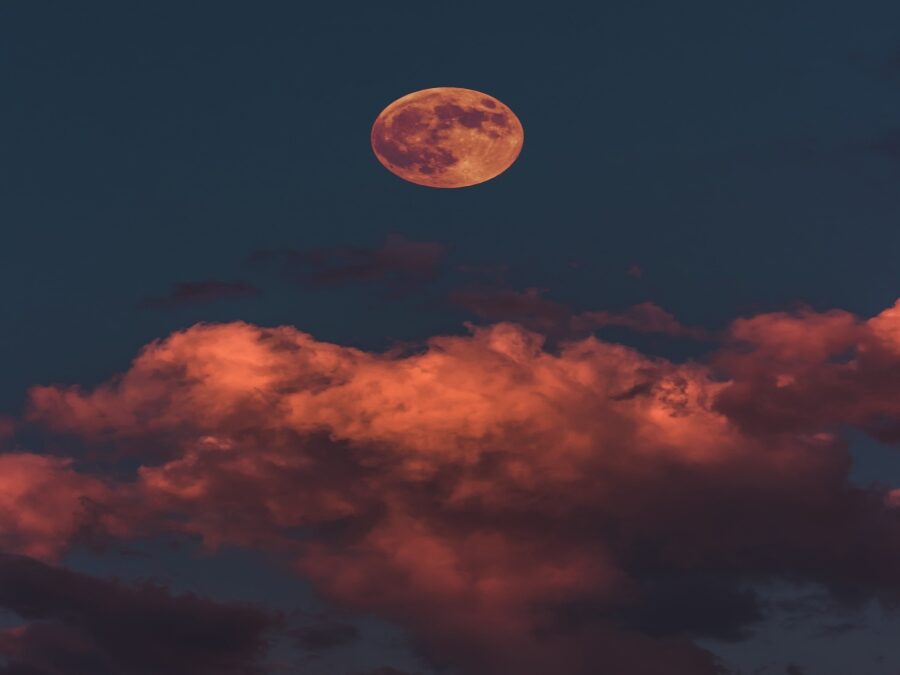
Tonight, I make my return to the water. The weather is warm, the moon full, the time right again to take stock of all I’ve removed and dropped into the deep black lake behind my home.
I wrote and sunk the first message a decade ago, now. Recorded my confession on paper, rolled it scroll-like, slid it down the throat of an empty glass Coke bottle, reattached the crimped red cap with noxious globs of superglue. The thick curved glass magnified and distorted the tight coil of my secret—
My Dear,
You aren’t real, so now’s the time to write. I’ve tried wanting you, willed myself to feel the rush of gooey hormones. I fail. And fail again. If you ever do come clawing into the world, you won’t know this secret. I’ll transform. Surely I will. I’ll shed this skin and glow with expectation. I’ll wear new skin—warm—to which you’ll press round cheeks. Surely. Surely I won’t fail even at this if you ever arrive?
With love I cannot fathom—
I fetched cement mix and a bucket and cooking spray and a hammer, the last a housewarming gift from my father. I stirred water into the dust, pressed the sealed bottle into enveloping gray slop, scattered a fistful of shimmering blue marbles across the sticky surface and mashed them down secure, one by one. Next day, once mud had set to stone, I gripped tight the hammer’s handle, busted the bucket, peeled away greased plastic and stashed the heavy gray plug in the darkest corner of the garage until the next full moon, when I hefted it to the lake and plunked it into the water and watched my secret slip fast away.
Took a year for me to make another confession—a memory of a man, recurring dream with no ending, a wispy haunting. Three lines of text, and then: roll, slide, glue, mix, bust, peel, heft, plunk, disappear.
Secrets flowed out of me quarterly for a few years, then monthly. I sunk them all, good riddance, careful removal of my dark gnawing parts.
I crafted a placid smile, went about life. Wife. Friend. Worker.
Then the baby came, pulling much from me, reshaping my body soft. Mother.
I adored the baby from moment one. I did and I do. She and my husband and me, molded into family, a new set of selves in the world. So much more to tear and carve and hollow, though—plunk plunk plunk, discarding myself piece by piece into the lake.
So little left, I hardly recognized my new sleekness, the gaunt whittled thing I’d become.
All that time, I’d hoped to muffle the noise of my secrets underwater. Instead, I heard a new sound. Always in my ears, that lapping of lake water against pebbled shore: waiting in the carpool line, arguing with passion at PTA meetings for longer recess periods and music and art and story-time, watching my darling toddler-chubby girl struggle to learn first and second position in her pink tights and tiny black leotard sagging at the rear. Always in my ears—a faint whoosh and trickle, calling.
So I bought a diving light and began to visit my scattered, sunken selves on full moon nights in summer only. Each year, winter has frozen the lake and desiccated me. I’ve spent the cold months gulping water from a bottle refilled hourly, spreading thick lotion over scaly skin, filling baths nearly to the tub’s brim. Me sliding under the surface, closing my eyes, holding my breath. Seconds and minutes stacking like bricks on my chest. I’ve gotten good at it, learned to be still within myself, learned I can wait and wait to breathe again.
Sometimes I hear the muted tones of my daughter’s voice lilting, Ma-ma Ma-ma, from the other side of the bathroom door. And shortly thereafter my husband’s deep rumble—Mama’s resting. Let’s let her rest.
Tonight, I make my return to the water. Well after midnight, family asleep, I shed my clothes and loosen my braided hair. The air is thick and summer-damp though it’s only early June. I walk down the sloped yard to the lake, moonlight silvering my skin, mouse-brown hair wisping at my waist. Bare feet against pine straw. Sick-sweet scent of a neighbor’s dryer sheets vented into the night. The banter of two owls.
From the creaking dock, I survey the black water, the surface stillness, the mist rising wraithlike. My skin glows bright and I arc my body to dive, breaking the surface with hardly a splash.
I swim down down down, releasing air in mercurial little beads, and when I reach bottom, I turn on the diving light—thousands of blue marbles glinting, enlivening the jagged graveyard I’ve made of myself.
I touch fingers to my stones. Slip of green algae, grit of cement. I know each one.
Hair floating gauzy, I press my feet into sludgy lake-bottom, launch myself toward moonlight and break back into air, gasping but full. I dive again. Again. Again. I dive until I no longer need to gulp air above the water’s surface, dive until my body feels silver-skinned, flattened and thinned, sliding swift and silent through murky water, between sunken tombs. Home again and nearly whole.
by Claire Polders | Jul 14, 2022 | flash fiction
Sixty minutes before she steps in front of a speeding van, she blenders bird seeds with berries for her vegan twelve-year old, who dirties their kitchen each Saturday for some type of raw bake-off, but cannot get up early enough on schooldays to mix her own shake. As a mother, she practices patience. Her smile tempers, yet never quite masks the discontent beneath her Dutch exterior. She looks like she’s haunted by a dreaded tampon jingle or smells her own rancid blood.
Fifty minutes before she loses her breath in a death-threat flash, she secretly dictates a dentist appointment into her husband’s calendar and sets up a reminder for seven days ahead. She should neither startle him with a sudden visit nor let him know about the event for too long in advance. As a wife, she protects. If she lets his anxieties spin out of control, the whole household will suffer. There are limits to what their healthy diet can cure.
Forty minutes before the driver hits his brakes with the power of blind rage, she verifies in her mother’s carelog whether the scheduled caregiver has checked in on time to drive her mother to the oncologist. As a daughter, she’s at a distance. In her early forties, when she herself experienced a cancer scare and vomited in buckets, she stopped trying to gain the love she had missed as a child. She’s a confident woman. If only because she refuses to be in a story where people see her flattened under a misery the weight of a truck.
Thirty minutes before small-town bystanders look up from their phones and applaud her, she sends an emoji-rich message to her bestie, who suffers from envy as though it were a chronic back pain. As a friend, she condones. Each time she meets with such a special person in her life, she feels as though she’s spreading a picnic blanket under a blossoming jasmine tree and is handed an elixir. The pleasure she derives from holding hands can be greater than from sex.
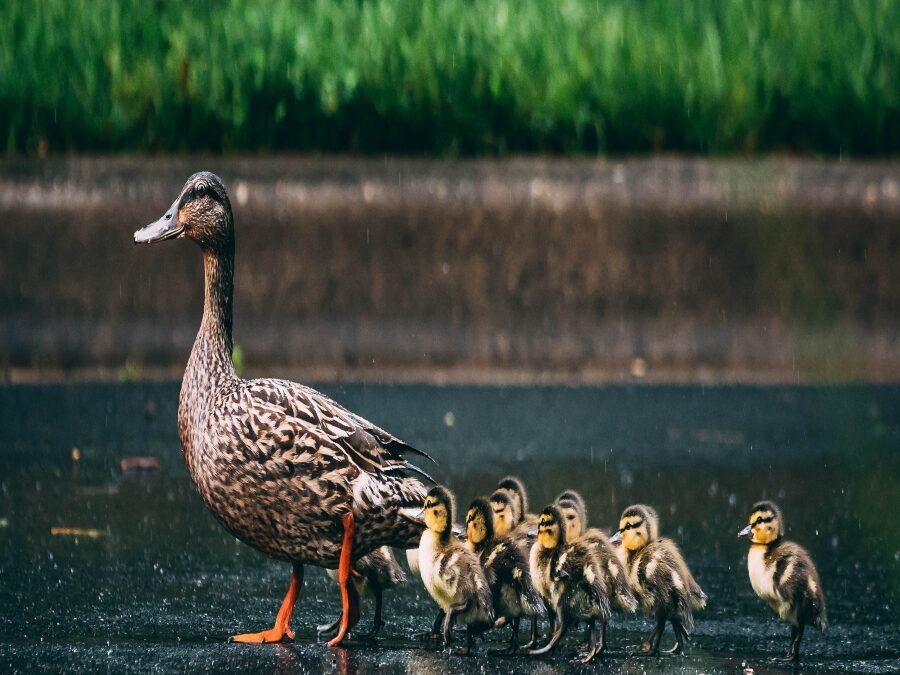
Twenty minutes before she spots the family of ducks crossing the street in a line, she calls her new team member with detailed instructions on how to prepare the brand-identity presentation later that day. Last but not least: The smell of fresh coffee is key. As an employee, she goes beyond the call of duty. Not in the hopes of advancing her career, but because she cannot bear to be a spectator of a catastrophe.
Ten minutes before she bursts out laughing at the thought of being a brave woman for the sake of seven birds, she unintentionally catches an eye and drops her saved dryer quarters in a held-out can. As a heroine, she is pathetic. Who has time for saving the world? Her father, apparently, who moved to Oaxaca at the age of seventy-three and became an activist for the Mixtecs. She turned the news of his departure over in her hands, like a sharp thing she’d picked up from the grass. Is it true that she has his jaws?
At the time of her near death, she steps off the sidewalk into traffic, not seeking to shatter her bones, yet distracted by the unexpected image of herself as a broken vase, a woman in jagged pieces. The van screeches to a halt in a cliché she fails to notice. There’s the stink of burnt rubber, and a memory flickers, ghostlike. As a child, she was a theater talent. There she stood on the makeshift stage of their shoddy living room rug, performing a self-written play in a self-made costume, hair in a ponytail hidden beneath a hat, acting out all the parts and getting applauded by the merry adults, including her mother, for so convincingly being anyone but herself.

by Susan Perabo | Jul 11, 2022 | flash fiction
That fall we spent our Saturdays deep in Amish country. We didn’t live there, but Becca’s boyfriend did, forty minutes from our McBurb near Reading. The farmhouse supposedly belonged to the boyfriend’s uncle, but I never saw an adult in all the times we were there – it just seemed like a bunch of cousins and friends were having a nonstop party on the property, most of them high school dropouts like the boyfriend, who Becca’d met in rehab. The barn was full of old minibikes and four wheelers, and anybody who showed up at their house could ride wild across the bumpy pastures, which is why I tagged along to begin with. The older kids would sit on the sprawling porch disregarding their rehab, and me and one of the younger cousins would go out on whichever bikes were gassed up. If you got far enough from the house you could see the Amish farm that butted up against the uncle’s property, and sometimes you could see a hatted man on a plow and some tired-looking gray horses, and once the cousin said, “They’re fucking crazy,” and though I had no reason to defend the Amish, and was just being contrary, I said, “They just want to live like old times,” and he said, “which is fucking crazy.”
Becca and I had been in cahoots about the goings on at the farmhouse ever since we’d first visited. Our parents fully expected her to lie to them, but me they still trusted, so when I said that it was good clean fun – adults present, well-maintained minibikes, video games, guys playing guitars – they were desperate to believe it. Once I let it slip that some of the kids smoked cigarettes, because I sensed their trust in me could be further cemented by the “accidental” disclosure of minor sins.
“My little hero,” Becca would say. “How’d I get so lucky?”
I ate this up. She was my greatest friend, my protector, my third and favorite parent. Rumor had it she’d made me laugh when I was only a few months old by standing over me and yoyoing so that the yoyo came centimeters from my nose but never touched it. The thrill, my mother said once in a family meeting, to the psychologist. His face… the absolute joy. She got misty, as she did all the time at those meetings; when she looked at us you could tell she was looking at our baby selves.
Afterwards Becca often quoted this moment to me, though not with the mocking voice you’d expect. The thrill… she would say dreamily, driving home stoned from the boyfriend’s house, into the western glare of late afternoon. His face… The absolute joy…
Often, on that state highway back to civilization, we saw buggies. There was a farmer’s market near our turn-off; when we passed it, we’d see horses lined up in the lot just like cars.
The buggies moved slowly along the state highway, straddling the line so that half the buggy was in the car lane and half on the shoulder. It wasn’t highly traveled but the speed limit was 55, so when my sister pulled off the dirt road and onto the pavement she always gunned it into the sunset. She hadn’t been driving that long, less than a year.
When she turned that day and gunned it and I felt the bump, I didn’t understand at first what had happened. Later I understood it must have been a hoof, that she’d shot out into the glare and somehow missed the buggy itself but clipped the hoof of the horse in its dutiful trot. The horse spilled down the embankment, dragging the buggy with it. Becca spun around to look and crossed into the oncoming traffic and a truck horn shrieked with such fury that it seemed to propel our car back into its own lane, and in her swerve Becca overcorrected and we spun and skidded to a stop on the shoulder facing the way we’d come, the buggy below us in a ditch, the black horse on its side, a hatted man in suspenders already bending over the horse’s face. A boy, maybe eight or nine, sat on the bench of the titled buggy staring up at us.
“Jeeeeeeeeeeeeesuuuuuus,” Becca said.
Already, oncoming cars were slowing, and I understood all at once that when the police arrived and found Becca fucked up in the driver’s seat that she was done, finished, that the trouble she’d been in before would be multiplied by a thousand, that so far she’d gotten away with her many transgressions by coming from a nice-looking family with kids who went to rehab instead of jail. But that would not save her this time.
“Switch!” I shouted.
She turned and looked at me blankly.
“Places,” I explained.
She jolted back into herself. In a hot second, our seatbelts were off and I couldn’t even say which one of us went over and which went under but five seconds later we were sitting in opposite seats, huffing. Later we would explain that she’d been sick and I had offered to drive, and no one understood this but no one stepped up to disprove it, either. Only the boy knew — he was still looking up at us when I stared down at him from the driver’s seat, my hands gripping the wheel.
His face was pale and round and flat as he regarded us. Maybe it was his brown hat, or the harsh angle of the descending sun, or what had just happened to him – but his face was as white and impassive as the moon at its furthest point, not the breathtaking yellow moon on the horizon but the cold white hole in space, and I only paused for a moment, hearing a siren in the distance, before emerging from the car and announcing to the moon and the man and the dead black horse, It was me.
by Iona Rule | Jul 7, 2022 | flash fiction
My uncle had a spotted pig, called Stripe. Which tells you a lot about my uncle. It started small but it got big, as pigs do. It was still small when my aunt left, sick of the smell of pig shit and the endless speculations on the weather. She packed her suitcases into her red car and drove down the track, bound for Lord knows where.
That’s what you get, Mum said, for marrying city folk.
After school, I’d cycle to my uncle’s farm. I’d pump my legs imagining I was a getaway driver for some notorious gang. The dust would billow behind me like tyre smoke. My uncle had a lot of pigs, not just Stripe. There was an old sow called Marilyn who would let me sit on her back and would prise her velvet nose into my pockets for sherbet lemons. I kept away from Stripe. He stared at me from the corner of his pen. He didn’t look at me like pigs did. He looked at me like he knew every greasy secret I’ve ever tried to hide.
My uncle fed Stripe. I saw him once, filling the trough with the things my aunt had left – flounced dresses, photos and lipstick stains. He’d eat them up, grinding them down until nothing was left but a dusting of glitter. It wasn’t typical pig feed but he grew fat on it nonetheless. My uncle said no one understood him like Stripe did. He was probably right.
Stripe grew so large that he busted right of his pen. One morning my uncle went down to feed him and he was gone, leaving a mangled knot of wire behind. Stripe ran loose around the countryside for weeks. He chased cars and killed sheep. They said there was nothing he wouldn’t eat: tractor tyres and hen coops were all devoured. At night we heard him roaring. We didn’t dare go outside. Our daddies formed an armed escort around our school bus and the door remained barricaded with broken desks during our lessons. He never killed a person, at least no one we knew. Although there were rumours about a drifter who disappeared. He did get Rambo, the Mcgregor’s dog, though. Tore him to shreds, poor thing. It wasn’t long after that that they got him. They shot him square between the eyes down by the bridge. They said he screamed when he fell. Afterwards, they strung him up in the main square, between the library and the war memorial. People posed for photos with the carcass and later we roasted him at the summer fête. The town smelt of bacon for weeks.
One night, months after, I heard Dad drunk with his friends talking about Stripe. They said that when they split his belly open it all fell out: the dresses, photos, and gold bangles. It had poisoned him, they thought.
That’s what love can do to you, Dad said. The men all nodded and finished their beers in silence.

by Fractured Lit | Jul 1, 2022 | flash fiction, micro, news
- Caterpillar Killer by Shastri Akella
- Dirty Shirley by Shannon Bowring
- Giving Up by Catherine Cade
- Picking Up Stones by Brad Clompus
- In the Closet by Grace Elliott
- Ways of Karst by Jamie Etheridge
- Sea Bugs by Amanda Hadlock
- Endless Spoonful by Susie Hara
- Charlotte Sometimes by Eliot Li
- Flossing by Anita Lo
- Arcade Neophytes by Sarah Matsui
- Luna by Dawn Miller
- July 1964 by Cara Olexa
- Dust by Terri Pease
- Spatchcock by Sarah Rosenthal
- Your Lover, The Clown by Iona Rule
- No Matter How Pretty They Look by Kristina Saccone
- The Magic Kingdom by Eliot Li
- Coefficient by Phillip Sterling
- Remember Your Goals by Michele Zimmerman
- Trauma Becomes You by Karen McKinnon
Judge Deesha Philyaw’s Anthology Introduction:
One thing that struck me about the twenty surprising and arresting stories I selected for this collection is that none of them are about the pandemic. There are no references to COVID-19 nor to the perils and uncertainties of pandemic life. And yet, the stories are very much of the moment. The characters in these stories are people just trying to hold on––to life or what’s left of it, and to those whom they care about.
We’re living in both extraordinary and ordinary times right now. Like the characters here, we’re all aging and some of us are caring for our parents as they age. Some of us are remembering who our parents were and what that cost us. Like the characters, we’re falling in love, and we’re breaking up. We’re having babies and we’re losing babies. We’re screaming. We’re grieving. We are heartbroken. We’re dealing with the cruelty of adolescence (and of adolescents). We’re fighting for control. Deep down, we crave a reprieve from it all. We want to get back to normal, whatever that is. In one story, normal is a troubled couple having sex in The Haunted Mansion at the most magical place on earth. Nice work if you can get it in.
All of the stories here embody the best of what flash can do. With intimate, precise language and voices that are sometimes raw, sometimes tender, these compact stories illuminate deep truths about love and survival. Their themes are both timely and timeless. I don’t think it’s accurate to say that these stories offer hope. But I can say that in reading them, I felt less alone.
Deesha Philyaw
June 2022
by Beth Hahn | Jun 30, 2022 | flash fiction
There are places where everyone wants to buy a house, but that’s not here. We have empty subdivisions. We have coyote in broad daylight. Our hospital is flying at half-mast. This used to be a steel town. Slag pits line the highway. The sun sets behind mountains of shattered stone.
Do your magic! the real-estate rep writes when she sends pictures of the house. I blur moldy faucets and overexpose smeared windows. I clone-stamp wallpaper.
After rehab, I trained for two weeks without pay to do this job. I could’ve learned in two hours, but I had to do exercises until the picture of the woman with a high ponytail in a blue polo shirt popped up and said, Great job!
When Nina Nelson disappeared, things were different. The sheet metal fabrication plant was still open and new Caravans lined the edges of its five AM parking lot. Nina Nelson had a part-time job there. Weekends. The graveyard shift.
She was a couple of years out of high school, and I was just going in. We didn’t look unalike: hair parted down the middle. Frankenstein shoes. Half-shirt.
I always liked monsters. When we were kids, my sister and I used to stumble around our house with our arms straight out in front of us like sleepwalkers. “Nice to eat you!” we’d say when we bumped into each other.
After she disappeared from the plant’s parking lot, my friends told the story of Nina Nelson over hog fries and chicken nuggets and fire worms at the mall. We drove by her house at creep-pace. When her family moved, their house sat empty. Soon, the rest of the houses on the street were vacant, too. It was like all the people turned to piles of dust.
If you ask anyone about Nina Nelson now, they’re just: “Who?”
I talk to my sister on the phone every Tuesday night. We talk on Tuesdays because that’s when the zombie show comes on. We’re wrapped up in the dynamic of the family who keeps their zombie children locked in the basement.
By the time I got a job at the plant, I was pure crystal unicorn magic on the graveyard shift. I scrubbed scum from the microwave in the breakroom. I wiped down safety goggles. I worked the hot press with Johnny Dee John.
I thought Johnny Dee John was ancient, but he was probably mid-thirties. Johnny Dee John wore a thin nylon jacket even when it was cold out. He was a tall man, and the jacket was gray and short. I can still see him with his hands high up in the pockets of his zip jacket. He’d come into the break room and do the usual thing with his locker. Johnny Dee John carried a ton of shit in all his pockets, and he took ages putting it in his locker. I’d shout, “Whatcha got, Johnny Dee John?” but he always ignored me. When he finished putting his stuff away, he’d work the lock. Close it, pull it three times, open it, and repeat the whole thing all over again.
When I told my sister, she made a buzzer sound and yelled, “What is a serial killer!”
My sister is very into true crime. She loves this one podcast where there’s a baby serial killer. “How’s a baby kill people?” I asked, and she was Oh My God. She dropped the phone she was laughing so hard.
Me and Johnny Dee John were on the last team working when the plant closed. We were the skeleton crew. Our final shift was just before Halloween, and Johnny Dee John wore a skeleton costume as a joke. It was raw cold for October and I didn’t like seeing him on the other side of the hot press in a skeleton costume.
After work, I had drinks at Johnny Dee John’s house. I thought he would change out of his costume, but he got some beers and sat down on the brown flowered sofa next to me. I kept looking around. I had the feeling I’d been there before. I asked Johnny Dee John if he had anything besides beer. “Like whiskey?” he asked.
“Sure,” I told Johnny Dee John. “Whiskey.”
I went outside to smoke a cigarette under the porch light and Bingo! I knew exactly where I was. I went back in and said: “You live right down the street from that poor Nina Nelson.” Johnny was standing in the middle of the room holding the whiskey bottle and it was like he was slumped and then stood up straight and the bones in his costume seemed bigger. “Who?” he said.
I knew there was no way he couldn’t know. I drank my whiskey and said good night.
My sister had to come and pick me up from the police station when I went in to tell them about Johnny Dee John and Nina Nelson. I hadn’t slept for a week. I was dehydrated.
“Is there someone we can call?” is all the cop said.
In the car, my sister yelled, “You can’t go around accusing people!” She pretty much forced me into rehab.
By the time I got out of rehab, Johnny Dee John had left town.
All I’ll say now is it wouldn’t surprise me if Johnny Dee John offered Nina Nelson a ride home the night she disappeared.
A lot of people look at real estate when they’re not ready to buy. There’s a house somewhere with high-sheen wooden floors or fresh vacuum trails, where green hills roll beyond pristine windows.
Maybe Nina Nelson lives in such a place. She’s in the next room or downstairs where you can’t see her. Her hair is still parted down the middle. She sits in front of a birthday cake, her name written in icing—just Nina— because no one who actually knew her called her Nina Nelson. Nina smiles. Behind her, the room is dark, but in front of her, the candles are all still burning.
by Julija Stanislava | Jun 28, 2022 | flash fiction
If word gets around, I’ll say you made it all up. I’ll tell them you’re lying, that you’re just looking for attention.
But, if you promise to take it to your grave, then I’ll tell you this:
The professor
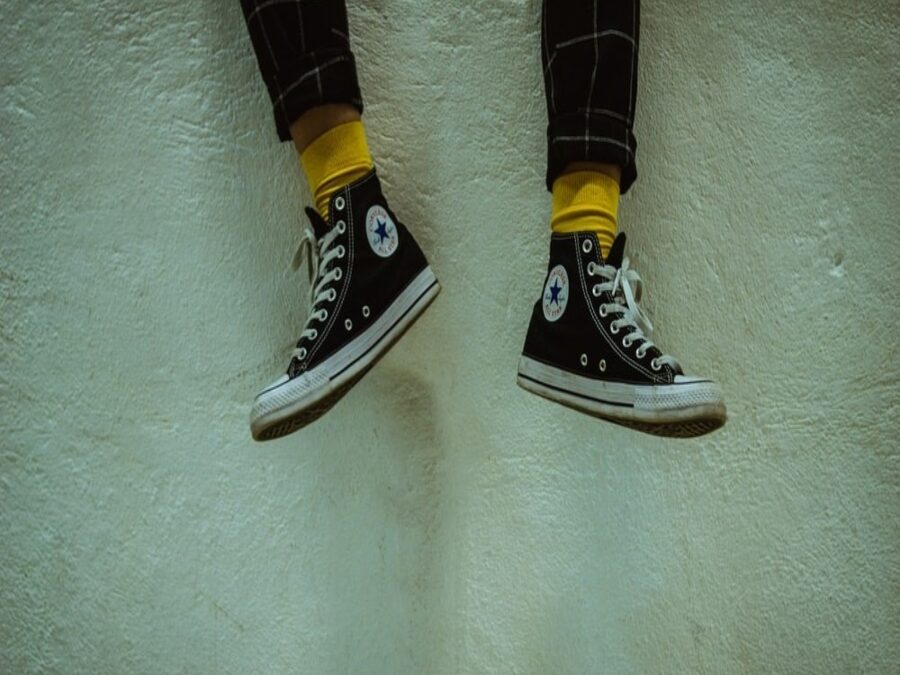
He tells the class to put the subject first. Who is doing the action, but more importantly, why? A subject is important, he says. For that short amount of time, they are the center of your world. He puts up a five-minute timer on the projector. Write. Write whatever comes to mind—I don’t want you to stop until the timer is up. I stare at him, his head of thick brown hair and eyes hidden behind wide-brimmed glasses. He is soft-faced and lanky, unassuming in every way. He wears colorful socks to put his students at ease, even wears old 90s converse to prove it. He’s telling us that he’s just like us. Just like her.
wrote
He’s a writer, of course. English class. English professor. English student. She is so young. He is not. A classic story. He sits in his dimly lit office, always just a little too dark for comfort. The shadows cling onto his shoulders as he fishes out a word from the back of his mind. He hovers over his computer, its light reflecting against his glasses so I can’t see his eyes as I knock. Come in, he says, his voice sticky smooth like the fly tape my mother hangs above all the doors in summer. As a child, I’d once grabbed hold of a strip, and felt the way its toffee-like glue morphed around my small fingers. No matter how hard I tried to pull away, it wouldn’t come off. How can I help you?
a story
I would have never heard about it otherwise–he doesn’t speak of it in class, performing the duty of a humble artist. But the department loves it, and so does the internet. What a masterful piece, how intricately he weaves the details of a chilling mystery, they say. Late at night, when I hope no one is watching, I search for the story. His name stains my internet history, but I finally find it. A young woman in a professor’s writing class. A failed marriage. A sick obsession. He watches her while she writes, reading her stories with such fervor his hands shake. He wants more, he wants her. But he can’t have her, no. What he could not have, the professor writes, he ripped to shreds like a lion with its prey. He digs little pieces of dirt out from underneath his fingernails, sawing off a patch of her hair to keep in his pocket. He smells it and touches himself. I click out of the website.
about her
She is my year, always used to smile, always made jokes in class. He liked that, he would tease her constantly as though they were friends. Maybe she got a little too close, maybe she gave off the wrong ‘vibe,’ maybe she dressed too provocatively–isn’t that what they say? But that’s not the point of this story. We all had meetings with him for our midterms, to talk about the direction of our piece. How can I help you? I tell him I am still unsure of what to write about–that I’d hit a rough patch of writer’s block. He smiles at me as a father would. Try some writing exercises, he says. They always help me. Or even better, take events from your life, and fictionalize them. See where the stories take you. I write a story about her, about how she stopped smiling in class, about how she dropped the course after midterms finished, guaranteeing its stain on her transcript. The professor says nothing of it–pretends she never even existed. With hands frozen in the winter air, he pulled a maggot from her body, pressing it between his fingers until it revealed soft pink flesh. When I get my midterm back from him, a note is scribbled at the top with red ink: fantastic job – she seemed so real.
death.
Every now and then I see her on campus. I always want to talk to her, but I never do. She had new friends, and a new major. Someone told me she doesn’t make jokes in class anymore. One day, I stop seeing her altogether. His story says she’s dead, my story says she disappeared like a magic trick. The top hat is pulled off, the rabbit within, gone. Which is the truth? Is there a truth to tell? One of those endings could have left her alone; allowed her to finish the class in peace so she could graduate. Her dark brown eyes, wide as she stepped out of his office during an empty Tuesday afternoon. My friend had gotten dumped just an hour earlier by some girl he’d met at a frat party, showing up to my dorm with a water bottle of vodka. I left him there to go to my meeting with the professor to talk about my midterm, my writer’s block. She is dazed, arms pressed tightly against the straps of her backpack. She doesn’t look up, the fluorescent lights in the hallway dim against her dark hair. She almost bumps into me, stopping short of my shoulder. Sorry, she murmurs, eyes glued to the ground. Her shadow slips into the stairwell without a sound, the heavy doors clicking behind her. Subject, verb, object.
by M. L. Krishnan | Jun 27, 2022 | micro
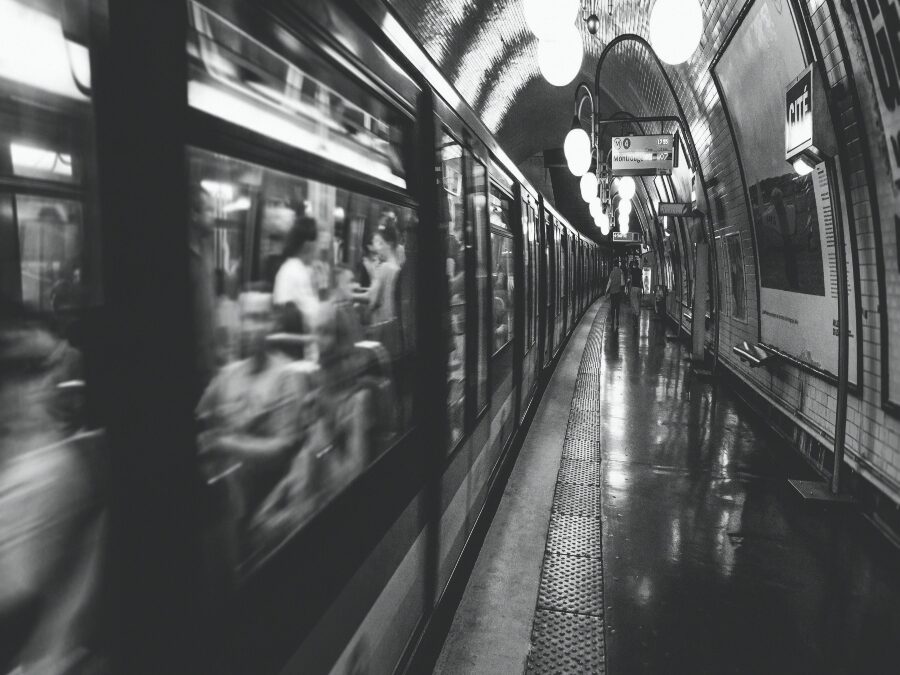
Super fast and super premium. We wished that were true about the greyscale beat of our lives. Its expectations a stone in our gullets. When we died, one by one by glorious one, we were not prepared for these things, as we were only girls. Not before, and certainly not after. On the Thamirabarani, men rode with pulses thrumming under their necks, their mustaches lining banks of teeth as they smiled, as they laughed, as their voices filmed over us. We had always believed that feelings were something that took its time, in awkward fits, in false starts, but in those moments, we plunged right through the earth, through rippling bands of magma, down to its searing core. We were boiled alive by love. We were incinerated. It started with the college boys, benched together on the train in inebriated lumps of arrack and acid. Nightfall skin, their limbs river-reed supple. The boys’ sweat pinpricked our gums in salt, their sinews trellising our fanged teeth. Next, was the kuthu dance man. He boarded the metro at the edge of a drainage basin, when the frogsong was at its shrillest. We could barely contain ourselves. We undid our abdominal cavities for him, letting the tickertapes of our innards loose, the polypeptide rush of our desires. Lourderaj, we breathed his name. We vacuumed him into ourselves, his gold lame shirt a supernova of light in our throats. Then, there was the cavalcade of married men who were all the same—safari suits, hair retreating back into their follicles, mouths livid with betel nut. We held them firm between our thighs. We bloodlet ourselves into their areca red lips as we kissed them goodbye, as we stretched our mandibles over their now-lifeless torsos. On the Thamirabarani we were a consumption. We ate, just like the way we had once been eaten. We ate as though the entire world with its shorelines and crags and oceans were in our maw, as though even that would not be enough, never be enough.
by Sarah Freligh | Jun 23, 2022 | micro
I’d have bet prison, fifteen to life for offing your ex while he slept next to the younger blonde who’d stolen your crown. Or maybe the roller derby, skating endless, sweaty circles alongside women nicknamed Glory Hole and Cuntalingus, girls who’d sharpened their elbows on high school scorn. Or most likely an OD, a quick funeral with a closed casket smothered in flowers smelling of pee and furniture polish, a service where the clueless pastor lists prudence as one of your stellar qualities. But here you are alive in Aisle Five shushing a pale something whose fat legs are threaded into a grocery cart full up with jars of baby food the color of what we used to puke up at parties so we could drink more. I should thank you for explaining blow job to me, for slipping me that baggie full of pills that hotted up my heart until I burned a furnace of calories and finally got skinny. Instead we talk about Lucy, Sherry Pam: Cancer, a stroke, a jealous lover. Once I dreamed they were waving from a boat pulling away from the shore. I don’t know where I thought you were. Driving, I suppose.

Recent Comments