by Fractured Lit | Sep 22, 2022 | news
- Bread
- Attaboy Louis
- Mother’s Keeper
- Before
- Viva Peaches
- Johnny and Janie Cross Country
- What Will We Do With All This Grief
- Here, Hereafter
- Why We Will Always Love You, Vera Knightville
- Bullet
- The Good Hours
- Shore
- No Rhyme Nor Reason
- Only Sky Above and Below
- One Bullet for Annie
- The Jumper
- Castaways
- Waves
- Cibola
- A Middle Finger Flipped on a School Bus
- Horse Poor
- Flight Path
- Loving Ruby
- Dear Girl, Dear God
- Daughters of the Air
- Out from Behind a Rock
- Old Wives’ Tales
- More Than an Acquired Taste
- Boy
- Undercurrents
- All You’ve Heard is True
- Valentine Springs
- Tiny Little Goat
- For Better, For Worse
- Fat Man
- Frank
- Gregor Mendel Never Knew My Father
- Third Marriage
- Matthew’s Ninth Birthday
- If Daphne Still Had a Mouth
- Why I’m Single
- One Thing to Take
- The Boy Bandit
- Saltwater Dog
- Mr. Ambrosio Is an Idiot
by Avitus B. Carle | Sep 19, 2022 | flash fiction
After the war, a corkboard appears in the center of the village. No one knows how it got there. Only that there are several black pushpins puncturing the cork and a message for all the villagers to post their missing children.
Weeks pass and none of the villagers post. They hover around the board, women linking arms in fear of losing each other to temptation. What does it mean, they say, pulling each other close. Their free hands resting on their stomachs.
The men gather in bars and claim the board does not exist. A prank. Something someone misplaced. Only when they are drunk or aware they’ve been away too long again, the voices of their wives echoing in their ears, do they murmur the names of their children, the ones who are never coming back.
The first of a month none of the villagers can remember arrives and someone posts on the board. A picture of a boy with freckles and blue eyes, his front teeth peeking beneath his upper lip. No one recognizes the child. Had he ever been one of them? They feel guilty, the women leave flowers while the men scatter caramel candies and mints long abandoned in their bars.
Someone else posts. An envelope, fat, with stickers of clouds decorating the front. For Mila, they read and try to imagine her. Hair past her shoulders before a rule declared it needed to be cut. Running and smiling while her mother chased her in the yard, ribbons in her grasp. Her father reading Mila stories about brave knights slaying dragons all before she applied and signed and left to train. All before anyone never saw her again.
The villagers fill the corkboard. Pin baby blankets, macaroni art, and candy wrappers. There are letters with no addresses, dolls with one eye shut. Glue sticks and glitter. Cowboy hats and home-made slime. There are pictures. Of Rico blowing bubbles in his mother’s shoes. Tandy covered in mud, mid-roar, “Beware Muck Monster,” written in braille. Carmen with peanuts in her overalls, Nathan balancing ten plates on his head, Cheza on the shoulders of a blurred man, and a boy named “Bean” sleeping on a stump.
However, though the corkboard is full of missing children, the villagers never know who they are. Though their names are written and their pictures are posted, and even though it’s clear someone is posting to the board, the villagers have no idea who.
The women enter the bars and ask the men if they know. No, they say, and the women sit and drink enough not to mind the burning in their throats. The men hover around the board, ask any women when they pass by half questions. Did we…? Did you and I? Is that our…? No, they say, and the men retreat to their homes. Watch the door until they grow tired of waiting for a woman they can’t remember.
Winter freezes the corkboard in the center of the village. Some of the villagers try to carve out the pictures and toys and blankets but everything shatters so the villagers choose to abandon the board instead. Agree to try again in the spring.
When the weather warms and the villagers tire of waiting, they go to the corkboard and find nothing there. No board. No blankets. No letters or pictures. A man steps forward, the sleeve where his left arm used to be pinned to his shoulder. He has freckles, his front teeth peek from his upper lip, and he asks where have all the children gone?
And all the villagers lower their heads including someone wearing their mother’s shoes, a string of bullet wounds dotting their chest. A woman with a silk scarf tied around her eyes, with mud on her teeth, and in her hair. A man balancing ten sets of dog tags in his palm. A woman with burns wrapped around her neck and chest sucking on salted peanuts, the discarded shells at her feet. The man in the distance, his arm in a sling, who sits with his legs crossed on a stump. They weep and they link arms and they whisper to one another, where have all the children gone?
by Lannie Stabile | Sep 14, 2022 | contest winner, micro
Today is my double mastectomy. Today is also my birthday. As he numbs me, the anesthesiologist wears a pink pointed hat, the string, thin as a Tuohy needle, stretched tight under his chin. Nurses patter around the room, prepping the procedure and blowing sound makers shaped like scalpels. I was so sure cancer cells would look like clumps of raw hamburger: clotted and bloody and dead. But when steady hands reach into the flaps of my left breast, then my right, they retrieve something much more alive: confetti. The surgeon lobs the fine, colored paper into the air and cheers.
by JR Walsh | Sep 12, 2022 | contest winner, micro
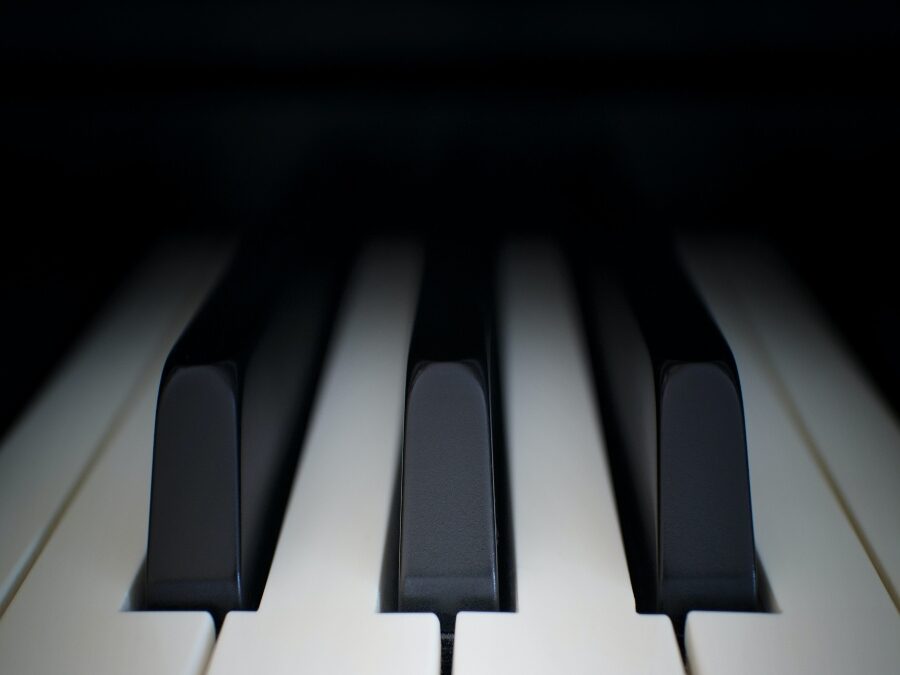
A baby grand piano appeared after Billie moved in with her son. Fourth-rate elegance. Plywood garbage.
The stroke took away her walking bass. Billie couldn’t trust her left hand to play the blues, even after two years of physical therapy. Drinking a glass of water was hard enough. Her sense of humor was flat too. She blamed retirement.
Her son begged her to play. No matter how noisy or wrong.
Billie’s screw jar had survived the move. Rusty nuts, thumbtacks, nails, and a pretzel spilled themselves among the piano strings.
With loose fists, she waited for the house to sleep.
by Susan Wigmore | Sep 8, 2022 | contest winner, micro
Demons cavort in the darkness of trees. Slender, knuckle-cracking things, whispering a wasp language. You stop your ears with moss, but the what-ifs and why-nots are siren voices.
So you take scissors to your hair, swap florals for denim and Elvis for Iron Maiden, spike your language with consonants to ricochet. Between your breasts, a rattle-necklace of bones and teeth. You turn to perfect the shape of your mouth in the window’s reflection but see only the beauty of demons haloing your head, raveling your hair. Behind you, the genie-bottle they emerged from shrinks as quickly as its contents multiply.
by Fractured Lit | Sep 2, 2022 | news
1st Place: It’s Still There by Robert McBrearty This is a superb metafiction; a very short story about very short stories themselves, but a story in itself, too. ~Rumaan Alam
2nd Place: Fusion by Diane Kraynak This taut (and funny) story understands that few things are more frightening and absurd than being in love. ~Rumaan Alam
3rd Place: Cold Comfort by Rachel O’Cleary It’s no simple feat to make a story of any length genuinely moving; to do it in so few words is a marvel. ~Rumaan Alam
Regular Acceptance: Fish Folk by Breana Harris & The Extractions by Kim Parko
Shortlist:
We Sleep Within the Vast Sadness of the Mountain by Gayle Burgoyne
Salty Feet by Christine H. Chen
Dark Crescent by Lyndsey Croal
How Boys Get Their Wings by Daniel Culpan
Lair by Kerry Greer
My Analog by Alissa Hattman
The Waking Spell by Meagan Johanson
Home Remedies Or: A Guide for the Afflicted by Libbie Katsev
The Silk Farmer by Malachi Lily
Nettles by Susie Lyddon
Skin Beetles by Rosaleen Lynch
Ghost Sweat by Sherry Mayle
The Lioness In Winter by Blake Rong
The Matchstick Girl by Alex Stein
In Spirit by Ethan Tan
Man-Made by Tessa Whitehead
by Jared Povanda | Sep 1, 2022 | micro
Womb
Cat wants to paint her house fluorescent orange. Call it Crisis. Call it citrus combating scurvy. Cat doesn’t go outside much anymore. She orders in her groceries. She doesn’t answer the doorbell, and whenever the mailman walks onto her porch with another package, she hides until her heart stops thudding in her throat. Cat doesn’t sleep well anyway, so why not? Why not the brightest orange she can find? It’ll be like living inside sunlight, or a womb illuminated by sunlight. Like an egg yolk, spilling. Running free only to be held fast by every waiting crack.
Seed
As Cat purchases cans of fluorescent orange paint online, she imagines someone lifting her house. She will be inside her house, inside her orange house, like a seed inside an orange, and someone who knows what they’re doing will hold her house in their palm (slightly calloused from carving birdhouses, or bones), and they will take a bite. Cat promises herself she won’t scream when she’s swallowed. No, it’ll be like going home. No, it’ll be like finding home again—cozy as a child in a fairy tale. As cozy as a little girl inside the witch’s stomach.
Fruit
Cat wasn’t always afraid. Before she decided to paint her whole house fluorescent orange, she had a wife, and they used to sit outside on their back porch every night as the sun snuffed itself in the mountains. She loved how the night held her body in thrall. But her wife is gone, and darkness presses against the windows with knives. Inside, safe inside her orange walls, Cat watches humidity pucker the paint until her eyes sting. She closes them, and oranges gather behind her lids. Orange trees for miles. Two different hands cupping the same fruit.
by Kaya Dierks | Aug 29, 2022 | micro
But here I am anyway, in the CVS on Perkins and Sixteenth, allowing her to turn me criminal. Like this. Don’t be, like, obvious. See? When she slides a lipstick into her palm, it’s so delicate, you’d think she was lifting a bird. At the counter, three Maybelline butter glosses jammed into the waistband of her jeans, she buys us a six-pack of Budweiser beer from a cashier with adult Invisalign. Her ID says she is twenty-five and from Nebraska, but we are fifteen and from Milwaukee. The trick is, you gotta buy it and be cocky. Like, believe it. Believe you’re from Nebraska. Thirty minutes later and we’re outside under a blank sun, making our brains loose with beer. She gives me a cigarette, which hassles my lungs. I rattle up smoke, and she taps a beat into my right shoulder and hands me a half-gone Budweiser, its mouth open and slick.
She tells me then that the cigarettes aren’t hers. They are stolen property, larcened out of the lockbox in her stepfather’s Honda Civic. She took them because she wanted him to notice they were gone. She tells me this as victory, not confession. And he usually notices. Something in the way she says it tugs me. So I tell her about this theory I have, which is that the saddest human beings on earth are the children left alone in the bucket seats of grocery store carts, fat legs four feet above the floor. I look into her face, the aluminum of her eyes, and I tell her that if I saw the kid in the cart I would take him, snatch him clean out of Walmart, even if his mother ran after me with a cop and a turkey baster and a vanilla sheet cake dripping vanilla. I wait for her to grin, but she doesn’t. She looks at me narrowly. Her eyes are the glass bulbs shoved into light sockets and screwed.
Later, in her busted, duct-taped sedan, we share the three stolen lipsticks and one more cigarette, our mouths just homes for our teeth, passing tubes back and forth until a freeway runs between our tongues.
Originally published in SmokeLong Quarterly
by Fractured Lit | Aug 28, 2022 | interview
It sounds like you’re always writing! How did you decide what stories to put in this chapbook? Were there any that you took out?
I officially started working on Breaking Points in Jonathan Cardew’s Bending Genres workshop when I wrote the first story in this collection “What the Detectives Found in Her Abandoned Car.” It was an unusual story for me to write, but it unlocked something. I realized I could do a whole collection of stories of women and girls at their breaking points. I even got the title that day! Then I did nothing for a long time. When the pandemic started, I realized that I could put together a chapbook—just to see if I could—and started thinking about breaking points again. Most of the stories selected were no-brainers for me. They did well when they were published, got nominations, etc. I considered them my best work in realism. There were a couple that I took out, mostly due to page limitations. Eventually, it came down to: did they meet the theme and were they too similar to stories I’d already chosen?
Let’s talk endings! Why are they so hard to write? How do you know when a story is complete? How much do you rely on the reader’s active imagination?
The majority of the time I write with a mental motor running in the background. When it runs out, the story’s over. There should be a sense of resonance, for sure, and maybe completion. Something has to have happened, even if it’s just a subtle shift. If I can’t land on an ending, it’s usually a sign that there’s a problem earlier in the story. I worry more about middles. I try not to rely on things outside my control as a writer.
Do you ever find it difficult to put characters in a position of danger?
Heraclitus once said, “A man’s character is his fate.” I think about that a lot. I’m not putting characters in danger. We’re surrounded by danger and potential danger all the time. It’s just a question of what’s going to happen first, and that’s going to depend on character and circumstances. That being said, it’s always easier with flash because the characters aren’t around long. “Coming of Age” was my first flash and the reason I started writing flash. I wanted to get in and get out. I’m working on a flash novel now and it is more difficult to write stories where traumatic things happen to my recurring characters. They’ve been through enough!
How did you find the forms for these stories? Do you start with the form first or add the form when you revise/ How do using different forms impact the storytelling?
When it comes to hermit crabs, I never add the form later. The form has to be baked into the story. It has to be essential or it shouldn’t be included at all. I’m drawn to hermit crabs for narratives that I can’t seem to write straight. Sometimes it’s because they’re too difficult, they’ve been told many times or I’m not compelled to write the concept when it’s alone. It’s only when the concept marries the form that it feels right. A good form gives life, movement and meaning to the story. It gives the reader an “aha” moment when it clicks, and that’s invaluable.
How important is it to get the right point of view in a micro or flash fiction?
It’s important to be intentional. I worry more about voice. Is this the right voice for this story? Is this the right tone? Point of view is part of that. I can’t start a story until I hear its voice. So, for me, it’s essential.
There’s a particular violence perpetuated by mothers throughout Breaking Points—Is it possible that our parents have the most potential to harm us? Has writing shifted your relationship with your family?
My mother’s really proud of Breaking Points! She reads the blurbs over the phone to her friends.
It’s a cliché that the people you love the most have the biggest capacity to hurt you. When you’re a child, that parental connection is essential to survival and with that kind of dependence, there’s enormous potential for harm. I think culturally we don’t like to talk about how mothers can be as abusive as fathers. Maybe we want to imagine mothers are incapable of that because it’s much nicer to think so. To think that at least one primary caregiver is required to be good and decent and loving. But everyone is capable of horrors.
Bio: Chelsea Stickle is the author of the flash fiction chapbook Breaking Points (Black Lawrence Press, 2021). Her stories appear in CHEAP POP, CRAFT, McSweeney’s Internet Tendency and others. Her micros have been selected for Best Microfiction 2021 and the WigleafTop 50 in 2022. She lives in Annapolis, MD with her black rabbit George and a forest of houseplants. Read more at chelseastickle.com and find her on Twitter @Chelsea_Stickle.
by Avra Margariti | Aug 25, 2022 | flash fiction
Sometimes I need it to be dark. That’s what I need. For it to be dark. I lean out my apartment window and pluck the midday sun like a plum from the sky. I hold it in my chapped palms, consider the swallow: the bob of my throat, the stone in my stomach, but no. I don’t think I would survive all that light spilling out of my body’s overworked seams.
So I reach for the glass of water left untouched, grown stale with air bubbles on my nightstand. I drop the sun inside like dentures, detritus, and watch the liquid eclipse its light. Watch the sun sizzle, give out.
I lie in bed. That’s all I do. I must lie in bed for a long while, although there’s no celestial body in the sky by which to mark the time.
This time, the one to knock on my door is the old man from the apartment below. When I last stole the moon, I was ambushed by the building’s teenagers, who demanded I hand it back because how would they sneak around after dark without its light? I adopted bravado, asked the leader–older than the rest, a college dropout like me–to give me a kiss in exchange. When she flashed a wicked smile and leaned close, I bolted, dropping the moon out of my pocket like a bouncing ball while her laughter echoed bright off the pitch-black courtyard.
Today, I can tell it’s the old man downstairs from the sound of his footsteps, the uneven gait. One of his feet is half a size smaller than the other. He has to wear special anatomical shoes. Claims in a previous life, he was a pirate king. Got his foot chewed on by a sea dragon.
“Hey, kid,” the old man from downstairs says through the flimsy door that separates the hallway from my one-room apartment. “Did you steal the sun again?”
At least he doesn’t call me girl. Even in the dark, I cannot always trick myself into believing no one in my life sees me that way.
“Did you know?” I speak from my spot over the blankets, too cold in the absence of the sun, but too tired to crawl between woolen warmth. “In nuclear winter, the only way to survive the frost is to find yourself a submarine and travel far underwater, close to the earth’s warmth. I read a science article about it and everything.”
What I don’t say is: I am far underwater.
There’s no warmth here.
Here be dragons, chewing on my bones.
Still, the old man seems to hear this because his gruff voice grows softer. “My daughter said she’d visit this afternoon. She’s only been to my apartment once, during our reconciliation. What if she doesn’t know the way in the dark?”
What if she gives up on me? is what the old man from downstairs doesn’t say.
What if, after everything I’ve done, I’m not worthy of being sought after in the dark?
Still, I hear his words. Yet part of me wants to keep the sun my captive. Because if its shine doesn’t benefit me, if I get enough vitamin D and a balanced diet and even salute the sun during yoga every day but I’m not better, never better–what right does anyone else have to its light?
“Hey, kid,” the old man says. “I was a pirate king in a past life. Maybe the sun really died then. For good, I mean. Maybe you and I hijacked a nuclear submarine and sailed underwater, looking for my daughter.”
I picture the undertow, the warm volcanic fissures spitting magma-hot bubbles. I wonder if we would find new things to salute with the sun gone for good. If, in that past life, I had someone—anyone—who would seek me at the end of the world, to the edge of the earth.
I get up in a single serpentine motion so as not to lose momentum. I grab the sun from its glass prison, water and effluvia of hydrogen and helium dripping between my fingers. Wrenching the door open, I face the old man downstairs, and he looks older and wearier than I remember, all spots and scars.
I shove the sun in his hand, curl the spindly fingers around it into a steadfast fist.
If he’s the one to hang the sun on the sky, maybe his daughter will forgive his vestigial tendencies–pirate king, deadbeat dad–that made him run away from her again and again.
I slam the door in his face, dive under my blankets. Through the weave of the wool, I see sunlight refracted by a filter of seawater, reflected over submarine portholes, dragon scales.

Recent Comments