by Sarah Matsui | Nov 21, 2022 | flash fiction
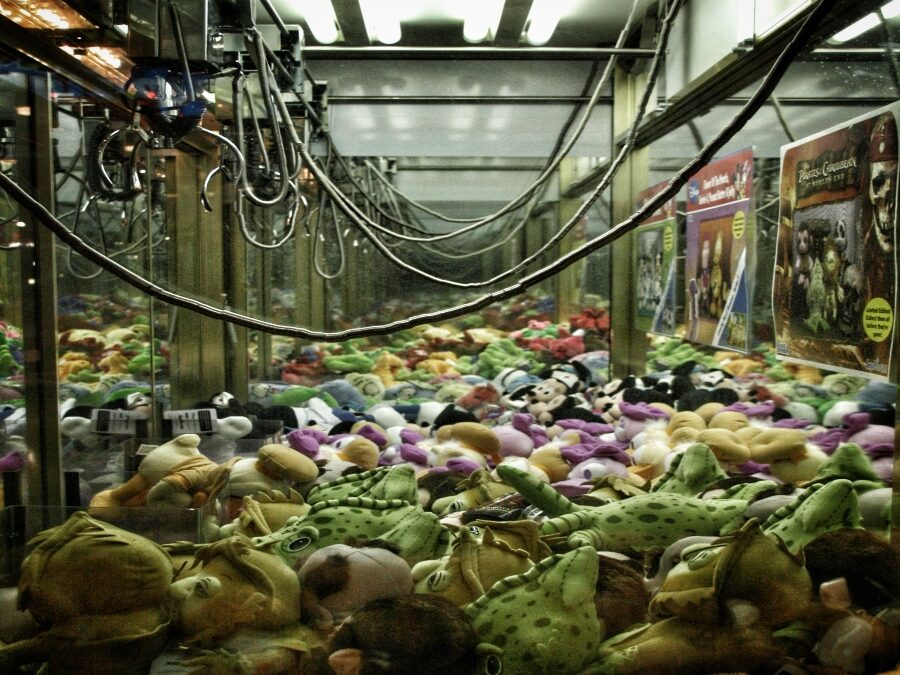
Mom and I got really into the arcade claw machine one elementary school summer.
Handful of tokens, a frappé from the neighboring cafe, ready. We aren’t even coffee drinkers.
Our eyes scan a sea of tightly packed yellow polyester lions with auburn manes.
“哪個?”
“That one.”
We speak different first languages, but I understand her question, and she can see which plush toy I’m pointing at.
This linguistic margin is bridgeable; it’s nothing compared to our contradicting visions for how daughters, mothers, ought to be:
“你怎麼變成那麼黑? 頭髮亂七八糟. 胖死掉.” How did you get to be so dark? Your hair is such a mess. So fat we could die.
No one else but her cares when I play in the sun or let my hair get wild. No one else calls me fat.
“這是你爸的錯.” This is your dad’s fault.
She was the one who chose to marry him.
“如果你是別人的女兒,我不管.” If you were someone else’s daughter, I wouldn’t care.
I had in fact, at various points, wished I were someone else’s daughter.
“我應該回台灣.” I should go back to Taiwan.
Sometimes, I didn’t understand why she didn’t move back to Taiwan.
“我的女兒不是我想像的女兒.” The daughter I have is not the daughter I wished for. “她不聽話.” She doesn’t listen.
None of my friends’ moms hit their daughters; none of my friends worry about taking care of their moms the way I do.
At the arcade though, that fifth grade summer, all this gets placed aside. Under the effulgent glow of this box, we scan the soft contours for what could come loose and fixate on the same shapes, together.
“Yeh!” she exclaims, deposits a small lion plushie in my hands.
We count two more tokens out.
We are a family that coupon clips for Top Ramen. Our clothes are from garage sales that we visit on weekends, rummaging through the discards of other peoples’ lives to build our own. Professional barbers cost money, so she once accidentally gave Richard a haircut that made him look like a skunk, buzzed straight down the middle. I watch her try on shiny size five-and-a-half shoes at Saks OFF 5th, and I watch her put them down.
It feels extravagant to spend money I’m not sure we have.
But Mom and I need more lion plushies.
by Anita Lo | Nov 17, 2022 | flash fiction
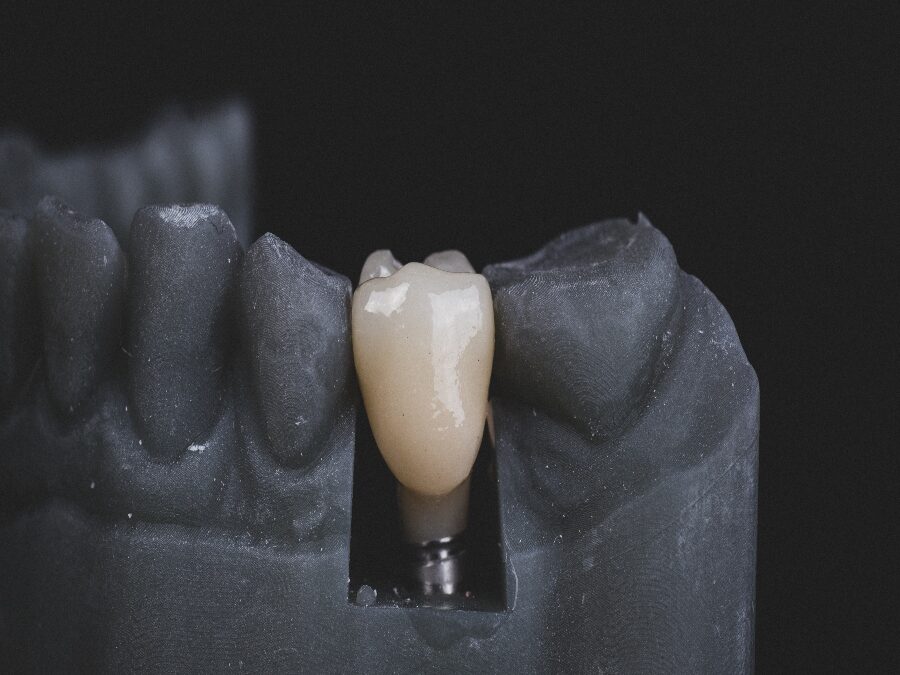
Mom flosses me every night with my limbs starfished across the kitchen counter and my head hanging off the edge. She kneels over me with a spool of minted thread and works the string between my teeth. She says nothing used to come out of there, just berry skins and basil, and I would pop my mouth closed like a little coin purse. Nowadays, cheap rhinestones and cigarettes leap from my gums, and she wipes her hands on an old blue bath towel that’s growing green. Then she sends me to my room where I dream of having a cartoon smile, unbroken upper and lower strips of white for teeth.
For lunch, Mom packs me sliced fruit soaked in salt water so that it doesn’t brown, so that even when cut open for hours it looks fresh. It is just as pristine when I bring it home uneaten. Other kids buy lunch from the cafeteria: cheeseburgers frilled with greens, red-drowned spaghetti, juicy slices of pizza. Julia says it’s gross but I eat her crusts at the end of lunch hour, covering my face in leftover salt and oil. Those nights, the floss gets so greasy and orange that it barely stays wound around Mom’s fingers. She knots it around her thumbs so that it doesn’t slip away, and by the end the tips are purpled like sausages, which makes me so embarrassed for her, losing her grip and killing herself over it.
Julia and I collect little trophies from the classrooms: protractors and staplers and the history teacher’s glasses and the art teacher’s aprons. She hides them in her dad’s car and I pocket them in my mouth. Julia gives me the principal’s mousepad that Mom flosses from between my canines; I grab for it as she tries to toss it over her shoulder. I am almost as tall as her now, but what scares her back is my blood-lined gums.
Mom always says we need to be extra careful because girls in our family are born with only one set of teeth. That others have the option of a fresh start when their adult teeth push the baby teeth out of their cradles, but our family sold that right in order to board a ship and come here. “If girls here don’t like what they have, they pull out the tooth and start over,” she whispers to me while she flosses, a staple flecking her cheek. “But we only have one chance.”
That’s also why she won’t show me her teeth. “We had no floss when I was young,” she says. “They’re full of junk.” She covers her mouth with both hands when she laughs or smiles or shouts. Every time she tells the boat story, our family is at sea for longer and longer, and by now we’re adrift for years between basement apartments and restaurant attics before Mom says, “Finally, I had you.” I imagine Mom at the stern of a ship trying to work a bottle cap from between her molars with her tongue, fingers tight on the gunwale, ocean spray brining her lips.
“Do I floss?” says Julia, draining a can of Coca-Cola in one breath. “I mean, when the dentist makes me.” She crushes the can and hiss-laughs when the aluminum cuts her. I lick the blood off her palm and it’s thick, rich, the flavor of someone brave. I study the veins in the pale of our wrists and suspect that they look the same.
On weekends Mom hard-boils eggs or heats a bowl of fish congee for us to share. I can hardly sit through our sterile breakfast before running down the street to 7-Eleven where Julia is waiting in the car, M&M bags wedged between seat cushions, the school gym’s Exit sign lopsided in the rear window. This week she shows me how to slip bracelets into my bra at Claire’s and how to dine-and-dash, and my mouth grows heavy with jewels.
Mom buys extra boxes of floss now, bulk packs that should last years but that we go through in days, because she lashes me to the passenger seat when she picks me up after school, so I don’t run away, so that she can wiggle matchsticks of salted pear between my lips and floss me again before bed. My teeth snap at her fingers but I swear I am just trying to ask a question.
Over spring break, Julia and I are running from the mall cops, and I trip over a seam in the asphalt, knocking out my top right incisor. Mom finds me in the kitchen holding a towel-wrapped ice pack to my mouth. “Let me see,” she says, and moans when I show her the gap, and then the forlorn bloody pebble in my hand. She puts the lost tooth in milk and binds me to the kitchen counter.
That night, gently exploring the jellied wound with my tongue, I discover a needle of enamel poking through my gum. I wriggle free of the floss and wake Mom, whose cheeks are still lacquered with tears.
“New tooth,” I say, something golden ballooning in my chest. She presses her lips tighter and peers inside, but even she can’t miss the whitish nub barely crowning.
“It’s not possible,” she says, her eyes unfocused.
“You were lying, you’re always lying to me,” I scream. “I’m not like you!” She crumples to the counter and lets me run to my room unclean.
I wake up later that night to a light in the kitchen. Gums itching, head pounding, I discover Mom kneeling on the linoleum, a tangle of floss in her hands. “Come here,” she says, and this time she lies down, arms and legs spanning the counter as if she’s floating in water. She drops her jaw and tilts her head back, and I gasp at all the colors.
by Maria Alejandra Barrios | Nov 10, 2022 | flash fiction
When Mamá’s apron catches fire, my first reaction is to grab Mamá’s body and share the fire with her.
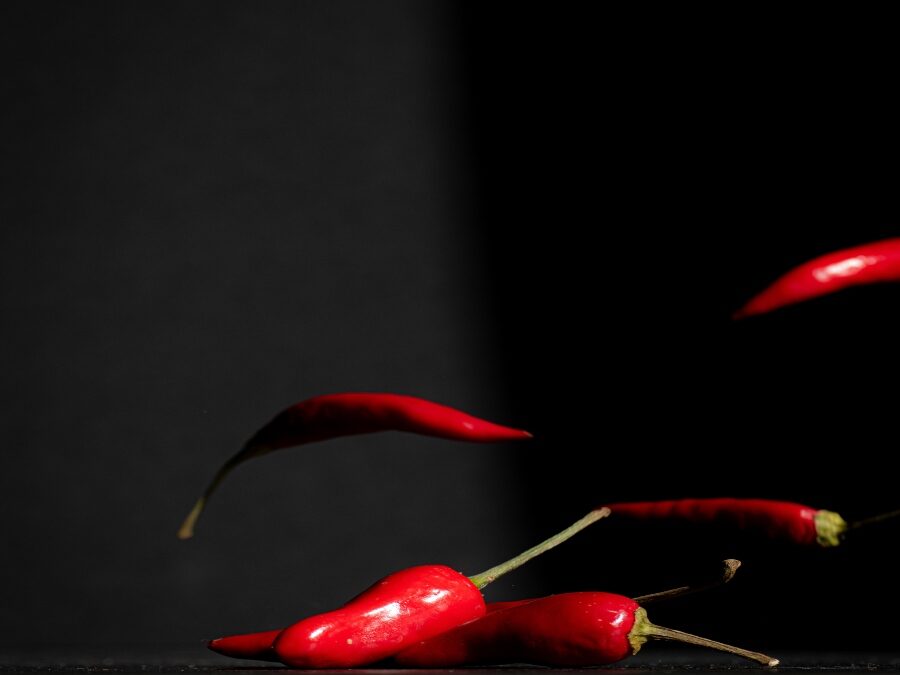
Pimientos en nogada is a dish that people eat in México at weddings and important occasions. Mamá is set on making it on our special day since she wants to prove to us, but mostly to herself, that despite her curled fingers and the ache in her knees, she can still cook. The night before the fire, she makes the nogada. She leaves the unpeeled nuts soaking with milk, mashes the nuts with fresh white cheese, a pinch of sugar, cinnamon, salt, and white wine. The mixture, after straining, is fragrant and creamy.
Mamá starts the dish with the fire, a set and steady flame that turns blue at the tips. She puts the pimientos on the stove. “How long on each side?” I ask, half looking at her and half looking at my phone. “You have to look to see,” she says, her bare hands turning the pimiento to the other side. Although they must be hot, she doesn’t say so.
“Mamá!” I yell, far too late, as the fabric of her hand-painted apron she had bought in México D.F. gets consumed by the flame.
Two days later, when we come back from the hospital, the nogada is still sitting on the table with the rest of the pimientos all over the floor, some blackened and some uncooked—the remnants of our kitchen incident, as Mamá would call it. Roberto, my soon-to-be husband, in the rush of paramedics and sirens, hadn’t put the food back in the fridge. I touch my stomach, which is covered in bandages, and think about flies.
Mamá, who rests in bed days after the incident, predicts that rain will appear mid-ceremony and soak us all.
“Rain is a good omen,” I tell her, my fingers covered in the thick white odorless matter I use for her stomach burns.
“How did it feel for you?” she says, trying to sit up after I am done with her stomach. “I didn’t feel it,” I lie while carefully applying the salve to my middle, which is covered in purple blisters. “My skin must have been numb from the pain.”
She turns to the wall, smiling as if she were seeing it for the first time. A flash of the flames engulfing the carefully hand-painted flowers on her apron comes to my head. The same flames that traveled to my cotton shirt.
I had poured a pot of water on both of us. I can still hear the panic in her raspy smoker’s voice. The way that her voice addressed me in one word: “Corre,” her delirious tone convinced me that we could escape the flame.
I removed the blackened apron and her shirt first, afraid that it would get stuck to her skin. My hands acted quickly as howls of pain escaped my mouth.
“The wallpaper. It’s starting to crack,” Mamá says.
I nod without looking. Every night after the fire, the smell of our leathering gets stuck to my nose.
Roberto, who comes to visit Mamá every day, swallowing his I-told-you-so about Mamá in the kitchen, Mamá at the stove, Mamá doing anything, is the first to be against the idea of postponing the wedding.
“I can’t wear the same dress,” I say, thinking about how the corsé will press against my skin.
“We will buy you another one.”
“My mother will not be able to go to the beach. Her skin could get infected.”
“So we marry here. Problem solved,” he says, sitting on the couch and putting his feet up on the table since Mamá is in her room and can’t move to tell him that he is not an animal and he is not in his own house.
I sit on his lap. Kissing his forehead, his cheeks, telling him not to press on my stomach—not now and not in the six months that it will take to heal. We start kissing, and for a while, we don’t check on Mamá, who after going to sleep, will miss the start of the rainy season that will stay long after the pimiento season is over and long after Roberto and I get married in the rain, my baggy wedding dress and his going out shoes soaked by the aguacero and the water that leaks from the top of the house, Mamá with her flimsy blue umbrella and with her water-resistant camera will take blurry pictures that will mark one of the first bad September storms.
When Mamá goes to sleep that night, I cover Mamá’s burns in the thick mixture. In the dark room, I hear Roberto calling for me. The taxi is here, he says. I lift Mamá’s shirt. My fingers get lost in her tender skin.
By next September, our stomachs will burst in a sea of scars.
Pimiento Season first appeared in Moon City Review.
by Susie Hara | Nov 10, 2022 | flash fiction
We’re having lunch at the faux restaurant. My mom is eating her fish at a glacial pace, and I’ve moved on to dessert. Without warning, she reaches over, scoops up a forkful of my ice cream, and spreads it over her fish. Disgusting, I think, but I say nothing. Why? Because we live in Dementia Landia. In this world, it’s fine to eat fish with ice cream sauce. In fact, pretty much anything is okay in this ecosphere, as long as you’re not hurting anyone.
A young man with expertly twisted hair and a name tag that reads “Faithful” comes to the table to clear the plates. He solemnly examines my mother’s dish. “Fish. With ice cream,” he states. “I’ll have to try that sometime.” He says this without irony.
I let out the breath I’ve been holding and smile at him, a nonverbal thank you for his kindness. It’s reassuring that Faithful also abides by the local customs here at the memory care village where he works and my mother lives. He nods gravely and moves on to another table and another story.
We continue with our silent meal. In the world where we used to live, before we were sent to this land, we were writers. Language was our medium, talk our currency. Analyzing, commenting, arguing, gossiping, revealing, bantering, chatting, discussing, joking, bickering, schmoozing, observing, remarking, pronouncing, articulating, proposing, kibitzing, challenging, agreeing, deliberating, and confiding. We talked about the terrors and pleasures of love and marriage. About the many kinds of heartache and loss. About books, plays, movies, friendship, war, peace, poetry, capitalism, communism, injustice, and stupidity. About food, history, sex, and comedy. These days, we still talk, but in much shorter sentences. If I string too many words together, she looks distressed. Sometimes, I lean over and speak directly into her hearing aid. Other times, she’ll say, “Slow down.”
I’m wolfing down the ice cream when I remember that we had ordered the bowl to share. I put my spoon down. But now, without the sweet dish to sedate me, sadness seeps into the gap. It spreads everywhere. I sigh, blowing out a noisy gust of air. My mom, fastening her empathetic coal-black eyes on me, reaches over to stroke my hand. In spite of everything, she’s retained her supersonic mother skills. A wave of love sweeps over me, and I curl my hand into hers.
I try to stay in the present, I do, but I’m already racing into the future. Fast-forwarding to this evening. When I will steel myself to leave. When I will say goodbye and she will try to come with me and I will explain I have to fly back home to San Francisco, and she will insist angrily that she will get on the plane with me and I will nod in understanding and hug and kiss her goodbye. When I will rush through the lobby, tears pooling, with an almost giddy sigh of relief. When the loudest of the competing voices in my head will rise above the others to accuse: You are a bad daughter.
In Dementia Landia, we caregivers tend to have an ongoing soundtrack. A guilt track. We each have a signature version, and mine has a distinctly Jewish rhythm, a sort of davening quality. It goes like this: If only we had enough money for 24-hour caregivers she could be back home, where it would be familiar and comforting. And then she would be happy. If only I had a big house and she could come live with us and if only that wouldn’t make us all insane. If only I had moved her up to be near me in San Francisco. If only I knew the right thing to do.
A childhood image of my mother rises up out of nowhere. She’s in the tiny room off the kitchen we called her office, her fingers flying over the typewriter keys, her cigarette burning in the ashtray, writing for hours, far away, in a world of her own making. Late in the afternoon, she stops working just in time to cook dinner for me and my sister, and our dad. Maybe she’s still there, in a parallel universe, banging on the keys, lost in thought.
My mother is done with her fish combo. She pushes away her plate, and I nudge the bowl of ice cream over to her. She takes a bite, says, “It doesn’t taste like anything.” Then she takes another spoonful.
I nod and smile, my head bobbing up and down like one of those dolls on the dashboard of a car. How I wish it tasted good to her, and how I wish I could change things. My next bite has a metallic edge. I put the spoon down. I’m so tired. I don’t like Dementia Landia. I’m lost here. There’s no GPS, not even an old-fashioned map. It’s not only that I don’t know where we are, I don’t know when we are. In this land, time is elastic.
My mom tunes into my wavelength again. This time her piercing eyes say come back. I make a soft landing, arriving back from hyperspace with a thump.
She points to the ice cream. “Have some more.”
I take a bite, and now the metallic edge is gone. It has the round, buttery taste of vanilla beans.
She nods and takes another bite.
We eat slowly.
Together, we finish every last endless spoonful.
by Amanda Hadlock | Nov 7, 2022 | flash fiction
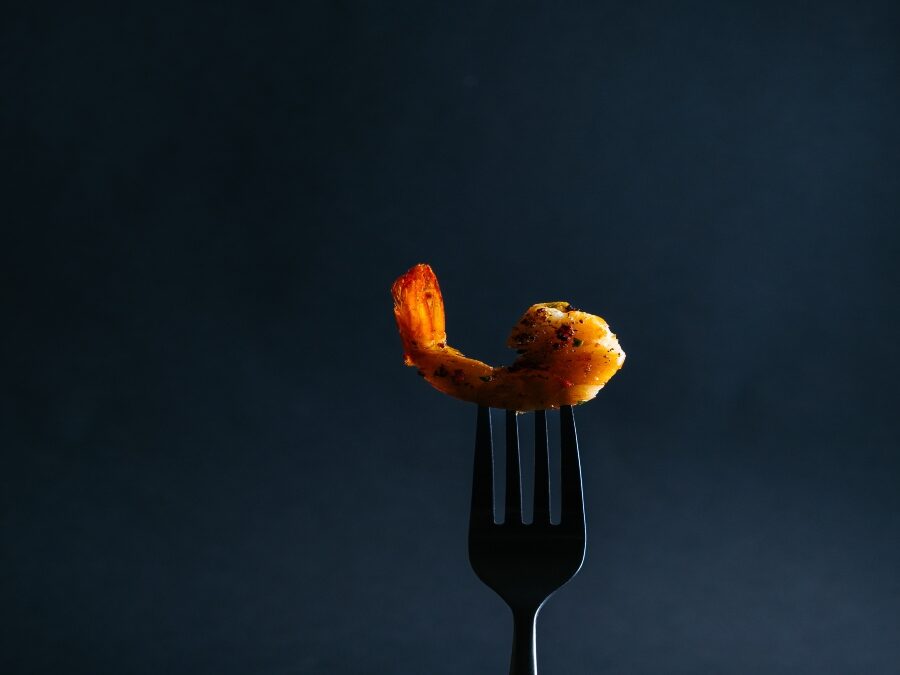
A shrimp’s heart is in its head. You used to say your heart was in your stomach when you couldn’t get out of bed all day. You won’t eat shrimp because your dead dad who you hated used them as bait when he took you catfishing as a kid. I found that out when I made scampi on our six-month anniversary, and you refused to eat it. That made me cry, then me crying made you cry, then we spent the whole night sulking and chain smoking on your back steps instead of eating shrimp and having sex like I had planned.
The commercial shrimping industry rakes in over 50 billion dollars annually. I used to buy the pre-cooked frozen jumbo prawns from Walmart for $4.99 a pound. That was fancy for a waitress in West Plains. I’ve never eaten them fresh. I’ve never been to the coast, any coast. The farthest I’ve been is Alton, Illinois to visit my grandfather’s grave. You wouldn’t go with me, either. You said the drive was too long and you don’t like my taste in music.
All shrimp are born male. Later in life, their gonads can develop into ovaries. A female shrimp can lay up to 14,000 eggs at once. You knew I’d never wanted children, in fact, we had laughed about our shared distaste toward kids on our first date. We drank a whole bottle of convenience store champagne and had sex for the first time on your kitchen linoleum. In the morning, you fried bacon for breakfast, and we ate the whole pound of it in silence, licked the grease from our fingertips. You told me to come back that night, and I said, Deal, and the rest happened fast and slow at the same time.
From conception to death, a shrimp will evolve through 16 different life stages. Depending on who you ask, humans go through 5 to 12. Does this make the shrimp more complex than us? Maybe, I think. I feel like I’ve gone through 0 life stages sometimes. And sometimes I miss eating those pre-cooked Wal-Mart shrimp, even though I always thought they kind of looked like weird alien embryos. Another thing I gave up for you, even though you never asked me to.
But then again, shrimp skitter around in exoskeletons, they’re invertebrates, just like the crickets or cockroaches we crush underfoot in your kitchen sometimes. This makes them sea bugs, technically, fish food. Maybe you’re right that they’re better suited as bait. Maybe I should pay more attention to what I put into my body.
A shrimp’s color is determined by its environment, and the Mantis shrimp can see colors we can’t. In the second year, we painted your spare bedroom baby blue for our son-to-be, like a good, God-fearing hetero couple should, laughing together when I joked about that. You were so excited, you said, you would have a family again. We stenciled the name we had chosen for him on the wall in pencil, but I bled him out before we got the chance to color it in. We never did paint over the stencil or erase it. You stayed in bed most days, called in sick. I had lost my appetite. All I could stomach for weeks was stale bread I’d steal bites of at work. I started picking up more double shifts so I wouldn’t have to be at home.
Some shrimp can snap their claws loud enough to kill nearby fish or rupture a human eardrum. I put on a hard exterior after we lost our son, thrashed my claws when you tried to come close. We stopped touching each other, stopped talking, stopped sharing meals. I wondered if you found me attractive anymore; you hardly looked at me. I spent hours staring in the bathroom mirror and pinching the folds of fat beneath my arms, between my thighs, across my lower stomach. I imagined taking a pair of kitchen shears and slicing off long, soft strips from my belly, tossing them outside for the turkey vultures. You bought a blow-up mattress and put it in the new spare room, with its walls still painted American Spirit blue and the boy’s name stenciled in. You started staying there, away from me, though I can’t remember how long it’s been. And I sleep better alone now, honestly.
Shrimp can’t swim, not really. They can’t control their bodies. It’s more like an illusion: They propel themselves through the water with small swimmerets they keep concealed beneath their abdomen. They typically move backward when encountering predators. We’ve been moving backward since our son left, eating less, fighting more. I still love you, I told you after I snapped at you again the other night. But you couldn’t hear me, or you couldn’t bring yourself to answer. I can hear you refill your air mattress through the walls sometimes, the motorized air pump growling like a dying animal. I hear you settle in when you try to sleep, the rush of air when you fall into bed, and I can hear you think throughout the night. I wonder if maybe we should repaint the walls. A deeper blue might be nice. Or one of the colors shrimp see that we can’t, a shade unimaginable to our small, human minds.
by Jamie Etheridge | Nov 3, 2022 | flash fiction
The hole drinks the grass, the leaves, the twigs, and our favorite park bench. Insatiable. Thirsting. It then drinks the sidewalk where little kids and their mothers play games like ‘avoid the shark’ and ‘alphabet hop’. But children don’t play on the sidewalks anymore.
***
You jump right into the middle of the group, your gloves and hat tossed to the ground, and the children gather around you, fluvial and seamless as a conga line. A waterfall of stubby, sneakered feet and flailing hands as the collective wades down the pastel-etched course, hopscotching to a rhyme.
1-2-3-4.
Mama said be home by four.
5-6-7-8.
Mama said don’t be late.
***
In the beginning, no one knows what caused the holes. No one knew what was happening or why. But I know.
Sinkholes are proof of movement, underground streams etching away limestone, fluting through rock. They coalesce: one depression joining another to create flat floor basins, underground caverns, dissolute rock formations. Known as karst, they are absences, evidence of what was once solid and certain but is now empty, disappeared.
***
We play in the park. You on the swings. Me on the bench, watching. Or we buy hotdogs and have a picnic. You climb the dogwoods or throw pennies into the fountain.
“Listen, Mama, I wish…”
“Don’t tell me, kiddo, otherwise it won’t come true.”
You place one finger against pink lips, nod, then close your eyes. I take another sip.
Later we skip across the grass, swinging hands, and then hop down the chalked outline, calling out the letters and numbers as we go. You want one more slide, one more turn on the merry-go-round.
So I leave you there, go for a quick nip around the corner.
***
Over time the holes multiply. People suggest fencing them in, since they can’t be filled, as if anyone can stop a hole as if a hole can be contained.
Over time the holes grow louder. They echo and judder. Reverberate. They whisper to me, enticing and lucid, like the moment that first drink hits your veins. I hear them calling still, like the wind, sere and desolate, cutting between the skyscrapers, slicing down the sidewalks.
***
That’s where they found you, crying on the sidewalk, scared and alone.
***
Sinkholes devour but also create—space and openings. And I think, maybe the holes aren’t holes at all but tunnels connecting me to you. A wormhole to a distant galaxy where mothers and children never separate. Where time and liquid do not matter. Where mistakes can be undone.
This morning I leave the apartment, take the stairs down to street level and buy hot coffee from a street vendor at the corner of the park. My throat aches. But coffee is all I will drink today.
The hole in Washington Square shudders and shimmers when I come near. The liquid black at the center eddies and shakes. I stand at the edge, lean over, look down, wonder if there’s any difference between jumping and falling.

by Grace Elliot | Nov 1, 2022 | flash fiction
When you start needing a place to scream, you try most of the rooms in the house.
You start with the shower. At first, you take a weird pleasure in screaming behind the shower curtain. In college, you had a film major roommate, and the two of you would take over the dorm lounge on Saturday nights. While everyone else got their kicks with underage drinking, you two would watch old films. Psycho was the roommate’s favorite.
But Psycho has created its scars. Or perhaps too many accidents happen in the bathroom for it to be a good place to scream. One small howl—not even enough to make your throat ache—brings your son rushing in.
“Mommy? Mommy?” he says.
At least he cares, you think as you pull the shower curtain around yourself and stick your head out to assure him you’re not hurt.
“There’s a bake sale at school today,” he says. “Did you make cookies?”
“What bake sale?” you ask.
That night, you try screaming into your pillow. You’ve heard a lot about that, it’s downright clichéd. A marriage counselor even recommended it to you, once. One of the early ones your husband liked.
You scream for a minute, and for some reason, you think about a production of Othello you were in during high school. The girl playing Desdemona was a friend of yours, a shy girl who was reluctant to be on stage at all, but who gave that final scene everything she had.
You scream and try to recall the story at the same time—was Desdemona cheating? Or was that Othello? You know this much, Desdemona did not press the pillow to her own face as you are doing. In the middle of a satisfying scream, your husband’s snores stop abruptly. He asks if you could please go to sleep.
The pillow is now moist from your tongue and teeth and desperate, spitting breath. You turn it over and wonder what else will go in the laundry with the pillowcase in the morning.
You think you’ve really found it, the perfect place to scream: in the closed garage, inside the locked car, with the motor running to drown out the noise. But then your husband comes down to get his car out. He’s going to pick up the oldest child for soccer.
“Don’t pull a Sylvia Plath,” he jokes when he sees you there, red-faced from the screaming but suddenly silent in his company.
“A Sylvia Plath?”
“She killed herself with gas, didn’t she?”
Afterward, you will look this up and discover that Plath killed herself in an oven, not a minivan. Your husband had his symbols of femininity/available suicide methods mixed up. You consider telling him this, but the thought of his distracted replies makes you want to scream some more. Besides, you have to pick up the younger children for swimming. You don’t have time.
*
You wonder if the closet with the spare bedding would make a good screaming spot. You’ve always liked the way it smelled—like your brand-new house and the mixture of your husband’s cologne and your own perfume. And you think that the space might be cozy, in there with all those blankets. But, ultimately, you don’t give it a try. You have been avoiding that closet for weeks now, since finding the condoms you did not buy, the fluorescent lingerie you would have mocked if you had seen it in the store. You screamed when you found all that, and the oldest of your children ran to you at once. She is a sweet girl, a good girl, just entering puberty, just starting to agree to watch your rom-coms with you on weekday nights when her father is working late.
“What?” she said, there in that closet. And you hurried to hide what you had found, even though you couldn’t stop screaming. Soon, you gathered a crowd. One frightened child you had to lie to and put back in bed, one just old enough to be wary at your insistence that there was a spider, one who will almost certainly remember this later and blame you, as you now blame your mother, for failing to leave a man who deserves to be left.
No. Clearly, that closet won’t work for private screaming again.
Instead, you walk around your house—your perfect house—and remember when you used to scream outdoors, in the open. When your screams were to encourage the Red Sox or shoo a raccoon, when you were not afraid of what would come out if you opened your mouth in public. Those screams, as you recall them, were satisfying, but they weren’t necessary. If the Red Sox ignored your hollering, then they would not miss the school bus or forget their homework or skip out into the street and get hit by a car. And that raccoon? It could have your trash. It’s your marriage you now want to protect from the woman leaving behind her trashy laundry, the husband tipping over the metaphorical recycling bins of your life and threatening to scatter your secrets in the street.
And so you find your places to scream. The garage, like Plath, as you now think of it; the pillow, like Desdemona; and the shower, like that woman from Psycho whose name you can’t remember. Slowly, day by day, you become hoarse.
“What’s wrong, babe?” your husband asks when you finally lose your voice entirely.
You look at him, but you cannot reply.
And so your life, as you know it, does not end. Your husband drives to get the children from soccer, and you bake cookies for bake sales. He snores in bed beside you, and one day, someday, you open the closet with the spare bedding and smell again the mixture of your new house and his cologne and your perfume. And then you close the closet door and go on with your life.

by William Bradley | Oct 27, 2022 | flash fiction
Two-lane rural route to the boatyard, boondocks enough for hoedowns, cross-burnings, not that I knew much about either, except they happened, that’s all. Downtown Philly boy a little young for my age, I once asked the burly guy who ran the place (clean shaven, blue checkered shirt, gas company cap) why everyone in sight was white, where was everyone else? And he answered with a slowly widening grin, maybe that’s the only kind we want around here.
My dad, so young and wild, driving us to the pea-green river where his Chinese junk was moored, bought for reasons undisclosed. Yet it made him famous for a day in the city paper, photo of him hunched over sea-charts, marking his turtle progress. At each harbor southward people approached, stoked him with questions about his alien craft—blood red sails held taut by bamboo rigging, coiled scaly dragons carved in teak on the bow, and a stern so canted and high it felt crazy to jump off. But we did.
My sister and I staring through pollen-smudged windows at dense, blurred cornfields. I devoured the newspaper in the back seat—my job to scout the seriously weird or bad stuff and read aloud. A shredded year: in his own driveway, Medgar Evers shot, killed, guardian police mysteriously absent. Dad said, “Don’t worry, Kennedy will get to the bottom of this.” Bomb crater in the ladies’ lounge, Birmingham church. JFK’s casket hauled down Pennsylvania Avenue, a riderless black horse tossing its head, pawing the ground, empty boots reversed in the stirrups. Dad insisting, “things have to get better, believe me.”
Glanced up to see a white rectangle with plain black letters, a town’s name flicking by—a disaster looping back to me. I recounted all the details to my sister and dad, though they kept saying, “That’s enough—you can stop now.” The Clipper Tradewind circled these fields during a thunderstorm, waiting for the signal to land. Five people on the ground saw a ball of fire after lightning hit. The black box saved the pilot’s last words: “Here we go.” Six thousand bits of debris: twisted metal, melted plastic, bone splinters, scraps of flesh. All that stuff packed in crates and hauled to a giant metal shed. They wanted to put it back together like a puzzle. Then I stopped, resumed staring out the window. By my rules, these fields should have looked different than they did, stay scarred, left unsown. Yet they were fully planted, luxuriant, managing only a vegetable peace.
Out of gas, the car coasted to a stop on a slight rise, framed by cornstalks on each side of the road. Dad would let this kind of thing happen. Take us to a drugstore, tell us we could stock up on comic books from the rotating metal rack—then sweet-talk the sourpuss cashier, who was right to doubt his check was any good. Dad said we were close to help but couldn’t say how close. He switched to a deep funny roaring voice, a little hoarse, just right for a tale of bloated king or monster: OK, kiddies, let’s lace up our hiking boots, time for an adventure! No hiking boots; just sneakers. I pushed the door open, heavy, a vault.
I was a little young for my age; needed everything explained, spelled out. Clean-shaven face of the boatyard guy, his blue checkered shirt, his slowly widening grin . . . the only kind we want around here.
The way we walked was uphill, the same direction we’d been going. No traffic—but you couldn’t see what might be rushing over that asphalt rise—just the crinkling waves of heat bracketing the road. Shifting to another strange voice, taut and severe, Dad ordered us to pick up stones on the shoulder, keep a few big ones in each hand. He was scared of rabid creatures that roamed this kind of country; told us that more than once. Walking up the road, I returned to the plane that circled above the fields, aiming to skirt hard weather, hoping the squall line would creep to another map. I found three mud-caked stones and gripped them tight.
**Notes: Medgar Evers, civil rights activist, was assassinated on June 12, 1963 in Jackson, Mississippi. The bombing of the 16th Street Baptist Church in Birmingham, Alabama, occurred on September 15, 1963, resulting in the deaths of four children. The Clipper Tradewind, a commercial airliner, crashed near Elkton, Maryland, December 1963, killing all eighty-one on board. The “black box” is a device in planes that records flight data and cockpit voices, and is used to investigate accidents.
by Leslie Lindsay | Oct 26, 2022 | interview
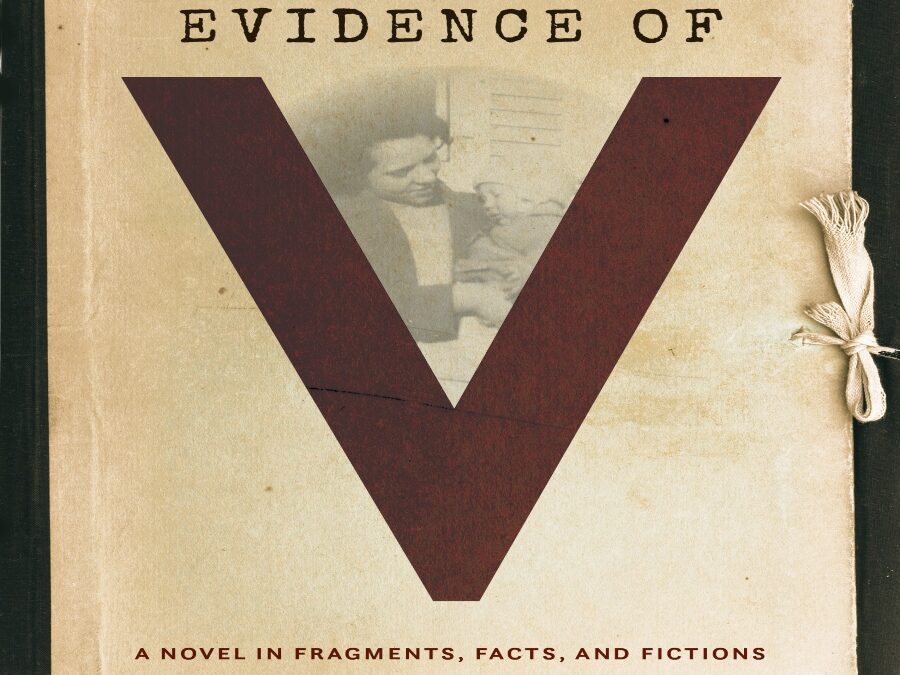
“There is always a wicked secret, a private reason for this,” a line from W.H. Auden’s “Twelve Songs, VIII” came to mind when reading Sheila O’Connor’s Evidence of V: A Novel in Fragments, Facts, and Fictions (Rose Metal Press, 2019), an elegant and ambitious melding of family secrets, historical documents, re-imaginings, and an unsealed case file from the courts.
Evidence of V is a compelling, near-poetic approach to unearthing family and national history by multi-genre, multi-award-winning author, Sheila O’Connor. Readers are immersed in the prose and invited to analyze data, find meaning in the white space, and peer at the injustice.
Throughout this nonlinear collection, O’Connor elegantly explores how we try to make sense of secrets through the found, the visual, and the experimental. Her writing—her use of language—is at once brilliant and visceral, haunting and heartbreaking.
What begins as a question: “Who was she,” coupled by a secret revealed when the author was just sixteen-years-old, Evidence of V is about O’Connor’s unknown maternal grandmother, V, mentioned to O’Connor just once, and never again.
In the 1930s, V was a promising 15-year-old singer in Minneapolis with grand aspirations. When she falls pregnant with the much older nightclub owner’s child, she is sent away to a Minnesota reformation home for sexual delinquency. Evidence of V is a delicious blend of biography, history, social and cultural critique, about searching for a woman essentially eradicated by ‘the system.’
With sections titled ‘A Book of Pseudonymns and Lies,’ ‘And Her They Safely Keep,’ and ‘Practical Experience,’ one gets the sense this is a tale of summoning remembrance, while allowing secrets to surface and breathe.
O’Connor braids together a thin case file, her own research, fictions, lyrical prose, questions, documents, and brackets, and more to puzzle together this devastating tale.
With V, I was reminded of my own maternal great-grandmother. Although the location was different (Missouri versus Minnesota), fragments of the story remain similar: a young, unmarried woman falls pregnant. The options remain few. Over time, stories become misunderstood, silenced, the result often buried in trauma. It brought forth more questions than answers, a curiosity and exploration I felt compelled to engage.
Leslie Lindsay: Evidence of V begins with a contemplation about where to begin, where V’s story starts. I find that so emotionally elegant and heartbreaking, too, this idea that we can begin as a secret, a clump of cells, a reckoning, a sealed history, a girl, a prisoner. Where, where do we begin…as a person, as a story? Can you give us a little insight into your inspirations and process?
Sheila O’Connor: For decades, I’d wanted to write a novel about the long shadow cast by my missing grandmother, but I was daunted by the task. First, there was the challenge of knowing next to nothing. Secondly, where to begin the story of an absent life? Birth? Childhood? The years after she was forced to surrender my mother to adoption? Her suicide? I had long charts that hung from ceiling to floor in my office, timelines essentially, and notebooks full of imagined structures. But her story didn’t get written. Oddly, this book arrived unbidden, with the first line in a piece of flash: “She enters the tunnel a little fox.” And there she was again. And the tunnel—the beginning of her life as a dancer, through her incarceration and escape from parole—turned out to be her timeline. But of course, that wasn’t the true beginning. Just as it wasn’t the ending.
Leslie Lindsay: I love how you state that we are ‘living in V’s whitespace.’ Of course, what all of this speaks to is the idea of erasure and intergenerational trauma. While you piece together the facts and bolster them by your (re)imaginings, you do the opposite of erasure, you write her into existence, you allow her to become tangible. I’m curious if you can expand on that, please?
Sheila O’Connor: Despite how long I’d searched for facts, when I finally had them, they failed me. I saw immediately that the facts of her file couldn’t be trusted, just as the historical claims about the girls and their reformation were lies based on institutional bias. And that what I’d wanted, needed, a story that could make sense of intergenerational trauma and where I am today, wasn’t in the so-called “facts.” In the end, I trusted fiction for the truth.
Leslie Lindsay: So much of Evidence of V angers me. It’s not her and it’s certainly not you, but the ‘system’ of maleness, the justice system, the reformation system, how women and girls are often exploited, misunderstood, silenced, and traumatized, still, nearly one-hundred years after V’s time at the Home School for Girls at Sauk Center, Minnesota. Mr. C, the much older father of V’s child, is largely unpunished, yet he had just as much responsibility—perhaps more—in her fate. Would you say that much of this story is about patriarchy?
Sheila O’Connor: Patriarchy is certainly one of its subjects, but the book takes up so many concerns: class, poverty, immigration, reproductive rights, legal rights, the prison complex, adoption, oppression of girls and women, historical truth, intergenerational trauma, power, shame—it’s difficult to settle my attention on patriarchy. But yes, the stories of girls and women victimized by men, and then criminalized for the men’s actions, those are certainly part of our past and present, and V, and her fellow inmates, were clearly punished for crimes they didn’t commit. In V’s case, I’m certain Mr. C’s was not sentenced to prison for six years, or made to work as a servant while paroled.
Leslie Lindsay: For a while, I lived in Minnesota. I found it more progressive than how it was portrayed in Evidence of V. Of course, you are writing about different period in history. Things change. But they also remain the same. While the Home School for Sauk Center no longer exists, echoes of it reside. I’m curious about your experience of walking the grounds of this place, what remains. Can you talk about it, please? Also, how talking about it helps instigate evolution and remove stigma.
Sheila O’Connor: It’s very painful for me to return to the grounds, just as it is to any site where terrible things occurred. This spring they opened the grounds up for visitors, and I think it was a painful return for many of us, but especially so for former inmates. The building where the girls were held in solitary confinement is still standing; I stood inside a cell, saw the thick locked doors, the metal bed, the tall fence around the building. It was horrific. And girls were kept in solitary confinement for months, sometimes on a diet of bread and milk.
That’s the first part of your question. The larger part, the desire to remove the stigma, to bring this history to light, to end the silence—that’s a hope I held onto as a writer. I had wanted this truth told, and I believed there must be others who wanted it unearthed. Survivors and descendants. And I was right. Shame is a great silencer—it essentially insured the history would be buried. And of course, the records were all sealed.
Leslie Lindsay: While reading Evidence of V, I found myself…haunted. It might have been the photographs of the women interspersed throughout the text, how one face reminded me of my own. She could be me, 90 years ago. Even though our stories are different, there is much to identify with simply because we are women and mothers. Can you speak to the way we sort of weave our own experiences into the vignettes you present—the images—and how that invites curiosity and expansion?
Sheila O’Connor: That’s a fascinating question. In the Venn diagram of my life and V’s, I had to look to our commonalities. We’d both been girls. Young, we both had dreams—V to perform, me to write. We’d had friendships. Fallen in love. Been betrayed. We both came from working class families—V’s poorer than mine. The two of us had come of age in Minneapolis, walked the same winter alleys, stood on the same corners. We’d carried children. Given birth. From a young age, I rejected oppressive cultural norms; I felt certain V did too. And of course, I asked myself how I would have felt to be sentenced to six years at fifteen years old, incarcerated far from home, forced into daily labor, paroled as a servant. All of that I drew on to understand the horror of what happened to V, but more importantly to recognize our shared humanity, to write her beyond the stereotype of juvenile delinquent, or “problem girl” to a fully formed human being worthy of love not judgment. I trusted empathetic readers would do the same; I’m grateful that happened for you.
Leslie Lindsay: I returned to the W.H. Auden poem that began our discussion and found it astonishingly elegant and poetic that the speaker is describing events that occurred in 1935-1936, the same years V was institutionalized. He writes,
“At last the secret is out, as it always must come in the end,
The delicious story is ripe to tell the intimate friend.”
–from “Twelve Songs, VIII—April 1936”
My own grandmother was born in April 1936. Have we started with a question, or ended with one? Has the secret been revealed, or is still festering?
Sheila O’Connor: I love this closing, thank you. And thank you for this fabulous conversation. The secret is still festering, absolutely. There were tens of thousands of girls across the United States wrongly incarcerated, and there are thousands of descendants, and their descendants whose lives have been altered by this history in ways they can’t imagine. And yet, the records remain sealed. The truth buried or lost. This is only one story. There needs to be a larger reckoning.
BIO: Sheila O’Connor is a professor in the Hamline University Creative Writing Programs, as well as the award-winning author of six novels. Her recent genre-bending book for adults, Evidence of V: A Novel in Fragments, Facts and Fictions, combines flash forms, archival documents, memoir, and historical research, to reconstruct the buried history of incarcerated girls. Honors for Evidence of V include the Minnesota Book Award, the Foreword Editor’s Choice Award, Marshall Project’s Best Criminal Justice Books of the year, as well as others. Her other books are Where No Gods Came and Tokens of Grace, and her novels for readers of all ages include Until Tomorrow, Mr. Marsworth, Sparrow Road, and Keeping Safe the Stars. Additional awards for her books include the International Reading Award, Michigan Prize for Literary Fiction, and Midwest Booksellers Award among others. Her books have been included in Best Books of the Year by Booklist, VOYA, Book Page, Bank Street, Chicago Public Library, and Barnes and Noble Discover Great New Writers. Sheila has been awarded fellowships from the Bush Foundation, McKnight Foundation, and Minnesota States Arts Boards. She has been a residency fellow at Yaddo, The Studios of Key West, Anderson Center for Interdisciplinary Studies, Tyrone Guthrie Center, and elsewhere.
by Cathy Cade | Oct 24, 2022 | flash fiction
My sister turns her key in the lock and pushes. The door moves a handbreadth.
Mum croaks from the living room. “Hang on—I’m coming.”
She grunts as she bends to move the draught excluder guarding the door, and we are assailed by the familiar onslaught of lavender air freshener.
In the kitchen, we unpack the shopping we’ve brought her, and Pam goes to open the cupboard under the sink.
“Not there—I’ve had a shift around.” Mum coughs. “Leave the laundry tablets. I’ll put ’em away later. You make us a cuppa.”
Pam abandons the laundry tablets on the worktop and dips into the shopping bag again. “I don’t like the sound of that cough,” she scolds.
I fill the kettle.
The floral caddy behind the kettle is empty of tea bags so I refill it from the box in the cupboard over the sink. As I return the pack, I spot the engraved cigarette lighter Dad gave Mum on their silver wedding anniversary, tucked between the sugar and the stock cubes. Maybe she’s afraid Pam will tell her to throw it away.
We almost lost Mum to bronchitis last winter. Her breathing was so bad she couldn’t smoke for weeks. Pam insisted it was time Mum gave it up as she would already be over the nicotine withdrawal period. Weakened by illness and fed up with Pam’s nagging, she’d yielded.
Not that Pam knows what withdrawal is like. Neither of us got into the smoking habit. Mum and Dad had both smoked since their teens; tobacco carried Mum through wartime fire-watching in East London. Even after Dad’s death from lung cancer in his sixties, Mum’s previous attempts to give it up failed. Miserably.
Pam takes a twin-pack of tissues into the abandoned dining room where Mum stores spare packs of stuff. She reappears brandishing a 200-pack of duty-free cigarettes. “What’s this, then?”
“Oh… Stuart stopped by on his way home from the airport. He never remembers I’ve given up.” Our brother lives up north. We don’t see much of him.
Pam fumes. “Is he trying to kill you off?”
“Probably.” Mum is always disappointed that his visits are so brief. “Maybe he’s in a hurry for his share of my house when I’m gone.”
She always makes the spare room ready in case he stays over, but he never does.
“Well, I’m throwing these away,” declares Pam.
Mum rallies. “No, leave them in there. I’m giving them to Jean.”
I’ve never seen her neighbour with a cigarette, but I say nothing and Pam stomps back to the front room, tutting.
While the kettle boils, I make space for shoeshine among a drawer stuffed with old polish tins and a can of lighter fuel. The mugs on the draining board would benefit from a rinse; Mum doesn’t always wear her glasses when she’s washing up.
In the sink, a filter-tipped dog-end is wedged in the drain filter.
I push it through and turn on the tap.

Recent Comments