You carry Grandma’s finger in a velvet purse. It’s your turn. Tess doesn’t have a chance of pocketing it now she’s wetting the bed again. Squeezing the smooth pelt, rolling your thumb over Grandma’s little bones, your breathing quells. In spelling tests, when big kids chase you off the monkey bars, when girls chide your hair’s like string, you have Pointer. Precious Pointer.
Grandma has a hundred stories and never says which one is true. A kitchen accident, lightning, a pruning mishap. But you and your twin know why Grandma doesn’t have a finger. You’ve heard her tell Grandpa to cook his own stew, make her a cup of tea, feed the dog. Grandma is a lion tamer.
When five, Tess scaled the roof. Friendly roars and claws, she was a dancing bear. But mid-twirl, the guttering cleaved, and she rocketed down. When wailing ebbed into staccato sobs, you examined her. Not a scratch, just a strawberry stamp on her thigh. She pulled Pointer from an old marbles bag tucked in her singlet and held it aloft—the sacred shield.
Maybe that’s why Mamma ran away with the circus. Maybe that was a time before Pointer. Before Grandpa had to choose—Grandma or the booze. Grandma says Mamma is a world-champion juggler. You practise with tennis balls in case she returns and you can be a double act. You toss and catch so often that the fuzz begins to bald like Grandpa’s dome. The only thing Tess can catch is a cold.
Every night, your illicit steps to her snuffly bed, wafts of camphor. As you cosset a cow-shaped milk jug, warm water laps the rim. You lift the duvet, spill from the jersey’s mouth. Your sister dreams on.
You’re thirteen minutes older, and Pointer is all yours.
The flock scattered across the river at the sight of him, and he watched, drooling—a bony shadow in the reeds—as the big rams shielded their wives and tiny lambs, as yearlings offered wobbling elders their strong shoulders.
The wolf had not eaten in a month, but he was not hungry. The snowless brown winter chipped away at him, and he rotted obediently—the earth was too hard to scrape out a den, shot through with hoarfrost and the fossilized roots of frozen weeds.
And so the wolf looked to the sheep, a shuffling, bleating cloud. He envied the naked lambs—how ugly and misshapen they were, their knobbly too-long legs and their floppy ears! Yet they were warm, sheltered from the cutting winds of the moor by their mothers’ wool.
No matter how the wolf shivered and begged, the sheep always fled from him. When he baaed with them, they simply flattened their ears and ran.
And yet, even after the rams’ clashing horns filled the air with bone-rattling thunder and painted the dead grass with gore, the flock never left them. Instead, they grazed together on withered crowsfoot, happily bloodstained.
The wolf watched them gather on the far bank, their cloudy white wool dripping onto the smooth pebbled shore. His matted black fur itched. Perhaps a sheep’s skin was more than warmth—it was softness, the promise of succor.
His wasting body plowed through the icy current. The sheep scattered—his claws sank into the neck of a yearling. It writhed and bleated beneath him, and the wolf saw himself in its wide black eyes—a cold, frightened echo—and he flayed it with maddened claws, swaddled himself in its warm white skin.
“Why did you kill me?” asked the sheep, its pulsing pink flesh.
“I wish for gentleness,” rasped the wolf, weeping bloody tears.
Trigonometry was Michaela’s least favorite subject. Her teacher, Mrs. Parveen, was at the front of the room, giving trigonometric functions her all; but the whole thing made Michaela sick! Sine, cosine, tangent. More like shitty, cringey, trash. At least she came by it honestly; her mother hated Trig too.
Michaela ran a hand up her face, trying to focus, but encountered the prick of a chin hair.
Ugh.The chin hair. A wiry, black beast running amok in Michaela’s family. If left unchecked, it lengthened, thickened, and curled into itself, like a dragon.
There were tweezers in her book bag, in her locker. Michaela raised her hand for a hall pass. Her teacher, in the throes of the Pythagorean Theorem, merely shook her head and continued.
With the pad of a thumb, Michaela tickled the black worm. She positioned her thumb and forefinger on either side of it, trying to get a good grip, but the hair was too short.
She imagined again the tweezers, resting snugly in the front pocket of her JanSport. In her mind’s eye, the tweezers were surrounded by a warm, inviting glow. In her mind’s ear, she heard an angelic hum.
A sharp pain yanked Michaela from the daydream. Her probing fingernails had rubbed her chin raw, and a bead of blood had formed just left of the cleft in her chin. Another family trait.
She continued to dig, confident she could excavate the stubborn hair. But that confidence waned as the lecture continued, and her fingers became slick.
Desperate, Michaela raised her hand again.
“Yes, Michaela?” Mrs. Parveen huffed.
Red lines dripped from Michaela’s fingertips, trailing down her bare arm. “May I have a hall pass?”
Mrs. Parveen’s face tinted green at the sight of blood. She nodded shakily, her mouth resembling a sine graph.
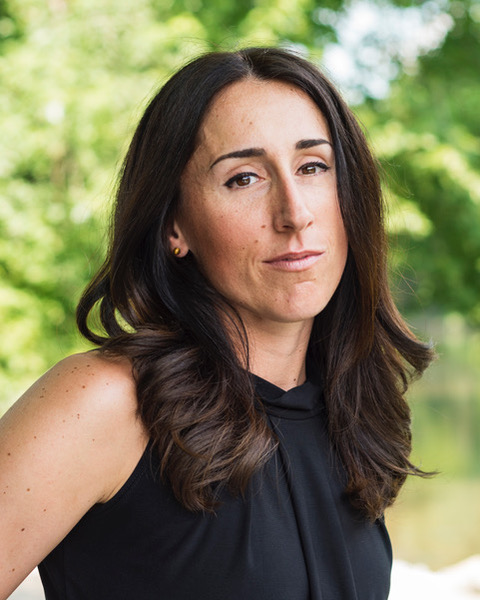
Tara Stillions Whitehead is a multi-genre writer whose powerful prose explores the fine line between fiction and truth. She regularly writes about addiction, abuse, and the underbelly of Hollywood, using personal history to explore memory and trauma via authentic, deeply compelling fictional narratives.
I’ve (Hannah Grieco) had the immense pleasure of editing Tara’s prose for JMWW and Porcupine Literary, as well as reading her first two books: Blood Histories (Galileo Press) and The Year of the Monster (Unsolicited Press). I’m a huge fan of her writing, of her generosity toward other writers, and of her basic humanity, which drenches every word she puts on the page.
This kind of honesty in storytelling is, quite simply, a literary treasure.
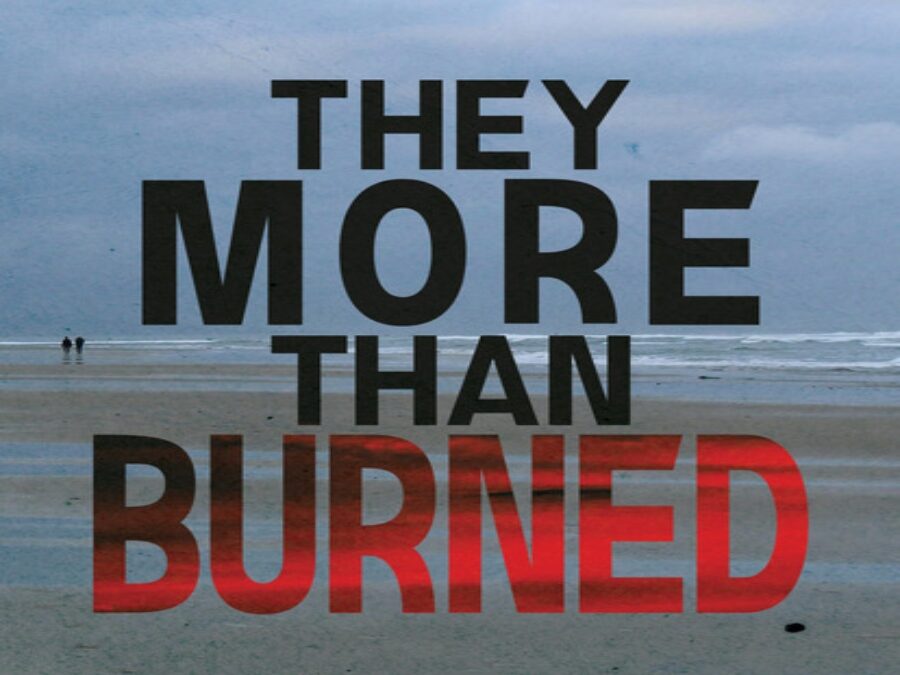
Tara’s new story collection, They More Than Burned, is an explosive, gripping read that dives even further into her psyche. It comes out March 15th from ELJ Editions and is already wowing readers with its distinctive voice, unique use of form, and heartbreaking characters.
I was thrilled to interview Tara for Fractured Lit!
Hannah Grieco:First and most importantly: Tell us about They More Than Burned.
Tara Stillions Whitehead: My publisher calls this my recovery book…and maybe it is. I used to think that my path to recovery was isolated to recovering from alcoholism and addiction, but at five and half years sober, I now realize that sobriety is only part of my recovery story. As a creative and as a human, there is a lot of myself left to unpack and process. Writing this book was a huge step towards that healing. The book may seem slim at 164 pages, but it covers 2,900 miles and 20 years in the life of a documentarian/addict who came of age when the twin towers fell. After enduring some unspeakable abuse in Hollywood, she moves across the country for the love of her life, only to discover that her alcoholism is about to kill her. She gets sober and ends up discovering footage she filmed right after 9/11. The book chronicles her journey of being courted by Hollywood producers who want to relaunch her career. I use screenplay format to tell this part of the narrative and braid in prose and hybrid texts that tell the story of the “archive” footage. The plot-level conflict is between our protagonist and these producers, but really, the conflict is about art-making versus art-selling and the complicated path to redemption. In real-life terms, that is where I am at as an artist and human. Writing this book was like answering the question of “How can I unpack these traumas and experiences that keep me afraid, that prevent me from living authentically and creating the art that I need to create?”
This collection feels truly linked, almost like a novel in how you use characters and setting. Even these incredible screenplay stories advance the narrative, despite their unusual (and highly effective) form! Can you talk about your timeline and writing process a little? Did you write these stories knowing they’d live together like this? Or did they just pour out of you over a longer period of time? How did you decide what to include and how they’d be ordered?
Form is really where the book came from. I was reflecting on my many attempts to translate not only memories of the past twenty years but also the zeitgeist of post-9/11, how that single event changed fundamental aspects of my DNA and damaged an entire generation’s perspective of America, war, and otherness. There aren’t always clearcut genres or mediums for those efforts, so during the generative process, which took place over about two and half years, I started writing these small prose pieces that felt like “archive” footage needing anchoring in a narrative that could contextualize them in a significant way. I realized that the point of view I’d been using was a person who had temporal distance from the people and places and traumas. The narrator was, in essence, “documenting” a twenty-year period following the terrorist attack on the World Trade Center and its effects on her life and the lives of the people she knew as a teenager. Screenplay format, which is written in third-person objective, was the form I needed to “document” this woman doing the “documenting.” It serves as a frame outside of a frame. I wanted to use her—this filmmaker, teacher, mother, recovering alcoholic—to show the internal and external challenges of telling this kind of story.
The prose pieces took longer to write. I published several in other iterations as standalone pieces in lit mags. When I looked at them collectively, I felt like I was witnessing a partially constructed constellation. Once I decided that this wasn’t just going to be a book of stylistically similar stories, that I needed Amber’s story to complete this “celestial” shape, things moved quickly. I spent about seven months writing the screenplay braid and film treatment titled “How to Rediscover the Unfinished Documentary about Your Life” (which essentially recaps the first two acts of Amber’s life and suggests that the book is dropping us into the third act, that we are watching it escalate in real-time).
In my “Acknowledgements” section, I write about archiving and how during the pandemic, I was actually digging through old notes and photos, watching the tapes I myself had filmed after 9/11. Many of those tapes captured people who have since passed on…places that have been bulldozed. I felt an incredible sense of loss going through all of those writings and video, but also panic. I kept thinking, “Tara, this is a story you started twenty years ago and never finished. You need to at least give it a chance.” I had no idea whether I was supposed to make a documentary or a book or whether it was possible to make both at the same time. I carry a lot of baggage from my time working in Hollywood, but I also carry a lot of grace. That came from getting sober, and maybe I wouldn’t have gotten to this place of inhabiting the liminal spaces of film and prose if I were still drinking myself to death. To be honest, when I watched the videos I shot right after 9/11, I felt guilty that I was still alive and some of those people weren’t. Who was I to tell their story after so much time had passed?
Can you talk a little more about the screenplay format? It’s unique, as is your background in both screenplay writing and television/film, in general. Was it an experiment, writing this way? A need?
When I write, content solicits the form, and as I mentioned earlier, I could not tell Amber’s story without using the “objective” screenplay format. Screenplays are technical documents meant to be interpreted by a third-party, but they also have to captivate, to draw that collective third-party in. Knowing that these screenplay portions are not going to be translated to the screen—or at least not writing them with that objective in mind—I took creative liberties, especially in the final script, titled “An Unofficial Meeting with the Network Executive Who Wants to Fund the Documentary about Your Life and RE-LAUNCH YOUR CAREER.” It was definitely a need to use both prose and film scripts/documents, both for the story and for me as a writer. I remember resisting it, reflecting on the fact that these hybrid forms are not wildly popular or accessible. I used them in my first book, but with restraint. And then I was rereading Interior Chinatown by Charles Yu, and I was like, yeah…I can’t deny the content its necessary form.
Were there any stories you chose *not* to include in the collection?
There were very few. One of those stories is “Thirst,” which was published in Five South, and which I absolutely love. It was included and then taken out and then included, but at the end of the day, it was too different stylistically and introduced so much new, speculative world-building that the book couldn’t carry. While the world in They More Than Burned is a fiery one, “Thirst” is a near-future speculative fiction piece dealing with water rationing and pollution issues that the other pieces don’t grapple with. Also, the story is in third person, and I needed to reserve that third person POV for the script portions that portrayed Amber’s struggles with trying to create a documentary despite the efforts of an exploitative and predatory film industry. It gutted me to pull that story, but it didn’t make sense to keep it in. It taught me that themes and setting alone could not justify a story’s inclusion. It made the book shorter, which I worried about. But then I reminded myself that this book, in its hybrid form, resists any traditional length benchmarks.
What was the hardest story to write in this collection? What was the hardest one to include?
Oh, gosh, this is going to sound awful, but I would say that the stories in my first book were much harder to write than these. These stories came so easily, it was frightening. I am a notoriously slow writer, but this book materialized over a two-and-a-half-year period, which felt like whirlwind. The hardest story to include was likely the opening story, “Drive,” because it combines into one-character details from several people I knew who died young. I was worried about treating that compilation character ethically. I wanted to create a fully embodied person who was fictional but held the best qualities of people I wish were still here, people who had so much to give the world.
So much of your work reads like memoir, and it’s a fascinating line we walk as the reader, not knowing what’s true and what’s fiction. [redacted], for example, is such a tough read. It must have hurt to write. How do you navigate these waters safely as a human being with a heart?
“[redacted]” started as a creative nonfiction piece that you published at jmww titled “Punchline.” Maybe that’s the piece that was hardest to write? Because it never felt exactly right?
When I was putting this collection together, I knew I was going to have to put a piece about Amber’s Hollywood assault in there. It’s referenced in the film treatment story and by multiple other characters throughout, but I felt like there needed to be a story that told us what happened.
I have written about my experiences as a young woman in Hollywood in my previous collection and in interviews, so it’s pretty easy to see that Amber’s trauma is inspired by, if not a mirror of, my own. When I rewrote it with all of the names and places and people, I felt liberated for a moment and then terrified for weeks. I went through and used erasure to protect myself. It’s interesting to think about that statement. To my abusers, it could look like I’m protecting them, but the reverse is true. That story is about “the cost of a laugh” and begs us to consider the tough question of “how to hold evil accountable, at whose expense we let it entertain us.”
This expense exists in memoir writing as well. When I’m deciding which parts of myself to use as material for a story, I have to consider whether the purpose—an act of creative catharsis, a call to action—justifies the expense. I try not to write at the expense of others. Not my husband, children, or colleagues. This doesn’t mean that I don’t write about those people or situations. My heart contains a multiverse of emotions that fuel my passion for storytelling, for social justice. I don’t always know the cost of what I’m writing—to myself or anyone else. I think the ego has a way of convincing us that art…really good art…earth-shatteringly brilliant art…is worth every cost and all fallout. It can be. But sometimes it isn’t. I’m not here to tell anyone what they should or shouldn’t write. I do think that the question of whether something we create works towards harm reduction is important. “Is my story further stigmatizing an already marginalized and harmed group? Is my art cognizant of the ongoing, complicated dialogue about this person, group, or subject?” These are necessary questions. I ask them of myself. The best I can do is write with intention and humanity and remind myself to treat others with love and tolerance.
Who were some influential writers in your early writing life?
When I was a kid, my mom worked as an events coordinator for several notable bookstores in the Bay Area, which is to say that I was always well-stocked with books. I started writing at six, but I really started writing obsessively at ten, when I got an electric typewriter as a gift. I started reading a lot of R.L. Stine, Diane Hoh, Stephen King, and Louis Sacher. I loved the Scary Stories to Tell in the Dark series by Alvin Schwartz.
I read a lot through high school, but I became interested in film then and was really drawn to movies with strong dialogue. My mom had a printed and bound copy of the second draft of Callie Khouri’s Thelma and Louise that I stole and loved. I saw Requiem for a Dream when I was in high school, and being that my alcoholism and drug use were progressing, I started reading Hubert Selby, Jr.’s books, which really messed me up but also (obviously) influenced my film and fiction writing at the time.
During undergrad at USC, I had a secret relationship with a music major who introduced me to Gabriel Garcia Marquez, which fueled my love of magical realism. Again, I was a film major, so most of my writing influences at that time were cinematic. The more indie and nontraditional, the better. I loved episodic films like Happiness by Todd Solondz, and films that manipulate time—like Run, Lola, Run and Eternal Sunshine of the Spotless Mind. When I attended FAMU in Prague, I fell in love with experimentalist Len Lye and became preoccupied with Kafka (it was his hometown).
It wasn’t until after working a few years in Hollywood and going to graduate school that I encountered the texts and authors I consider truly influential—Clarice Lispector, Édouard Levé, Kurt Vonnegut, Jr., Annie Proulx, and James Baldwin, to name a few.
Who are some writers you admire who defy conventional form?
I think there is a lot of writing that used to feel unconventional but has created new spaces and sets of conventions. We see calls for submissions for speculative memoir, microfiction, hermit crab prose, et cetera. I love these forms and what they provide in terms of experience and commentary, but I don’t think all who write in these genres are experimenting or writing “defiantly.” That said, Kathy Fish always surprises me with how she uses time and inverts reader expectations in her flash work. Vonnegut’s genius fragmentation, satire, and unconventional use of POV makes him my all-time favorite author. Ilya Kaminsky’s Deaf Republic is a work of poetry so singular, it redefined what poetry can be (for me, at least). I mentioned Charles Yu and his use of screenplay as novel earlier. I know there are a million other writers I am forgetting right now.
What books are in your TBR pile right now?
Which pile?
I have way too many books on my TBR list right now—many of them ARCs for blurbs. Books I am looking forward to that have either recently released or soon to release are Katie Farris’ Standing in the Forest of Being, Jesse Ball’s Autoportrait, I Have Some Questions for You by Rebecca Makkai, and The Family Izquierdo by Rubén Degollado.
What’s next for you?
This summer, I will be entering into preproduction for two short films adapted from They More Than Burned and The Year of the Monster. Until then, I’m enjoying a book tour and readings for students and other writers, and I’m hoping to begin work on a hybrid critical/personal essay collection about the influence of film and television depictions of addiction on addicts and how this contributes to larger trends of abuse and stigmatization in the industry itself.
—
Tara Stillions Whitehead is a writer and filmmaker from Southern California. She is Assistant Professor of Film, Video and Digital Media at Messiah University in Mechanicsburg, Pennsylvania, where she lives with her spouse, kids, and cats. You can find her on Twitter @MrsWhitehouse74.
What you remember is how you had trouble believing it was Ohio, even southern Ohio, the way the river moved and swirled, rushing over rocks, and scuttling the overhanging brush clutching the bank, and the water legibly clear to the bottom in the shallower runs, grassy and pebbled, yet not so swift as your native state’s Au Sable, mild even in most places, like most surfaces, glinting and sparkling where the sun broke on it like a silver wedding band which—in a half hour or so—would be dislodged by the drunken sidewise collision and upset in the uncertain depth of a pool, loosing a tangled moronic fury of curses and laughter, Sorry, so sorry, drifting away with beer cans and Styrofoam cooler debris . . . and what you most remember is how angry your young wife was that you’d been so careless to have lost the ring from your runner’s thin finger in the confusion—the sanctified, irreplaceable talisman of her love—and the long, silent censure of the car ride back to your flat in the Black Swamp, and how it would be another nineteen years before she apologized for her behavior—for all the times she’d accused you wrongly—and asked if she could keep the ring’s inexact replacement, the one you’d stopped wearing years before, and, if you also wouldn’t mind, sign the legal papers in the envelope you’ll receive in a day or two.
At the General Store, a cashier said, “No, we don’t sell food,” so we asked if she had candy or soda or anything general stores tend to sell, and she laughed. “I don’t think you know what General means,” and she showed us a green helmet and army boots and badges pinned to a heavy fleece uniform. “And there’s a Sergeant Store down the street.”
When our parents’ cars were replaced with tanks, we thought, well, this is a fun way to get to school. And when our P.E. teacher taught us marksmanship instead of basketball, we figured you aim with one or the other, what difference does it make?
It was strange at first when the birds stopped calling. But birds need trees, our mothers said, and there were no trees anymore. And in the spring, when we listened for peepers at the creek, our fathers said, frogs don’t sing when their rivers are paved with concrete.
On a freight train to the sea, some of our classmates waved goodbye. We played songs for each passing train, so they knew how proud of them we were. “Proud of what?” we asked our parents, and whispering, they said: “Proud it isn’t you.”
That summer, we barricaded our doors with bags of sand and salt, turned our fences from wood to barbed wire, got rid of our fluffy dogs and made the big ones mean. We foamed at the mouths and painted our faces, hocked chewing tobacco into baked bean cans. We called our teachers sirs and ma’ams and learned to shoot with one eye closed. The other eye we kept on God, who walked these streets in filthy clothes, dragging a cart of soda cans that jingled through the night. When the jingling stopped, we thought, Where’s God? Where are the birds? The frogs? Our parents? We found ourselves in empty homes with snarling dogs, but at least we turned our bodies hard, disposed of all the baby weight they said made us too soft. We growled at broken mirrors to see if we could scare ourselves and didn’t know what it meant when we did.
One night, we chased our shadows to an empty field and lay beneath the moon. We held each other’s hands, curled into one another. We whispered all the things we wished we’d said before. When the busses arrived, men in General Store uniforms shined their lights on us, calling us names we did not recognize, commands we used to know. We were hungry, I think. Reminded of the food we did not eat, the soda and candy they did not let us buy. Didn’t they know we were wild? The rabid ones, the feral ones, unable to be tamed. Couldn’t they see our teeth, sharpened on chain-link, our claws, toughened like bone? When we left them there to lie, we tore across the rivers they paved until we ran so far, we turned back time—and there we found them, our former selves, waiting in line at the general store, money stuffed in pockets, hoping to be fed. We only wanted to warn them. We barked and snarled, but they raised their hands and kicked the ground, so dust clouds stung our eyes. The sun that day shined through an orange haze, the sky darkening like a sheet stretched over town, or better yet, a plastic bag siphoning our air through tears they’d sew with ligaments and bone.
On a traffic light, a wood thrush perched above our heads. We touched our stomachs, felt our ribs. But first, we listened to it sing.
I would like someone to haunt my house and simulate some of my deceased husband’s habits, so I can get some sleep. These include:
Walking into the bathroom. Leaving the door open with the bathroom light shining in my face. Urinating loudly.
Opening the refrigerator door so hard the ketchup bottle clangs against the pickle jar.
Television blaring the Yankees game in the living room and loud snoring.
Night hauntings only. Money negotiable.
No Contact! Correspondence and payment through email and PayPal. I don’t want to see you as it will ruin the illusion.
A week after coming to terms with the only respondent to her online ad, the ghost made his first appearance. Olivia lay in bed with the latest Stephen King novel, and maybe not the best choice of book, but she hoped a bit of light reading would provide her some relief from insomnia. She opened the book and hissed when she realized she forgot her glasses on the kitchen table. The familiar urge to call out to Tully to come to bed and bring her glasses had not died along with him. She stayed to her side of the bed, her body falling into the dip in the mattress, but without her husband’s chest to stop her, she rolled into the valley. A sob welled in her throat when a blurry shape, a ghost if you will, entered the ensuite bathroom. The light on, the door open. A man peeing, a hard stream, not the staccato of Tully’s cancerous prostate, yet it brought tears to her eyes. A toilet flush. The light clicked off. Olivia whispered thank you. She slept almost forty-five minutes straight.
A few days passed before the ghost returned. Once again, Olivia lay in bed, this time with her glasses properly fixed over her eyes as she read a few chapters of her book by the light of the bedside lamp. She couldn’t get comfortable. Fidgety, as if she were caffeinated. From the living room came the familiar sound of the television turning on. Snatches of programs as channels flipped. A crowd cheers, followed by excited commentary. Difficult to make out the words. Spanish? A sporting event of some sort, but definitely not Tully’s beloved Yankees.
Goooooooaaaaaalllllllll!
Soccer? Tully hated soccer. And yet, the Spanish announcers, the rhythm and joy in which they called the action, lulled Olivia into a tranquil space she hadn’t known existed. A space outside her grief. The ghost made the odd snoring noise, obviously fake, and, intentionally or not, ridiculously over the top. Olivia giggled. Was that the ghost laughing as well? She put her book down and removed her glasses. She turned the bedside lamp off. An hour of uninterrupted sleep until she awoke in silence. Unable to quell her curiosity, she searched the house but found everything as she had left it. As if her visitor were really a ghost.
Weeks passed, and the hauntings occurred more frequently. Olivia always in bed. When the ghost made itself known, she would take her glasses off if she hadn’t already. Blurry glimpses as the ghost moved about the house, Tully on her mind. She’d listen to the sound of the refrigerator door opening, the condiments shifting on shelves, their satisfying clink. The microwave door opening and the beeping timer. The smell of food, a spicy aroma the house had never known in the time prior to Tully’s passing. Sleep would take her gently. The noise of the television still on sometimes after she woke from an hour or two of rest. No longer soccer, but movies, Spanish musicals filled with incredible scores. The instruments swept her along, and the ballads, while she could not understand the words, she understood their meaning. Occasionally, the ghost sang along, his voice high, a little pitchy, but tender.
“Si tengo que volver a amar, elijo amar solo a tu fantasma.”
The ghost visited every night and every morning, leaving no trace. The bathroom, the peeing, the refrigerator, and the microwave. One night she heard him cracking and stirring eggs. The smell of onions and peppers. Frying bacon. The ghost sang along to his musicals, and that night Olivia slept three full hours, waking when she rolled into the bed’s valley, expecting Tully’s chest to hold her up, only to be reminded he was gone.
In the morning, as she poured a cup of orange juice in the kitchen, she discovered a covered dish and a yellow Post-It note on the counter. Beautiful looping cursive. Please eat something. Beneath the cover, a flour tortilla stuffed with green and red peppers, onions, and scrambled eggs. Crispy bits of bacon. She hadn’t been eating, but now she was ravenous.
That night, she kept her glasses on when she went to bed. Only her bedside lamp issued light. She wanted to see the ghost. It didn’t matter what he looked like, but she could no longer imagine him as Tully. She listened to the creaks and groans of the house settling. She waited. The taste of the breakfast burrito from that morning lingered on her tongue. She read her book until it became obvious the ghost would not be making an appearance. Disappointed, she turned off the lamp and placed her glasses atop her book. She rolled back, and something prevented her from continuing into the mattress’s dip. The warmth of a chest pressed to her back. His knees tucked into the backs of her knees, legs filling the shape her legs left. Breath on her neck. A hand reached for hers, fingers trembling. She closed her eyes. She slept the night through.
You ask me: What is the collective noun for a handful of spent cigars beneath the knotty, crooked oak in the parking lot outside the Dollar Store where you work, dark nubs nestled like easter eggs in the dewy grass, loops of paper bands snug around the ends, the not-Dollar-Store silence, no voices raised or slurring, those brown slugs beneath that exhale of shade, an island of green in a sea of gray asphalt, no promises made, no small talk at all, although you are reminded of the way everyone pretends with your mother, the way they nod when she says, It’s our tenth wedding anniversary to your brother, when she says, You’ve come for my money, haven’t you, when she says, The moon behind the moon is the only place I’ll live, everyone nodding, shoring their hearts against the vanishing of her addled brain, so I answer in the only way I know how, quietly, because of the unyielding din already in your head, because you are besieged by nouns collecting dust on those Dollar Store shelves and still you manage to smile, so I answer you plainly: a smoke.
The night your father and uncle guzzle a thirty-pack of Miller Lite and ride your glittery bike shirtless through the neighborhood, you punch through your screen and tumble into the mulch. You have no plan, no destination, just a vague ache that launches you out the first-floor window. Your father started saying no to things, making the world feel close and small, but your limbs expand, and your grief stretches into shapes that slip through cracks.
Leah’s house gleams from across the street. The porch light always on, a bluish light flickering from an upper bedroom. Leah told you her mother is afflicted with a touch of insomnia, making her snappy and distant. You said, “beats having a mother who…” But you didn’t finish. You couldn’t.
Leah left that afternoon to attend a birthday sleepover across town. She isn’t there when your father and uncle swerve around the corner, howling with laughter that sounds sad somehow, like it’s floating above your house with nowhere to land. That’s how you imagine your mother sometimes, hovering above you, saying, “I know, dear.” Saying, “things will get better soon.” Sometime after midnight, the cops swarm your driveway, corralling your father and uncle inside. You crouch near the shrubs and watch Leah’s mother’s TV blink with faint light. Earlier, Leah bragged about her new flock of friends, the slabs of cake she’ll devour without you, the dumb scary movies. You nodded, as if you already believed you’d spend your whole life missing out. But deep in the empty hours of night, after your father and uncle sink into sleep, you wish you could tell Leah how solitude sometimes fills you with relief, how each day you need her a little less, how you’re not thinking of her at all as you shiver through the hazy dark and wait for morning.



Recent Comments