by Georgene Smith Goodin | Oct 9, 2025 | flash fiction
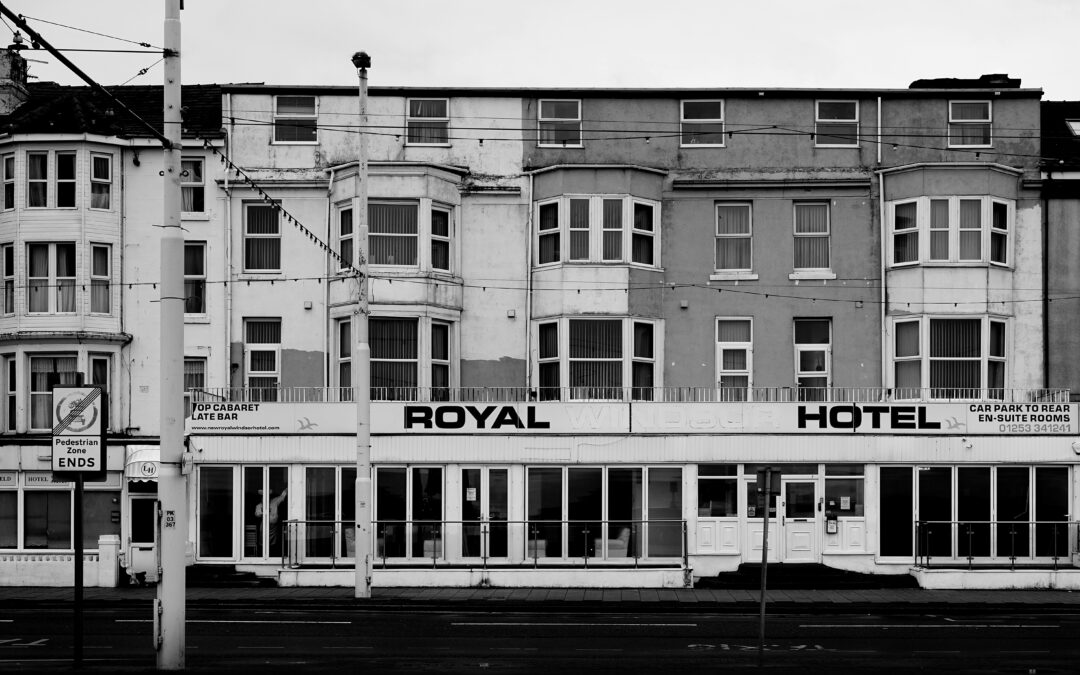
Your older sister is the amusement park at the end of the boardwalk, the one that’s been in the mayor’s family for a century and looks it; the one the mayor doesn’t maintain because the newer one, halfway down and closer to the big hotels, gets all the foot traffic these days, so why bother?
Your sister used to be the tilt-a-whirl, or maybe the teacups, careening you in circles, breathless with laughter, falling on your knees, dizzy. Now she is a roller coaster not fully on its tracks, your stomach dropping on every plunge. Today might be the day she derails.
You can’t eat the food at your sister’s even though you love custard and Chipwiches and powdery funnel cake so hot it burns the roof of your mouth. Your sister has failed the health inspection. She does not wash her hands after using the bathroom; there are mice in her kitchen. She put bleach on the fries instead of vinegar. She claimed it was an accident, but you have doubts. The chest pain, the breathing problems were the same either way.
After the hammer incident, your sister is the Ferris wheel with two carriages sent out for repair. You’re unsure which is more frightening: the shattered stubs of her front teeth or her refusal to get them fixed. She’s the carousel with peeling paint. The new pills dry her skin, leaving it to flake into dusty pieces, like feathers on a moth’s wing. It’s been so long since your sister soared.
Your sister is a mirror maze you can’t find your way out of, her reflection distorted into the unrecognizable, every turn a prayer that she stays on these meds. She always goes off them when she’s feeling better, insists she doesn’t need them anymore.
After Labor Day, when tourist season ends, your sister is the amusement park the mayor boards up half-heartedly. No one is surprised this year’s closure is permanent, the rides to be packed up and warehoused elsewhere. The mayor says he had no choice; he could not afford the bills. He wishes there could be a different outcome.
Your parents say the same.
Now your sister is the haunted house you always hated, the one with fluorescent paint more childish than chilling, the one with balls on springs that grab your ankles at every step. You lurk in her doorway, primed for fast escape. Still, she jump scares you from behind the bed, the dresser. Memories pour from the closet, all the more terrifying because they are good ones, reminders she was once the log flume splashing away the heat; the bumper cars jolting you into giggles; reminders that architecture is genetic and you or your children could become a haunted house, too.
by Hannah Goss | Oct 6, 2025 | micro, publications
Seeking a companion. Need not be romantic; platonic is fine. Just someone to wake up to for that morning breath that feels stale with closed-mouth soft snores, and those eyes holding long, floating eyelashes that I want to touch but won’t. Just someone who will empty the dishwasher. Or load it. We can take turns. Someone who likes early mornings, but not more than me. Leave me some empty hours. Then I’ll make us some eggs, dippy in the center, to run golden down your chin. Or tofu, if you’re vegan. I don’t discriminate.
Someone who will take out the trash without me having to ask. Someone who just notices that it’s full. Someone who will follow me to parties and lean in when I tell a joke, introduce me to the people I don’t know. Make me feel important. Someone to whom I can say: “The electric bill is kind of high, will you call?” And: “Don’t forget the garlic,” and “Did you see that look she gave me?”
Someone who likes getting caught in the rain. Maybe likes piña coladas. I don’t know. They seem fun. Just someone who is fun.
Someone who will watch horror movies even though I’ll close my eyes when the knife goes in or the lights go out. I’ll yell, “Right behind you!” You grip my hand. Someone who will hold my hand when it gets scary.
Someone who will tell me that it’s them who is making the floorboards creak at night. Not to worry. Someone who will fill that space between dinner and sundown with something other than absence. Make me watch the sunset. Want to see it rise again.
by Jomil Ebro | Oct 3, 2025 | contest winner, micro, publications
during a 50-minute massage. The grading, the emails, the sunken cold: my mid-back balled into a walnut. At Hand and Stone, a blind masseuse named Homer leads me to a room with prancing emerald lights: hospital sink, mirror from Marshall’s—a franchised underworld.
“Nice name. Homer. Like the writer,” I confirm.
“Like Homer Simpson,” he corrects, voice as soothing as the guitar-plucking on Spotify.
Homer’s good. I feel his fingers vibrate; riverstone of elbow, railway of forearm, twinge of hidden bruise. But it’s the lonely, long vowel of Homer’s name that drops me: Hom-er…Home. This time, it’s my dad. When he taught me how to hit a homer. Elbows in on the swing. When he’d take me to Home Depot, which I hated because it meant resurrecting a car or a brittle house—I still smell him in 2 x 4s, see the sun in the tawny of his arm. When he’d say, “Back home in the Philippines…,” and the black wind of his eyes curled back somewhere. When he went to EMT school at 40 and tried, he got good at naming muscles: rhomboid, soleus. When last we walked on Santa Monica Pier, salted crab in the air, in his maroon Members Only jacket, eating cotton candy just to hold something, I asked in anger why he did that to mom, and who is my half-sister, and why he couldn’t quit smoking so that he might see his grandson be born. When all he’d say was, I know, in that undammable voice which made the gloaming ocean freeze.
O, how I aged into a slender axe that could shatter that Pacific with a lone syllable. How one camouflaged siren of memory beaches us. How I want to approach him, cupping my palms around his trembling matchstick one last time.
by Elvis Bego | Oct 2, 2025 | flash fiction
Winter lay down fat in its white robe as if to die. The war was over, and he ached to get home after years of service in foreign parts. The villagers kept cramming his mouth with sausages and boiled cabbage and the grime of their fingers. They had made him their own. The leave-taking took forever, but even forever must end sometime.
At dawn, the cart was loaded with his things, and the driver shouted at the horse. Everybody followed to the station, and he struggled with the saltwater that rimmed his eyelids now. Shawls and gloves had been knitted for him by ruddy old women. Somebody made him a satchel. They all made such noise you would think it was a wedding. His friends carried him, sang songs of return. The children flew about like confused swallows, shrieking parodies of the same dirges, hoping for a treat or a coin. His own children had grown up awaiting his return. Yes, it was time.
The carriage clattered down the scree and the path that had been cut atop the steep dyke. Hairs in nostrils felt like copper wires. The horse snorted clouds like a train. They all looked and still could not see the station for the fog.
The train was coming. It appeared, neighed, squealed, and stopped, but, with its own nervous snorts, seemed eager to set out again. There were hasty kisses, laughter, promises.
Come back! they said.
Someone pushed a cloth wrapped around a loaf of bread into his hands, and it was still warm.
Lake, mountain, valley, he knew none of it. Truly, clouds had spun and dropped their cloak across the world. No home in sight for days.
One night came a yellow station light, and it grew, and his heart leaped as the train neighed, squealed, and slowed to a lurch, and stopped. He jumped to his feet, but then saw it was the village station again. All his friends were there, still merry, welcoming him, sending him off.
Stay in your seat, they said, you only have a minute before the train departs. What’s going on? he shouted through the glass.
Eh, said one in answer.
What?
Are you hungry?
By now, the train was too loud and the pistons in swing.
Snow melted and drained. The train kept coming back to the village. All his friends were always there, always happy, always saying goodbye, as if for the first time.
Do you know what’s going on, he asked his friends. Why am I here? Why are you here?
Why are we here? said one, as if insulted.
Dear friend, said another.
Things are here, and things are there, said a third.
Did you just say goodbye to me? And how many times?
What?
How do I get home? he asked.
Home? said one. We will see you soon enough, no?
This is just how it was going to be.
Previously published in The Moth (2015).
by Jay McKenzie | Sep 29, 2025 | micro, Uncategorized
Capuchin monkeys are named after the monks who are named after the drink or something like that, could be the other way around, so when Sam says that Olivia’s voice is like cappuccino we nod but we don’t really know what it means because none of us have tasted cappuccino, it’s just something from TV and Ben says don’t you mean chocolate? and Sam says something about him being unoriginal but the next time Olivia sings in assembly we all just get it and it’s like we can taste it, rich and strong and beautiful with a something sweet sprinkled on top, and even though it’s Olivia with her red hair looking ordinary but not ordinary in the hall, and though it’s this little light of mine and not whatever Lola wants, we could be sipping at it in the early hours as a smoky Gatsby-style jazz club is drawing to a close and Olivia there not in a grey skirt but in tassels or sequins or liquid gold, and we boys fold our hands in our laps just in case and the girls cross their legs and even Mr. Lamington who does the music is looking at her and not the piano and Olivia is looking somewhere else, beyond a draughty school hall that is too small to hold her ambition or notes sprinkled with cocoa sugar.
Later, in years where a cappuccino is just something to be grabbed from Costa, yes in the keep cup please, and we don’t even taste it because thoughts are punctuated by the clack of fingers tap tap dancing over a keyboard while we race through deadline, meeting, team share, it’s just something hot and wet to get us through, and grey Thursdays in Basingstoke are nothing more than that, and there she is in the street, Olivia, in a green coat clutching a keep cup and she’s there all ordinary but not ordinary, hi Olivia, and she tilts her head ah hi! How are you? and the relief that she remembers when most of us have almost forgotten who we are and she says I’m a singer now, and she’s lit up like she’s got a spotlight inside, well of course, you were always so talented, and she nods at the keep cup, cappuccino? she asks, nod, yes, cappuccino and she says cheers, chinks the cups together, haha cheers, and walking on, back to the office, take a sip and taste it again, that first thought of cappuccino, that first almost-taste of coffee laced with stars.
Inspired by the voice of Robyn Adele Anderson
by Fractured Lit | Sep 26, 2025 | interview, news
Caren Beilin’s new book, Sea, Poison, is a short, sprawling novel, remarkably complex in its brevity and wonderfully playful despite the heaviness of its themes. It tells the story of Cumin Baleen, a writer living in a “city of hospitals,” as she tries to make sense of a medical scam that targeted her.
Sea, Poison is in dialogue with two other books: The Sea and Poison, Shusaku Endo’s harrowing historical novel about vivisection, and A Void, the novel Georges Perec wrote without the letter E. A Void came out of the Oulipo, a French literary and mathematical society dedicated to writing under experimental formal constraints. In Sea, Poison, the constraint is imposed from without—a surgery leaves Cumin with brain damage that confines her prose.
I love tricky formal constraints because getting through them requires strange, inventive uses of language. But Caren Beilin’s language is pretty much always strange and inventive. When she applies Oulipian restrictions in Sea, Poison, it reads as her voice, only more so.
-Sophie Drukman-Feldstein
For such a short book, Sea, Poison covers an enormous amount of ground: medical abuse in general and gynecological abuse in particular, sexual desire and romantic jealousy, polyamory, genocide, exploitation in the arts, precarity, societal outlooks towards victimhood … The novel also takes some dramatic stylistic turns. How did the different elements of this book come together, thematically and formally?
Sea, Poison began with a desire to write like Shusaku Endo. This desire coincided with my building awareness of a spate of cases in the news concerning criminality in the field of OB/GYN—cases where doctors had been abusing their patients for decades—primarily concerning forced or unwarranted hysterectomies (for purposes of sterilization or simply, to make $$$ through an insurance scam) and, rape.
I was particularly intrigued by the case of Javaid Perwaiz, an OB/GYN from Maryland who made about 18 million by charging insurance for an inordinate amount of hysterectomies—among a lot of nefarious stuff, he was telling women they had Cancer. He spent about 2 mil at Sunglass Hut. Patients had been raising concerns about him to medical boards and the legal system for decades—he’s now in prison, but it took about 30 years. This all coincided with a conversation I had with my mother that let me know the ways my own life intersects with this problem.
My first draft of Sea, Poison was a line for line syntactical mirror of Endo’s novel about human vivisection during World War II, The Sea and Poison. In this draft, I painstakingly described—as Endo did with the human vivisections of POWs in Japan—Perwaiz’s operations involving uterus theft, and was particularly interested in the ways all the people around a criminal doctor—nurses, assistants, administrators, institutions of higher education, the Olympic Committee—support those crimes, even if some do so tremulously, maybe out of massive ineptitude, or from their own horrific corners (traps). This was not a viable novel, as it did not contain enough of my voice and it was not funny. Plus, I was left with an uneasy feeling, conducting (via writing) these same criminal surgeries. So I wrecked the whole thing with more voice/my syntax and jokes, because who wants to read a novel about gynecological crime (which is basically a synonym for “the news these days”) if it’s not funny. So I hope it’s pretty funny, and ruined all through it with sexual desires and other ideas and parts of life, which also exist.
(The chapter “A Manager” is a vestige of the earlier Endo form where the sentences mirror his in terms of syntactical arrangement).
Did Cumin Baleen, the protagonist of Sea, Poison, emerge from the character by the same name in your short story “The Start”? If so, could you talk about the process of carrying a character from a shorter work into a longer one?
I suppose she did! For me, it’s not too much of a process since I write in a blurry, autofictiony space where I don’t take a lot of care between characters and whatever I consider myself to be. Something about “Cumin Baleen,” though, maybe jokes around about the self-seriousness that can come with autofiction.
I wanted to ask about this jokey approach to autofiction! Sea, Poison has two characters whose names are playful bastardizations of your own name. Both “The Start” and Sea, Poison talk about Cumin as a doppelgänger. Sea, Poison’s Cumin ties her experiences to a novel she’s writing, perhaps the same novel we’re reading. You also once said that you don’t care whether or not people think the protagonist of Revenge of the Scapegoat is you. How do you feel towards autofiction as a genre? Do you have any thoughts on the tendency to assume women’s writing is autobiographical?
Before I started writing autofiction more explicitly, I was used to people conflating my characters with me all of the time, sometimes uncomfortably. I felt affronted actually. These days I’m so inclined to use autofiction as a lure—there’s something so loud and obvious and even obnoxious about this form, and of course very intriguing on a base, gossip level. It draws someone in, this little shaking treat of potential nonfiction. The important thing about autofiction, to me, is that it’s not a sincere form. For me, it’s a lure and a joke. It’s a self-deprecating form in at least two ways—one, reading autofiction that isn’t self-deprecating in style/tone is largely excruciating and two, autofiction is so sort of pompously and ridiculously on-the-self that hopefully it deprecates the importance of “self” or even this kind of very dominant protagonism in fiction form.
Writers of other forms of fiction spend a lot of time developing characters—developing individuals, with their different traits and proclivities and particular backgrounds and probably, goodnesses—but a writer of autofiction doesn’t really have to do that. Like, whatever, it’s me, or it’s not. Read my bio. It deflates this task in fiction writing, which is a task bound up in individualism, maybe Western exceptionalism, maybe imperialism and war, genocide … these moments when all of the attention, the plot must pool around what someone’s traits are like, or how they are good, or will become good. Over and against what? Well, a lot of other people and things. I’m not exactly arguing for no protagonists (though I’m a huge fan of the literary magazine LEAN, which is devoted to non-protagonist-centered fiction—and my answer here takes inspiration from the editor Semyon Khokhlov’s narrative theory), but something about autofiction as a form deflates and, to me, makes a joke out of being a person. (It’s also a way to not write within that dominant strategy of empathy—writing the other—which I find to be, at its worst, imperialism, colonization, domination, erasure).
Sea, Poison involves an elaborate scheme to force concision and simplicity onto Cumin’s prose. How do you, as an author, experience the norm of concision in writing? Where do you think this norm comes from, and what do you think it does?
When I was in grad school for creative writing I had a professor who used to chide us for writing in such a way where he felt he was “slipping on a banana peel,” which was a way of saying “be concise,” or “not so language-y,” “don’t trip me up,” which was confusing to me, at the time, because in his courses we were often valorizing Barthelme. Who is allowed to be so extravagant? Concision is often linked to wisdom, like a precise observation or knowledge (it’s a common power tactic in a business setting to be laconic) but I don’t think I write because I’m wise or precise or knowing or a good businesswoman.
For me, you could be concise or not concise, but be in a dynamic with the reader—be giving that person too much, more than they want or expected or think they can handle, or give them too little, causing their mind to tumble with philosophy, or give something that seems exact like an aphorism. That’s fun. Sometimes concision is a necessary revision tactic if it feels like the writer doesn’t know the reader will be there and has a mind. Like, it’s not good to blather or complete every visual or every thought. But yeah, a lot of my work is about being too much, feeling and desiring too much, seeing and thinking too much, bleeding too much, being too sick, too silly, too gross, overfeeling things, spending too much time in the bathroom, I mean obviously I favor an excessive syntax.
Cumin says, of victimhood, “it is so hard, in life, to get off of the nose … But people really need you to do that. They get annoyed. They get bored.” Has this perception—that stories of victimhood are too on the nose—impacted your writing? If so, how?
For Revenge of the Scapegoat, my previous novel, I was interviewed by Brad Listi for his podcast. Due to the topic of that book, he asked me if I was the kind of person who holds grudges and it was so unsavory to me to admit that I am that I lied. I said that while this may have been my way as a child and younger person, I’m better now. Because the better thing in life is to not dwell in insult and to move on, that’s a better personality profile, it’s reassuring to hear about someone (that they don’t), and it’s comfortable to spend time with someone who doesn’t hold a grudge. But I am very confused about how this all works, considering some people in society are so much more likely to be victimized and it would sometimes be deeply important to recognize yourself as a victim (and for others to recognize this as well). In all the cult docs, a big motivator for the cult members to keep staying in the abusive situation is they get admonished for having a victim mentality—but they are victims of the cult. It’s such a fear people have, of being seen as having this mentality. A lot of people would do anything to not be seen this way, or to be seen as a victim. But there are victims. There are victims, for example, of gynecological crime. I don’t know how to square up the disgust society has for the “victim mentality” and its role in creating victims. I hope my confusion over this comes through in the writing.
You use the framework of Oulipian constraints to explore the kinds of restrictions that get imposed on writing from without, by oppressive institutions. Could you talk about how you view the Oulipo’s creative project in relation to these more inescapable, violent constraints?
Oulipo inspires and enables me. It is a practice of resilience. And, its very practice (of imposing sometimes impossible-seeming constraints on language production) is a recognition of the ways in which our language is largely automated, and would need to be forced, somehow, out of this automation. With Oulipo, you can be in touch with the parts of yourself/your language that are not simply running a script, a part of language you might not easily find access to without imposing massive, punishing constraints on “flow”—might be helpful, no, to mess with the flow, considering what we seem to be flowing towards?
There are many inescapable, violent, outwardly imposed constraints … Thinking of Oulipo in relation to these, I think about resilience, about the refusal to not survive, and to live anyway, write anyway.
You write that there is “no character sketch, no beginning of a book or anything, that genocide doesn’t sway right into the insides of.” How do you see the role of writers and other cultural workers today, in this time of extreme repression of those who speak or write against genocide?
Largely, if we are independently involved in language, dialogue, artmaking, gatherings, representation, poetry, conceptual provocations, storytelling—our role is peace. These are the activities of a peaceful society. I did not write Sea, Poison in light of more recent (getting very un-recent) events, but much of my work discusses the horror of genocide and the horror of the profusion of genocide in our human history. Heart of Darkness comes up in a couple of my works—in Spain, in Sea, Poison—I’m sure it’s because it’s a very impactful book on many levels, one of those impacts for me, personally, is that reading Heart of Darkness alerted me to a genocide I previously had no knowledge of (of the Congolese during Europe’s “Scramble for Africa”).
How many genocides have there been? I was humbled to learn about China’s Great Leap Forward, a three year period (1959–1961) of aggressive industrialization that saw an estimated 50 million deaths due to a government-induced famine. I didn’t know a thing about that until I attended a poetry reading by Jane Wong, where she read her poem “After Preparing the Altar, the Ghosts Feast Feverishly” which she says was dictated to her, very suddenly, by her ancestors who died in this (if you read the poem, you’ll believe it). There are many genocides spanning human history. Conrad, Wong, here are two writers who delivered the news of a genocide to me—who else was going to tell me? Had I come across these elsewhere?—no.
Or take Endo’s The Sea and Poison, overtly about the human vivisection of American POWs in Japan during World War II, but certainly calling to mind the concurrent Japanese activities of Unit 731, carried out in China during the war, which killed 14,000 people onsite (medical experimentation) and is considered responsible for 200k additional deaths due to its research into infectious disease. So there’s a very important role for writers, artists, in acknowledging and discussing mass killings and genocide—the very real human capacity to do so. As a Jewish person raised by someone born in a refugee camp in Austria, to parents who had survived (and lost everyone else), I was raised with persistent messaging from my family and my religious leaders to stamp out genocide wherever I were to see it growing. And how effective it was, as they helped to raise someone who is attuned to the signs of genocide—othering taken to its extreme. Scapegoating given to its logical conclusion. It may have been even more effective to link our devastating history to that of the Congolese, to the Chinese, to all who had been carelessly or carefully exterminated (unsuccessfully! Genocide is a lot of things, but it’s so fucking futile—this earth is populated by descendents of survivors of genocides)—then, we would have even more practice in recognizing the insidious motion of the genocidaire, how transferable it is across the human.
In Sea, Poison, I write as I often do about my status as a descendent of the Holocaust—one small choice I might highlight in this is the way I first discuss the genocide of the Congolese, in a small attempt to disrupt the primacy of one genocide over others, in the awful case that the fact of one genocide would somehow lessen or disqualify (or rationalize) any other. This idea, to skewer the primacy of my own family’s story of survival, with the initial acknowledgement of the Congolese, came from a conversation I had with David Naimon on his podcast, Between the Covers, and some of our shared ideas about growing up Jewish.
What was the experience of writing with Oulipian formal constraints like for you? What about the experience of writing the section that mimics Endo?
Sheer bliss! Effacing one’s own style only brings you closer to it. Mimicking another writer is a way to feel their awesomeness. The brilliance and deadliness and strangeness of Endo’s syntax—calm, direct, effusing these doubles, mirrors, often in the same sentence—is forever in my heart.
How did Perec write A Void without “control F”?!?!!?
I was surprised that the constraint around which the plot revolves—the shortening of sentences—is never applied to more than a few lines of the book. What went into that choice?
This narration is written inside of the triumph of—despite violent constraint—finding a fucking way to do it. Slip on these banana peels, motherfucker.
I really love all the descriptions of extreme, bizarre, and sometimes gruesome conceptual art that feature in many of your works (including Sea, Poison). How and why do you imagine so much fucked up art?
I was in art school and beginning to write seriously during the peak of a particular group of artists dominating the scene. Art world megafauna. Damien Hirst with his slabs of cow. Jake and Dinos Chapman who drew on real Goya sketches. Tracey Emin’s tent. I don’t know if I was in love with these artists but I was enthralled by them, and they were frequently in my visual field. They seemed like they were dripping in money. I remember Emin’s self-portrait “I’ve Got It All,” a photograph of her shoving money at her crotch. The art was willful and exasperating. It relied heavily on persona. Sometimes it felt evil. It was too surface-y and shove-y to feel profound. A kind of craftless art—paying other people to stick diamonds on a human skull. It was like, Art is just as bad as the rest of the world. A lot of the art was like “Suck my dick.” A lot of it’s about commandeering resources. I think I obviously admire it or am jealous or something. Part of my imagining so much fucked-up art is my enjoyment in partaking. There are other layers. In mid-life I’ve started to become overwhelmed with emotions before ancient art, antiquities. I tremble, in my new city of Cleveland, before a portable shrine from Tibet carved out of a solid section of log—or “The Stargazer,” a marble statuette from Western Anatolia circa 3300–1200 BCE. These artisans are anonymous—it is the craft, their offering, the materials and the working of them, that remains. I know in my own life that I must move, as an artist and person, from persona to anonymous, and I tremble before the task (ego where will you go?) and before the art that I am now drawn to.
I also appreciate that you often approach unusual things as literature. I’m thinking of Iris’s students’ emails in Revenge of the Scapegoat and Cumin’s search history in “The Start,” as well as the overall idea, in Sea, Poison, that medical violence could constitute a literary project. What appeals to you about these kinds of unconventional literature? Are there any unexpected places where you’re finding inspiration these days?
I feel humbled by these wonderful questions. I think it is somewhat about that willfulness of the artist. To use anything, move anything into the realm of creation. To refuse not to create. To convert impoverished fields into fields of provocation, music, color, design, story, poetry, into metareflection. In high school I had this dick pre-calc teacher. He really was one. Cruel, embittered guy, the kind of person who throws a chair around in frustration in front of children. I was startled, triggered, repulsed by his anger. When it came time to do the final exam for the class, we could fill up an index card with anything we wanted, to help us through the exam. I filled mine with the poetry of Lawrence Ferlinghetti and then transferred it onto the test. I got an F. F is for Ferlinghetti.
• • •
Caren Beilin is the author of the novel Revenge of the Scapegoat (Dorothy, 2022), winner of the Vermont Book Award for Fiction. Her other books are Blackfishing the IUD (Wolfman Books, 2019), Spain (Rescue Press, 2018), The University of Pennsylvania (Noemi Press, 2014), and the chapbook Americans, Guests, or Us (Diagram/New Michigan Press, 2012). Some of these titles have been published abroad with The Last Books (Amsterdam) and los tres editores (Madrid). A new novel, Sea, Poison, is forthcoming from New Directions in October of 2025. She lives in Cleveland + Philly and is an Assistant Professor at Case Western Reserve University.
Sophie Drukman-Feldstein is a writer, editor, and French translator living in New York City. Their work has previously appeared in the Bellingham Review and Contemporary Verse 2. They read submissions for The Dodge.
by Kara Diune | Sep 25, 2025 | micro
The brother, Paleo, and I are doing inventory when it begins raining. Acid. It’s Acid Rain. The one that strictly arrives on the first Saturday of every month, to burn away the soil nutrients and kill the grass that has grown since the last acid washing. It’s a very dry planet. Our houses are known to crumble.
“Keto, come help me with the beans,” Paleo says. The toddler sister, Atkins, naps in the room next door.
“Stop telling me what to do,” I tell him. “I’m older than you. I could kill you in your sleep.” But I bend down to help him anyway, holding the doll’s mouth open as he tips kidney beans down her rubbery gullet. Inventory is not the worst chore in the world. The sex dolls are propped in a line against the kitchen wall, labeled RICE, FLOUR, and, of course, BEANS. Apparently, large Tupperware is too much for our parents to handle. The father is a part-time businessman whose side hustle is being a sex fiend. The mother is a hardcore elliptical coach at a private gym who tans her hide orange on weekends.
When she comes home, golden and sweaty, Atkins wakes up and begins crying.
“Those aren’t pinto, are they?” The mother asks, pointing at the BEANS doll.
“Kidney,” Paleo says.
“Good, good. A study just came out saying they have less fiber and can raise your blood sugar by point-five-one percent. Unbelievable.”
The shower turns on, and Atty keeps crying. We move on to NUT BUTTERS.
Depending on which diet the mother’s on, our dinners are blended into shakes, frozen into cubes, or wobbling in blocks of lime Jell-O. Tonight, it’s cubed fajitas with Heinz mayonnaise and cactus pear aioli. The tortillas are blended with whey and textured pea protein concentrate into nutritional smoothies.
“So I’m having lunch with Charles—Murdock, not Murphy, and he’s telling me he’s being sent off to Widower, to work for the eastern branch,” the father says. Paleo has already finished his cubes, and I’m cutting mine into an infinite number of tiny little chunks. Atty stuffs her face.
“This is the guy with the bitchy wife, by the way. The one who came into the office with the grocery store vegan cupcakes? So I’m like, ‘Widower’? Sounds like a good omen to me.’”
He laughs, then rapidly looks at us to gauge our reactions. We’re not laughing, so he stops. His right leg spastically bounces under the table.
“I want pasta juiceee,” Atty whines, thumping little fists against her tray table. “Juiceeeeee.”
“Hon, that’s tomorrow’s dinner,” the mother says.
“Oh, is it? I won’t be there for it, then. Leaving for going, ah, Wichita tomorrow morning. Business meeting,” the father says.
“You just came back today.”
“They need me up there. The northern branch is, ah, really struggling in the financial department right now.” He puts a hand on his leg to stop the bouncing, then the other leg starts up.
Paleo has already snuck away from the table, but no one notices or cares.
And now Atty has turned very still, her head making small jerks forward, her hands clenched in fists. Her lips are turning dusky blue.
“Keto,” the mother says as Atty continues to choke, “Why haven’t you been watching her? And can someone please pass the tortilla pitcher?”
by Khalisa Rae | Sep 22, 2025 | flash fiction
In Low Bone Parish, the water don’t knock. It just rises. Quiet at first, like breath
held too long. It slicks along the bayou’s edge, kisses porch steps, then swallows
whole towns without a word. Folks call it a natural disaster. But the women on our street
know better.
“The water comes when the women stop singing,” Nana always said, voice soft as
river moss.
That year, the river came early, slinking in through cracked windows and dreams. Mama said
it was just a storm. Said the levees would hold. Told us not to speak my sister’s name near
the door. As if names invited things in. But Nana just rocked slow on the porch, humming
a song with no words, just sound passed down from throats long turned to dust.
Then came the morning my sister disappeared.
She was eight.
Wore her yellow dress, the one with the ruffled sleeves that made her look like joy
pressed into cotton. She danced around the kitchen that morning, humming
to herself, sticky with syrup and sun. By noon, she was gone. The search party came
late and left early. Sheriff Jenkins said it was the current. Said little girls shouldn’t
be out near the water. As if that river weren’t stitched into our veins, baptized
into our bones. All they found were her shoes neatly placed side by side at the edge
of the marsh. Filled with mud. Like she’d stepped out of them and floated up.
Mama didn’t cry for two days. She just scrubbed the same floorboard over and over,
like she could erase the silence. Like grief was dirt that could be wiped away.
“She ain’t coming back,” Mama whispered on the third day. “That water took her.”
“No,” Nana said. “That water called her.”
Mama turned, eyes wild, face hollowed out like something eaten by time. “Don’t
start with that, Ma. Not now. Don’t bring your stories into this.”
Nana stood, slow and sure, like roots straightening themselves. “You forget what
you come from. You forget what we know. That girl didn’t drown. She got summoned.”
That night, I couldn’t sleep. My sister’s laugh
kept skipping across the floorboards. I
swore I heard her tapping on the window, soft like rain. I dreamed of her
underwater, skin glowing like moonlight on moss. And I woke with her name in my
mouth. I told Nana I wanted to find her. She didn’t flinch. Just pulled a small pouch
from under her apron—dried rosemary, a lock of my sister’s hair, a piece of rusted iron.
“You take this and walk barefoot,” she said.
“The river don’t hear shoes.”
Mama blocked the door.
“You really gonna let her walk into that thing?” she asked. “Let her be next?”
“I’m letting her remember,” Nana said. “We all forgot too much.”
The river felt warm, like it recognized me. It parted soft around my ankles,
whispering in a voice I almost knew. I walked deeper, Nana’s pouch pressed against
my chest. The water rose to my waist. Then my shoulders. Then everything else
went quiet.
Down there, the current spoke in hums and hushes. I saw women floating with their
eyes closed and their mouths open, singing songs with no sound. Girls twirled
through the silt, their dresses trailing like jellyfish, glowing in colors I don’t have
words for.
I saw her.
Not exactly her. But her shape. Her light.
She looked back at me with those big eyes of hers, and for a second, the water
stopped moving. She didn’t speak, but I heard her.
“I’m not afraid of ghosts. Just people.”
Then she smiled, kissed my hand, and the current pulled her gently into the dark.
When I came up, the moon had shifted. I don’t know how long I was gone. Nana was
waiting at the edge of the porch, a blanket in her arms. She wrapped me in it and held me without asking questions.
Mama came out a few minutes later. Her eyes met mine, full of something raw and wordless.
“You see her?” she asked.
I nodded.
And finally, Mama broke. She sank into the steps, her sobs folding into the night
like thunder after the flash. Nana sat beside her, their shoulders touching, not speaking,
not needing to.
The next morning, we sang.
Me. Nana. Mama.
We sang her name like a hymn, like a warning, like a door that still remembers how
to open. Let it stretch through the trees and over the water. Let it echo back.
And the river
for once—
listened.
by Thomas Kearnes | Sep 20, 2025 | flash fiction
I’m clean. I was clean five minutes ago. I scrubbed every inch of skin, washed my hair twice. Now I stand as the water streams over my body. The shower curtain is clear plastic. On the other side, standing before the mirror, Henry shoots the dope into his arm. I can’t see him with any clarity. All I see is the shape of his body, the minimal movements of his arms. He told me to stay in the shower until he was finished. Can’t stand being watched, he said. This is private, he said. You don’t need to see this. I wanted to say, I love you. Show me everything. But I said nothing. I snorted my share of the dope earlier. I was just starting to feel it, so I agreed to shower. Henry said he liked his boys clean. Can’t stand fucking a dirty boy. The water starts to cool. I’m running out of heat. I’ve never used the needle; I always believed that was too much, so I’m not sure how much time to give him. Surely, he must see himself in the mirror with its water spots spattered along the bottom of the glass. What does he think, gazing at his reflection as the dope sprints through his veins? Are you finished, I call out. The bathroom’s acoustics make my voice sound hollow, dead. Just another minute, he says, the words coming with difficulty. Once, soon after we started fucking, he asked me if I wanted to try it, to shoot up. It’s incredible, he said. You look in the mirror and forget who you are. But I said no. I tried to say I love you, but all that came out was no. The water now carries a distinct chill. I wrap my arms around myself, but they’re wet like the rest of me. There’s nowhere to go. Are you all right, I call out just to hear the sound of my voice. I hear, Oh, God. Oh, fuck me. Jesus fucking Christ. But I know I’m not meant to hear. I stare at his distorted silhouette through the plastic curtain. What am I waiting to see? It’s June. The air conditioning hums outside the room. I am thirty-two years old. I know my mother loves me. I know my father loved me. No one should ever know how much. I don’t want to die in East Texas. Henry exhales so loudly, I wonder if he’s done. I’m so wet and cold. I could turn off the water and simply stand in the tub. No, the thought of silence terrifies me. Just then, Henry’s silhouette moves closer. He has left the mirror. He moves like a twister surging through a pasture. He wants to fuck me. Always, after he’s done, that’s what happens. He pulls back the curtain. He’s so handsome I forget my name. He may not recognize himself, but I will always know him. Baby, he says, still holding the curtain. Water splashes onto the tile floor. Baby, he says, you’re shivering. Gimme a smile, he says. I wasn’t gone that long. Don’t I always come back for you? I want to say I love you, but instead I simply say yes. In less than a moment, he will touch me, and I will remember the first time he touched me. I will remember everything.
by Deb Waters | Sep 15, 2025 | contest winner, flash fiction, publications
I’m at a wedding in the Languedoc. It’s the last weekend of September. I’m relieved the hot, cruel summer is almost over. There’s a woman on the table next to mine with bleached hair and a magenta mouth. She looks like an eighties rock star. I can’t take my eyes off her. She’s wearing gold hoops and a purple boob tube that’s so sheer it shows the contours of her uneven nipples. She took a call halfway through the vows, and now she’s heckling the groom.
“What’s her problem?” I say to the man beside me. He’s wearing a linen suit, a fedora and trainers. He’s an art director called Tim. Or Tom. I suspect we’re being fixed up. She stands on her chair and gestures like a footie fan: oggy, oggy oggy, oi oi oi. Other guests twitch and recoil, or try to outstare the remains of their cassoulet.
“Mattie? Oh, she’s been like that since the baby,” says Tim-Tom. When he talks, he views me from the corner of his eyes in shifty glimpses. There’s a smudge of butter in his auburn beard.
“Baby?” The air is warm and weighted, it presses on my head like kneading fists.
“She dropped it.”
“It?”
“A boy, I think.”
I think about my own child, as unplanned as the relationship I was in, and as yearned for, both barely formed before their pitiful endings.
“What happened?” I ask.
“Dropped him onto a coffee table.”
“A coffee table?”
Mattie sits down and leans back. She yells for champagne. Where the top’s shifted to show her tan line, her skin looks sore and neglected.
“It was an accident,” he says, as though my face suggests otherwise. “Wriggled out of her grasp and fell. Poor thing didn’t stand a chance.”
“Coffee table?” I’m a high-pitched echo.
“Yeah, one of those glass-top ones. It shattered, went everywhere.” He mimes a bomb going off. Not glass breaking, a bomb. Boom.
“Jesus Christ, that’s awful.”
Mattie stands up and staggers towards the bride. A crimson-clad bridesmaid intercepts, puts an arm around Mattie’s waist, and gently leads her away. Mattie’s laughter sounds like mating foxes. I reach for a half-empty bottle of wine.
“Her husband left her. Blamed the drinking.”
“Before or after?” I ask.
“Before or after what?”
I turn my head and use my fingertips to rub at the pain that’s forming in my skull. The waiter puts crème brûlées in front of us. Tim-Tom stretches his limbs and rubs his palms together; he has hairy arms but smooth, feminine hands that look like they don’t belong to him. He grabs a spoon and whacks the caramelised top; it cracks and splinters. Boom, he mimes again.
I push mine away. “You don’t want it?” he says, and takes mine.
I put my elbows on the table, rest my chin on my palms, and watch Mattie. She twirls and sways to Dancing Queen. Wary guests give her a wide berth. When “Copacabana” comes on, I drain my glass, scrape my chair back, and shimmy up to her. Mattie smiles and hugs me, though she doesn’t know who I am. She smells of cigarettes and almonds. We move around in a drunken clasp and when Tim-Tom joins us I those warm hands of hers in mine and lead her off the dance floor.
Recent Comments