by Alex Bisker | Jan 18, 2024 | flash fiction
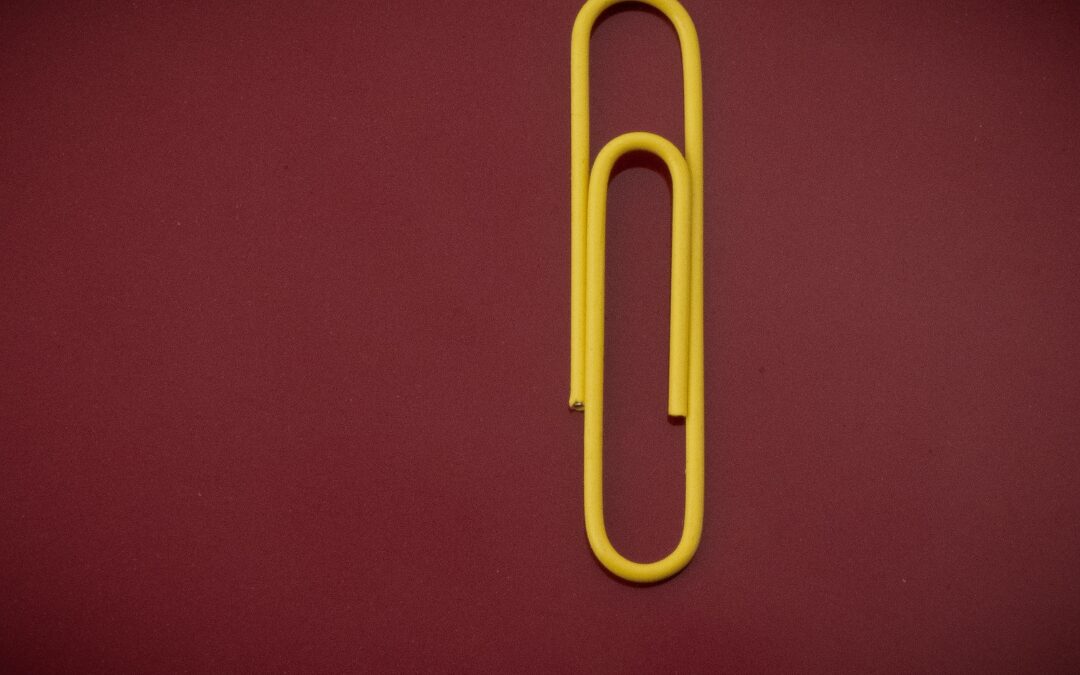
The paper clips look like angels if you bend them a certain way.
We wear them reverently or as reverently as seventh-grade girls can. Pinned to our collars, in remembrance of the popular boy who died: Our tiny office-supply seraphim.
Maggie was dating him for two weeks (almost two weeks) when it happened, and so Maggie is holy to us. Star-crossed lovers, she says, at the memorial, in the gymnasium. The principal winces, but we nod, enraptured. We recognize the iambic pentameter beneath the scratchy buzz of the microphone. We have been primed for tragedy, assigned it in third period. And here it is among us, finally, and one of us, chosen! Afterward, she carries a tissue box down the hall, an ark, and teachers part like the sea.
She wears his blue flannel around her waist, and we ache to touch it. Instead, we swirl in her eddies and lap up her sorrow. A solemn chorus, faces puffy from tears. We check the mirrors in our lockers, smudge our makeup just so. Adjust our paper clips. Then we trail her from pre-algebra to library studies, gripping the white wires of our headphones, pulling them through thumb and finger slowly, methodically. Lead us not into temptation.
We remember the popular boy in spurts, whisper memories like prayers: A lewd joke he made to one of us. The gray meanness of his eyes. How he made us feel like stains, how we ached for him to scour us clean of ourselves. Even the memory of it makes us bite our lips, heat spreading up our necks and in the dark places between our thighs.
But that’s not how Maggie remembers him. She is full of lunch period pronouncements now. We were in love, she tells us, ripping the crust from her jelly sandwich. And being in love changes you. She is stoic as stained glass. You wouldn’t understand.
The flannel fans out around her pale legs. We agree. We are unworthy. Abject in our ignorance. We offer her pudding cups in hopes of absolution, but her disdain is delicious. In her words, we hear the boy made flesh again, and it makes us tremble. She slurps her chocolate milk and sighs. Maybe it’s best if you sit somewhere else. She flicks her fingers, dismissive, like she’s sprinkling holy water. Her blessing burns us, and we bob our heads, penitent. Forgive us, our trespasses.
We carry on. Lost in the wilderness, we pinch each other’s arms when we need fresh tears. The paper clips bite into our flesh, chafe against our training bras. Maggie avoids us in the halls.
Did we not obey? Did we not smear our mascara?
We wring our hands. We are high on this feeling, but she is taking it from us, this grief that is the biggest, most real thing to have happened so far in our short, short lives. And that we cannot forgive.
But she was our intermediary once, our bridge to this feeling.
She could be again.
The idea comes over us like a fever—a vision. Our torment shall become our salvation. We’re used to one thing becoming another. Water to wine. Grape juice to blood. As we forgive those who trespass against us.
Maybe we hope for an intercession. For someone to save us from ourselves. But probably not. She almost seems to be waiting for us, for our beatification. You too can be an angel, say our hands.
Yes, say her eyes. That is best.
The paper clips look like angels if you bend them a certain way. And if you loop one around another, you can make two. It looks like they’re holding hands, like they were destined to be that way. We wear them reverently, as reverently as we can.
by Carly Alaimo | Jan 15, 2024 | flash fiction
In this future, my mistakes as a parent—the ones my friends told me not to beat myself up about—they make a difference. They’re the first divots of trauma in Melody’s soon-to-be-totaled-out soul. I can hold her attention for a few brief years with watercolors and pipe cleaners before she breaks from my gravitational pull. By five, she sees straight through me, concludes that I’m a sorry excuse for a mother; I could’ve tried harder, that her proximity to my battered star cannot sustain human life.
It’s obvious, she tells me the day she detaches from my orbit, that I do not love myself, and therefore, I cannot properly love her. She isn’t wrong. As history has shown us, the women in my family are not reliable suns; we are inept at warming.
I let her go, watch her whirl away; a single speck of stardust, my solar nebula, barreling through the great expanse. In the blackness she gathers things, harnessing her memories of Disney princesses and Taylor Swift lyrics, recites the stories we read to her about thunder cake and filling buckets. She constructs Magna-Tile forests, Cinnamon Toast Crunch mansions with Frosted Flake roofs. With these materials, she builds her own planet, one filled with children, that in its early stages is just a giant pool party where kids squirt each other in the eyes with water guns. Here, our daughter is The Queen Mermaid and receives unlimited popsicles, tossing the half-melted ones to kids who leave their cherished toys at her Outshine alter. She is a lawless space ruler, finned and feral. Hairbrushes, toothbrushes—what the fuck are those? She eats Sour Patch Kids for breakfast. She grinds the sandpapery gummies in her rotting teeth, shredding our favorite books with unapproved adult scissors. She can’t hear our nervous begging. Her spacesuit is resistant to interplanetary adult interference. Lightyears away, her power grows. She forms strange opinions about how much fruit punch is safe to drink, how telling the truth is a waste of time. Her tongue is an orange Fanta-flavored scythe. She can dismantle a weak argument in seconds, make you feel as small as you always feared you are.
Back home, we receive middle-of-the-night texts from the other children about her crimes. We learn at this point she has a pretty advanced addiction to a pill made from pulverized spacerock and some kind of odorless cooking oil.
The day we get news of the coup, Melody is no longer queen of her planet. We’re told she’s returned to Earth with a boyfriend, Surge. Together, they rob pharmacies. Maybe they start a cult that inspires a Hulu documentary series or, they become Protestants or, they plot to murder us and do.
Anyway, in this nightmare future, she dies well before us, or directly after us.
When she’s mourned in our world, they call her a lost soul, wasted potential. Of course, her end can be traced back to my dreadful parenting. It’s obvious to everyone—the media, the President, churches, schools, our friends and families—her violent end was the fault of the mother.
Somewhere like death, our ghosts hold hands and sigh. In the afterlife, we can agree on three things:
- We hope she’s not stuck somewhere forever with Surge.
- We wish she were here with us in this place that smells like a parking garage.
- We don’t blame her for anything.
Where we are is a type of purgatory, we guess, even though we’ve never believed in purgatory. In vain, we sniff the air for her soda breath, strain for echoes of her hopscotch in the stairwells. Sometimes, it feels like we’re getting close to finding her, like one of us will mistake the sound of squeaking brakes for her laugh, but that nagging fear that we’ve lost her for good? That never really goes away. We argue about what version of Melody we’ll find, where those versions are likely to be hiding. At some point in time, we release our hands to conduct our own private quests for Melody—we both think we always knew her better—and live out eternity circling opposite floors on foot, searching, waiting for her to call.
by Jennifer Ahlquist | Jan 11, 2024 | flash fiction
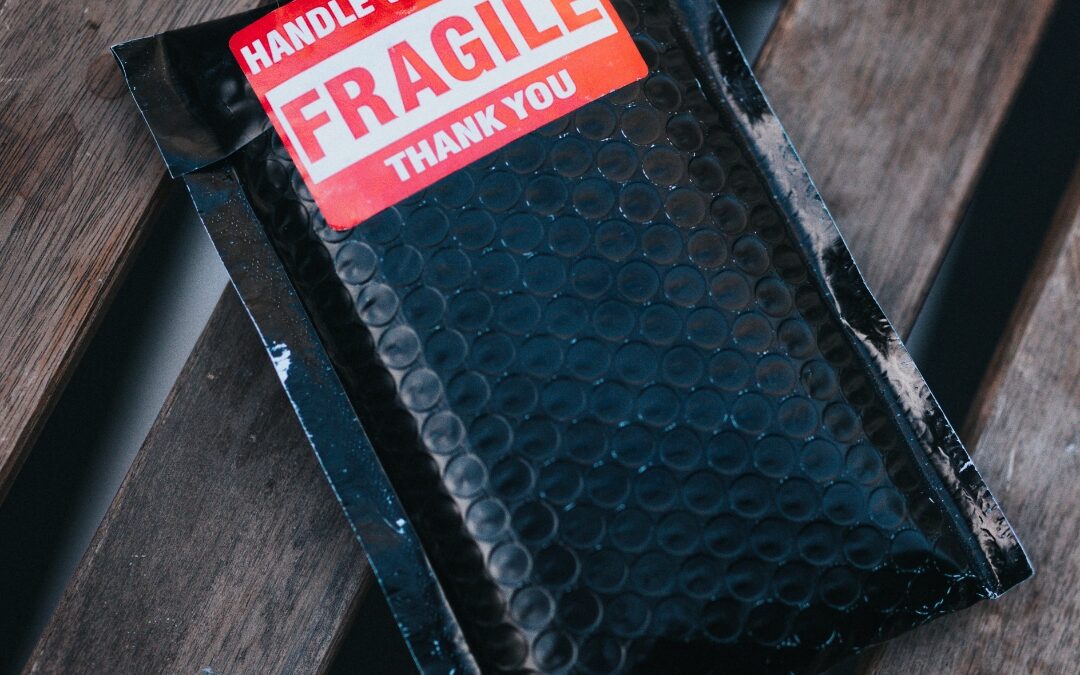
A new pair of underwear arrives in the mail on the 14th of every month. The subscription service delivers on their promise, and the hip-huggers, thongs, and French-cut briefs are as beautiful as they are comfortable. This month’s pair is very good. Bikini cut, pale blue, a generous reveal of the lower cheek. They’re sexy in the way that morning light on a down comforter is sexy, when two people rock themselves awake against each other, the sweet obscenity of a day post-coitus, pre-anything else. She pulls them on and runs her hands over her ass to test if they are softer than her skin—close call.
The subscription was a gift, back when she and the Ex could both enjoy it. A year since the breakup and she hasn’t gone a single month without a black box appearing on her doorstep, freckled with smooches and a St. Valentine’s logo embossed in labial pink. The account and billing are still in the Ex’s name. The Ex has never contacted her to ask for thanks or if March’s pair was better than April’s. The subscription automatically renews, and it’s possible the Ex simply forgot about the recurring charge, but who else could have updated the delivery address?
She considers calling the Ex. She doesn’t. Instead, she lies in front of her mirror and imagines calling the Ex. “Thank you,” she says. She doesn’t want anything specifically from them anymore, but the offering still feels good. The Ex wants to give. She wants to take. No one is promising to keep. She rubs at herself until guilt and friction make her ecstatic. After, she slips the satiny thing off and tucks it back inside the tissue paper. In the morning, she puts the blue bikini briefs into an oversized envelope and mails them to their old apartment—the only address she has for the Ex. It’s what she’s done every month, with every pair, for the past year.
The new tenants in Apartment 5D, a family of three, can’t figure out where the panties are coming from. A pair of musky, wrinkled underwear arrives by mail on the 16th or 17th of every month in an oversized envelope with no return address. The parents accuse their teenage son of soliciting the deliveries online. There was a prior incident—X-rated charges on the credit card they gave him for emergencies. They cancel the card on a hunch. The deliveries don’t stop.
The parents make a show of opening and throwing away the packages in front of him. He tries to reason with them. He points out the postmark of the USPS branch nearby. They ask if they should feel better that he buys locally. When the son brings home a girlfriend, his mother looks at her with pity and puts extra honey in the iced tea she brings to his room as an excuse to interrupt them. His father calls her miss, asks what time her parents expect her home.
In September, when the son leaves for college, the packages still do not stop. Being relieved of the duty of moral instruction—at least in the day-to-day—awakens the new empty-nesters to neglected appetites. They have been discussing lately how they should maybe move closer to the city. When that month’s pair arrives, they take turns trying on the stretchy blue bikini briefs still damp at the gusset. They couple on the floor, and the discarded tissue paper rustles underneath them. In the morning, they both sign the card they will tuck into the first care package they mail to their son: a dozen vacuum-sealed snickerdoodles, a few colored pens and highlighters, a framed photo, body wash, a new toothbrush and, although his mother made sure he left home knowing how to do his laundry, a 6-pack of Hanes boxer briefs. It’s not quite an apology, but they want him to know they’re thinking of him.
by Tara Isabel Zambrano | Jan 8, 2024 | flash fiction
I pick up stuff. Things others left behind. Scarves, mittens, dollar bills, pens, rings. And I cannot describe what it feels like to carry these things around. A month ago, in a crowded bus, I was standing behind a girl with a gym bag, and I noticed her deodorant almost falling out. I slowly pulled it out. I used it every morning until it ran out.
A few days later, a woman left her lipstick next to the sink in a restroom. It was a beautiful shade of orange. Before, when I saw her smacking her lips and placing the makeup in her blind spot, I knew she’d forget. That’s the amazing thing. I know it will happen. Restrooms are the best places, there are no cameras. Usually, people go back to look for their things. I watch them from a distance. It’s disappointing they give up so quickly.
I work at a Walmart next to my apartment, greet people and bag groceries. Customers leave their things in the bagging area, next to the cash register, in the carts, sometimes on the floor. Especially the moms with little babies, old people, teenagers with plugged ears. I often brush past their fingers while taking cash, checks or giving out receipts. It feels like I have touched their being, if only for a moment. After my shift is over, I take a bus to a public library or a mall or a park.
I am a fan of Dostoevsky because his books are long and hard to put down. On weekends, I read them in the library next to the tall, elegant windows. It feels good to keep coming back to something.
On days I don’t want to draw attention to myself, I go home, head to my bedroom, and place all the picked stuff on my bed. A strange feeling takes over — a rush mixed with tightness like you know something others don’t. And what keeps me awake at night is this: when something/someone goes missing, no one cares after a while. The world goes on. Nothing changes.
A week ago, when I was roaming in a park, I saw a woman sitting with a package in her lap, her hands on top of it. A beige blouse and powder pink colored skirt. After a few minutes, she got up and left. And it didn’t look like she was moving away from the package but as if space was created between them. I walked toward the green and blue box. There was no rush or tightening this time. No sweaty palms. It bothered me.
At home, I pulled out a silk shawl and placed the box on it. It was full of sheer cream-colored envelopes. I could see the handwriting underneath, but not enough to read it, like light footsteps on snow. I opened the letters carefully, one by one, and ran my lips over the edge. Sharp, gummy taste. I even cut my lip, and a drop of blood settled on one envelope. For a while, I sat with folded A3 papers all around me: the promise of love, the security of dreams wrapped in unhurried happiness. I thought about my father, who left me and my mom when I was thirteen, my mom, who worked three jobs and died on her fortieth birthday, boyfriends who liked me because I was different but left because of the same reason. I felt the scar on my wrist, under a bracelet I picked up outside a bar. Then I kissed each letter, placed it back, and glued the envelope as if that had been the plan right from the start. And just for a moment, I felt I wasn’t beyond saving.
The next day, I took the package and placed it on the bench where I found it. I stood behind an oak not far from the bench. The air was salty, and I felt my pulse rocking against the warmth of it. As the evening progressed and darkness unraveled, I waited. No one came. On the way back, I waded through a light mist to get to the bus stop. The wind swept my hair from my face, and I watched the deserted sky between rows of dense clouds with jagged lines of light as a bridge between the past and the future. It started to rain when I got on the bus. Everyone was complaining about the traffic and the unexpected weather, but I was seeing something else entirely: the people I hadn’t touched, the pages I hadn’t flipped, the stuff I hadn’t picked up: all dancing along the edge of the fading light urgently calling out to me.
**Previously Published in Compose Journal
by Annabel LI | Dec 18, 2023 | flash fiction
Ma has a third thumb. It hangs from her pocket when she thinks no one’s looking, drags behind her as she bruises across the hardwood floor. When we were younger, meimei and I used to take turns unhooking it from her hand while she slept, then butterflying its joints over our cheeks. We’d press ourselves against the end of the couch so her feet dangled above our heads and timed our movements with her snores, so we wouldn’t get caught. Then her feet would twitch ever so slightly, or she’d choke on her saliva, and we’d screw the third thumb on and skitter back to our bed, flattening our bodies beneath the covers.
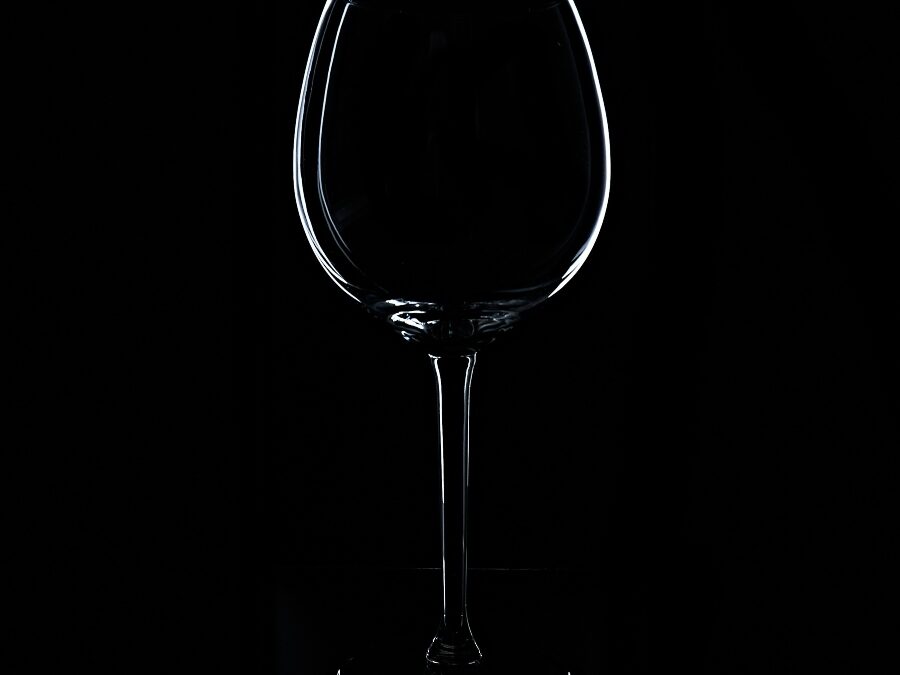
No one knows where that third thumb came from, not even Ma. It goes in the same category of stories about Ba – the drunk, sordid kind. Once, she fragmented her wineglass onto the table, and when I leaned over, I saw a million versions of myself, fish-bowled and googly-eyed. “That’s what he did to me,” Ma moaned, before staggering to her room, third thumb straying along the walls. That’s when we learned Ma’s first lesson: the dead are dead for a reason.
Meimei and I still had our suspicions, though. In the afternoons, we clandestined in our shared bed, undressing our favourite legends. Perhaps Ma had been born in rice paddies at midnight, the thumb an inheritance of waipo’s cleaved stomach. Or perhaps she’d been one of those thousand-limbed goddesses, defending her village from things that roared like men. Or maybe she’d hidden it from Ba, and that was why he left.
That last one was mine. When I told meimei, she smacked my knee hard enough to shine it into a coin, growling: say sorry, right now. I’d forgotten that this was after Ba became a bad word; I was still thinking of the romcoms Ma always watched, the kind where the girl was white as a fishbone, and the guy was tall and muscular, and they looked like they could be cousins if you squinted.
I had no words for meimei, so I just grabbed my feet, roly-polying between my head shakes until her mouth stopped resembling a powerline. Even now, we could hear the TV echoing through the crack of the bedroom door. I knew if I went out, I’d see Ma perched on the couch, legs fused together like Buddha, and the screen bright enough to backlight bone.
Sometimes, if she were at a particularly good part of the movie, she would ask us to massage the thumb. We’d kneel beside her, hands grasping the joint as she closed her eyes. Then her mouth would either grasp into ahhs and ohhhs, or she’d stay silent. If it was the latter, we knew we’d done a good enough job, and that she’d bring us goodies from work. She’d been a janitor at a nearby school since Ba graduated from our lives, and after the bell, she would scuttle under the desks, using her third thumb to pluck the abandoned wads of gum and granola bars and candies. Then she’d tuck them into her bag, her armpits, or wherever things went to disappear so that when she scampered out, her janitorial uniform thick as a cigarette, no one checked her for prizes.
Another one of Ma’s lessons was that all things tasted better half-gone. So we mythologized our half-eaten bags of chips, half candies, half-lives. For dinner, meimei and I split the noodles she cooked, convinced we could make it last forever. We spooned each other one noodle at a time, swishing it in our mouths and pretending we were baby birds. When Ma came home, she found our bodies bent over the bowl, heads searching for those doves from the magic tricks. Then she chased us with the slipper until we vanished ourselves into the closet, our limbs mimicking clothes hangers until the slipper thudded to the floor and her footsteps trickled back to the couch.
Ma’s favourite part of any rom-com was when the guy takes three flights, two hitch-hiked car rides, not including the stop at the roadside supermarket to buy a bouquet before biking to the next closest town, and steals a motorcycle to arrive at the girl’s house for her birthday. See, she explained once, she’d flown across the country to get away from him because she thought he loved another girl, but that was a lie made up by the guy’s jealous brother because he’d inherited the family business and left him with nothing, but that’s because he’s a big gambler, and if it weren’t for the girl the business would’ve gone down, like bam, because when the guy, not the brother, met the girl, she helped him win the business, even though their fathers were rivals. I wasn’t sure where the rivalry came from– maybe some mistake in a will, because maybe they really were cousins – but now the girl was standing in her pyjamas at the door with a full face of makeup and perfectly mussed-up hair. When they kissed, Ma looked at me, a single tear bobbling out of her eye. “Find yourself boy like that,” she said fiercely.
I excused myself and went to bed. Later, when I took meimei to pee, she was still on the couch, except with her hand flossing between her thighs. The floorboards creaked as we backpedaled, and Ma sprung up and chased after us, her third thumb waving like a battle cry, and beat us until we were round and purple as grapes.
The morning after, we awoke to the stovetop popping. We tip-toed out of our room, braided together like flowers to see Ma in the kitchen, hunched over a simmering pan of eggs and tomatoes. “Try some,” she beckoned, and when we got close enough, dipped her third thumb into the red. “Here, and here,” she said, swabbing her thumb over our cheeks, our mouths, so we could taste the salt and tomato and everything else she’d left behind.
by Jan Stinchcomb | Dec 14, 2023 | flash fiction
I get to relive one day. That’s all. For me, a crash ended everything, but the full range of trauma runs through our circle. Every form of loss. An assault stole one woman’s child. For another, it was a cult. Disease. Suicide. Accidents. Plain old bad luck. There are endless ways to lose your baby.
We sit in the basement of the witch’s house, where we form an uneasy circle in our metal chairs. It looks like AA or some support group, but there is an unholy purpose lodged in our hearts. We are transgressing, going against God and nature.
It’s for a whole day, Becca would remind me whenever I got cold feet. One tender day.
Becca has been a devotee for years, but she has never been chosen. There is one meeting a year, and the witch picks only one mother at a time. If she looks you in the eye, you are the winner. You get to have your child back for the day of your choice. Most women choose birthdays. Smart women remember quiet days so they can have hours of delicious, uninterrupted time. I dream of seaside vacations, storytime, inside jokes.
You have to state the complete date, Becca told me the first time she invited me to join the circle. Day, month, year. Be careful. Memorize it.
And it will be an exact duplicate of that day? Every detail will be the same?
Down to the frosting on the cake. Down to the towels at the hotel.
You’ve spoken to past winners? I ask her.
Only one, she whispers. We’re not supposed to talk about this.
Did they say what happened? Is it like a dream? Will the other family members remember it later?
Calm down. They won’t remember anything. You, the mother, are the only one who will retain the experience. And that’s as it should be.
I don’t know if I can lie to my husband.
Don’t you think he lies to you?
I bristle but promise to come with her to the witch’s house on the next full moon.
Now I must choose the date. I look through all my pictures, something I haven’t been able to do since the day everything changed. Do I even have a favorite age, a favorite memory? I settle on the day we got on the plane to move out here. Many women choose a day from toddlerhood, when they could still carry their child in their arms, but I am drawn to the one day I always blame. We should never have boarded that plane. We should have stayed where we were, and then we would have been able to keep our little family intact.
Remember, Becca warns me as we approach the witch’s house, don’t even think of pulling a fast one. You can’t go back and change events. You must go through the day as it was. This is a chance to see your child again, nothing more.
What happens if you don’t follow the rules?
Why would you ask that?
Just tell me.
You’ll make things worse than they already are.
Do you know anybody this has happened to?
Becca purses her lips and refuses to answer. She shakes her head.
In my mind, I have relived the airport scene a million times, how I grab my daughter’s hand and march her out of there. Don’t worry about the luggage. It doesn’t matter. Our clothes can be replaced. Sometimes, I change my airplane behavior. I don’t let her leave my side. She isn’t out of her seat when it happens.
Or I join her in the aisle.
It’s okay if we die together. I’m easy to please.
You’re not going to do anything foolish, are you? Becca asks when we are seated and waiting.
The doorknob turns, and a tremor passes through our crowd of hopefuls.
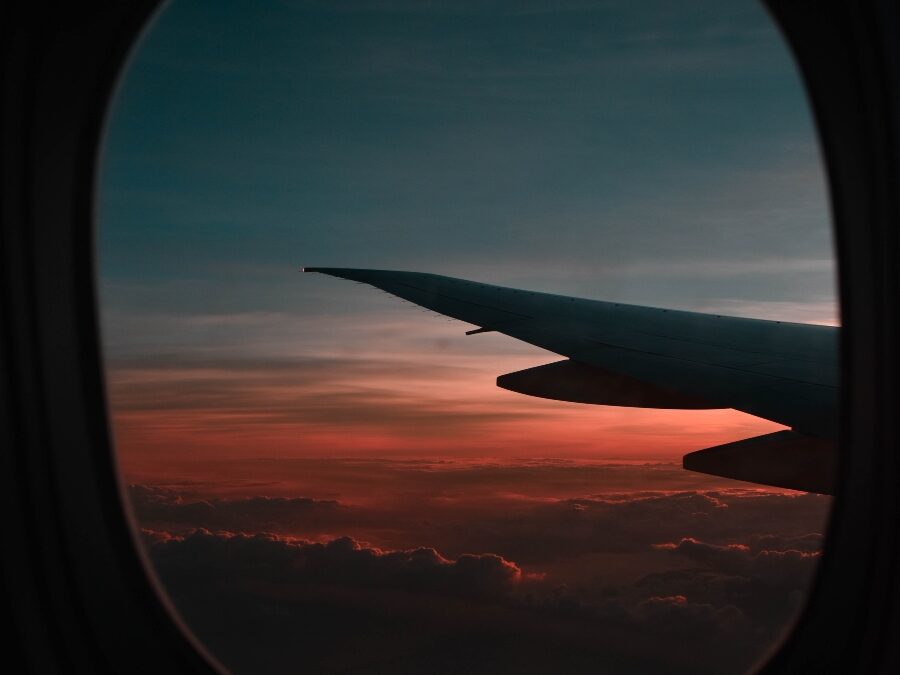
The witch enters on one of the icy clouds I saw from the plane window that day.
Are you? Becca hisses. Promise me!
I don’t say a word. The witch glides right up to me; her feet never touch the floor. She looks me in the eye, but it’s her cruel sneer that surprises me.
She knows what I am planning before I name the date.
And I can taste the sweetness before the harrowing plunge.
*Originally published in And If That Mockingbird Don’t Sing: Parenting Stories Gone Speculative
by Melissa Ragsly | Dec 11, 2023 | flash fiction
Character and Expression class. Monday.
A black box theater. The teacher clutches her cross pendant, “We must be looking above the characters. We must see things others can’t.”
She paces the perimeter of the circle.
“Come to class with a meaningful object and place it at your feet.”
Bez swallows her gum and hopes a tree takes root inside, one big enough to clear out all the duff that has built up. She is the first to leave.
Tuesday.
“Tell us about the object’s meaning. Tell us how it motivates you.”
A student presents an old Hess truck, the final Christmas present from the Grandmother who raised him.
“Many of us harbor the fear that we are all so boring that only the character has something to offer. But you are the only source of life for anyone you play.”
A dog collar from a deceased pet.
“What’s hidden inside you is a wellspring.”
Bez thinks a wellspring would make a big old mess. It will be her turn tomorrow. She has no idea what to bring.
Wednesday.
Bez buys a bug zapper like the one that hung in her parent’s Vermont kitchen and plans on returning it after class.
She kicks the zapper box forward towards the center of the circle.
Do you know the first time you see a parent in a state of physical weakness?
She stops her monologue. With a balletic sweep of her toes, the box is back under her chair. During the break, she heads to the restroom. A tampon in her hand. On the bathroom mirror, someone had swatted a fly and not cleaned it up.
Thursday.
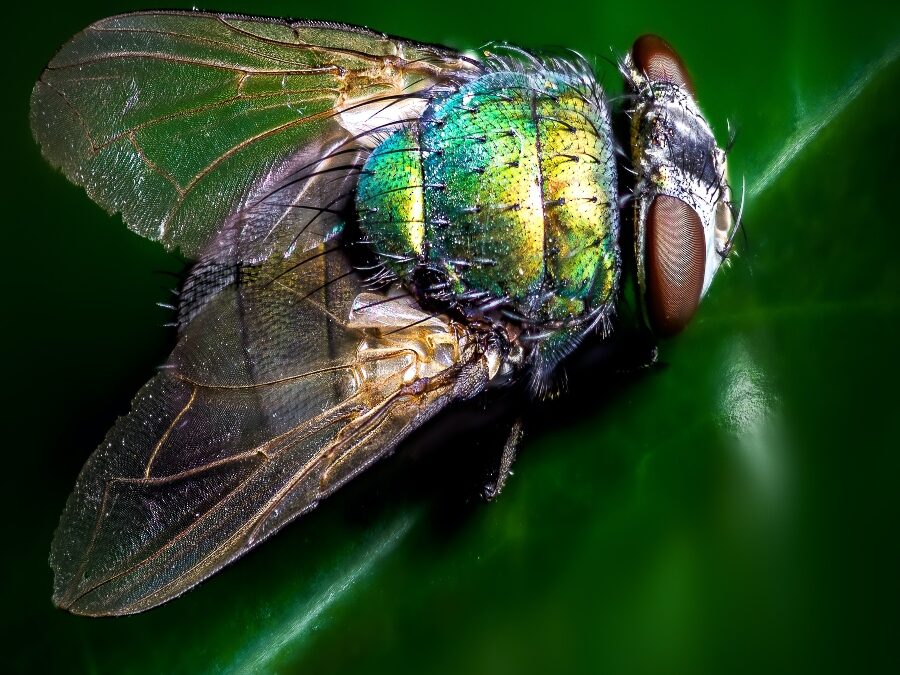
The fly is still caked on the mirror, hardened in a streak of its own blood.
“Every new day is a revision of the last,” the teacher says when Bez returns to the circle.
Friday.
The teacher gushes over Stanislavski, the Muscovite father of acting. Bez exits. In her bag is the bug zapper she hasn’t returned. And a tampon. She greets the fly, an audience.
My dad was allergic to hay, so he became a farmer. Fevers and cold sweats. His mouth watered so much, he couldn’t swallow all of his saliva.
She swallows her gum.
That’s what poison does to you.
The zapper is wrapped in plastic like an amniotic sack.
This person who has cared for you, lifted you up over puddles, is depleted. Pesticide’s a bitch.
An outlet near the sink against the fire code. She pauses, forgetting for a moment, the next line. Is it any wonder that all these objects have to do with a need to pretend finality can be defeated by memory?
There were lots of tricks. Hanging Irish Spring Soap from twine. Soaking hot peppers in water and spraying the juice on leaves. We hung a bug zapper in the kitchen.
Bez drips water down the mirror, hitting the fly. An uncrushed wing catches a bead and blooms.
The sound of a zapper is like dropping something in the deep fry. My father is in bed, losing his strength while I’m gaining mine. I felt guilty about that. I would take over. At twelve, I was riding a backhoe.
Whatever it is that Bez feels in her stomach, growing, like the swallowed gum was a sprouted seed, she wonders if her dad felt the same thing. Something uncontrollable and wild.
It was my fault he was weakening because I was getting stronger, and it felt good.
When did he know that what was growing inside him would take him over? The fly falls from the mirror, glides down to the sink, and floats on a current down the drain. Bez believes she has all the words memorized.
by Hannah Zhang | Dec 7, 2023 | micro
The town scalper says he lost his eyes at the supermarket. Left them on a shelf in the toothpaste aisle, and when he came back, they were gone. I say maybe he wasn’t looking hard enough, and neither of us laugh.
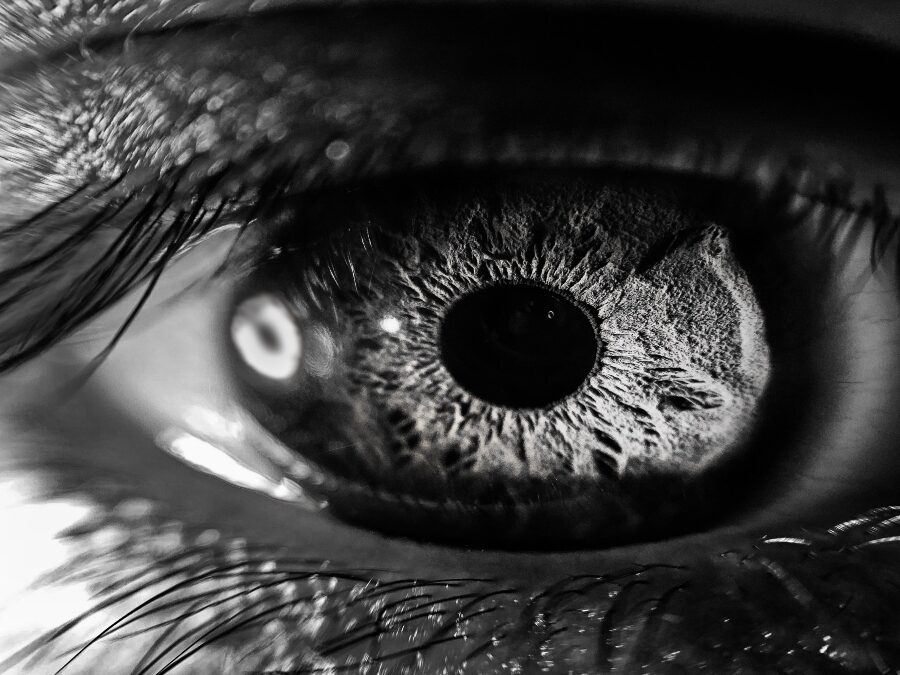
My sister keeps a jar of two brown eyes on a shelf in the garage, bloodshot with pupils like smears of wet dirt. A cloud of bacteria drifts in the stale water, foggy like a daydream. She found these at the supermarket six days before the town scalper lost his. Whenever I ask where she found her jar eyes, my sister just giggles. She’s thirty years old, she shouldn’t be giggling anymore.
By August, half the townsfolk had lost their eyes. They leave them at the corner store, the fire station, the post office, and when they come back, their eyes are gone. Why do they take them out in the first place? Do they even know how to put them back in?
My sister’s collection hasn’t grown, but she giggled so much and said so little that they sent her to the home with the other giggling young women in town. They’re giving young women a bad look; my dad says I should join her before I’m burned at the stake. The hospitals are filled with people with empty sockets, lined up against the dingy walls like red-pocked ghosts. A week before September, I ask my mom to drive me out to college while she can still see the road. Neither of us laugh.
A few months in, they stop sending letters—they probably can’t see their papers anymore—so I work hard to stop wondering, too. I make some friends who have eyes and don’t giggle. When winter break comes, one of their families offers to drive me home when no one comes for me. I say they probably shouldn’t do that if they want to keep their eyes in their heads. They laugh, hauling my suitcase into the trunk.
by Ola W. Halim | Dec 4, 2023 | micro
—finally, it is night and you wrench the bulb from the porch ceiling and all the moths plop to the floor and you traverse the rug of ripped wings and squashed thoraxes and the sounds of your boots pierce my chest but this time there is no blood and the pain I’m supposed to feel is quiet and docile and so, instead of a rivulet of fresh-harvest tears, I tuck my lips in and rise from the splintered chinas and spilled Marocchino you left behind and proceed to gather the ripped wings and squashed thoraxes, dry them over the hearth where we branded our initials onto each other’s chest, where we kissed and I said your lips tasted like frozen Vin Santo and not congealed blood, and then, with the glue I bought for your splintered body-parts, I paste the ripped wings and squashed thoraxes one by one to the wall of the bathroom, just below the black blot that was once you gripping a hilt, teasing your wrist, reciting the Bible verses your mother burned into your head, plunging your fingers into your ears because my voice was something like your mother’s, and my hand on your back was a Leviticus that stung and stung, long, long, long after Jesus died for love and salvation, and you were screaming into things that couldn’t carry your voice, like the bathroom walls and the stained windows and the bunched-up curtains and the barbed cacti outside, and I was waiting for your return the hundredth time, but finally, it is night and you wrench the bulb from the porch ceiling and all the moths plop to the floor and you traverse the rug of ripped wings and squashed thoraxes and the sounds of your boots pierce my chest but this time there is no blood and the pain I’m supposed to feel is quiet and docile and so—
by Sara Hills | Nov 30, 2023 | flash fiction
We bury Lil Fucker facing north in the frozen yard, halfway between the dogwood tree and the rusted tin shed, in the spot where he liked to shit. Daddy Lin tamps the dirt with the back of the shovel and hocks a pink gob onto the snow next to Lil Fucker’s fresh grave. Were he a gambling man, Daddy Lin says, he would’ve gambled on Lil Fucker having a couple more years of bark left in him if the air hadn’t been so thick this winter.
Daddy Lin waves his hands at the polluted fog like he’s trying to move the toxic molecules out of the way and rants about Big Oil, how it’s the shit we can’t see that’ll kill us—pieces of crap thirty times smaller than a human hair—and do I reckon if my mother fucked off to Reno or is she somewhere up there with God, laughing?
I shrug, knowing Daddy Lin’s not really expecting an answer, he just needs to talk. Lil Fucker was the last link either of us had to my mother. And in those long whimpering nights after she left, the dog earned his new name clawing at the door, gouging the dark wood until it splintered.
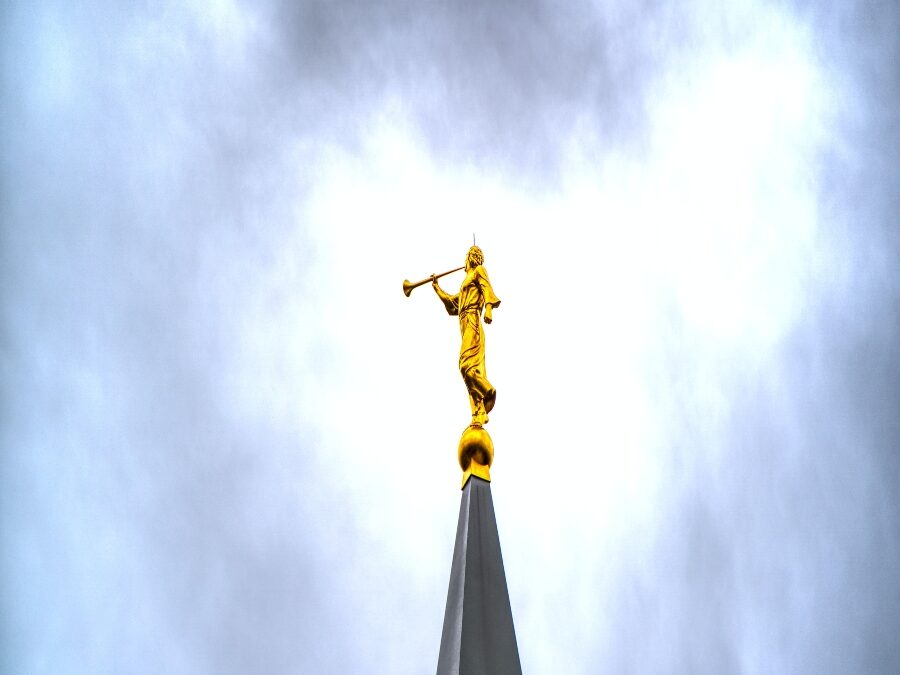
Daddy Lin hocks and spits pink again, tinting the snow the color of old bubblegum and the setting plaster on Jordan Kowalski’s bedroom wall, the same pukey color of the poison sky that spreads over the city, from the Wasatch Front in the east to the Oquirrh Mountains in the west, cloaking even the Angel Moroni perched on the highest spire at Temple Square.
There’s no point in explaining to Daddy Lin that it’s warm weather pressing in on the cold ground that traps the bad air. That it was likely a similar pressure that caged my mother and caused her to fuck off without saying goodbye, and that if I had been the gambling sort, I would’ve put money on her leaving sooner than she did. I would have bet on her bringing me along, not abandoning me in the Great Basin, a soup bowl of emphysema and runaway third wives—a place which is only great if you’re into skiing, gambling, and God.
I breathe through my scarf so I don’t have to taste the air while Daddy Lin coughs clouds that mist between us. He gulps and wheezes, recovering enough to raise his empty fist and toast Lil Fucker for being the third-best dog we ever knew.
Afterward, he heads back inside to sink into the warm, human-sized dent in his recliner, and I head over to Jordan Kowalski’s and sink into the warm, human-sized dent in his mattress.
Jordan asks if I want to watch a movie, and I shrug because I’m trying not to think about Big Oil or Lil Fucker freezing under the ground or the pink gob freezing onto the snow. And maybe because my skin prickles like it holds the scar of every groove Lil Fucker scratched into the wooden door, or maybe because I know Jordan’s mom will be back from Temple soon and it’ll be a cold walk home, I ask Jordan if he ever had a mind to leave the church and fuck off to somewhere warmer, brighter.
We consider our options and listen to The Smiths and kiss and kiss, the pinks of our bellies grazing, until the only thing I want to feel is the warm weight of Jordan’s body pressing me down and down and down until some small part of me finally rises up.

Recent Comments