
by Allison Field Bell | Mar 14, 2024 | micro
Colors baked into a layer cake of rock. A hot and dry May in Arizona. We cannot drink enough water. Whiskey at night: our mouths like tiny deserts in the morning. Relentless sun on dirt, on sand, on what’s left of a river. We haven’t talked about it. The other woman you’re seeing. Young and brunette. A woman who hasn’t seen the contours of these cliffs, who hasn’t stuck her body in the body of a bottle. A small useless thing trapped by glass, trapped by the booze that soothes me. I don’t know how to tell you I’m finished. I run my hand over a sharp, hot rock. These cliffs make me think of the Dead Sea: the mud in stripes of minerals. You’ve never been to the Middle East. There are some things I don’t expect you to understand. The way I remember the salt-strewn shore. Walking out into the gray water. Sky gray, water gray. Skin coated in gray mud. Something about the desert that throws everything raw and clear. A long, stark horizon. The question of survival on the tip of the tongue. Sand grit between the teeth. No place to hide or piss. This is a sanctuary. But then there’s you trudging ahead of me: slender waist, well-built back, baseball cap forward and for the sun. I don’t want to follow you anymore.
by Matt Kendrick | Mar 7, 2024 | micro
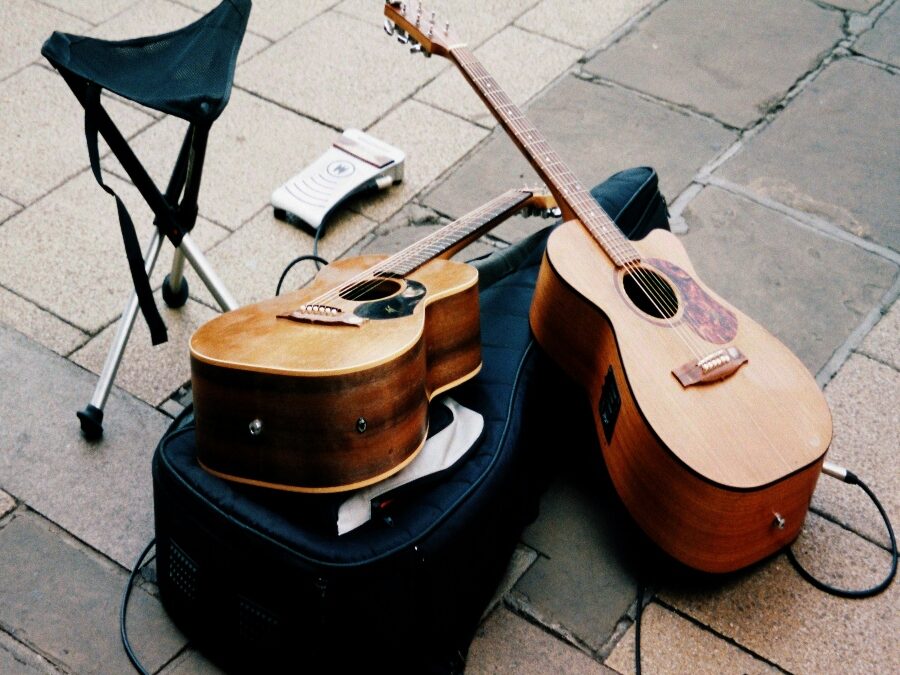
Four murderers, one of them with horn-rimmed glasses. A steady flow of pushchair mothers who divert to left or right around the woman handing out homemade fliers. Boys who fold the proffered fliers into paper aeroplanes – one of which the flier lady’s husband catches and crushes. Fancy dress girls off to McDonald’s for twelfth birthday celebrations, dragging despondent fathers in their wake. The dad who knows twelve is nothing compared to thirteen, fourteen, fifteen. Sixteen Pixie Lott lookalikes spaced out through the afternoon, each drawing the eye of the other pedestrians because they could conceivably be someone who the fancy dress girls should be chasing for an autograph. An off-duty policewoman without the necessary energy to be civil to the flier lady who has three years’ practice scanning faces and recognises her from the missing person case long since put on ice. The local journalist who wrote an article on the case in which he described the girl – blonde hair, green eyes, like that pop star – and cast aspersions about smilies and stars. A psychic with a message from the dead, which the flier lady won’t hear because her Lucy is still out there somewhere, and someone must have seen her. A mime sprayed in white, the colour of acid – other times, he does pizza deliveries, pulling pints, rushed transactions behind Bonmarché. The reverend who used to visit the flier lady’s house on Tuesday mornings to offer spiritual guidance and cadge a custard cream. A former neighbour who nods at the flier lady then at her husband sitting nearby polishing his horn-rimmed glasses. A homeless man staring at the pedestrians’ scuffed trainers and kitten heels, remembering the mismatched Converse of a blonde-haired busker and how she always gifted him a fiver from her takings. A woman with hoop earrings not called Lucy who twists away from the flier lady’s urgent grasp. An artist painting a watercolour sketch of the scene in which the only people present are a man selling rainbows and a girl with a tangerine guitar.
*Originally published online and in print by Reflex Fiction*
by Holly Burns | Mar 4, 2024 | contest winner, flash fiction
The summer I babysat the Brady twins, their parents were on the brink of divorce. My parents were on the brink of divorce too, but at least I knew about it. Nobody had told the Brady twins that their world was about to splinter into a before and an after, but they were only six, with gappy smiles and saucer eyes, and so I couldn’t bring myself to do it either, even when Mrs. Brady called me on a Friday morning and asked me to stay the weekend so she could take a girls’ trip to Martha’s Vineyard. I agreed because she’d pay me double, but when a Jeep pulled up ten minutes after I arrived and there was a man at the wheel who wasn’t Mr. Brady, I knew she wasn’t going to Martha’s Vineyard, or at least she wasn’t going to Martha’s Vineyard with any girls.
“My chariot awaits!” she trilled, whirling into the foyer in a macrame dress, slapping a wad of cash onto the table. “Take them to Blockbuster, Sasha. Or ice cream! You guys want ice cream?”
“Sasha doesn’t like ice cream,” said Caroline, and Mrs. Brady laughed.
“Who doesn’t like ice cream?” she said, but her eyes were on her reflection as she re-tied her halterneck in the mirror, licked lipstick off her teeth. “Donuts then,” she said, reaching for the doorknob, gold bracelets jangling on sinewy Pilates arms.
In the Jeep, she rolled the window down, blew showy kisses, called “Don’t do anything I wouldn’t do!” Caroline waved from the doorway, long after the car, and her mother and the man who was driving her mother rounded the corner onto the main road.
***
That night, we lay together in Mr. and Mrs. Brady’s bed. Cam fell asleep immediately, but Caroline lay stiffly next to me, doing the sort of deep, intentional breathing I associated with women in labor on TV.
“What’s that you’re doing?” I asked.
“Yoga breathing,” she said. “My mom taught me. It’s for anxiety.”
I woke before them, the sun streaming in over their pretzeled bodies, limbs tangled in limbs. In a week, I’d be leaving for college; perhaps the next time I shared a bed with someone I barely knew, it wouldn’t be a person in Pull-Ups. I tickled Caroline’s shoulder, ruffled Cam’s hair, meaning to rouse them gently so we could call Mrs. Brady to say good morning, remembering, as they stirred, that she hadn’t left a number for where she’d be.
***
It was barely nine when we left for the donut place, and the day was a scorcher already, the heat pressing down on us like a living thing. The Brady twins were grumpy, un-sunscreened, and taciturn, their flip-flops squeaking irritatingly with every step. Halfway there, I let them rest outside the library, and Caroline peered idly up at the bulletin board. The weekend stretched before us, bloated and humid, and I thought of taking them to the beach, letting them float on their backs in our tiny crescent of tide and stream. But a plane had crashed into the Sound a few weeks earlier, and there were rumors of bathers bumping into chunks of wreckage. Besides, I didn’t even know if they could swim.
“Trampoline!” cried Caroline, suddenly. “For sale! Can we get it? Please?”
I squinted at the ad. The twins looked up at me imploringly, hands clasped in supplication, more animated than I’d seen them in weeks. Yesterday, when Mrs. Brady had answered the door, she’d leaned into me giddily and whispered, “I’m an eensy-weensy little bit high right now,” as though this were a normal thing to confess to the teenage babysitter whose parents you often waved at in the aisles of Stop N’ Shop. I thought of her rolling the window back up as she made her escape, sealing herself off from the scabbed pan of mac and cheese in the sink, the constant blaring of Caillou, thought of Caroline in bed, breathing in for four, holding for four, breathing out. Anyway, in a week, I’d be gone. It wasn’t my back yard.
“Sure,” I shrugged. “Let’s go get a trampoline.”
***
The transaction was swift, half of Mrs. Brady’s money handed to a white-haired man who offered to drive the trampoline over and set it up. It looked new, and when I asked why he was selling it, he put his fingers to the pouchy half-moons under his eyes like they hurt.
“Grandson died,” he said. Caroline’s head whipped towards me in alarm.
The man pressed on the half-moons. “Still can’t believe it,” he said. “He was here last summer, and he was fine. Bouncing all over. He was fine.”
***
Once the man left, the Brady twins climbed up onto the trampoline and started jumping. I climbed up too, tentative and then less tentative, soaring, breathless, the Brady twins whooping with laughter as they ricocheted in my wake.
Caroline did it first, slumping abruptly onto her back, hands splayed on the springy canvas.
“I’m dead!” she yelled, and I stopped bouncing, worried I’d hurt her, but a second later, she bolted up, unscathed.
“I’m alive!” she shouted. “For a short time only!”
Cam, copying, flung himself supine, tongue lolling, eyes to the sky.
“I’m dead!” he roared and hurled his body upwards. “I’m alive for a short time only!”
“Now you, Sasha,” said Caroline, and I let myself crumple backward, easy as anything, easy as breaking a vow and driving to Martha’s Vineyard, or maybe not Martha’s Vineyard at all, easy as buying a trampoline as misguided revenge.
“I’m dead!” I yelled, but I didn’t feel dead, I felt alive and capable, a kid in charge of other kids. The heat shimmered on the manicured lawn, our shoes akimbo in the grass. Caroline watched me warily, awaiting my resurrection, and I lay still for a second, tracing the clouds overhead. “I’m alive for a short time only!” I shouted, springing up, as the Brady twins scattered and shrieked.

by Abigail F. Taylor | Feb 29, 2024 | contest winner, flash fiction
Sundance Lee draped his old snagging blanket around his shoulders. It hadn’t snagged anyone for many years. His legs were too skinny, and there was too much silver in his thin braids. Still, it was powwow season. He had plenty of opportunities. During the Grand Entry the day before, he caught a white woman whispering “aho” in quiet fascination to herself, trying to mimic the emcee’s cadence. Her eyes flitted nervously in Lee’s direction; he was standing so close, and he almost snagged her with a smile. It would have been that easy.
Except there was something churchy about her, like she’d become frightened by him once they were alone and naked in his camper. The equal parts of fear and desire in the so-called ‘exotic’ reminded him of his first wife. So, he left the woman alone to her muttering.
That morning, he leaned a foot on the trailer’s metal step, testing the weather. He could skip the rest of the powwow and avoid the boggy heat, but he’d promised Abel Keel he’d be on the main drum. Abel Keel had a pretty jingle-dress sister, and she’d be dancing. Lee sang pretty good and figured she’d be impressed by him, maybe not as impressed as a white woman, but…
Lee splashed the first pour of coffee against the gravel, catching a mean anole with a wide neck. It also reminded him of his first wife. He marveled over how she suddenly occupied his thoughts after twenty years.
They weren’t a good fit, but when they were sixteen, he’d slid her cotton panties off at the church social. He remembered the little pink rose stitched into the white front, like a frosted candy on top of a slice of wedding cake. She made him promise her it meant more than it had.
She got pregnant, and they married before anyone could see the rising bump. A foreign mass. An alien. A vow that neither one of them wanted or prepared for.
The wedding was held at her parents’ fancy two-story house. Lee stood awkwardly in the foyer. He’d cleaned the mud off his work boots, but her parents asked him to stay on the newspaper trail laid out to keep the carpet clean if he walked anywhere.
They married in the living room. His parents. Her parents. A balding traveling preacher with tiny hands and large glasses. No one smiled, but Lee didn’t feel ashamed either. He thought he knew what love meant. It meant her and the little intruder. Love was an education in how to be a man. That’s what his father said, anyway.
Extended family was allowed in the backyard for the reception. Her kin came first and then his. She was in the bathroom making final adjustments to her white dress but came out shrieking. “Oh, Lee! Lee! There’s a bunch of red Indians on our lawn!”
Lee gaped at her. The cigar her father had just cut for him was halfway to his mouth.
Her father laughed. “Law alive! Who’d you think you were marrying?”
Lee’s father stared into the middle distance.
Lee tried to keep the marriage working but eventually realized she wasn’t a good woman. It was in her small cutting jabs that built up over time, that sense of being othered in his own home. Once, she found out that his mother drove across town so that she could fill up her plastic jugs with the garden hose before the sun rose and the neighbors could see. They had clean, well water. Lee’s wife told him it was trash behavior and laughed in his face.
She cured him of love, but he got children out of it. All the suffering counted for something.
Around midday, he got a call from his youngest daughter. She sounded frustrated that she spoke to his voicemail, but he’d been on the main drums for the Grand Entry and hadn’t heard the phone ring.
“Mama’s died. Aneurysm, they said. Thought you should know.”
Lee stared at the black screen. The afternoon had grown so hot sweat crusted the shape of his ear against the glass. He slipped the phone into his pocket and wandered around the grounds. He saw the little white woman from the day before. She stood in line for bannock, and her naked shoulders were red. He wanted to say to her, “You’re redskin like us now.”
He wanted to say, “I’ll treat you right and put you on my tongue like honey.”
He watched her hand dip into the purse for money to shoo the bees that hovered around the sticky, sweet remains of Pepsi cans piled around trash bins. Lee watched how she covered her mouth as she whispered little words she heard, like she was visiting somewhere exotic and not South Texas, where his kin had been since before God separated the light from the dark. She asked Abel Keel’s sister what her costume was called and if she could take a picture.
Lee could snag her, and later, she’d say to her church friends, “I had me a real Indian!” She wouldn’t tell them that he’d taken her to his camper and they bounced the old tires flat or that he cried into her breasts and talked about his dead wife. She’d smile and say all coy-like, “He had big brown eyes.”
The woman turned, sensing his stare, and smiled. Bashful. Uncertain.
Lee crumbled. He whispered, “Let me bother you. Can I hold your hand? Just for a minute.”
She didn’t hear and turned away to speak to somebody new.
“I’m sorry,” he said.
That night, Lee poured the last dregs of coffee out on the gravel and tucked himself under the old snagging blanket, his arms curved around a pillow. He needed to call his daughter in the morning and figure out funeral arrangements. He wondered if there would be a spray of roses on his wife’s coffin.

by Payne Ratner | Feb 26, 2024 | contest winner, flash fiction
First it was the little porcelain dogs with green glass eyes. Each one in various uniforms. A policeman bulldog, a doctor poodle, a nurse greyhound. Over a hundred and twenty in the series. She got them all. They lined the shelf. Their glass eyes watched her husband come and go.
Then, it was the crystal animals with the springs for tails. They multiplied like mad and filled the shelves, and when there wasn’t any more room on any shelf, they crowded on the space heater, and when the TV came on at night, they got excited and glittery.
Then it was parachute pants.
“So many boxes full of them that someone dumped at Goodwill,” she said, “just three dollars.”
She stacked the boxes in the living room.
“Why don’t you ever wear ‘em?” he said.
“I will,” she said, “when they come back in style.”
There were jars full of pennies that filled the pantry and the closets and boots and shoes in all sizes because a visitor who’d lost his shoes and seventeen cases of raisins she found in the back of the dollar store could come by.
“They was gonna throw ‘em out.”
She looked so proud he hesitated to say anything, but that night he did.
“You don’t like raisins.”
“It’s an acquired taste I just ain’t quite acquired one quite yet,” she said.
There were folding chairs. Thirty-seven chairs in case someone had a wedding. There were bags of charcoal in case the stove failed, and every day, there were more stacks of newspapers for when they got bored.
“Who wants to read about what happened in, lemmee see,” he said, “five years ago?” her husband said.
“Well,” she said, “history does repeat itself.”
The stacks of papers filled the rooms. And climbed up on the kitchen counters. She stacked some magazines in the refrigerator when there wasn’t any room left on the kitchen table because of the horse and buggy pictures.
“Where the hell’s the bread,” her husband said. He pushed some things around, and then he found a plastic bag wedged between the case of Sibelle Anti-Snore Chin Straps and the stacks of infant disposable diapers. The bread bag had a wad of something green in the bottom.
“Jesus, Melda,” he said.
And then one day he woke up and he couldn’t find the door.
“I don’t know,” she said, “it was there yesterday.”
He shoved some things this way and that, but it wasn’t there.
“I’m sure it’s somewhere,” Melda said.
He tried to get to the kitchen, but he had to climb up on a stack of Sansibelt slacks with reinforced elastic waistbands, sizes forty-five through sixty-three, just two dollars for the lot. He got to the top and tried to swim across the pile but fell headfirst into the tangle of old vacuum cleaners and what nots.
“Melda?”
“Yes?”
“I’m stuck. I think I cut myself.”
“Where are you?”
“In the vacuums. Where they all are. And all them plastic bumble bees.”
“I don’t know where that is.”
“Them Bumble Bees, with the buck teeth, and the signs that say Be a Sandybell Honey Sucker.”
“I don’t remember them.”
For three days, she tried to find him. She clawed through stacks of wedding dresses and pony saddles and cases of bunion pads, but his voice got so weak she couldn’t hear him anymore, and eventually, she gave up.
“I’m sorry, honey,” she called out, “I’m so sorry.”
She tried to go about her normal life, but with no doors or windows, she couldn’t get out to get things. She found a case of tiny jars and put scraps of wadded paper in them, like flower blossoms, and found little crevices to push them in. But with no food or water, soon enough, nature took its course.
As she lay there, pinned beneath a toppled stack of Life Magazines, too weak to move, she looked around and had a funny thought before she died. She thought, I wonder how a house can be so full and so empty at the same time.
by E.R. Ramzipoor | Feb 22, 2024 | contest winner, flash fiction
And because the house was filled with comfortable things, you wondered. As your wife slept under the perfect thread count, you licked peanut butter off a steak knife. You thought about what it might feel like to be ripped apart by something you wanted. On the internet, people were scarred but intact. They were whole but changed. You dropped the knife in the sink, but your wife didn’t stir; she’d once slept through an earthquake. You had never felt anything but soft. Was soft a feeling or its absence?
# # #
Sometimes, when you corrected a student’s paper, you got the urge to graft a number onto the wrong strip of skin. An ill-timed four might shatter the universe. That was physics.
# # #
She’d stopped by the coffee shop where you were putting yourself through college. One of you spilled green tea on the other: not enough to hurt, just enough to charm. Numbers changed hands. In bed, her skin felt like the ink that stains your hands when you read a newspaper. You both hated comedies. You preferred to laugh when you least expected it.
# # #
After fourteen years, you expected it.
# # #
And because you wondered, you said yes. Yes to Munich, where you didn’t speak the language. Yes to the dinner; you wanted alienation. Biting into a stuffed mushroom, you listened to the thick roll of German and imagined they were talking about you, your American vowels, your perfect teeth.
Your wife steered you over to the window. You said yes. Yes to the window, where the night was thick like peanut butter, sharp like a steak knife. Two couples introduced themselves in English. “I don’t want you to feel like you’re alone here,” she said.
You kissed your wife, who smelled like canapés. On your second date, you’d shown her that a mathematical proof could be beautiful. When the numbers balanced out just right, you barely noticed they were there.
# # #
You were eighteen, and she was twenty-five. One boy later, you knew what you wanted. You came to college with a mission: kiss a girl.
She had dated everybody. Grilling steaks—her bare arms, her collarbone, the sun—she told you about the time she asked out the girl from the orchestra. That was before she ran into an old professor at a dyke bar downtown, and they’d ended up in the back of her truck until six in the morning. She was sharing, not bragging. She felt secure in the fact of you—of you plural. As she plated the asparagus, you studied her fingers. Yours were ignorant by comparison. You asked her: “What if you get bored?”
“With the book?” she said. “I’ll start on a different one.”
“No, with me.”
She looked stricken. “Baby, I love you. Is there something I could do better? To show you?”
“It’s just that I haven’t done anything. And you’ve done everything.”
“Oh, baby,” she said, and her arms, her collarbone, the sun.
# # #
Throughout your twenties, you lost friends who saw how easy you had it. Could you call yourself queer if you got married at twenty-three? If you bought a house at thirty? If you had four types of peanut butter in your cabinet?
# # #
You were the one who got bored. She slept through the earthquake.
# # #
You said yes to opening up. It was her idea; she had read you. She offered to be your wingman, horrifically kind.
At the bar, she introduced you to the woman with the gray lipstick. She was your type: muscular, slow to laugh. All night, you tried to want her. She ran marathons; you thought about her thighs. You cracked a joke for her, but the men by the TV started to sing, and you hated them so much it was almost desire. Three drinks in, you went to the bathroom to slide a hand into your pants. But her body was just a body, and so was yours.
When you came back, she was making out with your wife. Yes, you thought. You were sick: yes, yes. You looked at the places the woman had found, the places it took you months to find. Yes, you thought, this is it, make me feel something, pierce my skin. Put a four where a two belonged.
# # #
You said yes when they wanted to sleep together. You thought it would crush you to sit alone in the apartment. But the woman and her partner, a quiet man who worked at the hospital, offered to let you stay at their place. At first, you thought no, that was too generous. On second thought, maybe that was worse, and it was better: the place where the woman slept, where she put her things. Yes, yes.
When you arrived, the blankets were folded up the way you liked them. The thermostat said sixty-eight degrees, which you preferred. There were three pillows on the bed. Two lights on. One window open, one shut, one cracked. A towel in the bathroom, a robe in your size. A bathmat in your favorite shade of green. The shampoo you use, the conditioner, the body wash, the acne cream. In the kitchen: peonies. By the sink: vanilla soap. In the refrigerator: the brand of milk you always bought, the seltzer, the cream, the chocolate you only ate cold, the strawberries you’d wanted from the market, a takeout box from the place you’d meant to try. In the cupboards: your brand of tea. You turned on the TV, and it was set to the channel you watch when you’re alone, the stories that end in the place they began. You counted the books on the shelves, and the number was four, and when you did it again, the number was four, and when you did it again, the number was four, and when you did it again,
by Fractured Lit | Feb 21, 2024 | news
And the winners are…
- Sideways by Cassandra Parkin
- Canarsie Zuhitsu by Geri Modell
- Every Thought and Prayer by Stephen Haines
Thank you to all of our writers on the shortlist! We know so many of these stories will find the right home soon!
- Siempres & Wedding Cake by T. Abeyta
- The right to bear arms by Nicole Broder
- Bethany by Wesley Bryan
- Keratin High by Victoria Buitron
- Love Love by Sherry Cassells
- Salsa by Peter De Voecht
- Camping with Jeff by Darryn Di Francesco
- In the Next Life, Spring Comes Back by Sara Fetherolf
- Kleptomania by Sara Fetherolf
- Gem City Shauna Friesen
- Sacrifice by Cynde Gregory
- Every Thought and Prayer by Stephen Haines
- Cave Swimming by Jared Hohl
- Greek by by Shawnacy Kiker Perez
- Jingling Journies by Elina Kumra
- OUR END IS OUR BEGINNING by Caroline Lea
- Peripheral Neuropathy by Marita Mežroze
- A Cautionary Tale by Lynn C. Miller
- Canarsie Zuhitsu by Geri Modell
- I Fell to Earth and Landed in Alaska by Meghan E. O’Toole
- Sideways by Cassandra Parkin
- Last Contact by Adam Peterson
- Ground Beneath the Bars by Jess Richardson
- The Trouble with Hell Raina Skotting
- Cusp by Ryan Sloan
by G. Ochsner | Feb 19, 2024 | flash fiction
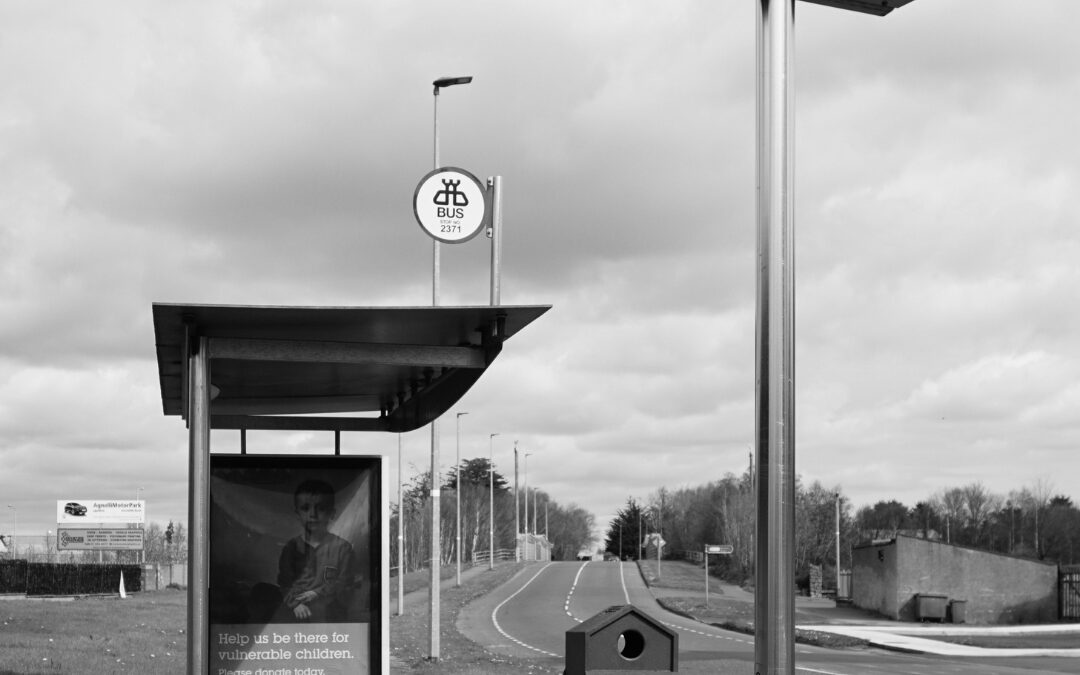
One morning, as I stood at the bus stop waiting for the 7:05, my neighbor, Horowitz, drove over my left foot with his butter-colored Volvo. I shouted. I shook my fist. Then I limped home to show my wife, Myrna.
I’ve had a long history of bearing tread marks, so my mishap didn’t come as a huge surprise to Myrna. She put down the obituaries, took off her reading glasses, and bent over for a closer look.
“What was it,” Myrna asked, “a truck?”
“No—Horowitz,” I said, pulling off my left shoe and studying the upper. “The nerve,” she said.
That morning, I went back out to the bus stop to catch the 7:35 and wondered if there was something wrong with Horowitz’s vision. But when he drove over my foot the following morning, at 7:05, and again the morning after that, I began to think Horowitz might be terribly maladjusted. Maybe he had an oddly developed sense of humor.
Maybe he didn’t know his running over my foot hurt me. Maybe the Volvo, a sleek GL sedan, just needed realignment. And for those first weeks, I thought about asking Horowitz to stop. I thought about reporting him to the authorities. But then I realized that his driving over my left foot every day was the natural and likely culmination of a life full of injustices, large and small, and I gave myself over to resignation, that inestimable salve, taking extra comfort in the fact that Horowitz didn’t drive one of those pricey sport utilities.
***
Over these last years, I’ve grown to appreciate Horowitz. I need him the way Myrna needs a smoke the second she rolls out of bed, the way some people need a morning cup of coffee. I tell myself that because of Horowitz, I am doing OK; better than that, in some tiny measure, I am victorious. For there’s no denying my spirits have risen over the months, buoyed, I suppose, by the thought that if I can withstand these daily abuses, then surely, I am stronger for it, stronger than my un-trod upon co-workers.
Good news: though at night I may need to soak my foot, thanks to the lightness of the Volvo’s frame–that sentinel of the best in Swedish design– I’ve never suffered a broken bone. More good news: on some days, I’ve noted, the front end of the Volvo will lurch away from the curb. I may have to lunge for the tire, then, leaping with my left foot extended. But, with a prickling of joy, I’ll see that in the glimmering of a second, when the tread of the tire is about to miss my shoe, the Volvo will right itself and crush my foot.
Sighing deeply with gratitude, I go to work, satisfied, feeling as if I’ve already accomplished something important and essential.
***
I laugh sometimes when I recall how I used to think Horowitz was rude, his running over my foot with the Volvo in second gear a mark of malice or bad manners. Now, I consider Horowitz one of my closest friends. We shake hands in the grocery store, never acknowledging our intertwined paths, the sanctity of our ritual. Instead, he asks me about Myrna, and I inquire about his wife.
“Middling, her health is,” he always says, and I picture her soul with boneless pliancy testing the air for flight, hovering in between good health and bad, while her body, below in bed, is not quite sick, but not entirely well either. It has occurred to me that my waiting for the 7:05 has given something to Horowitz as well, and this thought fills me with hope, makes me feel as if I have, at last, found one act of kindness I can perform for a fellow human being. I feel, too, it’s such a small thing, this standing at the corner, a small thing that I can give to Horowitz. And if his driving over my left foot gives me such a charge, I can only guess at the thrill it gives him.
***
One day, Horowitz didn’t show. My panic–colossal. I learned, after some frantic investigation–several calls to his office and some peeping through his garage windows– that Horowitz was simply on vacation. That was all. But when he came back, he didn’t look well; the skin of his face seemed to grip at his bones like leather over-cured. I sent
him aspirin and cold remedies. “You must take better care of yourself,” I said to him a few days later in the frozen fish aisle. But all that next week, as I waited for my bus, I worried for Horowitz and prayed I’d hear the splutter of his Volvo coughing to life and see the old, familiar pale-yellow frame of his car sidling around the corner. When it did, at precisely 7:05, I’d sighed, unaware that I had been holding my breath.
***
Several weeks later, on a Tuesday, Horowitz didn’t show again. His Volvo sat cold and covered in his driveway under its blue tarp. Relax, I told myself, he’s on another vacation. Get a hold of yourself. But after four days without Horowitz and two boxes of antacid remedies, I had to acknowledge my worst fears. I went home on that fourth day, intending to call in sick to work, for I was just that, sick in the heart, down to every last capillary, sure that something dreadful had happened to Horowitz.
Myrna met me at the door with the newspaper opened to the obituaries, Horowitz’s name highlighted with her lime green pen.
“I’m sorry, Mort. I really am,” Myrna said, handing me the paper.
They say we’re born twice, and I believe this to be true. For I felt with Horowitz’s passing that I had died, once for each of us. I couldn’t bear to look at my closet full of crushed left shoes nor Horowitz’s Volvo sitting in his driveway, offering all the hope of a broken-down telephone booth, the last one on a long, long highway. Each day, I stand out at the bus stop, lunging with my left foot toward the tires of passing cars and even trucks. But the motorists, perhaps more alert and wary of a lawsuit than Horowitz had been, artfully dodge my best attempts, and I have never been so depressed in all my life.
It is sad, a little pathetic, even, to think that this was what I had been living for, my life having been ground down to such a minor moment. But the importance of a thing comes from the weight it bears upon the bones and later, much later, in the spirit. I still wait for the 7:05, but now it is with a terrible fear cribbed between my lowest ribs and an ache of nostalgia thrumming through my metatarsals. What will I do without Horowitz’s butter-colored Volvo muscling over me, an oiled mammal given the music of a bad muffler? Please, I whisper, wringing my hands. I need that weight, the press of gravity reminding me that I am alive. In a world like this one, it is all I have.
by Gabriella Navas | Feb 15, 2024 | flash fiction
She begins each morning by peeling the dead skin off her lips.
Sometimes, she feels like she is shucking corn and other times, she feels like she is unwrapping a present, but mostly, she enjoys the aloneness that allows her this ritual, this tiny indelicacy. She enjoys death in small doses, which she tells herself is not the same thing as enjoying death itself, the same way a person who collects miniatures knows they aren’t collecting the real version of whatever has been miniaturized: everything is just an imitation of something else, a shrunken homage, flattened flattery.
In dreams, she imagines building a hutch and filling it with all the little deaths she acquires throughout her day: piles of dead skin; clumps of tangled hair snaked from the drain in her shower; the edibles that slow her heart rate so much that she can no longer feel her pulse when she presses two fingers against the inside of her wrist—arranged into a sticky, glistening pyramid; orgasms by her own hand, bottled or pickled.
She dreams of painting the hutch red and installing tracks of LED lights, the color-changing kind, on each shelf so she never gets bored. (She knows herself well enough to know that she will get bored, though, and that once she does, it will be incurable.) In these dreams, she makes acrylic plaques by hand and engraves them with witty titles for each item, as if they were pieces of art too obscure and profound for the average person to understand when, really, they couldn’t be more self-explanatory. She always makes a plaque for herself, too, but rarely engraves it. Once, all she could think to write was WOMAN, but halfway through, she ran out of space and wrote WOMB instead.
Sometimes, the dreams end with her attempting to drill the plaques into the wood and accidentally drilling a hole through the center of her hand instead, and other times, the dreams end with the entire hutch falling on her as she tries to push it as close to the wall as possible.
But they always end, is the point, and she wakes up, her lips chapped, cracked like unwatered soil, pieces of dead skin like seedlings. If she peels them slowly—which is how she prefers to do it—she bleeds, and the blood briefly wets her lips, staining them with a color so rich that she wishes she could conjure someone out of thin air just to kiss them stupid and share it with them. But because she can’t, and because she doesn’t want another person to see her bleed, she has begun to leave lip marks for herself all over her apartment: on her pillows, on her ironing board, on the walls, on the hood above her stove. Her favorite place to leave them is on the pendulum of the grandfather clock she keeps in her office; her second favorite is on a wooden rolling pin she doesn’t remember buying.

by Fractured Lit | Feb 14, 2024 | news
We want to celebrate the 52 stories on our Anthology Four longlist! An eclectic group of fantastic flash fiction that we read with excitement! Our shortlisted titles will be announced early next week!
- tell me how it works
- Protocol for What to Do After Hearing Another Rape Story in Exam Room Five
- Rearrangement
- Late Blooming Rita
- Driving
- Whispers of the Vaal
- Crab Island
- The Eulogy Competition
- Could Die for Just a Lie Down
- (Young) Woman
- Act As If
- Newfoundland
- True Story
- The Last Laugh
- Rollin Danny
- This Time of Death
- Diorama of Star-Crossed Lovers Driving at Night
- Those Who Seek
- Safe Passage
- hey girl I am utterly bedazzled by you, definitely not because I’m the only one speaking
- RIDICULOUSLY BUSY AND RIDICULOUSLY HAPPY
- Kaddish for the Departed
- Like Oil and Water
- Hidden in the Stacks
- Whalesong
- Hug Me
- Thirteen
- Maddy and Peirce
- The Children
- Great Unimportance
- WAX FROM WINGS
- So How Are You Liking Boise?
- When The Giant Breathed
- SELF-PRESERVATION
- We Went to the Museum
- Flesh Wounds
- Veronica’s Secret
- The Life of the Mother
- Eskimos
- Reunion
- Lemon Sherbet
- A Sighting
- I’ll Be Around
- Until You Sing
- The Nun
- Golden Years
- Vintage
- Bramble
- Preamble
- An Intentional Man
- Unspoken
- Regrets

Recent Comments