by Chelsea Stickle | May 6, 2024 | micro
Now that the Arctic isn’t cold anymore, The Blob is awake and tearing through malls like a post-breakup trust fund baby. After it drinks the oceans dry, The Blob returns to North America. The 24-hour news cycle was made for this. On their websites, you can watch the feed from the helicopters shining a spotlight on its backside. In the corner of your favorite sitcom, there’s The Blob inhaling a Chinese restaurant in Vermont. On news panels, so-called experts speak in circles. Kids blame billionaires for destroying the environment and failing their fellow humans. Billionaires blame scientists who knew this was coming and didn’t do anything to stop it. Scientists blame the governments who ignored their warnings and denied funding. Governments blame their citizens for their consumption cravings, for not recycling, for not riding the bus that doesn’t come to their area, for not spending money they don’t have on solar panels, for wanting to eat something other than canned beans. But no one ever asks The Blob who it blames for its solitary existence on Earth. They see a monster and don’t ask what’s behind that flubby exterior. And since all the humans are so busy watching The Blob and discussing The Blob, they don’t actually attempt to stop it. So, The Blob rolls alone, searching for another of its kind, one it can merge with and become whole. It consumes what it can to maintain its optimism, but rolling through skyscrapers in the city moonlight, it feels emptier than ever.
by Sara Hills | May 2, 2024 | micro
For only seventy-seven dollars, the TV preacher promises God will grant me a miracle. He clasps his hands in prayer, gold rings glinting, while I clasp the telephone, punching the numbers from the TV screen that casts the room in a greenish glow.
“There, there,” the woman in the phone says, shushing me, and already I feel the miracle of Mama refilling my cracks.
The woman waits while I tiptoe through our dark trailer, careful not to step on the stain, careful not to disturb the steady rasp of Daddy’s sleep-breathing or his one arm hanging off the bed. I find his jeans in the empty dent on Mama’s mattress side and slide the V-I-S-A card from his torn leather wallet.
Stretching the phone to the dawn-lit window, I whisper the bumpy numbers, which the woman makes me do twice, asking how old I am (7), asking if I have any pets (yes, a dog: Roy), asking if I ever planted seeds at school (not at school, with Mama), and did I know seeds grow miracles and more seed money helps God save the world?
I sink down against the wall, burying my fingers into the knotted fur along Roy’s ridges where the fat ticks hide, while the woman calls me honey and God’s little angel and tells me all about which money-seeds we can plant for different kinds of miracles.
Her voice hums, like bees waking in springtime or when the neighbor’s cat Carlo catches a mouse, and I can almost feel Mama kneeling there next to me, fingernails heavy with dark dirt. Only this time, Daddy’s not shouting, and Roy and me aren’t whimpering. It’s just the woman’s voice filling my belly with dollar amounts and seed names—Resurrection, Recovery, New Beginning—so soft and sure they feel like an already answered prayer.
Originally published in Reflex Fiction.
by Lori D’Angelo | May 1, 2024 | interview
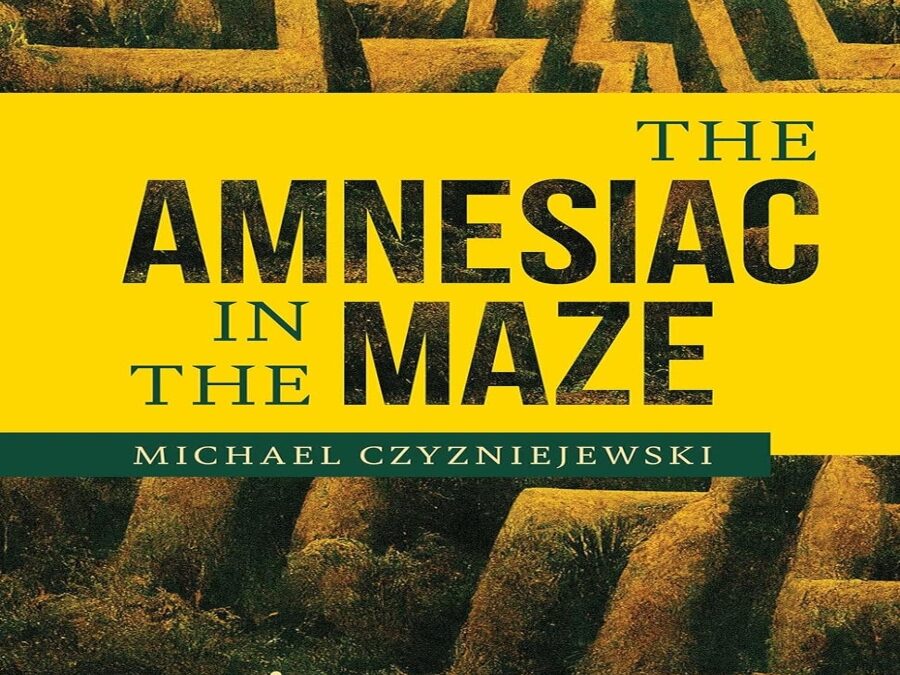
Michael Czyzniejewski, who is the interviews editor at the flash fiction magazine Smokelong Quarterly, has written four collections of short stories. His most recent is The Amnesiac in the Maze (Braddock Avenue Books, 2023), which writer Mark Polanzak describes as a collection of stories that “conjure the heady experiments of Kurt Vonnegut, Donald Barthelme, and Mark Leyner.” These are stories that make the reader think. On the surface, the stories appear to be thought puzzles, but underneath, they reveal deeper layers of human longing and desire.
Lori D’Angelo: You’ve written both flash fiction and more traditional short stories. How would you describe the stories in your most recent collection, The Amnesiac in the Maze?
Michael Czyzniejewski: There are some flash pieces in the book, but it’s more balanced with longer stories, or at least mid-length stories, often around 2,500-3,000 words. There are even a couple that are like novels for me, around 4,500 words. Those were difficult for a flash writer!
Lori D’Angelo: The stories in The Amnesiac in the Maze put your characters in a series of absurd scenarios. In one story, you have a pyromaniac who is stuck on an island surrounded by water. In another, you have a town filled with murdering monkeys. In another, you have a hemophiliac who falls in love with a glass eater. How did you come up with the ideas for these stories, and how did this collection, as a whole, come together?
Michael Czyzniejewski: This is a project I’d been working on for a while, since the late oughts, stories that came together by me writing one story, then writing another that seemed to follow the same pattern; all of a sudden, I had a project. I worked on it off and on for about ten years, finishing it and getting the manuscript out right before the pandemic—and there it froze for a couple-few years as small presses were holding back on their publication schedules.
As you point out, the stories follow a pattern, somewhat like the title of the book, The Amnesiac in the Maze. The stories all feature some stock character or archetype or trope or generality in a situation, often doing things. “The Amnesiac in the Maze.” “The Hemophiliac Engages the Glass Eater.” “The Daredevil Discovers His Doppelgänger.” “The Atheist Reconsiders.” It was a fun format to experiment in, to work with general and often nameless characters, to get into the core of who they were, how their identities shaped them. Or didn’t.
Not sure where the ideas come from, or really, how to answer that question, which I get a lot. My answer is always as straightforward as I can make it: I think a lot. Lots of things pop into my head and some of them are good ideas for stories, things that make me smile, things that excite me. It’s usually not intentional—whenever I try to start something and think, “Okay, what’s a good idea for a story?” I don’t get anything. I guess I can’t will myself to think of ideas, but they come when they come.
Lori D’Angelo: I feel like the titles such as “The Bigamist Gets Ambitious” are doing a lot of work for these stories. In a way, this collection kind of reminds me of Robert Olen Butler’s Tabloid Dreams. Can you tell me more about how the titles are working for these stories?
Michael Czyzniejewski: The titles do a lot of the work in terms of setup, a lot like poems often do—if the title wasn’t there, the reader would have no idea what was going on. Or, at the very least, it would take a lot of the story’s length to figure it out. The title sets up the protagonist, the situation, the conflict. That way, I could hit the ground running, no need for set up or backstory. It’s a neat trick.
Lori D’Angelo: In a lot of the stories in this collection, the main characters are referred to by what they are (e.g., a nudist, an inventor, a hypochondriac) rather than their names (though occasionally, in some stories, their names are referenced). Can you talk about why that is?
Michael Czyzniejewski: I think it was more interesting to try to break down the trope or type or even stereotype than to use a real character, with a real name. That’s what the stories do, pose a certain type of person against their, perhaps, worst fear. I started that way by accident and just went from there—it seemed to be working.
Eventually, as I wrote more of the stories, I wanted to shake things up, add variety, so I did write more traditional stories with names, real characters, etc. “The Bigamist Gets Ambitious” is one that does that. The bigamist, who is also not the protagonist in the story, just has a name, as do his wives, including the original wife, the protagonist, and the narrator. It just made for a more well-balanced, less repetitive book that tries different things.
Lori D’Angelo: You’ve written four short story collections, including this one. How would you say that your work has evolved from the beginning of your career until now?
Michael Czyzniejewski: I remember just trying to write a good story. Then, for a long time, I wanted to publish one of them, and that took a couple-few years. Then I wanted to do it again. Eventually, I wanted to do it consistently. I’ve always wondered if I would “make it,” if I could sustain a career in writing stories, or at the very least, have a tiny space in the universe. Eventually, after a couple of books, a job as a professor teaching short stories, I kind of figured out that, at the very least, it wasn’t an accident or a fluke. That’s a good feeling, a relief … yet I suffer from stage 4 imposter’s syndrome still.
Lori D’Angelo: I’ve noticed that you’ve published a lot of flash fiction recently. Can you talk about what draws you to the form of flash fiction and what you think makes a work of flash fiction successful?
Michael Czyzniejewski: I like getting full ideas out in one sitting. Flash allows that, while novels and even traditionally sized short stories don’t. I can start and finish a draft of a flash piece in one sitting. Once I get an idea, I can usually write it to its end. That’s empowering, plus it fits with how my brain works, how it can be ultra-focused in short bursts but get sick of ideas—especially my own—very quickly. I’ve tried writing novels and got really far into one—25 pages!—but every time I went back to it after that, I couldn’t be less bored. And if I was bored, then the reader ….
Lori D’Angelo: Which writers would you say are doing interesting work right now in the form of flash fiction?
Michael Czyzniejewski: I’ve read so many people and could fill pages upon pages here with names. I look at Kathy Fish and Pamela Painter as real trailblazers, and they’re still doing consistently great work. Sherrie Flick could be the third person if we needed a trio there. I love a lot of the authors on my press, Moon City Press, even before they were on the press, so it’s no wonder they won our book contests: Kim Magowan, Michelle Ross. Andrew Bertaina. Sarah Freligh, and our forthcoming author, Avitus Carle. Other people are so prolific and do so much great work. Melissa Llanes Brownlee. Erin Vachon. Chelsea Stickle. Kelli Short Borges. Tara Isabel Zambrano. Sudha Balagopal. Tommy Dean. Francine Witte. Mikki Aronoff. Meg Tuite. Now I feel bad because there are so many, but I can’t list every author here.
Lori D’Angelo: It seems like flash fiction has become very popular recently. Why do you think that is? And when do you feel like flash fiction really took off as a form of writing?
Michael Czyzniejewski: Yes, very popular! My guess is that it gives fiction writers the opportunity to work like a poet: Shorter, more focused works that can be written (and submitted) in bunches. I suspect a lot of writers have the same issue with longer works as I do, that they just don’t have the patience. Speaking of, I think it also helps that a lot of online flash journals—and there are a lot of them—respond to submissions in less than a month, sometimes in less than a week; flash is moving and shaking at a faster rate than more traditional lit mag operations. And there are an abundance of great flash journals out there, and a lot of print magazines, mine included, have made special spaces in their pages, or on their websites, for flash.
When did it start? Wow, hard to pinpoint. SmokeLong Quarterly has been around for a long time now, over fifteen years, and I had an early story with them. Then I wrote my second book, Chicago Stories, all micros, and published those in 2011-2012. And then I didn’t pay particular attention for a while, but all of a sudden, in the late twenty-teens, all these journals popped up. I found out about it because these great authors on Moon City Press—like Kim and Michelle—had their work from their books in these journals, journals I hadn’t, at that point, heard of.
Lori D’Angelo: Which writers would you say have had the biggest influence on you?
Michael Czyzniejewski: There’s three that are easy to name. Firstly, I went to college in the early nineties and all my professors were still absolutely obsessed with Raymond Carver and minimalism at that point. They all went to school and got hired in the seventies and eighties, and that was just what writing was: Carver. Short, declarative sentences. Minimal exposition and emotion. That iceberg metaphor. I read all of Carver and his contemporaries—Ford, Wolff, Beattie, etc.—so I wrote, and still write, in that stylistic mode.
But times changed, and people got sick of that. Carver was dead for almost ten years. His editor, Gordon Lish, was no longer in charge at Knopf. Then I ran across two authors/books right when I was in grad school: The Girl in the Flammable Skirt by Aimee Bender and CivilWarLand in Bad Decline by George Saunders. Absurdity! Humor! Magical realism! Creativity! Description and exposition! Both of these authors really spoke to me, especially with their stylized prose and their imaginations. So, Carver and Bender and Saunders.
Steve Gillis, the editor of my first book, Elephants in Our Bedoom, said my work was “magical minimalism.” That made perfect sense, Mike = Carver + (Bender + Saunders). I don’t think I’ve changed much since.
Lori D’Angelo: You’ve worked as an editor, both at Mid-American Review and now at Moon City Review and Moon City Press. Can you talk about how being an editor has shaped your writing?
Michael Czyzniejewski: I’ve learned a lot. Every time you read something, you get smarter. And reading submissions for a journal is different from reading a published work, a book or a story in a lit mag. Sometimes, you learn what to do. Sometimes, you learn what not to do. Sometimes, you get inspired. Working on a journal, as part of my job, has been a gift—any time you can say you’re going to work, and part of that is reading and discussing stories, which is time well spent. This has been true for my entire career. It’s just great to be spending time on these pursuits, as opposed to welding, lawyering, leathernecking, whatever.
Lori D’Angelo: You’re also a professor of creative writing at Missouri State University. Can you talk about how being a teacher informs your writing?
Michael Czyzniejewski: Kind of the same thing: It’s just great to be able to go to work and read and discuss stories. Students inspire me but in a different way than lit mag submissions. Your brain is in a different mode: Help/Fix, as opposed to the editing/choosing submission mode, which is Yes/No. I’m lucky to be able to earn money by talking about short stories, about writing in general. They don’t let you do that in most other jobs. And being around writing all day fuels me, inspires me.
I have writer friends who are happy to go and do _____ all day, then write when their workday is done. I don’t think it would be like that for me.
Lori D’Angelo: You’ve had a fairly successful career as a short story writer, which is a difficult thing to do. What advice do you have for newer writers who are hoping to write flash fiction and short stories?
Michael Czyzniejewski: Work on it, and don’t stop. I’m convinced the only reason—or most of the reason—I’ve had success is because I was persistent. I read, wrote, revised, and submitted my work without letting up for years—more than half my life at this point. This thing we do, it’s not a lark, not a passing hobby, not something you stumble into. Nobody is looking to publish anyone’s hobby/side hustle, or anyone’s rough drafts. There are so many talented people writing and submitting and pushing the genre of short fiction forward. To be one of those people, you have to work just as hard or harder to break in.
But if you love this, have talent, and were meant to write and publish stories and flash, this shouldn’t be a problem. Even when I was getting everything rejected—and that happened for years—I was never like, “I hate this. Writing stories is so tedious.” I was doing what I wanted to be doing, so working hard at it wasn’t an issue. What else was I going to do?
Lori D’Angelo: What are you reading now, or what have you read recently that you have particularly enjoyed?
Michael Czyzniejewski: I bought a huge stack of books at AWP that I haven’t touched yet, ten weeks later. I have gotten into the practice of seeing friends advertise their new books on social media and then writing them, asking to buy a signed copy—I’ve done that at least ten times in the last month. I am teaching the Contemporary Fiction course in the fall here at MSU and I haven’t read six of the nine books on my syllabus yet. What I’m reading now is student stories and final portfolios: As soon as that’s done, in a few weeks, I hit all that other stuff!
Lori D’Angelo: What are you currently writing, or what are you thinking of doing in terms of your next writing project?
Michael Czyzniejewski: I have two books done, pretty much. One is a mixed collection—flash and longer stories—about dads, dad-child relationships. I was really on that kick as soon as I finished Amnesiac. I finished this dad book, comparatively, pretty quickly, in less than three years, while Amnesiac took about ten. I have been writing flash exclusively for the last few years now. I’m at the point where that might be a book—I should probably count those pages up soon!
***
Michael Czyzniejewski is the author of four short story collections: The Amnesiac in the Maze (Braddock Avenue Books, 2023); I Will Love You for the Rest of My Life: Breakup Stories (Curbside Splendor, 2015); Chicago Stories: 40 Dramatic Vignettes (Curbside Splendor, 2012); and Elephants in Our Bedroom (Dzanc Books, 2009). He is the editor-in-chief of Moon City Press and Moon City Review and the interviews editor for Smokelong Quarterly. He coordinates the creative writing program at Missouri State University, where he also serves as a professor. He is a two-time Pushcart Prize winner and a 2009 recipient of a National Endowment for the Arts Fellowship.
Lori D’Angelo’s debut collection of stories, The Monsters Are Here, is being published by ELJ Editions in 2024. She is an alumna of the Community of Writers at Squaw Valley and a fellow at the Hambidge Center for Creative Arts. Her fiction, non-fiction, and poetry has appeared in various literary journals including BULL, Drunken Boat, Gargoyle, Hawaii Pacific Review, Heavy Feather Review, North Dakota Quarterly, ONE ART, Potomac Review, Reed Magazine, and Rejection Letters. She is a 2012 recipient of a grant from the Elizabeth George Foundation. Find her on Twitter @sclly21 or Instagram at lori.dangelo1.

by Gillian OShaughnessy | Apr 29, 2024 | micro
I bury my dead in this garden. Over there, under the cabbage roses. They haunt me through the day. At night, they sleep in the shadow of a fig tree with branches as wide as an archangel’s wings. I used to sit there and knit the smallest of garments. I chose thin needles and fine woollen yarn; I never dropped a single stitch. My husband and I don’t speak of that anymore; I put those tools away at his insistence. Who did he think he was helping? Now I fashion makeshift shrouds from whatever I can find, I pick at fallen leaves and discarded feathers of lucent blue, I peel the soft skin from the paperbarks. I try to keep my children quiet, but their ghosts play ring-a-rosy while I work. The chime of their glass laughter leaves me teetering. I no longer clean the crescents of dirt that crust beneath my fingernails or bother with snags in my hair. When he wraps me in the weight of his compassion, I’m cool as frost. He says I drift away like smoke, but he doesn’t bleed like me, he doesn’t see how tenderly I rest my palm on their cradles of soil, how I nurture every blossom. Ghost babies are born with sharp teeth. They eat through my womb. They wail beneath the fat cabbage roses; they gnaw at my back when I turn my head away. They are ravenous.
*A version of Hunger was longlisted in Reflex in the Autumn award in 2022 and shortlisted for the Bridport Prize for Flash Fiction.*
by Fractured Lit | Apr 27, 2024 | news
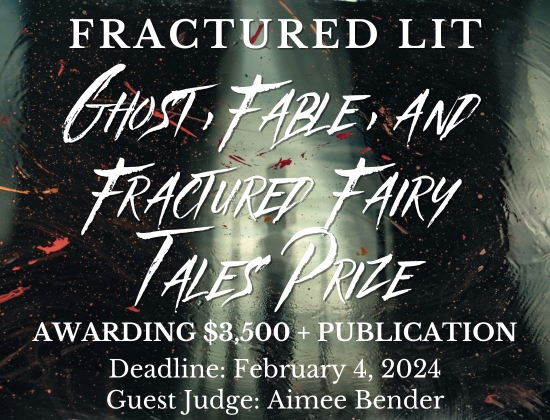
We asked for new ways to tell these kinds of stories, and these 52 writers did not disappoint! We’re working on getting down to a shortlist very soon. We can’t wait to send it to our guest, Judge Aimee Bender!
- Dear Goldilocks
- Snow White and the Sleep Study
- Heart of Stone
- What Big Eyes
- The Incantation
- The Nesting Doll Paradigm
- The Boy Who Couldn’t Sleep
- The Weeper
- Every Time a Bell Rings
- Heterothermy
- Deliverance
- Enjoy Every Moment
- He is the River Monster
- The Cycle
- The Department of Missed Connections
- Agnes and The Dog Star
- Forgiveness by the Numbers
- Pizza Rat, Don’t Think I Have Forgotten You
- Her Little Animal
- The Rat-Catcher of Hamelin
- Selection Pressures
- Narrative Seeds
- Cordelia’s Ghosts
- The Rattle Grass
- Our Lady of Clean Kitchens
- Blue Dragon
- Dreams of Me
- Second Sight
- To Pay the Piper
- The Last Time I Saw Frank
- A Fairy Tale for Florida Girls
- Selkie’s Stew
- Yellow Eyes Jack
- The Pebble and the Witch
- Wild Horses
- A wommon’s World
- Harpy
- To the Tower
- Godmother Yes
- Is There, Is There Balm in Gilead
- Ratibia
- Animal Nature
- The Riding Hood Effect
- A Goat for Goldstein
- Thank You For Coming
- The Burden of Authority
- Mama Bear
- A New Volcano Friend
- At Whistling
- The Mouth
- The Desert Sound
- Let Down
by Richie Zaborowske | Apr 25, 2024 | flash fiction
For two years now, Leonard’s wife hasn’t wanted to have sex with him. He figures it might have to do with her mother passing, or maybe it’s because both their kids are in college and the house is empty. Maybe it’s biological. He has no idea. Hell, for all he knows, it could be the cat puke. Their tabby bolts her food nearly every morning, and even though Leonard tries to find the mess before his wife has to deal with it, maybe cleaning up all that chunky, mucous, slop, has finally killed off her libido. He’s not sure, and he doesn’t blame her. If anything, he blames himself. He feels culpable in a way he doesn’t understand.
To find answers, he’s read a stack of vintage Cosmo magazines that he bought at Goodwill and a shelf worth of relationship books from the library. On his phone, he cruises Reddit’s Dead Bedroom forum and tunnels through the wormhole of YouTube. There are also chat rooms. Spread out across the country are others just like him. Leonard commiserates, he swaps tales, offers what little guidance he can. He also gets invited. There are meetups. Men and women looking to comfort each other. To get from each other what they can’t get at home. There is a meeting tonight at the Texas Roadhouse just across town.
Leonard has resolved to attend. As a cover he’s told his wife that he’s joined a bowling league. Just a bunch of guys from work. Drinking beer and throwing strikes. Don’t wait up. After showering and slapping on too much aftershave, he unzips his bowling ball bag to double-check that the box of Trojans is still there. When he looks up, he sees his reflection in the bedroom mirror. He unbuttons the top button on his shirt, then realizes he looks like a creep. Hastily, with his thick fingers trembling, he buttons it back up, trying to ignore the fact that he now looks like a sleazy businessman on the prowl.
On his way out, he pauses at the patio door. Outside, wearing sweatpants and a shawl draped over her shoulders, his wife is on a wicker chair, lost in a well-worn paperback. Alright, dear, he says, trying to keep his voice even. I’m leaving, he says, just wanted to say goodnight.
You look nice, she says, putting down her book and standing. Before you go, I wanted to give you something.
You did?
You remember our honeymoon? she asks.
He does. She wore lingerie. Purchased from a boutique in Austria. A complexity of lace across her bosom, red fabric stretched taut across her backside. There were these clips that hung down and pulled up her stockings.
One moment, she says, walking past him into the house.
Would she really purchase lingerie? Anything was possible. Years ago, many years ago, on a frigid mid-February morning, she had visited his apartment unannounced. When he opened the door to the bracing cold, she was standing there on the stoop, wearing an oversized parka that went past her knees. Once inside, she unzipped the fur liner. To his surprise, she was naked underneath, her hands freezing but her body warm and welcoming.
When she comes back she’s traded the shawl for a hooded sweatshirt, the paperback for two bowls. She hands him one.
What’s this? He asks.
Gelato. Vanilla.
Gelato?
I saw it at the grocery store, a new brand, she says, sitting back down on the wicker chair. And I thought of you.
You thought of me?
Yes, she says. Remember Italy, our honeymoon? The vendor with his big booming voice? Every time we were near his cart, you had to stop and order a scoop of each flavor. You spent a small fortune.
Leonard doesn’t remember, and he holds his spoon awkwardly as if he’s never used an eating utensil before. The gelato sits in his dish, white, with specks of brown, a frozen lump that’s about as far away from sex as he can imagine.
Come on, she says, watching him, smiling at his bewilderment. You were wild about gelato.
Only one bite, he promises himself, stabbing the gelato with his spoon. The group isn’t going to stay at Texas Roadhouse all night. He didn’t splurge on the twenty-pack for nothing.
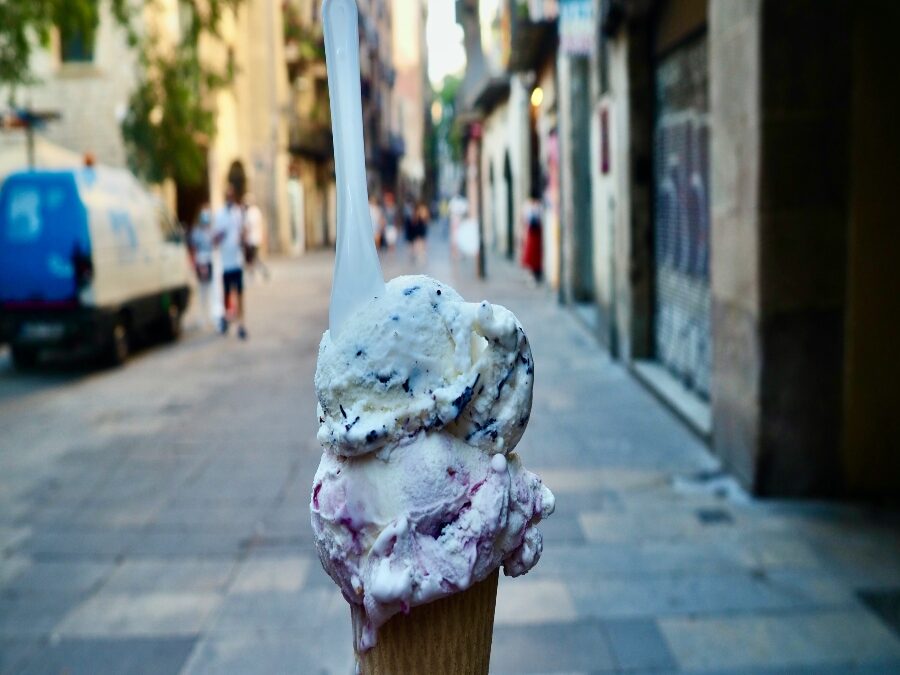
Tentatively, Leonard takes a lick. The gelato is denser than ice cream. The vanilla flavor bright and spicy, almost floral. More like the idea of vanilla than actual vanilla. The man, he remembers now, was named Giovanni. Giovanni’s Gelato. At dusk, parked on a cobblestone lane, surrounded by all those tall buildings stained Baralo red, Giovanni’s cart would be all lit up with votive candles sputtering away in little glass jars. Giovonni liked to tease Leonard. Said the reason Leonard was so hungry was because he was in love, and Leonard’s love was going to help Giovanni retire early, help him send his daughters off to college overseas.
Leonard remembers the joy he felt in the simple act of holding his wife’s hand, his new wife, as they strolled along the lanes and talked about everything and nothing, talked for the sake of talking. He remembers how each time they approached Givonni’s cart, the man would spread his arms wide in the fading light and roar, Thank God for Leonard’s love!
How could he ever forget, Leonard wonders to himself, scooping more and more gelato until his spoon is fruitlessly scraping the side of the bowl.
by Fractured Lit | Apr 22, 2024 | Uncategorized

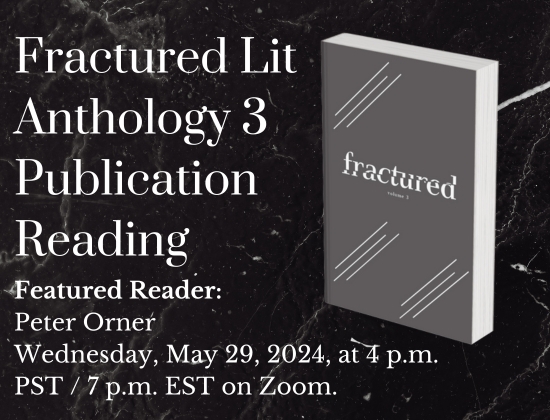
anthology 3 publication celebration reading
Wednesday, May 29, 2024, at 4 p.m. PDT / 7 p.m. EDT on Zoom
Add to Calendar
submit
Join us in celebrating the publication of our third anthology of flash and microfiction. We were honored to work with Guest Judge Peter Orner on this project, and we want to share these stories with you at our first online reading event. Peter will also share some of his own work as our featured reader, followed by many of the amazing writers published in this collection.
The following writers will read their stories published in the anthology:
- Kati Fargo Ahern
- Reneé Bibby
- Brett Biebel
- Megan Callahan
- Christine H Chen
- Hillary Colton
- Elizabeth Conway
- DE Hardy
- KA Polzin
- Kim Steutermann Rogers
- Arthur Russell
- Robert Shapard
Featured Reader: Peter Orner
Peter Orner is the author of two novels, Love and Shame and Love and The Second Coming of Mavala Shikongo, and two story collections, Last Car Over the Sagamore Bridge and Esther Stories. His work has appeared in The New York Times, The Atlantic, The Paris Review, and The Best American Short Stories. A recipient of Guggenheim and Lannan Foundation Fellowships, as well as a Fulbright to Namibia, Orner has taught at the Iowa Writers’ Workshop, the University of Montana, Northwestern, and the Warren Wilson MFA Program for Writers. He is currently on the faculty of San Francisco State University and a member of the Bolinas Volunteer Fire Department.
submit
by Barbara Diggs | Apr 22, 2024 | micro
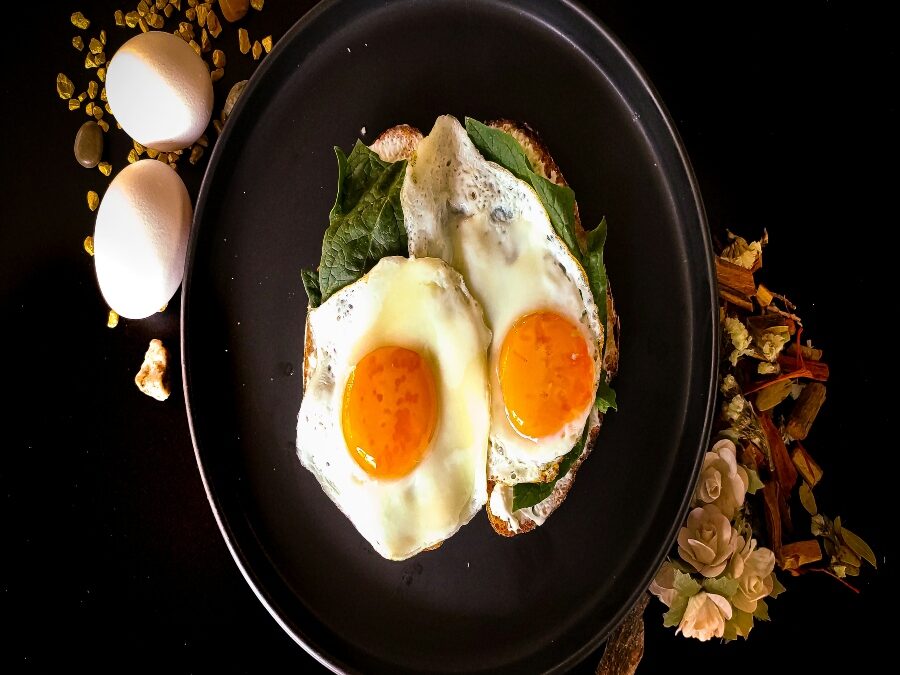
so I know you are eggs. Sunny side up, salmonella-scrambled, salsa-slathered, over-hard yellow-white discs fried in bacon grease until the edges curl like wispy brown lace. Your dad was the original egg man, eating five every day, insisting you ate at least three. One slurry night on somebody’s basement couch, you mumbled into my neck that you didn’t even like eggs, just learned to choke them down because it was easier and now you couldn’t stop. I pressed my hand to your chest and felt your heart cracking beneath my palm.
You are what you eat, so I know you are rage. You ate it by the forkful, along with your daily eggs. Your dad sprinkled it like salt all throughout your home; tiny bitter grains that amplified everything: spilled milk, burnt toast, untied shoelaces, lost hats, dead batteries in the remote, Chinese take-out that arrived cold, smart-ass delivery drivers who don’t deserve a fucking tip, gotdamn companies trying to rip him off. You ate so much rage that the taste was constant in your mouth, rising unbidden at the sight of a single burned pepperoni on pizza, a shattered egg spilling its guts on the floor.
You are what you eat, so I know you are my love. I baked it into lemon-poppy muffins, stirred it into chicken soup, slid it into the slow cooker along with pork chops and apples. I thought it could overpower any craving, salve your cracked heart. You consumed it with eyes closed, licked your fingers, but told me everything tasted sour. So I melted it in syrup and poured it over pancakes, infused it in fruit smoothies, tried candying it with roasted pecans. You slammed your fist on the table and asked why can’t I ever just make fucking eggs. I tried to fold it into an omelette but a spoonful of rage fell in instead. You gagged as you ate it; said it was the best thing I’d ever made.
by Fractured Lit | Apr 19, 2024 | contests
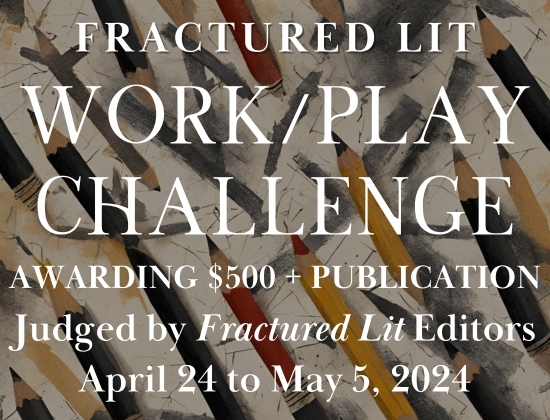
Fractured Lit Work/Play Challenge
Judged by Fractured Lit Editors
April 24 to May 5, 2024 (Now closed)
Add to Calendar
submit
The winner is The Breakfast Shift at the Usual New York Diner by Debra A. Daniel!
Challenge Prompt
For this challenge, we want stories based on the theme of “Work/Play.” If we get to know our characters in flash fiction through action, nothing quite reveals them more than their behavior when they’re at a particular job or when they’re at play. Each part of this dual theme could connote happy feelings or conversely, show the dark undersides of employment and leisure. Take us to the places your characters grudgingly go or sneak away to, the places where they try to hide their true natures, the places that make them feel free and hopeful, or the places in-between, where society encroaches. Both work and play have their own sense of rules, so show us what happens when these rules are broken, ignored, or enforced. We love characters who aren’t afraid to exhibit their desires and face their fears, who are willing to make mistakes, and who fail beautifully. Be imaginative and original in your choice of setting, in your invention of plot, and in the combination of these elements to create an exciting and resonant story.
GUIDELINES:
- Your $20 reading fee allows up to two stories of 1,000 words or fewer each per entry-if submitting two stories, please put them both in a SINGLE document.
- We allow multiple submissions-each set of two flash stories should be a separate submission accompanied by a reading fee.
- Please send flash fiction only-1,000 word count maximum per story.
- We only consider unpublished work for challenges-we do not review reprints, including self-published work (even on blogs and social media). Reprints will be automatically disqualified.
- Simultaneous submissions are okay-please notify us and withdraw your entry if you find another home for your writing.
- All entries will also be considered for general publication in Fractured Lit.
- Double-space your submission and use Times New Roman 12 (or larger if needed).
- Please include a brief cover letter with your publication history (if applicable).
- We only read work in English, though some code-switching/meshing is warmly welcomed.
- We do not read anonymous submissions.
- Unless specifically requested, we do not accept AI-generated work. For this challenge, AI-generated work will be automatically disqualified.
- The deadline for entry is May 05, 2024. We will announce the shortlist within ten to twelve weeks of the challenge’s close. All writers will be notified when the results are final.
Some Submittable Hot Tips:
- Please be sure to whitelist/add this email address to your contacts, so notifications do not get filtered as spam/junk: notifications@email.submittable.com.
- If you realize you sent the wrong version of your piece: It happens. Please DO NOT withdraw the piece and resubmit. Submittable collects a nonrefundable fee each time. Please DO message us from within the submission to request that we open the entry for editing, which will allow you to fix everything from typos in your cover letter to uploading a new draft. The only time we will not allow a change is if the piece is already under review by a reader.
OPTIONAL EDITORIAL FEEDBACK:
You may choose to receive editorial feedback on your piece. We will provide a two-page global letter discussing the strengths of the writing and the recommended focus for revision. Our aim is to make our comments actionable and encouraging. These letters are written by editors and staff readers of Fractured Lit. Should your story win, no feedback will be offered, and your fee will be refunded.
submit
by Kelly Ann Jacobson | Apr 18, 2024 | flash fiction
The third store we visit has been raided. The shelves are like rows of gapped teeth—missing flashlights, missing batteries, missing fans, missing gallon jugs of water. Our list is a prayer in your clasped hands. “What about candles?” you ask, and the nervous girl hanging lighters on the endcap takes us through the aisles to décor. “Not much left,” she says as she eyes the few colorful glass cylinders on the shelf. Is she reconsidering her own supply? Will she return here to scavenge the remains? I notice, then, that she has a bump of her own, but I know better than to ask. She retreats back to the lighters, and I watch, out of the corner of my eye, as she bends and hangs and slides.
“Pumpkin spice?” you say as you wave one of the candles under my nose. The smell is cinnamon, clove, and maple—but not pumpkin.
I turn back to you and shake my head. “Please don’t ruin pumpkin spice for me.”
“I forgot you’re an addict.” You clink the cylinder holder down and retrieve the pink one. “How about this?” Watermelon, oversweet, like the fruit has turned.
“Worse,” I say. My sense of smell has always been stronger than yours, but the extra estrogen in my body has turned me bloodhound. I point to the white ones, Clean Laundry. “Just buy two of those, and let’s get out of here.”
“Fine.” Your voice is angry, trying to be calm. You are probably thinking, Why did you bring me here?
I am thinking about it, too.
Of course, we never use those candles. Or the one jug of water we find in the cracker aisle at Walmart. Or the sanitary wipes. Or the black beans, baked beans, sliced carrots, peaches in 100% juice, saltines, minestrone soup, all still towered in the back of the cabinet like soldiers ready to deploy at a flicker of the lights. We never use any of them, because we are not there to watch the trees fall against our chain-link fence. Maybe we should go?, we vaguely ask our neighbor, a true Tallahassee man, and he says, with his calm voice and waiting-to-catch-a-fish gaze, I think that would be best. This is a man who slept through the last hurricane. This is a man who knows how to batten down the hatches with storm shutters and sandbags. He is our litmus test—If the locals are all staying, we tell ourselves, then who cares what the privileged students do?—but that morning, after he tells us what is best, we pack our bags and leave within the hour.
We are lucky we find an article about filling up our tank so we can use the car to charge our phones.
We are lucky we don’t have a good car, the kind that only takes premium-unleaded, and that we make it all the way to Troy, Alabama, without needing to stop at the gas stations, most of which are emptied like breast at the mouths of famished babes and left with plastic bags on the handles like the white flags of surrender. We are lucky, lucky, lucky to be those privileged students; or, rather, for me to be that student, and for you to be that privileged—and don’t I feel it, as you swipe your credit card at the desk and I put my hands on my belly and think, We’re safe now.
Originally published in An Inventory of Abandoned Things (Split/Lip Press).

Recent Comments