
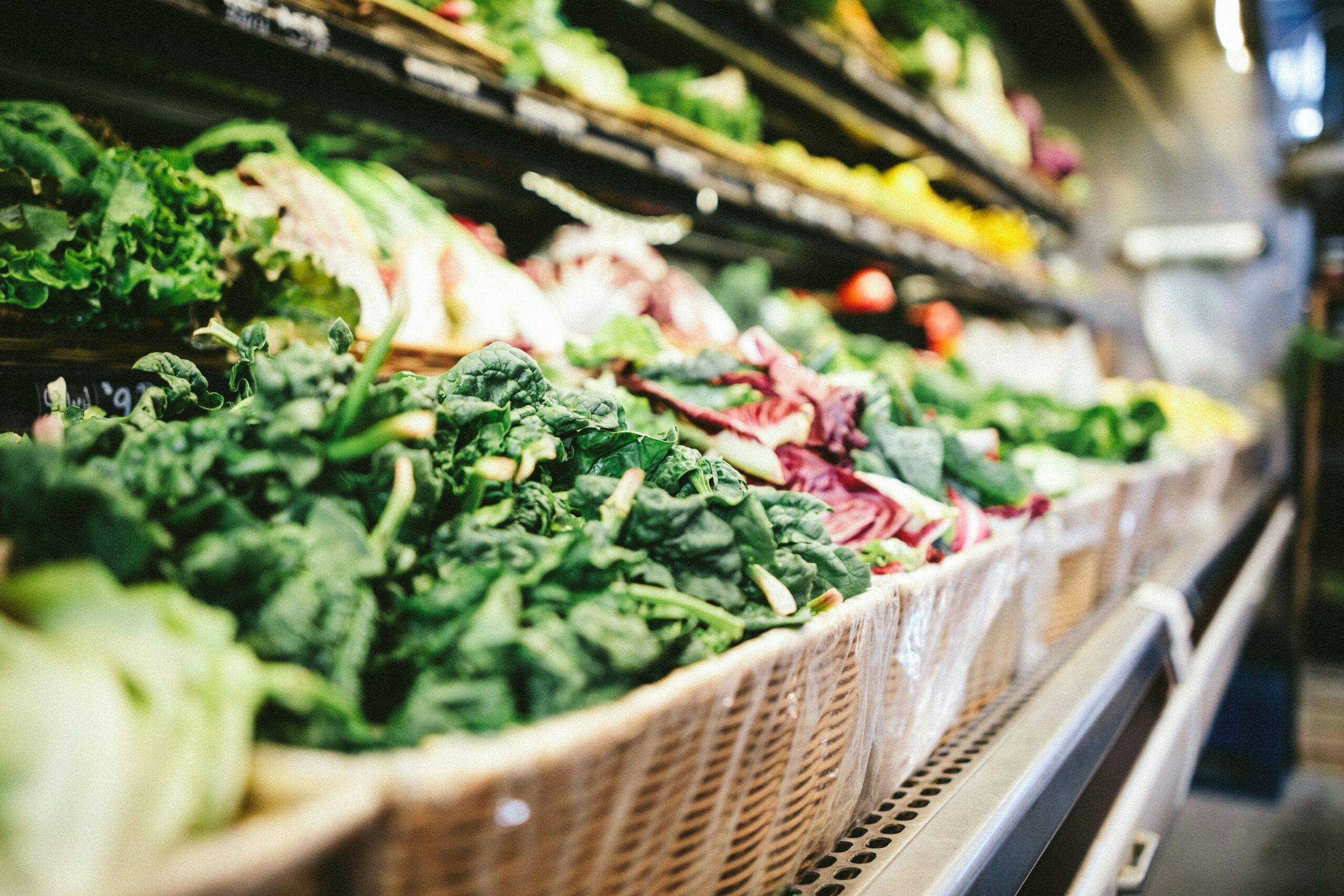
I grew up in a store called Boise. I was born between the tomatoes-on-a-vine, $2.50 for 4, and the green curves of watermelons, whose viridescent rinds bled into one another like tie-dye, and which, when in season, were buy-one-get-one.
I was produced among produce, a product of production. I swelled my mother’s belly into a watermelon, fed on vine-ripe tomatoes and fresh pasta, and on the day of my birth she squatted down in aisle 4 so I could slide out like a clementine loosed from its biodegradable bag, clutching at tile flooring and squalling as I tasted my first whiff of egg-carton air ripe with the sensation of green bananas just starting to yellow.
I knew vegetables intimately. I knew the thirst of lettuce leaves, their frail, frilled edges quavering beneath the touch of misted droplets, never quite quenched. I knew the nervous tumble of potatoes as they burrowed into their shallow trench. I knew the secrets of papayas, that intensely private fruit, which—though eventually they, too, betrayed me—I will never tell.
My mother manned the register from noon to night, but in my memory it was always night, just before closing, when the overtime stragglers, the desperate and the hungry, plodded through the automatic doors, a narcotic parade collecting late-night cravings. Puffed bags of popcorn seasoned with rosemary and sea salt, bunny-shaped gummies Made With Real Fruit!, loaves of sourdough bread with spongy innards and crackling crusts. Dropping items on the stuttering conveyor belt, soothed by the sporadic beep of the scanner against which my mother expertly shuffled barcodes, the stragglers’ eyes drooped before bursting open like summer-plumpened cherries between the teeth of the total flashing onscreen.
$$$? they asked incredulously, handing over their credit card. Is that right?
It’s not right, my mother informed them. Nothing ever is. She swiped the card with a practiced flick of her wrist.
I inherited that place, though it was not mine to inherit. The wooden crates in the back brimming with pimpled cucumbers; stacks of flour satchels that emitted a clean, rich dust; fish with frozen eyes and gaping mouths, shocked into silence. I strutted the aisles of crackers and vitamins, climbed the towers of natural-flavor sodas, sashayed behind the deli counter while tracing my fingernail along the grains of the chopping block; I re-piled the roll-prone carrots, telling them to stay, and they did—already ordered, without my knowledge, by some greater force against which I could not reckon, an authority I could not command to face me.
When I say I inherited the place, I mean I inherited the invasion of it, as an unwanted blight. I buried my face in the mushrooms, inhaling their earthy scent, and they whispered with vitriol, Scourge! I nestled myself among the plums, my body curled soft and round. Imposter! I pricked my finger on the butcher’s knife; I bottled my blood and offered my flesh on a Styrofoam tray, but no amount of packaging could make me what I was not.
I, too, was born from the soil, I insisted. I am from dust and to dust I will return. But they did not believe me, eyeing me with skepticism, knowing that as much as I did not belong among them, I was not worth the effort of removal, either—transport is never cheap. Still, I would not break; I was born like a clementine and similarly thick-skinned. I dusted flour off my pants and froze my face into a smile, genial and nonthreatening. I tried out phrases my mother used on customers: I’m so sorry you don’t like me. Is there anything I can do to help? But the kumquats said nothing; the bell peppers would not ring.
Caught in the middle of an attempted metamorphosis into a pickle, I caught a man stealing fruit. Staring at each other, he with one apple-clenched hand thrust in his jacket pocket, I with my foot in a jar of brine, we reached a certain understanding. I was a thief, too, though it was I who had been stolen from. I was a thief, and I would not say Stop or No; I would watch, toes wrinkling with salt, as he pressed his bulging coat close to his body and surged beyond those blind doors into an endless night. Go, I said softly as I pulled my foot, still dripping, from the jar. Go and don’t look back.
I inherited my mother’s exactness with numbers and propensity for shuffling barcodes, and, shortly after the thief encounter, I began exercising these talents. I learned to say, It’s not right. Nothing ever is, and swipe the card with a practiced flourish. And when I pushed the register drawer shut with a thrust of my hip, there it was: the ring of cold cash, and only then did they extend open arms. You are one of us. You belong here. You always will.
I was almost convinced of it, tempted by that long-expired dream I had of fitting like a carton in a freezer slot. Tempted to stay frozen in time, kale perpetually green. Still, I decided I’d rather wilt than wonder. After deciding to leave, the leaving was easy. My mother? I can almost hear her now, as she watches my retreating figure, her hands already caught in the movements of attending to the next customer, calling after me beyond the incessant beep of the scanner: Go. Her voice is clean like soapy water for mopping the sticky contents of dropped bottles. Go and don’t look back.
But I would be lying if I said I never looked back. Since Boise, I have lived in many places and times; I have consorted with mushrooms and interlocuted with plums; I have even set foot in similar worlds of frozen fish and stale crusts—but it is never the same. The butcher’s block wears different cracks. The sourdough is less sour. Never again will I live there the way I did then.