by Josh Wagner | Dec 3, 2021 | flash fiction
The speaker made us choose:
“Your house is on fire. Family and pets are safe. What one thing would you take with you?” He hunted us with his eyes. Shoes squeaked over the gym floor, echoing in the frost of our hypnotic teenage lethargy, “…just one thing…”
The bell rang, and we exploded like buckshot.
*
That summer, wildfires funneled through the canyons toward our little five-acre plot of fenceposts and sagebrush. The bald ridge flaunted sparse pine. If the fire hit all this scrub, there’d be no stopping it.
What would I take?
Dad built the house for my mother before I was born. Last year she took her own life in the gully where, in autumn, elk descend by the hundreds. We’d constructed a memorial with a cedar bench, iron cross, and a ring of standing stones.
Everything I valued now was part of the earth. Flames might blacken the stones, singe the cross, ash the bench. Scorch the ground where she offered parting words to a starlit sky. Sometimes I’d go down and listen for their echo.
“We’ll have to move,” Dad said.
“They’ll put it out. They always do.”
The evacuation order gave us 48-hours.
*
Sunset brought traces of smoke over the hills. We spent the day hauling boxes to our new apartment. I grabbed two beers for one last walk down to the cross and stones. I sat on the bench, watching silver sage turn purple. I imagined the ridge going up like a phoenix glaze of cloud-feathers molding renegade light into evening clay.
Most of my anger had fizzled out. Only cold heat remained, trapped in brittle stone. I’d stopped asking why she didn’t stick around to see me graduate, write a book, start a family… Now I ask why our world still can’t soothe agony raw enough to blot out such dreams.
What would she have taken with her, given the chance, in flight from the burning house of her mind? Leaving me crippled, a coal in the grass, desperate for an evening gust. My whole life ahead of me, which really isn’t any time at all.
Only sparks now. I had to choose.
I emptied her beer at the base of the cross. A fresh glow licked the horizon.
If you could take just one thing…
Then I heard her voice. Like an echo under all that ash.
Take the fire.
by Fractured Lit | Dec 3, 2021 | interview
- (Tommy Dean) I love the mix tape/Album format of the Chapbook. Especially the run or reading
times next to the titles in the Table of Contents! Where did this idea come
from? How does it influence or enhance the reading experience?
(Tara Stillions Whitehead) I’m glad you like the album concept—I really have Galileo Press editor Barrett Warner and book designer Adam Robinson to thank for that. In preparation for the release of Blood Histories, I created two book trailers. The first used a postcard-themed visual style with me reading an excerpt from “The Most Beautiful Shapes No One Has Ever Seen.” That story, which involves a woman grappling with alcoholism and losing her mother to terminal illness, incorporates lyrics to songs that I associate with the Southwest and other barren spaces I’ve lived in or traveled through. When Barrett saw the trailer, which included some photos I took of a friend in the desert about 15 years ago, it clicked for him (or at least, that was my perception of it). Music references aside, the book is very lyrical. The title story is anthemic, a nod to female musicians who dominated in the 90s when I was a teen, and Barrett believed it, along with the other dispatches, constitute an album more than a book. He relayed this to Adam, and the two made magic. Blood Histories is exactly what it needed to be, and I think this is an example of trust in others and the collaborative synergy makes better art.
- (TD) How important is it to your writing to take on different point of views? How does
this conflict with your CNF? Are fiction and non-fiction at odds with each other? Is it the point of view, the choosing of a character, that delineates the forms?
(TSW) The attempt to embody another perspective is an attempt to empathize, and empathy helps us create dynamic characters. How well we execute is up to the reader.
I don’t consider fiction and nonfiction at odds with each other, but I do think it is important to consider the ethics involved in setting up reader expectations through categorizing a text as fiction or nonfiction/CNF. I have published work as fiction when it could have been CNF, and I have published CNF that leans on ambiguity. I do this in “Self-Portrait for Edouard Léve,” which appeared as a prose poem in Gone Lawn, issue 37. It is likely the most vulnerable work I have ever written. But one has to ask, where is the threshold that makes it a poem? A biography? A dialogue with the late Léve? What makes it true?
Fact: “I do not recognize the scent of a tiger, but I have eaten glass and phencyclidine; I fear sudden thirst, and I know where to find drink, how to use it against myself to end the world.”
The general statements “find drink” and “end the world” are where I’ve blurred the lines. Whose world? What drink? Would it be better to come out and say a shard of glass in a salad a friend served me nearly killed me? That I am a recovering alcoholic and will, if given the chance, destroy myself with it? Omission serves a purpose here. Using concrete language that is open and allows for exploration places the onus of truth on the reader who, if presented with a piece categorizes as nonfiction, is programmed to read for “facts.” I addressed this in a panel on flash memoir last spring, where there were many questions about categorizing work. For me, truth and facts are not the same. However, the world we live in, obsessed with empirical proof, uses the terms interchangeably.
I consider my purpose with a piece when deciding how to submit it/designate it for publication. Because we use genre to assist us in our approach to reading and making sense of a text, I have to consider what the audience’s expectations are and appeal to them ethically. I do not present truth as fact; I do not presume nonfiction should avoid ambiguity or abstraction.
I think a lot about the first lines in John Prine’s “Angel from Montgomery”: “I am an old woman named after my mother/ my old man is another child that’s grown old.” Early on, people thought Bonnie Raitt wrote the song. She is a woman. Singing a song about being a woman. However, Raitt was not an “old woman” when she covered Prine’s masterpiece. The word “old” becomes an abstraction for me. Old how? Old soul? Old-fashioned?
When I hear John Prine sing his song, I believe he is that woman, that soul. I refuse to accept that he is not in the woman in the kitchen, hearing the flies buzzing, wishing for “one thing” he “can hold on to.”
I have strayed from your questions. What I think we can learn from the folks who spin yarn into gold is that the writer’s purpose is central to the genre designation. John Prine was writing another song about being tired of the same old shit, but he was also rewriting Charles’ Baudelaire’s “Windows” (1898), which imagines the agony of a woman who “is forever bending over and never goes out,” her life lonely, repetitive, exhausting. Baudelaire writes:
“Avec son visage, avec son vêtement, avec son geste, avec presque rien, j’ai refait l’histoire de cette femme, ou plutôt sa légende, et quelquefois je me la raconte à moi-même en pleurant.”
Did Prine invent others’ stories to help him “suffer in someone besides [himself]” (“souffert dans d’autres que moi-même”)? If not, the songs allow me that privilege.
- (TD)These characters, are tied to natural world, to the beauty: the danger. How do these
sensual details of the natural world work to help you draft? Or are they found while
revising? If the average person looks past nature is fictions job/function to make them notice?
How do you decide what’s worth noticing?
(TSW) I enter a story through setting more often than character when I’m in generative writing mode. I usually need to sense the space before I can populate it. “Ornithology for Girls” began in an orchard. I smelled the dry grass. Tasted the winter mud. Then, a flash of red. A robin. A mother. Sick as the grass. Removed from the mud, the early disease.
Once I sense a place and populate it, I ask, “Why here, and why now?” Those questions usually lead me to “what’s worth seeing and smelling and tasting and hearing here?” I like to employ the senses that are less obvious or more difficult to translate into words. Sound and smell and taste get the reader emotionally “plugged in.” It’s even better when you can use literal representations instead of figurative language. A room can feel too small for the character or it can be too small. If I make it too small, I can have a lot of fun with the character bumping into things and the conflict arises out of the diegetic world as opposed to an authorial metaphor—which works, obviously. A lot of people write that way. But I love to use setting as a character with edges that can draw blood, not just give the impression of danger.
I teach a digital media senior seminar course, and right now, students are creating a multimodal scavenger hunt project that uses the senses to help recall memory. One of their “rooms” involves smell, and they have been researching which scents have the strongest emotional associations with childhood. I find I try to do the same with my writing. What does winter taste like? What emotion arises when I cross the smell of chaparral with sweat? How does this character experience chronemics? To secure full investment from the reader, I have to take them to the desert, to the orchard, to the bar, to Las Vegas, to their knees. I have to use all of the senses, and I have to be economical.
- (TD) How do you find the seams in realism to open up to fabulism? What unlocks this door while you’re writing?
(TSW) I was exposed to a lot of hybrid genre writing during my time in grad school. I took courses in prose poetry with Marylin Chin and explored subversion through indeterminate texts with Harold Jaffe. I read verse poetry, narrative essays, compressed fiction…really, anything I could get my hands on—Milosz, Celan, Lispector, Borges, Davis, Simic, Marquez, and Szymborska (to name a few favorites). I also read and fell in love with Annie Proulx, who used the Wyoming landscape as a portal to bestial mythologies of the 20th Century frontier. In fiction workshop, Katie Farris introduced me to Kate Bernheimer, who led me back to the fairytale, and from there, I started discovering troves of authors who give these playful forms dark, subversive looks.
“Opening up” to fabulism from realism is something I think Kurt Vonnegut did so well, and any time I am looking at an opportunity to transition a story into another register, I think, “WWKVD?” I’ll probably die alone on this hill, but Breakfast of Champions is one of the best books on the human condition ever written. It’s the perfect mashup of satire and folklore. Vonnegut presents a new fable, fairytale, historical retelling, or sci-fi story every five or six pages, and all of them add up to the best ending in all of literature: a man (writer) realizes that God exists—life matters!— and his one request to the Creator of the Universe is “Make me young! Make me young!”
- (TD) How do you approach creating metaphors? For example, “a girl who hides shame the way mothers conceal the bruise on an apple, it decaying softness tucked hard into the palm.” Is there something hiding in an image like this?
(TSW) This is my simile pretending to be a metaphor because I do not like similes. There is a lot going on in this metaphor. The book deals with mother-daughter relationships, inherited identities, misrepresentations, societal expectations, and the power of defiance. Food offerings are common conceits in fairytales, as are mother-daughter relationships, and most of these intersections involve maternal dishonesty (see: Snow White, Hansel and Gretel, God’s Food, etc.). So at the level of artifact, the symbolism conveys clear but transient meaning. The logic of the metaphor is what is being compared. A bruise on an apple cannot be hidden, only concealed by the offering hand, which implies that the girl cannot hide her shame, only conceal it strategically until she is revealed, discovered, eaten. I am a mother whose children used to eat the apple whole, without inspecting it. They trusted me. At some point, they discovered the texture and taste of the bruised apple was not to their liking and now eat around it. They ask me to pare the overripe patches out of the banana, but sometimes I can get away with handing it to them uninspected. Until they find the offending spot and give me that look, the “you tried to deceive me” look. The girl with the shame is playing the role of the mother who deceived her.
A metaphor should not make the abstract more abstract or make something clear more opaque. I enjoy it when someone places two concrete elements within the context of a metaphor. Juxtaposition alone is pretty powerful. That’s my personal preference.
- (TD) I’m wondering about your relationship with music? A lot of these stories have lines that feel like song lyrics. Do you listen to music as you write?
(TSW) Blood Histories is technically my second book, but it is the first to be released. The Year of the Monster, a full-length collection of traditional and hybrid stories, will be released next year, and I would say that the lyricism is 150% stronger in this second (first?) book. There are a lot of reasons for this. One of them is that I got sober. This was a year or two before I started querying for TYOTM. During that time, I couldn’t listen to music because it took me to places I didn’t want to revisit. I didn’t know how to have emotions when I quit drinking because I had anesthetized myself for so long. A CSNY or Sublime or PJ Harvey song would make me lose it. I didn’t know how to feel the feelings that music made me feel. I would drive 32 miles to work every day in silence because I couldn’t even handle the radio. That was hell for me. Music is transportive, and without it, I felt stuck in this oppressive reality of having to deal with life on life’s terms, without a drink to help me cope (not that I ever had only a drink). I had no coping mechanisms. Music eventually brought me back to writing, but it was a journey.
I sometimes write to music now. Usually, that occurs when I am working outside of the house. I like to write in crowded spaces, away from my vacuum cleaner and the piles of clean laundry. I’ll typically write for an hour or two with the same 12-13-song playlist on repeat.
- (TD) Can stories or narratives save us? Is there a function beyond entertainment?
(TSW) Each story I read is a tool that goes into my toolbox. I use some more than others, and there are those I don’t know what to do with, but they go into the big drawer on the bottom, just in case I one day figure out how they can help me. By virtue of its conception in another human being’s mind, a story can, at the very least, alleviate my loneliness. Even if it’s a bad story, knowing someone was on the other end, creating and attempting to connect, reminds me that there is more to a story than the inciting moment and the reversal of fate.
Very good stories affect change. In the reader, across cultures. Sometimes these good stories get a lot of mileage on main. A director I’m producing a film for keeps referring to my work as literary and “emotional.” It’s his way of differentiating it from “mainstream books.” I think it’s also his nicer way of saying my writing does not appeal to a wide audience. My mother-in-law reminds me of this, constantly. When she read Blood Histories, she told me, “I didn’t understand any of it. Not a single word.” At face value, someone might think this is a directed insult—how could she not understand a word?—but knowing my mother-in-law, whom I love very much, I understood the comment within the context of what she likes to read, and she isn’t my audience. I’d love to think my writing could provide universal tools, but I’m okay with it having the ability to move a small number of people in ways they are still trying to articulate long after they put the book down. Many people have reached out and thanked me for writing this book. Some of them feel it has something to say. Some of them were entertained. The fact that anyone has given their time or money to stuff that came out of my head? I should be so lucky…
- (TD) Your stories are so sensual, not just visual, but a feeling of being a body—in danger, peril, seeking safety, growing, maturing, fighting. How has your film career helped with your writing?
(TSW) I’ll address these two topics in reverse order. Much of my film and television career occurred before significant events in my life that gave me purpose. I went to film school, the best at the time. I worked over one hundred episodes in production, first as a production assistant, then as an assistant director. When I landed at Warner Bros. with the idea that my job would lead to writing opportunities, I was hungry and desperate to get out of production. If you look at what is going on in film and television production today, you will see that not much has changed in terms of quality of life on set. IATSE is about to go on strike, and the stories they publish anonymously on their social media pages are horrifyingly familiar. I wrote about the sexual assault that I endured and the disturbing way it was “handled.” I would never say that the trauma was necessary for me to have a good life (because my life is good today). Trauma, sexual violence, emotional abuse—none of that is necessary or okay. However, choosing to leave the industry for a near decade was the best decision I could have made. As I slowly move back into visual storytelling (I produced a web series in 2019 and am currently a producer on a short film), I am hyperaware of my role in ensuring the crew is treated well. I would hate to think that we are “making art” at the cost of someone’s health and livelihood, which is, unfortunately, the culture of the industry at large.
Film and television are topics in my writing—celebrity worship, the fetishization of violence and addiction, the lack of ethics and outright abuse of people involved in creating shows streamed all over the world—and have a hand in the shape of my stories. TYOTM has a lot of hybrid script, alongside many industry stories. My writing overall is stylistically visual. That, I am sure, comes from working in the visual medium.
Working in the visual medium has always attracted me because of the haptics involved. I’m talking about physically maneuvering a camera, a light, a body through physically represented diegesis. Writing has a haptic quality. I write by hand. I keyboard emotions. The .2 in THX’s surround sound formats triggers my fight or flight. The vibrations in a textual world have the capacity to trigger my adrenaline. When I write, I want to go for immersion and economy at the same time, and that’s where the haptical approach—I want to TOUCH the reader in this specific way with this specific word—comes from.
BIO:
Tara’s writing has been published in or is forthcoming from various award-winning journals, magazines, and anthologies, including cream city review, The Rupture, Fairy Tale Review, Gone Lawn, PRISM international, Chicago Review, Pithead Chapel, Jellyfish Review, and Monkeybicycle. She is Assistant Professor of Film, Video, and Digital Media Production at Messiah University, where she is also faculty for the renowned Young Writers Workshop, and has given public lectures on monsters, media, and film.
Tara’s writing has been included in the Wigleaf Top 50, has been nominated for Best of the Net, the AWP Intro Journals Award, and a Pushcart Prize. She is the recipient of a Glimmer Train Press Award for New Writers. Her hybrid chapbook, Blood Histories, will be released by Galileo Press in July 2021, and her full-length collection, The Year of the Monster, is forthcoming from Unsolicited Press in September 2022.
by Sally Toner | Nov 29, 2021 | flash fiction
That spring before, the crows on their farm were Don Corleone, leaving the heads of baby rabbits on their patio. The oversized infant teeth were bloody shards over soft pink tongues. Alec had told Libby he’d researched it. Crows were actually more intelligent than dolphins. They could call animal control, box the murderers up for exile somewhere in the Blue Ridge behind their property. Her father had taught her how to shoot. She could take a pellet gun out into the field and scare the shit out of them—a crack in the clear air sending up a cloud of bat flaps and avian cacophony.
But the birds would return. Like Libby had. The farm was her grandmother’s, and her mother’s before her, and her mother’s before her. Their family name was burrowed like the cicadas in every inch of earth she walked across in the mornings, feet iced with dew, the fog cuddling her like a blanket.
Alec had also researched the softest blanket available online. It was robin’s egg blue, just a shade darker than her eyes (though those had faded as of late). No one would have thought that a thirty-five-dollar piece of felt would become her prized possession. Cancer was full of surprises.
“Can you get that in tartar control?” Alec said, nodding towards the red bag on the pole. He was funny. That was always the aphrodisiac for Libby. Her Achilles. He’d gotten her into bed those years ago with that, not that she remembered that person, that body. She herself was a chocolate bunny, parts of her chewed away, placed in a plastic bag, and left in the back of the pantry drawer. Still, he tried so hard.
“You know,” she attempted a joke in rebuttal. “I’d say sitting with me through round three of this shit makes up for all those times you pressed the ‘no’ button when the credit card machine asked you if you wanted to donate a dollar for cancer research.” Alec winced.
“Your back bothering you again?” Libby asked.
“I’m fine. I brought your Goldfish.”
Ellen, the infusion nurse, was beside her already with a Styrofoam cup of ginger ale and an extra pillow. She handed the drink to Libby and placed a waste basket with a trash bag around it by her chair. This was the routine. At this point, the nausea began before she even cleaned out the veins with the solution that made her entire body taste like mint. Libby hated peppermint. When she and Alec first married, he had made fun of the fact that she used Powerpuff Girls bubblegum toothpaste.
Veins flushed, look at the bag, recite your name, date of birth, puke, repeat.
“I’m good with the Goldfish for now. Try me in an hour.”
At least these were the shorter days—less antihistamine so she didn’t feel so drunk. Though sleeping killed the time. And three tries in, there was no easy delivery. No time for a mainline. So it went straight into the arm, and this shit burned.
They might have pissed the birds off at some point. Alec always had a project, and he never let a soul get in the way. Maybe the crows had disrupted the planting or eaten some seed, and he might have gone out and yelled at them—walked out to the birch in the middle of the field and clapped his hands or set off a cherry bomb just to fuck with them. Wasn’t that what everyone did when they were young? Sex with too many people, the wrong people, unsafe people? Driving too fast? Drinking too much?
The red dripped from Libby’s bag. Occasionally, the beeping started either on her machine or one of the other three in the room. Ellen calmly trod from one to the other, checking numbers, checking bags on the poles. She looked a little like Julianna Margulies from that show, ER, but Libby had never told her that. Alec wasn’t a fan of Ellen; he found her directness rude. But Libby liked her. She brought her chocolates every other treatment, and they understood each other. Ellen always had the ginger ale ready for her before they entered the office waiting room.
“Do you want your headphones?” Alec asked, looking up from his phone. He sat in the chair beside her.
“Nah. Not feeling moody jazz today. But you can hand me my book. It’s in the backpack.”
A Good Man is Hard to Find. Libby had rediscovered Flannery O’Connor during treatment. Maybe she appreciated her humor as she did Alec’s. Maybe she admired what Flannery created on crutches and in pain.
Right after Libby was diagnosed, for the third time, one of the crows had left a rabbit a little less dead than the others. She had been on a walk right as the sun rose and found the baby not a hundred yards from the house.
The baby rabbit was still breathing. Her eyes weren’t closed. They were dull pink marbles. Libby had run the silk ears, just a few inches long, between her fingers. Then she’d clenched her fist just under the chin and squeezed. The baby’s chest ceased its slow movement up and down, and the silken stomach, matted with muck and clay, went stiff in her hands.
For Libby, this time in the infusion room was different than tasting someone brushing her veins like teeth from the inside. These were shards of fire under pink skin singeing her from the blood to the air. And no matter what they did—even if they used bullets instead of BBs—the crows would return. Every time. They were that fucking smart. And they never forgot a face.
“Do you want the goldfish now?” Alec asked, looking up from his phone again.
“No, I’m good.”
“Anything else you need?” Libby looked into his marble eyes and felt her hands around his throat.
“Nah. You can take my book, though. I think I’ll try to sleep.”
by Bob Thurber | Nov 23, 2021 | flash fiction
— Another Misadventure of The Broken Boys —
The boys started climbing at first light. In the crisp air, their breath had the thickness of fog. They huffed heavily, eyes on the ground, already weary of dragging their shadows. The plan was to hike the ridge and obtain a bird’s-eye view of the forest and whatever lay beyond, though what they hoped to gain from that outlook remained undetermined. This was during the troubled days, after the forgotten years, before the dreariness of nowadays changed everyone’s way of thinking.
Roughly an hour into the climb the boys discovered the carcass of a wolf in a patch of high grass. The poor dead creature looked as bad as it smelled. A thousand flies buzzed, darting in and out of the corpse like bees working a hive. Only the wolf’s head was recognizable. Some of the boys suggested hacking it off and taking it as a trophy. The matter was debated and nearly put to a vote until someone noticed the cavities of the wolf’s eyes swarming with maggots. The sight was horrifying, though the boys had seen worse.
Nevertheless, a dead wolf was troubling. There might be others, alive and hungry. Like boys, wolves traveled in packs. Sometimes as many as twenty wolves hunted together. The boys had learned that such warnings shouldn’t be ignored, so they aborted their mission, deciding to seek higher ground and a better view another day.
In twos and threes, they scrambled, hurrying back down towards the woods, which the younger boys called the Forest of Forever, because the trees never seemed to end. They scrambled down a gravelly slope that rolled into a weed field bordering the beach. Before stepping onto the sand, each boy removed his shoes and socks.
Shoes in hand, they spread out, walking side-by-side rather than in their usual formation of one after another. They did this mainly to avoid having sand kicked up into their faces. But this haphazard configuration was uncomfortable because no boy appeared to be in charge. This made the group feel less like a band of adventurers with a chief and a pecking order than a scattered disarray of barefoot heathens searching the beach for bits of buried treasure. As usual, they were doing a fine job of getting no place fast, while finding nothing, and leaving long rutted trails behind. Eventually, they’d run out of beach and be forced back into the forest.
They were making reasonably good time, when one boy cried out, drawing everyone’s attention. Clutching his foot in his hands he began hopping about, howling. It seemed like an act. The howl had a false note. The whole thing felt like a gag.
Then the boy lost his balance and flopped ass-first into the sand. His howls turned to sobbing as he examined his injured foot. The others crowded in and saw their fallen comrade sitting in a rut of his own footsteps. Beside him, arranged in an odd shape, was a cluster of small bones.
As it happened the bones were the sun-bleached remains of an eagle, but there were no feathers or claws or other clues to indicate what creature this might have been, and none of the boys knew what he was looking at. All anyone understood was they had found “another dead something,” which was not an uncommon occurrence.
As they studied the bones, a dark band of clouds moved in over the horizon, which meant a storm was building. White crests were already curling and crashing against the rocks. And as the boys considered the displaced bones they could feel the spray and taste the salty air.
One boy stepped forward and dropped to his knees for an up-close and personal inspection, then he stood up and pointed at the sea with one of his shoes. He said the bones were from some kind of sea creature and no one argued with that. Another boy leaned down and picked up one of the bones and held it like it was a pistol. He pointed it at the sun.
“Bang,” he said. “Right in the eye.”
Another boy dug up the skull and shook off the sand. He blew through an opening but the skull made no sound, so he tossed it to another boy who caught it above his head in one hand and flipped it behind his back to another boy who fumbled the catch but held on, trapping it against his ribs. Then he immediately spun and whipped a side-armed throw at the horizon. But there wasn’t much arc on the toss and the skull landed well short of the water in a pile of seaweed.
“Nice throw,” someone said and the older boy said,
“Shut up. You don’t know what I was aiming at.” And once again, with nobody in charge, no one was in any position to argue.
Wind gusted in, lifting sand, irritating eyes, and the boys turned their backs to the ocean and covered their faces.
When they looked again, they were already moving. There was no discussion about what they’d seen. No boy expressed any gratitude for what he had been a part of. Even the oldest boys were too young to appreciate the power and glory the brittle bones represented.
An eagle’s bones are deceptively small, predominately hollow, and rather unimpressive. The skeleton of an adult eagle weighs under a pound, while its feathers weigh twice that. The bulk of the bird is muscle. Eagles are mechanisms of might – strong, streamlined killing machines capable of taking down an animal ten times its size. One could, for instance, singlehandedly kill a wolf. Or a boy.
Death hides ten thousand secrets but guards few more fiercely than the ferocity of living eagles. Luckily, the boys possessed a few secrets of their own. Often in dreams, they possessed giant wings that allowed them to soar, gliding high, while watching everything they knew, everything they loved, alive or dead, turn smaller until it disappeared.
by Fractured Lit | Nov 22, 2021 | flash fiction, micro, news
Lost Centuries by Shome Dasgupta
Motherhood: A Hexaptych by Candace Hartsuyker
Nothing the Wind Might Sting by Edie Patterson
A Nice Blue Place by David Byron Queen
A Guide to Small Town Ghosts by Regan Puckett
Lessons in Negative Space by Sara Hills
by Chloe Seim | Nov 18, 2021 | flash fiction
1/10
Grandma Kim had a rose-petal mouth. See the ballooned lips, half-inch creases trapping her mouth at each end. Such shapes are difficult to translate in their three-dimensional splendor on paper. She smiles, but a printed smile is not a living smile. I would like to have seen her grin for myself, but then again, art is the playground for reanimating the dead.
2/10
Grandma Kim curled her hair, her pretty black hair, our mother says, showing us the formless crimps of her own broken and burned hair. What a mistake. Our grandma’s hair could be like ivy when left to its good nature: voracious. Here she has pinned it down, her bangs the only moving part, and they, too, show little of her unmuted self.
3/10
This print is of my grandmother, whom I never knew, and so it is of my mother and my sister and myself, too. You cannot see her large front teeth or the slight bowing of her calves or the delicate arc of her nose, but I tell you they are there, and in my mother and my sister and me, too. Her body divided into my mother divided into my sister and me.
4/10
Screen printing demands that you separate the world into discrete layers, but so too does it force you to see the glory made in overlapping them. Blue ink overlays gold and soars into a fertile green so that my grandmother’s garden pops, as it must have then, so much care given to the nurturing of things. See that birth. Note the flush of her tomato vines. Observe the hard lines that separate my grandmother’s hair, her body, from the background. No such lines exist in this world.
5/10
Each layer: run a test, note the placement with tape, pull fast and with strength and without breathing. Too slow, this layer, the gold of my grandma’s skin, which also blends with the plush blue of my grandma’s sky to create the green foliage. The paper has stuck to the screen and now my grandma’s unblemished skin and her garden are pocked and bubbled, the ink left reaching toward you. This, too, is natural.
6/10
Places can be haunted, we are told, but people must be haunted, too. If ghosts are souls turned vaporous and their homes confined spaces, then surely they can occupy a body? My mother always spoke of hauntings in her adulthood, before I or my sister came. Of a crushing feeling over her legs as she slept. Of sounds and voices that had no physical birth. She always believed her apartments to be haunted. She never considered that it was her bones, her blood that sabotaged her. Her hauntings stopped only because my grandmother channeled herself into me before birth. See the doubling of the linework, impossible without running the ink twice, and I tell you, you see, in those twinned grandmothers, her ghost making herself known. She deserves to be known.
7/10
Grandma Kim wore an apron even when she walked my mother and her sisters to school. Even when she went to the movies. The only time she ever untied its strings, our mother says, is when she would go to church with my mother and her sisters or when she would lay with her husband, who neither attended church nor went to the movies, so that he only ever saw her hips free when they made love. Note the fraying here, the delicate wash from a clean cream to the gritty brown marking years of use. We call this a rainbow pull, the melding of two colors in one layer. Some rainbows are not vibrant. Some rainbows are dishwater.
8/10
See the fumbling of the sky, the ink that just kissed the surface of the paper, leaving so much desire in its wake. My mother says that our grandmother was a perfectionist, every garment sewn in rigid lines. No errant threads. You might call me a bad grandson for presenting the unruly and off-kilter versions of this print, but let me remind you that to honor your ancestors you must build on their triumphs. A seamless garment. A seams-bared serigraph.
9/10
You might say this was not the assignment. You might say that you asked for ten matching prints, and I tell you that these are the same. Identical in their sloppiness, their mishaps. No more perfect symmetry exists than in the misguided, the malformed, the tainted.
10/10
Grandma Kim was born in Seoul and died in Kansas, not even seventy, not even a grandmother yet. Riddled, my mother says. She was riddled with tumors. A hard life takes its toll in hidden ways and yet, my grandmother kept going, even in death, to know my mother, to know me. She spent her years escaping to Tokyo, escaping to my grandfather’s barracks, escaping to his American home with its American layers, so opaque, so unreadable. See her spirit in these eyes. See her reading you and everyone else, finally, with the clarity of the unbounded. With the eyes of the immortal.
by Richard Schwarzenberger | Nov 15, 2021 | flash fiction
The receptionist, who I thought might be a robot, told me I could fill out the form online or else in the office with a No. 2 pencil. I chose the pencil. The hexagonal pencil, if you think about it, has a sophistication that only a highly advanced civilization could achieve.
One of the questions on the application form was, What is your favorite electrical device? Tough question. I penciled in vacuum cleaner because I didn’t want to spend too much time thinking about it. I do love my vacuum cleaner. It’s a Miele, and very faithful, although I’m not one hundred percent convinced fidelity is a virtue I should elevate so highly. Maybe it’s not my favorite device. One of my ten favorites, surely.
Ten favorites. I could do that list in a minute. The toaster oven would be right up there. Butter melting on a steaming slice of cinnamon raisin walnut bread. Think about it. My weedwhacker also is beloved. It’s electric. It does its whacking in an offhand, genteel way, unlike gas-powered devices that slash and hiss like vipers. I would also put my hair dryer near the top of that list. It shrives my moldy thoughts with dry winds. It convinces me every morning that I am worthy of love.
Thinking about the hair dryer I was compelled to remember the motor in my vacuum is making anguished noises, and there is a smell more unpleasant than usual. I gave considerable consideration to how it might look if I erased. The scut of eraser, and the faint shadowy canyons of vacuum cleaner. I forged ahead. I erased, marveling, but who wouldn’t, at the perfect economy of the eraser. Some whiz calculated mass of eraser-head versus probable human mistakes and this is what he or she came up with. Nothing is as depressing as a pencil with a depleted eraser. Or worse, an eraser that is petrified, that not even spit will revive. This eraser was a paragon, and vacuum cleaner was dispatched.
I worried that I was taking too long with the form. The receptionist was giving me a vamoose vibe. I couldn’t tell exactly how I knew since she was pretending to attend to some flickering on her screen, but I knew. By then I was pretty sure she was a robot but boy howdy, I had to admire the craft, especially the skin texture and tones.
Another candidate appeared for consideration. My blender. Although the last time the cap was loose, boom, soup on ceiling, soup dripping down counters and out of my mustache. I was lucky not to end up in the emergency room.
Scratch the blender. I will put it on the sidewalk for someone else to have their own good times with it.
My final answer, and a very satisfying one, was my Oral-B electric toothbrush. I spark it up before bedtime, and when its programmed duration ends, my gums radiate wellness. Since I started using it my nightmares have abated. Even now when I have one, I can convince myself that nightmares are just anxieties compressed into images and not fate.
I handed in the form and gave the receptionist my full Oral-B smile. When she returned the exact smile I knew she was definitely, absolutely, without a doubt, a robot. And her skin wasn’t as credible as I thought. It had a rubbery sheen.
It made sense: the business of the company was robotics. Of course, they would want to know the depth of one’s intimacy with machines. Trying to get a job here was a wild goose chase. My decades in Human Resources will terrify them. They will say I am too non-linear. They will press their delete keys and then, for spite, because even robots have a petty side, trash. They are programming their own extinction and they don’t know it.
I couldn’t find my goddamn car in the parking garage. My car is not on any Favorites List. For a half hour the Orfeo on my key chain led me into the depths. If I had a do-over I might put that thingamabob in the catbird seat instead of my Oral-B, if I knew what to call it.
Why, will someone explain to me, can they develop such intelligent machines, and the elevator is always on the fritz? Good thing I have a brand new hip and could walk the stairs. I’m not against mechanization. Other body parts are ripe for upgrading: knee, eyes, teeth. I’m thrilled with my artificial heart. Without it, I wouldn’t be here. I wouldn’t be me.
Can a robot have a concept of “here”? I would love to have a philosophical discussion with the RMs. They might appreciate me. They might recognize that I am potentially an abundance, a natural resource. I embody the past and the future, the wine-dark sea, the topless towers of Trebizond. I contain multitudes.
Driving home I flayed myself because of the erasure. I flubbed my chance. That was not an ordinary No. 2 pencil. They don’t make ordinary No. 2 pencils anymore. It was a surveillance device. I should have known that. I should have been more astute and disciplined.
Rolling into my driveway, it became blindingly obvious that the garage door opener is my primo, no question about it, electrical device. Observe how it opens a portcullis to welcome the errant knight to his castle. How it rattles out a fanfare that indicts its master with negligence regarding lubrication. It’s on my to-do list. There are so many machines, but none are adept at maintenance. The sooner they are, the better.
The garage door descends like a swimmer in a graceful, slow-motion dive, pulling a blanket of shadow around me. Here I am, mirabile dictu, intact. Perhaps I should worry about sitting here with the engine running. It’s how humans kill themselves.
by A.J. Rodriguez | Nov 11, 2021 | flash fiction
There used to be a village named for the future. It straddled la frontera like the saddles of the vaqueros who once lived there, whose bones are now particles of the Texas dust they farmed and irrigated a century ago. Before it went up in flames, the village sat on the banks of the Rio Grande, sprinkled by a dozen or so families, most of them Tejanos with last names like Flores and Hernández. Of the hundred-some bodies that populated this community, fifteen of them—all morenos—all unarmed—were whittled by bullets and left to water the cracked desert earth with their blood on January 28th, 1918. That morning, before sunlight swept away the dark, members of the Texas Rangers, Company B, ripped the villagers outta bed and rounded up those suspected of being thieves or criminals or bandits. With rifles loaded, they marched the vatos to a hill, shattered their existence, and turned the village of Porvenir into smoke. A future made a ghost.
Pops never broke the law, obeyed it to the letter, wouldn’t even cross a street unless signs or signals permitted it. Growing up, his padres drilled it into his skull—belted it onto the brown of his skin—that there was no room for illegality in this family. Abuelo was in the military then, working as a mechanic at Lackland Air Force Base in San Antonio. Pops once told me that when he thinks of his father in those days, he can’t picture the vato without his uniform. No matter where homeboy went or what he did, Abuelo dressed all spotless like a bootcamp cadet ready for inspection. He wore that getup to the movies, to pick his ’ijos up from school, to vote—especially to vote. ’Cus on election days, local to presidential, Abuelo donned his dress blues, all lapeled and brass-buttoned, tie bisecting his chest, ridged cap turning his head into a shark fin. Pops once showed me a framed and yellowed clipping from San Antonio’s bilingual paper, which featured a photo of his father’s rigid profile, standing at attention, waiting in line to cast a ballot for Lyndon B. Johnson. The attached headline read, “Votando con Orgullo: Massive Hispanic turnout for LBJ, Texas native.” But the body of the article wasn’t included in the frame, as if we were supposed to write the words ourselves, tell a story with Abuelo at the center, imagine a past with the knowledge of its future.
The shots sounded like balloon pops, like firecrackers without rhythm, like door-slam after door-slam after door-slam. Bodies dropped under tables, sunk over cash registers, shielded each other from slaughter, all constellating a map of shredded lives around the El Paso Walmart. The statements of the Texan that fired these bullets blipped onto the internet minutes before a trigger was pulled. They painted a bullseye around the Hispanic community, washed it in acidic language, declared it full of instigators and invaders and illegals. Armed with these beliefs and a semi-automatic, the Texan drove over five-hundred miles to this border town and proceeded to cut the strings holding twenty-three individuals to this world. Two carried the name Hernández, another Flores, all of them vessels filled with stories and histories. The Texan took less than an hour to destroy generations, and after he surrendered, a squadron of Texas Rangers guided his head into a car that delivered him to a cell. Where he still lives. Where he awaits his future.
When I was eight, Pops slapped me in the face. It happened after he found The Matrix themed sunglasses I’d stolen; the ones he refused to get me while we were back-to-school shopping. He confronted me, had me take a seat on the couch before revealing the cheap wire frames. The vato didn’t bother asking me why, just if I knew that I’d broken the law. I couldn’t answer, paralyzed by the unfamiliar bass in his voice. He asked me again: did I know that this was wrong, that I was wrong for doing it. Don’t you get it, m’ijo? I remained mute, trembling in the thunder of his words. But the questions kept crashing against my brain, banged and banged till Pops’s palm cracked over my jaw, smearing a timeless dolor across my skin.
Here’s what I wished I’d told him: A gabacho named Patrick had shown up to the first day of class sporting the same pair of shades, and everyone said it was the coolest shit they’d ever seen. He looks just like Neo! I’d never seen the movies, but I begged along with the other boys to try on his sunglasses, convinced that with my eyes looking through them, I could see beyond this world, our matrix, and discover an actual, truthful reality. We clamored over each other’s bodies, offering anything and everything: lunch money, trading cards, homework answers. I chose to sacrifice what I’d been looking forward to all day, a plastic bag of biscochitos Abuelita had baked me to celebrate the start of another school year. Patrick grimaced at the cinnamon-dusted cookies and asked what they were. Upon hearing their Spanish name, he snickered and explained with every stare on us that I could never be Neo. Because you’re a Mexican! All the kids erupted, pointing and laughing at the stupid-ass beaner. All I could do was sit there, cheeks on fire, eyes misty, and pray that someday this would all be behind me.
But I ask myself now, what would telling this story have done? Would it have stopped Pops’ hand? Reminded him of his childhood? Of the Texans in his life? His father’s life? What would he have recognized on my face?
I’m still not sure where history ends and my future begins, but I walk a splintered line between the two, tracing every step, breathing every breath.

by Gillian OShaughnessy | Nov 8, 2021 | flash fiction
A sheep has escaped from the abattoir. It’s loose on the railway line that runs along the coast to the harbor and they’ve stopped the trains. You hear on the radio, the activists are out with placards, Meat is Murder, Ban Sheep Ships and the like. The police have been called. Your mum thinks she might head down to help, she knows someone with a rescue farm if only she could remember where she put the number. A port city is a tough place for small creatures on their own.
You take the long way to the beach to avoid the commotion. You walk past the docks where orange and white container cranes stretch their tall necks high. There are no ships in today, no live trade trucks to avoid looking at too closely. You keep walking and don’t think about a poor trapped thing, skittering along the tracks, eyes rolling, people running this way and that, shouting.
They’ve been trying to close the abattoir for years. It’s too close to town, infecting the beach with washed-out gruesome remnants. On still days the shallows are brown and soupy but you swim regardless because everything’s expensive but the ocean is free. You keep your head above the surface and stay on the move, in a straight line out deep.
This sea has its own moods. Tomorrow it might be green, clear as glass, marbling the sand below the surface with shifting light. You’ll go with a friend and linger, chasing small schools of minnows sparkling past under a white sun. You’ll hurl yourself at rolling breakers, body surf the biggest waves to shore, you’ll spit sand then go again. But today the foam that collects on the shoreline is oily and yellow, the air is sweet with decay. It sticks in your nose and the back of your throat. You won’t stay long.
Your mother encourages independence. A swirl of colorful caftans and cigarette smoke, she hates wearing shoes and doesn’t own makeup. There’s not much steady work for single mums around here, she’s tried the tanning sheds near the abattoir but it made her sick, all those skins draped in rows drying in the sun, a washing line grim and stinking. Instead, she writes horoscopes for local papers, reads tarot cards for strangers in her low lamp lounge with beaded curtains and a crushed velvet couch.
She left your father years ago, drove along the coast to settle in this port city where there are plenty of places to cash a child endowment cheque if they know you. She needed to see herself anew, without the encumbrance of tradition. She wants you to go to university and keep your name if you get married.
At the beach, you’re free from picking at the past and wishing things were different. You forget you’re the only kid in your class without a dad to drop you off on his way to the city, to coach the local footy team, circle the keg at cricket parties while the women gossip over salads in the kitchen. You forget your uniform is second hand and there’s no money for takeaway dinners, not even for special treats in your lunch box, tiny packets of sultanas, or homemade cakes with lemon icing.
Your best friend is the prettiest girl in school and you’re not but you don’t mind. When you look at her, you’re filled with love, envy, and a kind of relief. It takes so much energy to be on your own. Your friend’s skin is brown and smooth, her hair is always shiny and she doesn’t need to watch for second guessers. Her family lives in a split-level house with a swimming pool and her mother doesn’t like you. Nothing’s said directly, but they don’t invite you to dinner or for sleepovers.
You swim together when you can, it’s your favorite thing to do, side by side, your strokes strong and steady, you never get tired. In good weather when the waves aren’t high, she’ll stand behind you, waist-deep in water, comb your hair free of tangles with her fingers. She’ll say it’s slippery like silk when it’s wet and it’s the closest you’ll ever come to feeling beautiful. If the current is kind, you’ll float and stare up at the clouds. You’ll talk about songs you might request on the radio, dedicated to boys you like, if only you were brave enough to pick up the phone and speak the words aloud. The two of you will stretch out your arms like angels, or the Jesus on the cross in the church up on the hill.
Today the sun stoops under the weight of a heavy sky and the smell from the abattoir is thick. You swim alone and go home early. Your mother didn’t go to the protest after all; she couldn’t start the car so she stayed home and kept up with the latest on the radio. She cooks up beans left over from the night before and butters brown bread. You set the table on the verandah, you pick lavender from the garden and arrange it in a teapot, you know the correct position for knives and forks, and where to put the water glasses.
They shot the sheep. You don’t understand why they couldn’t let it go, just this once. Your mum says it was quite the ruckus. They blocked off the road to keep protestors at bay and brought in a vet and the rangers. It wouldn’t give in; it wouldn’t lie down for their clutching hands or duck its head into the noose on their catch poles. It was heading for the ocean and nearly made it too.
by Wendy Oleson | Nov 4, 2021 | flash fiction
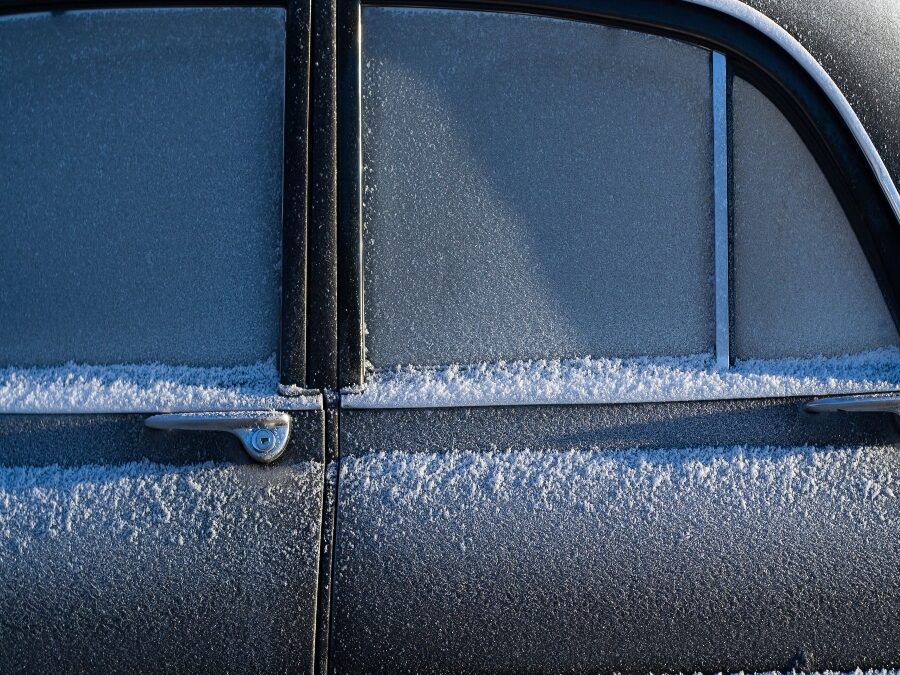
He’d be back soon, and she was glad to be cold. From the passenger’s seat, she’d watched him float up the dark path. His footsteps remained, half-inch depressions in new snow. It fell—blue-tinted gobs of it, the kind that made children’s mouths water. Sticky snowflakes that tilted chins skyward and opened mouths wide.
She had decided to wait. She had asked him to turn off the engine. It wasn’t that cold, and they didn’t need to be wasteful. He’d taken his keys. It’d be quick, he’d said, like ripping off a bandage, and he’d return to her with snow in his hair and on his shoulders. She’d brush it off, make him tingle at her touch.
His figure disappeared into the cluster of apartments; it had been necessary to park the car that far away. She couldn’t have gone in with him, even if she’d wanted. Even if she was desperately curious. Her presence would be salt in the wound. She understood. She understood him—that’s why he’d chosen her. She wasn’t worried. If she was worried at all, it was about that shared dog, that his love for the yappy thing would make him lose his nerve. Dumb dog.
The car smelled minty—maybe it was her breath—and it felt warm enough. Not comfortable, but warm enough with her mittens and scarf. Other cars lined the road. Not many. She counted three—four, but the bend made it hard to be sure. The cars weren’t cars anymore, their backs rounded with heaps of dirty snow. Old snow caked in ice. She felt sorry for their owners. Useless cars frozen in place. How many times had the snow plow ruched up another wall of it? Only a persistent sun could free the metal beasts.
Those cars weren’t her problem though. She couldn’t see through the windshield any longer, and she couldn’t bring herself to get out of the car to clear it. She’d lose too much heat. The snow would come back. A Sisyphean task. Winter was worthless.
There were always summer stories of idiots leaving dogs and babies in hot cars, but you didn’t hear much about freezing. Cold was slow. The Earth warming. Each year there’d be more news about the infirm perishing, bodies slumped in rocking chairs, window fans shorted out. The stink they’d leave! She was glad to be cold and wiggled her fingers inside the mittens. She’d knitted him a pair in olive green because she believed he would do it—was surely doing it this very moment!—and he’d be quick, back any second, relieved to be done. He was doing it for them. Then, they could get their own dog (despite her allergies), a big one. A better one. An explosion of white fur! A dog to pull their baby’s wagon. Was she blushing? Such warmth in her cheeks. She couldn’t see through the windows, but he was coming. This was love, that thing she’d been waiting for, and he had to come now. So much snow falling, her spine bore the roof’s bow. The anticipation was a sweetness, a pleasure, because what a sight it would be, what a blessing, when he scraped away the snow and opened the door to her—waves of snow, a Hallelujah, the black sky white with snow—him lunging toward her, all reward for her patience—her faith without fear—and she’d kiss him madly, his one and only, her mouth opening and opening: her body warm pooling honey where he’d beg to swim.

Recent Comments