
by Deesha Philyaw | Mar 14, 2022 | flash fiction
You were 48 hours old when I called the midwife and told her that my uterus was falling out, hanging on by a thread. “That’s simply not possible,” she said, far too cool. I told her I was splayed on the bed, naked, holding a hand mirror, and nothing down there looked familiar. Sure, the reds and the pinks and the browns of me remained, but something had come untethered. Something gaped and was lost. You lay next to me sleeping, unaware, wrapped tight in a blanket like a burrito, the way they had taught me at the birthing center.
In the morning, she nursed the baby, ate an apple. In the afternoon, she nursed the baby, found her husband’s lunch forgotten in the fridge. Mid-afternoon, she ate a bagel. In the evening, she cooked spaghetti. In the morning, she picked up Cheerios the toddler threw on the floor. In the afternoon, she ate chik’n nuggets the toddler left on her plate. In the evening, she made salmon. In the morning, she packed the kindergartener’s Hello Kitty lunchbox, found the woman’s text messages on his phone. In the afternoon, she ate an edible, waited. In the evening, she ordered Thai.
After your father moved out, I almost bought a gun. I hate guns, but I don’t hate your father, despite what y’all seem to think. I wanted to protect you, just us in that house meant for a brood on an acre of woods. Pitch black nights that swallow you whole when you step outside without the porch light on. Guns offer the illusion of safety, protection. But after “family” became a thing with two houses, you didn’t need any more illusions. No, guns shatter. What I wanted was to hold the pieces of you together, whole, in the light.
She hides her loneliness the way some people hide a horrific scar, or an outside child. There are friends she could call, and she does, when she feels like pretending. Empty nest, missing breast. But her smile; she still turns heads. And she still goes into the office every day, and makes candy-filled care packages for the residents at the senior center every spring, until she can’t. She spends a small fortune on organic whipped body butters that make her sparkle. She revels in the way she lights her own fire. Like a shooting star, she is bright, brilliant, brief.
Pink balloons hover every few feet in the hospice center lounge. The birthday girl’s fresh white gown covers her remaining breast and falls just below her knees. Her house shoes are open-toed. Her fresh pedicure features a shimmering red. A kind nurse places a decorative cover on the colostomy bag. The lounge is filled with family and friends and old classmates, their laughter at a respectful volume. The birthday girl’s favorite foods cover a table in the corner. She takes one bite each of macaroni and cheese, potato salad, banana pudding. She looks around and tells her daughter, “I’m popular.”
by Nicole Tsuno | Mar 10, 2022 | micro
wears a killer whale’s tooth like a toe tag and populates every available margin with sketches of the sea Oreos.
Clara and I don’t sit near her because her acrylics alone look “responsible for an obituary” (Clara’s assessment) and we don’t want to “become a hashtag” (ibid). So instead, we watch Orca Girl from two rows over, her uncovered stomach tight like a drum. In one hand, she fingers a bullet of cherry lipstick, or maybe, something else.
When anyone asks Orca Girl a question, she responds only in orca facts. On the symbolism of Miss Maudie’s Azaleas last month, she explained that orcas go underwater cow tipping to paralyze and eat great whites. Great whites! By now, most of our teachers have stopped asking, removed her popsicle stick from the jar completely. Only Mr. Morris presses on and with increasingly deranged optimism. Today, she tells him that orcas can punt seals up to eighty feet in the air. It’s unclear if they want to loosen the skin or just Jack the Ripper them, she continues. She turns and flashes us a smile, seaming her front teeth with lipstick, rabid.
Mr. Morris digs his hands into his pockets and dismisses Orca Girl with the sad shake of his head. Orca Girl leans back and closes her eyes and Clara says she must be sleeping. But I can see them jittering underlid, ejecting us one by one into the sky, making chalk outlines in the clouds.
by Jamie Feldman | Mar 7, 2022 | flash fiction
Sister Francis’ long black coat whipped behind her in the wind, clipping the heads off dying dandelions and scattering white fluff into the air behind her. Two by two she led us like a grim reaper with a yardstick across the soccer field and into the funeral home. The muddy earth and damp, saturated air provided perfect weather for rubber boots and coincidentally for Ethel’s wake. That morning, Daddy hadn’t come home again so Mama decided it would be okay to give me my new yellow rubber boots without him. Ethel used to have a red pair and we would always sing Raindrops Keep Falling on My Head whenever it rained on our way home from school. Mama made me promise not to wear my new boots today, but she seemed more upset over Daddy than usual and didn’t notice when I slipped them into my bag.
As the other children entered the church to pay their respects like the good Catholic classmates that they were, they each wiped their black Mary Janes and brown penny loafers on the front mat, while my boots squeaked and squawked up the center aisle. Sister Francis instructed us to approach the casket two by two and say a prayer. I had never seen a dead body before. Ethel just looked like she was asleep. The girl beside me reached inside and touched Ethel’s hand. “Don’t!” I said, but I secretly wanted to touch her, too. I wanted to wake Ethel up and pretend that we were in Butch Cassidy and the Sundance Kid. I wanted to be Sundance and she could be Etta Place. I wanted to know if she had worn her red rubber boots today.
As we exited the funeral home, my rubber boots still squealed against the wet floorboards. I could feel the adults in the room watching me as I walked. They were all whispering and pointing at my noisy new boots. Someone began to laugh. I didn’t think you were supposed to laugh at a wake.
That afternoon, I walked home alone from school to find Daddy’s car in the driveway. Brown boxes were thrown into the back seat and the trunk was held shut with a frayed bungee cord. It kind of looked like something from one of those old movies Daddy loved to watch when they came on TV. Maybe he came home to whisk Mama off on a fabulous weekend getaway, or maybe he would take us all someplace far away like in Roman Holiday or Casablanca. As I began to pull back the screen door, I could hear Daddy shouting inside. I walked in to find Mama stooped over the oven crying into a pan of uncooked bread, and Daddy in the living room buckling a suitcase. “Where are you going?” I asked. “Today’s my birthday.”
He just stared at me for a moment and then down at my yellow boots. “You already got your birthday present, I see.” He turned away, picked up his suitcase, and walked past me. The screen door screeched open and then slammed shut.
The next day they buried Ethel. I buried the boots. After the service, I stood unseen, watching from the woods at the edge of the cemetery. At dusk, when the last pile of earth had been patted in place, I turned back toward home. The line “We’ll always have Paris” ran through my mind as wet grass and cool mud squished between bare toes.
Originally published in Every Day Fiction

by Eric Scot Tryon | Mar 3, 2022 | micro
My son starts grinding his teeth in the Fall of 3rd grade. As he sleeps. The scraping, the pressure – I hear it through the thin walls of our shoebox in the Tenderloin. Our third apartment this year. He in the bedroom, me on the couch. It keeps me up all night. Just as I’m finally adapting to our walls made pink by the neon flicker of Peaches, the strip club across the street.
I ask him one morning, are you okay? Does anything hurt? Head down, shoveling stale Cheerios, he shakes his head.
The grinding intensifies each night. That crunch, heavy like cement. In the fitful space between waking and sleeping, I dream his teeth fly out of his mouth and shoot across the room one by one. Not fragments, but whole teeth. Adult teeth, with long red sinewy roots that trail behind like streamers. I wake with a screaming headache.
Again I ask in the morning, are you okay? Lifting his head from his cereal, he looks at me, nods, and wipes a bit of old milk from his chin.
I buy him a mouthguard from CVS. He refuses to wear it. The grinding continues. Like the shifting of tectonic plates, a pressure that could move continents. Amplified by a father’s guilt, when it reaches my ears it jackhammers. And with Peaches still winking her neon nipples at me through the paper thin drapes, I can’t sleep for days.
I return to CVS. Buy earplugs, a night mask, Jack Daniels. At night, I bury my head in the thrift store couch cushions, breathing in decades of cigarettes and other people’s sweat.
I have to see it for myself. To watch him sleep, my son, my small boy, making these horrific sounds that shake our fragile walls. Just past midnight, I stand in his doorway and wait for my eyes to adjust. Bone on bone. The grinding now accented by squeaks and clicks. My eyes adapt, and there he is. Asleep. Eyes clenched like fists. His teeth and the bones in his face grinding and shifting, popping and dislocating, rearranging themselves. Desperately trying to reconfigure into a different little boy, one who lives in an apartment where the walls are still white, one whose father makes fruit salad in the morning: fresh apples and mangoes and peaches.

by John Fulton | Feb 28, 2022 | flash fiction
When the boys’ father came to pick them up at their mother’s and take them for the day, he was not driving his green Ford truck but a red Porche that could not have been his. “What do you think, boys?” His voice swelled with aggression and enthusiasm and with a sudden love for himself. He was wearing his monkey suit from the garage where he worked and had the smell of metal tools and the strong flammable odors of oil and gas and gin on him.
Standing out on the lawn, the boys’ mother was still wearing her pink nightgown, ripped and coffee-stained on the sleeves. It blew in the wind and made her look fragile and discarded like a candy wrapper. “What do you think you’re doing? That car’s not yours. Boys,” she said, “you’re not going anywhere with him today.” But the boys were already in the car, their eyes looking out at their mother through the dark glass that was made for speed. When she advanced, their father pushed her and she tumbled over the burnt yellow grass and before she could stand again the little green house had disappeared and the man and the boys were driving on the freeway towards the mountains above the city, then in and out of the tunnels that pierced the mountains until the buildings and streets of the city were tiny, like sutures, in the valley below.
The interior of the car had an expensive, feminine smell, a light perfume of leather and freshness. As the man drove, he talked about the car as if it were a beautiful woman who needed him to do something great, something heroic for her. “Listen to her purr, boys,” he said. “We’re not going to let her down. We’re going to give her all we’ve got.”
Their mother no longer loved their father. Both boys knew that, even the smaller one who was not yet five. “Where are we going to, Daddy?” this one asked.
“Oh no you don’t,” the man said. “I’m happy! Happy!” He said the word as if hammering on it. “And I’m not going to let you sour pusses ruin my fun, you hear?”
The boys kept asking him that same question, but their father only answered them with the figures of their acceleration. “Ninety,” he said. “One-hundred. One-hundred-and-ten. One-hundred-and-thirty-five.”
The speed pushed the boys back in their seats and pressed against their skins like a firm caress, a preparation or a warning for something painful that would soon come. The windows began to tremble and the car beneath them shook as the man held it in a turn and the mountains and the other cars fell behind them. They had passed the timber-line and huge treeless lumps of snow rose above them.
“One-hundred-and-sixty,” he said. He looked over and back at the boys now, trying to hold his speed. He wasn’t looking at the road. “One-hundred-and-sixty-five.” His eyes were dipped inward and were a strange purple color of black. He seemed hungry. “You never went this fast before, did you? Did you?”
by Judith Claire Mitchell | Feb 24, 2022 | micro
At eight I was rich and powerful, controlled railroads and electric companies. A banker, I embezzled rainbows of cash that I flashed at the twins while our parents slept in. Let’s play restaurant, I’d say. Jacob, you’re the chef. I’ll be the customer who leaves a big tip. Even at six Jake made an elegant French toast. Syrup, Madam? he said. Please…allow me.
Later, after he washed my dishes, pocketed the orange dollar bills I left on the table, we played The Game of Life where convertibles motored across the board as we acquired advanced degrees and children and wealth. Our favorite part was the oversized spinner, the ratchety clack when a flick of thumb and forefinger turned it into a blur like Jake when he tried to make himself dizzy. Sometimes, if my fortunes lagged, I’d take his car, heavy with pink daughters, blue sons, and oil rigs, place it right on the spinner, and launch that ragtop into outer space, tell him, oh, so sorry, but his family had landed on Mars, the red planet.
In the end he never left home. He is upstairs now in the same bedroom, shades drawn. He takes pills, some turquoise like the backyard pool, others white to compensate for the absence of light. He is all we talk about. Why does one child thrive, the other hide? All our holidays and reunions, all our birthdays and breath, are devoted to him. My mother says, Merry Christmas, the doctors think it’s ADHD; happy birthday, it’s borderline personality disorder; pass the white meat, it’s plain old depression.
These doctors, they’re picking diagnoses from a hat, rolling the dice and seeing what comes up. They don’t know what I know: that he can’t leave home; that each morning, our parents asleep, he comes downstairs to search for his car, his future, his lost children. They are slivers of pink and blue plastic, negligible as eyelashes. They are buried somewhere in the pile of the carpet. Because I was unkind, because I needed to win. My nieces, my nephews. They are four planets away from the sun.
This story appeared in slightly different form in StoryQuarterly, #33, 1997 pp. 47-48
by Tina May Hall | Feb 21, 2022 | micro
The bloom of your skin as the river thickens around us. Constellations of algae exhale. We eat the fish that bob to the surface. Suffocated. The flesh tastes of mud and cumin. Our campfire flares in the night, a signal no one is close enough to answer. Three elements to build a fire, you tell me. You used to wear a costume of khaki. Adults embroidered your accomplishments onto your torso. Heat, fuel, oxygen. The air here is thin. We sip it from each other’s mouths. The large animals have died, but we are small. The fever comes at nightfall and everything hisses. There used to be teakettles and family dogs, limited-edition sneakers kept clean in their boxes, spun sugar on a paper cone. More fish lie atop the water, gifts from cold gods, fragile bones to pluck. You make a harmonica of yours. I whittle needles to stitch the sky.
by Christine Kandic Torres | Feb 17, 2022 | flash fiction
When Tía Amelia died, we ordered KFC.
“Kentucky Fried Cruelty,” she used to call it, before biting into the flesh of a drumstick, brown breadcrumbs on her white teeth, fingertips slick. Red ink bleeding on paper bags scattered before us now outside her empty bedroom, cardboard buckets gray with grease; we trained our teenage grief on this coffee table altar in her dark living room. Unable to eat like the rest of my cousins, I picked at the embroidered veins of the couch, the same couch where Amelia’s husband Gustavo once tried to explain to me how big his dick was. How familiar, the ever-present task of choosing which feelings to play, to keep inside, a 5-CD changer of inappropriate emotions, eject, eject, eject.
Amelia was my aunt, but only fourteen years older—a whole teen mom apart, we joked—and I spent most of my time after school in the rent-controlled railroad apartment she shared with Gustavo in Greenpoint. He welcomed relative after relative at the front door now, another buzz, another knock, another pastelón. A laugh track roared from a UPN rerun on the television, but none of the cousins paid attention to anything but the bones, the screen throwing blue and white shadows across the oak-paneled walls while adults and Gustavo made arrangements around us.
Amelia died no more than fifteen feet over from where we sat, in the bedroom behind us, alone in the dark. “Blood just up and quit traveling to her brain while she slept,” my mother said. A stroke at 31, que pena, un freak accident while Gustavo was away on business. Nobody in the family knew exactly what he did; something with computers and the internet, but it was for Jet Blue, and they sure understood comp flights to San Juan and Orlando. Amelia died in the next room over from us, the room where Gustavo unzipped my pants while she enjoyed Even More Space on her way to visit our abuelo in Caguas.
Is she a ghost now, or am I? Are ghosts just carbon copies of our energy, existing alongside us, repeating our pain over and over again out of the corners of our eyes? Were our ghosts there beside her as she took her last breath, Gustavo’s hand snaking around the curved shell of my back while I slept? Will Amelia haunt me as the blue-lipped corpse, empty and still, or the incredulous wife, laughing as she slammed her door in my face?
After the funeral at St Michael’s, we ate asado in the back room of an Argentinian restaurant where Amelia first took me when she learned I’d never eaten ribs before. “Here,” she’d secured a bib around my neck. “You’re still my own baby muñequita.”
Gustavo led the family in prayer, his voice wavering each time he said her name, and then explained which parts of the cow the chafing dishes along the wall contained. Costillas, yes, but also chorizo, entraña, vacío. “We Argentinians know our meat,” Gustavo said before sitting down at his seat across from me. “You’re gonna love it.”
I frowned, dipping a piece of saltless bread into olive oil, wondering when exactly it is that a body becomes meat. When exactly Amelia will become a meal for the earth.
Lost in that thought, I reached for my water glass the same time Gustavo did, his fingers resting briefly atop my knuckles.
“Whoops,” he winked, performing embarrassment. “I’m like a kid.” He squeezed my wrist. “You’d think I’d know by now what’s mine and what’s not.”
The room offered light laughter in response, a kindness: the cousins whose noses were usually in their phones, the long-jowled uncles whose giant ears housed wiry tufts of hair, the aunts whose ages you could tell by the depth of the crease in their cleavage, they all laughed, including my parents. I cleared my throat, synapses tripping over the joke as I registered Gustavo’s smiling teeth inside his mouth, instead of against my ear, biting and licking the soft cartilage after challenging me to down a 12-pack with him in that apartment he shared with Amelia, who was now a ghost, or meat, depending on what you were hungry for. My finger pads tight against the sweating glass left a topographical map behind that no one else could follow except maybe her, now, finally. Phantom trails, like his wink, not visible to others.
I blinked away the pain of Amelia’s happy face printed on the back of the prayer card in my pocket, the laminated corner digging into the top of my thigh, and understood that the only path forward for me was to part my lips and ride the swell of laughter from the bitterness at the back of my tongue, and sink my teeth into the ribs before me, its meat glossy and red against my open mouth.
by Myna Chang | Feb 14, 2022 | micro
On Sewing and the Anatomy of Lips
Cupid’s bow: The contour line of the upper vermilion.
I am drawn tight, nocked with pretty words and flattering susurrations, pulled close like the fletch of a hapless arrow trembling in that heartbeat of before—then released, flung afar, the unforgivable distance of a promise unkept.
I would disarm his weapon, the clever charm of his mouth, snip his bowstring and thread it sharp through the eye of my needle, Cupid’s falsehoods be damned.
Vermilion border: The demarcation between pigment and surrounding skin.
I am without boundary, threading the lines of him and me, craving the simmer of fire he breathes across my skin, dreading the harsher whispers, the ones that inflame my flaws, char my weaknesses to naked bone.
I would set my foundation stitch in the depth of his vermilion kiss, knot the filament to hold firm against the heat of his exhalations, even when he enkindles cinnabar and mercuric love.
Oral commissures: The corner intersections of the upper and lower vermilion.
I am entangled, caught in his caress of contrition, enticed by apologies murmured sweet in the space of my doubt, over and again.
I would stitch my resolve true, corner to corner, right to left, my needle piercing and tugging snug, sealing me safe from the taste of betrayal. I would reinforce the seam, whipstitch strong, and bury the traitorous scissors that, even now, beg to cut loose the thread, long to let me again fall into the curve of his infernal, beckoning vermilion.
by Brett Biebel | Feb 11, 2022 | micro
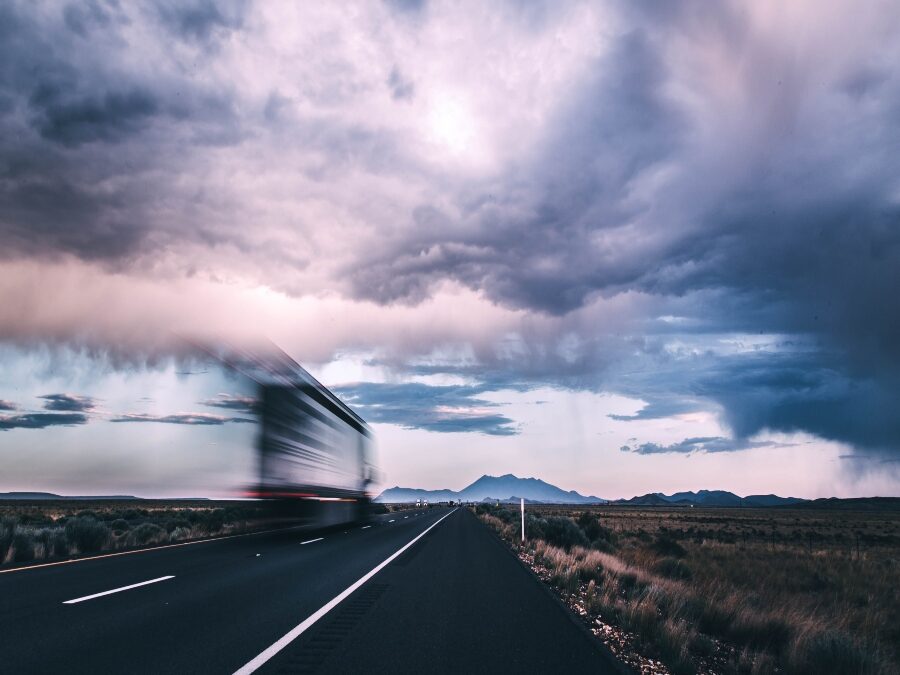
Mom was pushing 80 past a semi on the wrong side of Madison, and it was one of them numbers with the cows in it, and you could see the faces peering out through the slats. She must have caught them on the periphery, or maybe she got a glimpse of me in the mirror, and she guns it up a few hundred yards or so and then brakes. Hard. Swerves so we’re straddling the midline, and all I hear is a horn and Pen wailing from the car seat, and we sat there for a while. No one came. We got going again eventually, and who the fuck can say where we were headed, but I still dream about it, and in the dream, the truck hits us. Lots of red. Dead within microseconds, but there’s that way time slows down, and I know the cows are up there, floating overhead like clouds, or else maybe flying all panicked like them 38 frames or whatever from Twister, and all I know is Christ. That’s curtains. But maybe there’s a way they don’t ever have to come back down.

Recent Comments