by Barbara Diehl | Apr 14, 2022 | micro
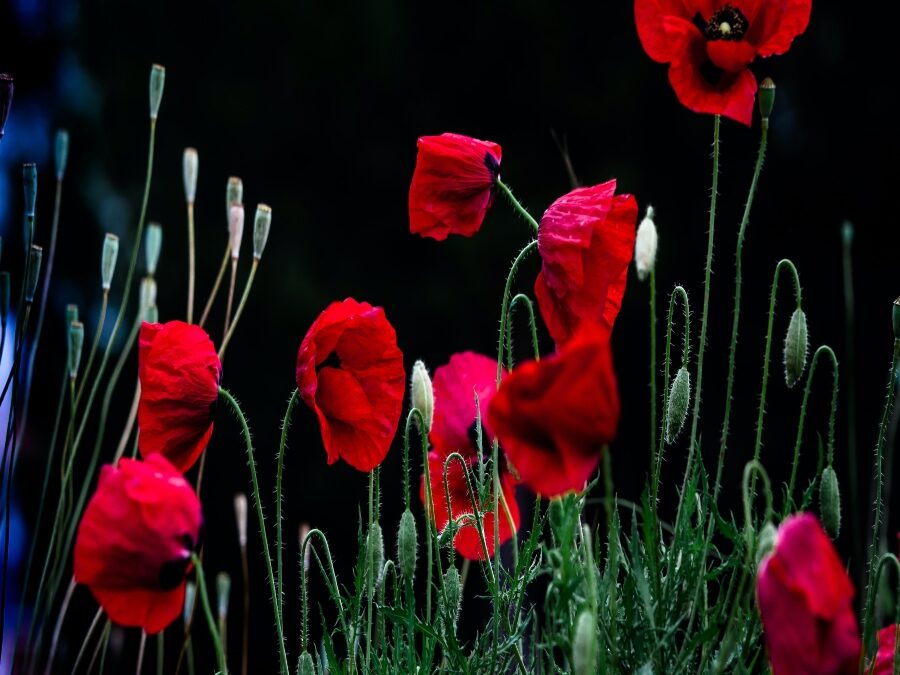
Because she is still shaking the doorknobs of this broken farmhouse the cyclone heaved from its foundation and dropped like an anvil on someone’s feet in ruby slippers. Because she still dreams she strolls through a field of poppies, poppies, poppies and breathes the opium breath of forgetfulness but always wakes in wheat. Because she can’t forget those scenes in Technicolor so she squeezes the pigment of the shoes’ red sequins onto her palette. Because she regrets the return to the sepia tones of the Kansas prairie. Because she can’t shake the Lion awake and the Scarecrow is still hellbent for Emerald City and the Tin Man is heartless. Because she wants to forget that she was the one who promised him a heart and to forget that the crows are descending on the crops back home and to forget that she has to be king of her own forest. Because the paint on a bristle brush is a Tin Man’s axe to the canvas that stretches flat and straight as a road alongside a Kansas cornfield and poppies are a siren song through the sheaves. Because she still hears monkey wings and fighting trees in the April wind and hears poppies, poppies, poppies in her brush. Because she knows how to paint the burner flames below her Omaha State Fair balloon. Because she can’t wait for a cyclone to take her.
by Yvanna Vien Tica | Apr 11, 2022 | micro
1.
Reduce
The first night you eat Peking duck. It is not your first time to consider ducks as food or something less than the geese who always know where to go during winter: your mother used to cook it for your birthday. To this day, you don’t know her ethnicity, and They don’t offer any words, only say you are some version of Asian. The marinated head sinks halfway through the pool of sauce, the beak broken off and discarded. They try coaxing you into staring at something more than the duck’s eyes, burnt and cratered. You will never eat ducks again; They will think ducks have magic that bewitches you, and you will never correct them.
2.
Reuse
The houses start looking the same; all the faces are gilded masks you know better than to peek into. Those eyes insulate and sneak bits and pieces of you before you realize someone’s touched your robe. The power’s gone, you would say, but no one’s listening. She’s doing better every day, They say. Your mother threw her shirt at you before They arrived; you sleep in it every night, finger the quaint butt holes lingering in her cigaretted memoir. It’s the only book you like to read, and later, when the soccer girl calls you a name a white man once called your mother, your fingers flex her face, redraws it in some uglier line.
3.
Recycle
During the drive home, They—or the radio, you can’t tell—ask why, why you stood there gazing at the bleeding girl, unmoving. The last chords sizzle as They turn the car. We’re trying, They say. You watch a Walmart plastic bag flee something across the road and blink when it stops, a skinny evergreen branch thrust through its pellucid skin. They crush the knob under key-stained fingers, direct those curses at anything but you, stuffing the red-face, heaving delirium inside for the social worker. Tension snaps across the windshield, and the Walmart bag is floating somewhere between the space of the branches. Tell Them they’re not the first. Tell Them you don’t want to be proselyted into a Chanel bag. Tell Them Walmart is good enough. But say only your marooned, cliché wasted-breath wish:
Let’s go home.
by Nova Wang | Apr 7, 2022 | flash fiction
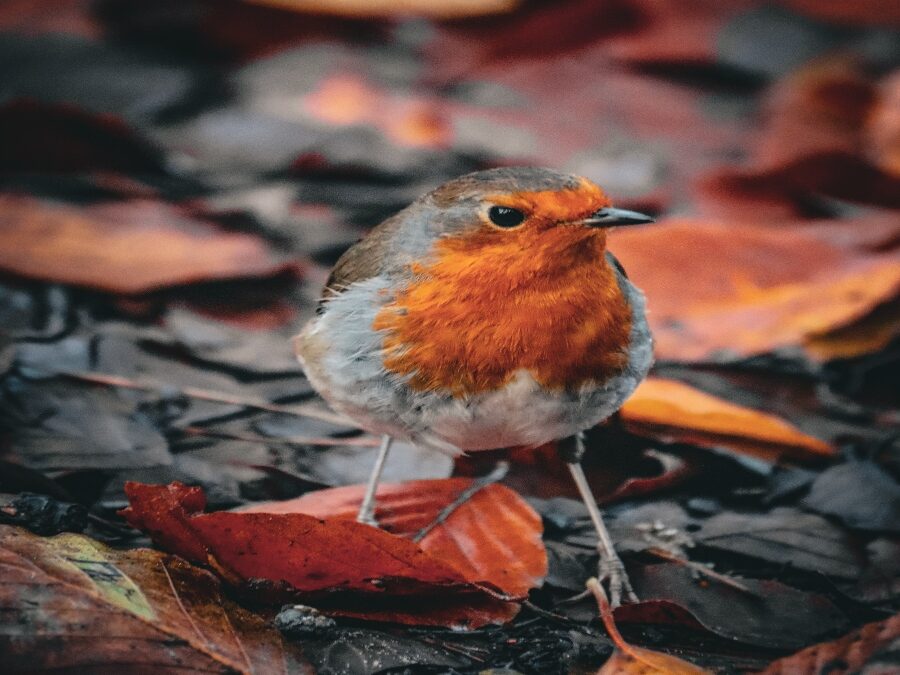
At dusk, we snuck into the backyard and planted birdseed by the drive. This was so robins would sprout out of crabgrass and dirt, talons curled around rock, wings opened like palms. Our mother glared from the door, said flight cannot be born from earth. Nothing grows from its opposite, but we ignored her because this couldn’t be true. After all, we emerged from the hollows she left behind, one twin for each fist, each hole punched through the kitchen wall. Our bodies birthed from negative space. That was what it meant to be her daughters: to grow around the spaces she made, to be her reflection split in two.
So we stole sunflower seeds from the pantry and tucked them into the earth, dirt gritting under our nails. We had to grow the birds we harvested because that was the only way to tame them, leash their flight, and brand it with a name. It would be harder to control something wild, and we didn’t know if we could catch them fast enough to name, to give them the only weapon we could yield: identity’s collapse into sound, collecting on the tongue like firepowder before the shot.
Our mother had taken two weeks to name us, delaying ownership as our bodies crumpled, small as the birth certificates on the desk. All the names she’d prepared were male—Andrew, Michael, James—sturdy enough to withstand her pride. I wanted someone strong, she said as she ironed our father’s shirts, someone who would carry their name beyond themselves, solid in the lineage of blood. Steam fogged her face and blurred it into a single exhale. She always spoke like she was ending a breath, words balanced on the edge of speech. One night, I pried open her mouth to see if her tongue was cut into a comma. Maybe that was why she lived in a pause, suspended between one body and the next, unsure how to proceed from mother to child. Maybe that was why she didn’t know how to pass on her name, its syllables leaking through her lips as we took our father’s instead. But her tongue lay in her mouth, whole and unslit. When I released her jaw, her teeth clacked together and she awoke, spitting in my face.
No matter how many boys she prepared for, we tumbled forth in our girlbodies, four fists closed, our crime twinned in the doctor’s gloved hands. The names our mother finally gave us began with sh: Shirley, Sherry. She wanted the sound of shushing, silence engraved in our throats, but we likened them to freshly honed knives. Metal whispering, emerging from water and stone. The way our father wielded his voice like a blade, shredding air around our heads. The way we sharpened our names against teeth and spat them across the yard, voices high and saliva-bright.
In the afternoon, we competed the distance we could fly our names. Positioned ourselves against the house and aimed for the road, cars whipping our hair into a storm. We took turns and counted how many selves we could seed in gravel, syllables dissipating against dirt. How many leaves we could cut with breath, sliced along their spines, broken halves like feathers released to the earth. Once, I held up a leaf and replaced half my sister with its broken blade, her limbs emerging around the other side. Her body, growing out of green. This was how we home-grew ammunition, vowel by splintered vowel, birdseed like shrapnel in our palms.
At dawn, we stole into the yard where robins flapped their dusty wings, talons rooted to the ground. We snuck on feet choked of sound. Locked hands around their necks and pulled them from the earth, burying their wings against our chests. We could only catch two a day—the remaining birds rushed into the sky when we arrived—but we knew to take what we could and wait. After all, we learned patience before we learned our names.
We huddled against the back of the house and held the birds at arms-length, their necks strangled in our fists. The scientific name for American robins was Turdus migratorius, but it was marred by too many centuries to use. To own something, you had to name it yourself, so we readied our mouths. Baptized birds in sound as their throats twisted, too choked to object. To reject our claim on their bodies, their flight. They should feel lucky, we said, that we named them the morning they appeared. We knelt and readied our knives, so sharp they barely whispered against flesh. Their throats opened red and warm, a cry that bathed our hands in blood.
by Fractured Lit | Apr 6, 2022 | flash fiction, micro, news
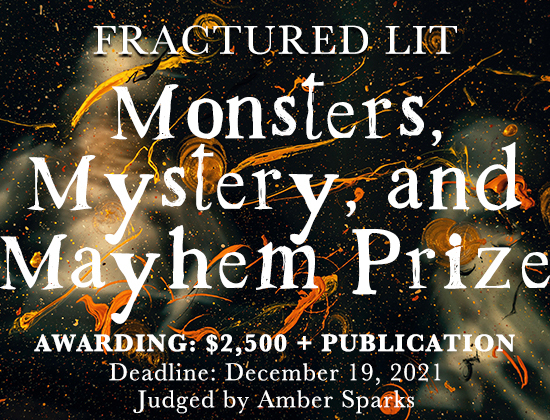
These 20 stories thrilled us with their specific and creepy details, their attention to character, and their surprises in plot and language! This shortlist has been sent anonymously to Amber Sparks!
A Modern Fairytale
Double the Fun
Monster Diary
The Bottom of a Well is Also a Home
Bottom of the Food Chain
a woman, the mother, the bird
Omigaa
Escapologist
Breathing Room
Flesh and Blood
Tribute
My Brother, Named and Unnamed
Selkie Wife
Hypnos and the Mother
Princess Pea of Sangankallu
Blood Honey
A Love Story
Hair, Teeth
You Ain’t Heard of the Buffalo Man
Vampires in the Basement
by Olga Musial | Apr 4, 2022 | micro
Father says he built the house back in Poland and hauled it with him across the Atlantic. The story goes: once, there was a field, and in the field, there was a cabin, and inside the cabin was a man, and inside the man’s stomach was a house. He gave birth to it during a storm that scared all the storks off, and now Polish is the language of storms. Storms are your mother tongue, says father, Polish making waves on his tongue until it falls limp. Don’t say the language is twisted. He’ll hear.
What I remember about the house is the spine. Bricks and honey, not like father’s bone and marrow. He says the spine is where you find the soul. We slide through its mouthpiece onto herringbone floors, jump up to feel the ceilings. The house is no longer young, and we are to be kind to it because the Atlantic set salt in the cracks of its bricks. We tour father’s twin, so that we don’t get lonely with our stories. We’ve not heard his in a long time.
We wait to be welcomed for tea until the milk goes moldy in the fridge, until vines grown on the house’s mouth like a beard. Father has a beard too, says brother, now I see how he’s twin to the house. Do you see the resemblance? Sometimes I think, concerning human standards, the house is more of a person than father is. Oh, we do get so lonely with our stories.
We’d ask, at dinners, if he could invite English onto his tongue and learn our own stories, and not only his. We know yours, said brother, but ours are dim for you. No, he has tried, it doesn’t feel right to him, he won’t go again, alright, alright, it’s his tongue that rebels, ties a knot in his throat. His mouth is native to storms and not skyscrapers and sunny beaches and Costco’s.
But that is how you fit in, said brother, except the only place father fits in is the 60s futon we found at a landfill with a beer in his left hand and a ham sandwich in his right, and the remote in his mouth so he can change channels with his tongue. Father would leaf through our heads to see if we dreamt in Polish, left bruises to blacken our sleep if we didn’t. He said he’d crack my bones open, squeeze me into the size and shape of his fist, and I giggled because I didn’t know what to say if it hadn’t been a joke. This is how he lives his story we’re not part of. Unless…
The tongue, I said, you have to take his tongue.
But he looks so peaceful asleep.
Listen, do you want the story or not?
But his tongue cannot tell our story, only his, said brother.
We reach into his throat, except now he is not moving.
That’s enough, wake up and tell us the story. Or we’ll ask the house.
I know what it is, says brother. He’s grieving, it’s that easy. He says it as if grief was something you could unhook a person from like you unhook fish from a rod.
But that’s only if he’s too small to be eaten by it, brother adds.
You think he’ll be grieving for his tongue?
No, brother says, besides, we can’t have the story until we strip him of his language. Then he’ll spit it out. What’s left of a story if you strip it of its language? The sky is a splash of dark paint and on it there are spots of clouds we cannot see through. So, we haul him along through grass and into the storm outside. This is how you rebirth a person, I say. You give them back to where they come from.
Father’s mouth splits open. This is your story, he says and shoves it down our throats, but that’s the way you don’t hear it: Once, there was a cabin, and inside the cabin was a man and inside the man’s throat was a language and inside the language was a storm. Language made you a home.
No, we say. This is your story, and we are barely part of it.
by Fractured Lit | Apr 1, 2022 | flash fiction, micro, news
These 39 stories thrilled us with their specific and creepy details, their attention to character, and their surprises in plot and language! We’re narrowing it down to our shortlist and this will be sent to judge Amber Sparks very soon!
Flesh and Blood
Regarding the Disappearance and His Subconscious Mind
Dealing with Black Mold
Devotions
Gone
Tribute
Local Color
Speak to Sire of Love
Double the fun
The Bottom of a Well is Also a Home
The Prize
Her Secret Dark
Selkie Wife
Omigaa
Vampires in the Basement
Should be Around Here Somewhere
A Love Story
The Pigeon-pea Princess of Sanganakallu
Hypnos & The Mother
You Ain’t Heard of the Buffalo Man?
Breathing Room
Hair, Teeth
Millie & Mary
Monster Diary
Blood Honey
Game
Mousetrap
Mr. Reynolds Made All the difference in the World
After the End
My Brother, Named and Unnamed
Searching for Pesticide
The Loch Ness Monster is Dead
Fridge
Three Part Figment: a Woman, a Mother, the Bird
a modern fairy tale
Papaya Erectus
THE CHILDREN HAVE COME
Escapologist

by Elizabeth Maria Naranjo | Mar 31, 2022 | micro
We wait until the soft explosions above deaden to absolute silence—not the kind of silence that listens but the kind that sleeps, and teenage girls know the difference. We wait until our murmurs turn to whispers and even the whispers seem loud—muffled collisions, muted giggles. Fingers fumbling at the silver latch of a basement window. We crawl through the narrow opening, climb over the well, roll onto cold grass. Streak across the backyard and scale the fence like wood sprites, two girls—jeans, sweaters, sneakers, cigarettes. We run.
Dark empty streets, a world asleep, the gift of midnight. Our voices now like bells. We light our cigarettes and inhale deeply, listening to the paper crackle, watching the embers momentarily glow brighter before they turn to ash. We blow jets of smoke into the night air. We have nowhere to go, and nowhere is enough.
Another night, another bedroom, this one above-ground. We slide the window open, quietly, carefully, pop the screen. We lower ourselves gently onto the gravel, tiptoe across the gravel, wince at the comically amplified sound of our sneakers on the gravel. We leap silently onto the gray strip of sidewalk and bound across the street, waving at the neighborhood boy who sits on his front porch smoking, friendly face, long blonde hair—he waves back. Later we will stop for boys, later boys will run with us, after us, they will pick us up in cars and drive us places and buy us alcohol. But for now, it’s just us.
Maybe we’ll walk to the elementary school and climb the highest horizontal bars—one with chipped blue paint, one with chipped yellow paint—eight feet up, sitting, falling, coordinating death drops so our feet hit the ground at the exact same time.
Maybe we’ll jump onto the swings, side by side, long brown hair streaming, voices shrieking, kicking our legs higher and higher until our feet shatter the moon.
by Kayla Rutledge | Mar 30, 2022 | flash fiction
In her old age, the Virgin Mary moves to your town in the North Carolina backwoods, buys a fixer-upper and takes walks on the side of the freeway. As she walks, she hums — a song by Lennon, or Handel’s Messiah. Or something else. A lullaby with a name you can’t remember, something whistled through an open window on the last day you were young.
The Virgin Mary on the highway, amid the blown-out tires and glass-sharp gravel and styrofoam cups stained with dip spit. She comes after sunrise and before the end of night shift, like a yellow clearance tag on the cuff of the new day. The sun on your plastic tollbooth window shows all the fingerprints.
You recognize her by her gait, the song, or because your brother calls you up and says, “Did you know the Virgin Mary lives right around here?”
“Thank goodness she was able to get in,” you say. The country, you mean, with immigration being what it is, and of course, there being no box for ‘Saint’ on the paperwork.
She arrives without fanfare, no donkey or frankincense. She leaves her sneakers on the porch, to air. The Madonna wears a pair of Sketchers GOWalk Arch Fits in light maroon. She double-knots the laces.
*
The Virgin Mary on the highway, rolling dandelions between her index finger and thumb. When people from town drive past, they roll down their car windows and wave. They shift politely into the middle lane. It’s spring. The grass comes up finespun as fur.
No one important lives in your town. Even the local weatherman commutes back and forth from Fayetteville. The Baptist minister worries the Pope will show up next. Or worse, Jesus Himself.
“We can’t have the second coming here,” people say to each other. “Think of the traffic.”
More traffic means more work for you, the click-slide of the window, rattling drawer, pointing at the sign: Exact Change, Please.
The Madonna always turns around before reaching you, as if you might charge her for walking. What does your tollbooth look like to her, flattened under the glare of the sun? Opaque and resistant. A silver thumbtack marking out Nowhere from Somewhere.
*
In summer, you are the last stop before the road trip begins, the beach vacation, the out-of-town-email-response. Families pull up in the pink dawn, already poor-tempered from packing and preparation, thermoses of coffee throwing steam. Their cars teem with boogie boards and chip bags the size of small children. The Madonna trails behind them with the sun.
“She’s funny, isn’t she?” they say. “But nice. Definitely nice.”
They say this with concern, like they’re waiting for you to tell them otherwise.
A class of Sunday schoolers leaves a skyline of candles on the Virgin Mary’s porch. She extinguishes the display with a bucket of dishwater. She leaves dough in a bowl on her windowsill, to rise.
*
The Virgin Mary on the highway, in fall. The grass grows, tall and brittle, to her calves. School starts, and everyone is late all the time. The cars scream past and do not slow, they come one after the other like notes at the bottom of a piano, like the huffs of a woman in labor. Always the strong, angry colors: red, grey, black. Her head covering flaps in the wind.
The Methodists want the Blessed Mother as a guest speaker for the youth group. They show up on her front porch, asking for the hits: the angel, the manger. Perhaps she could mention the benefits of virginity. They would feed her, of course — pizza.
The Virgin Mary just tilts her head politely, drying her hands on a chintz dish towel. It turns out she doesn’t speak English. She doesn’t eat pizza, either.
This is really the last straw. Nobody wants to say it, but they do, in texts, at home, in church, to each other. The Virgin Mary is weird. She sends dishes to the potluck that are too spicy to eat. She doesn’t keep up with college football.
“If she’s living here, she could at least try to get to know us,” people complain. “She could make an effort to fit in.”
They toss their trash out car windows. They pay their toll.
*
The Virgin Mary on the highway, mostly forgotten. She wades in ripples through the grass. Sometimes an artist passes through, hoping she’ll sit for a portrait, or a particularly penitent Catholic. “What’s she like?” they ask, running their hands up and down the wheel. “I mean, what should I expect?”
What is she like?
You went to her door once, toward the end. You wanted to tell her that no one pays attention unless you make them, until you hold them up for every last cent.
Your brother was dying then. A tumor on his liver the size of a quarter. His life was a noiseless walk through tall grass. He never asked anyone for anything, and when he died, you knew, people would say his life was a waste, if they spoke about him at all.
It didn’t have to be like that for the Virgin Mary. You wanted to tell her that.
It was Friday, the beginning of Shabbat. You saw through the window. The Virgin Mary alone at her kitchen table, watching the candles burn down, eating carefully the bread. It struck you then that she knew a thing or two about the way things are paid for. She understood what being worshipped demands of you, in the end.
*
They say the Virgin Mary might live here forever. Her tomatoes are doing well. She is accompanied by no miracles except one. When death, in all its forms, comes to visit your town — when a toll is paid, at the line between Nowhere and Somewhere, leaving someone else behind — the grief-stricken open their doors to find a single pair of Sketchers sneakers on the porch, perched like a polyester butterfly.
One day, it happens to you.
by Sara Chansarkar | Mar 28, 2022 | micro
I did not combine melted butter and eggs in the medium mixing bowl or beat the mixture with the hand blender. Did not add organic flour and sugar, breaking the lumps with my fingers before whisking the contents together. Did not transfer the batter into a greased baking dish, smoothing the top with a spatula. Did not stow the pan in the oven, setting the timer for 45 minutes, did not open the fridge to find the cream cheese jar empty, did not pull out a flattened candle packet from the sundry drawer, chiding myself for being unprepared. Did not run to Kroger’s for a quick purchase.
On the way back, did not stop at the screaming blue and red lights careening in beside the yellow buses at the K-1 school, did not press my heart with my left hand, steering into a parking spot with the right. Did not trip on the strap of my satchel while scurrying out of the car, falling on the tarmac, skinning both my knees. Did not watch stretchers with little bodies being stowed into ambulances—a pink headband, the sparkly purple letters spelling “BIRTHDAY” soaked red. Did not level the surface of the earth where she lay with my hands, again and again, breaking the lumps with my fingers, smoothing out the surface, wishing I had a spatula. Unprepared.
by Lena Valencia | Mar 17, 2022 | micro
When they ask the hero how big the bomb is, he says “Big enough to blow a hole in the world,” and we know we’re done for.
It was a normal day. We were going to work. We were going to visit the grandkids. We wear toolbelts and have a wife. We are the working-class symbols who travel by bus in a city of cars. This action narrative doesn’t have the capacity for our lives but that’s ok. The villain is the only one with a backstory, and no one is surprised when it turns out he used to be a cop.
Still, questions linger: Will we be fired for missing work? Will the grandkids still want the teddy bear, now that it smells of gasoline? Will we ever be able to slow for gridlock without doom choking us? Will we ever be able to take the bus again?
We don’t actually have a choice in the matter, never did, unlike the tourist, who can just go home and never has to see a freeway again, or the woman who was only there because driving on them made her tense up, but she’s dead now, skull crushed by the tires of the great machine, the same machine that soared fifty feet across the gap in the 10 Freeway interchange. For you, it was watching a gymnast handspring across a balance beam and stick the landing. For us, it was the red of our eyelids clenched tight, urine pooling in our seats as we clutched our bags like the hero told us to, hearts in ears, praying.
Yes, we were saved. In the shelter of the LAX shuttle, we watched with adrenaline-fueled ecstasy as the bus collided with a courier jet, heard the solid crunch of metal on metal, and then the boom, clouds of fire billowing into the sky. A blast of heat big enough to rattle the windows. It was like a movie, yes, just like a movie, that bomb that blew a hole in our world.

Recent Comments