by Alexa Logush | May 16, 2022 | micro
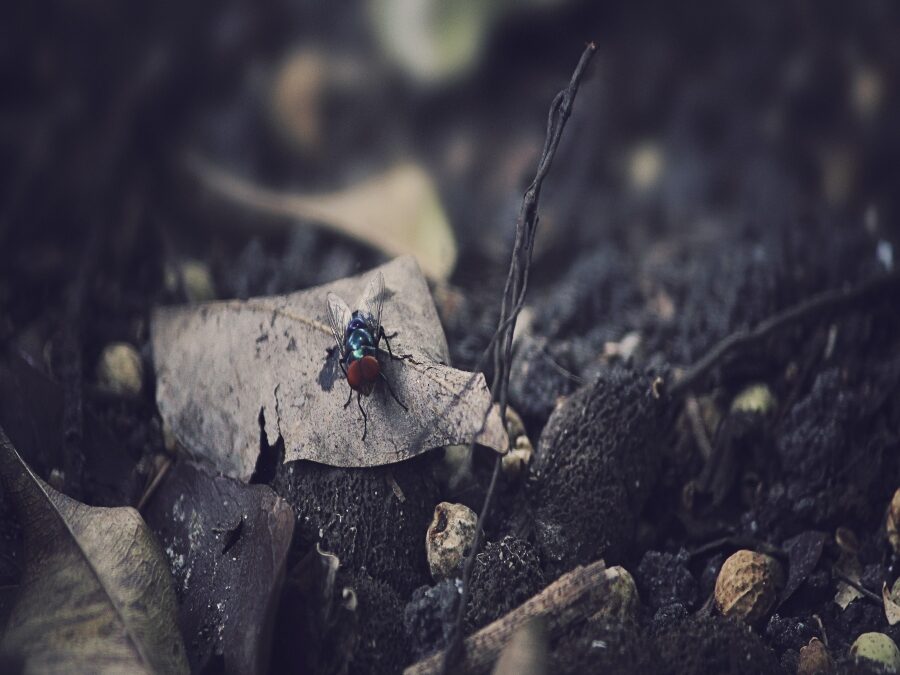
When Danny turned six, his mouth rotted and a host of flies swarmed his lips. They laid their ugly eggs beneath his tongue and zipped right through the holes in his gums. Nana washed his mouth out with Listerine and soap, scolding him for not being more careful. For not acting his age. For not growing up.
But back then, when autumn fell like Danny’s baby teeth into Nana’s unsuspecting palm, she cradled the little spotted things and planted them in a flowerpot. She placed it in the window above the kitchen sink and tended to it incessantly, sprinkling water from the tap with her fingers, raking the dirt tenderly with Danny’s old plastic comb. It was the same one she once used to tug all that soft hair back from his face into a silly little tail atop his head.
In the morning, Nana came down the stairs to find Danny pointing at the pot. I watched his tongue probe the new gaps in his mouth as Nana stopped before the kitchen sink. She pressed a hand to her lips, beckoning to Danny, as they watched the frailest tendril curl right up from the base of the pot, reaching towards the ceiling, not unlike a silly little tail that’ll eventually get cut.
by Fractured Lit | May 16, 2022 | contests

fractured lit reprint prize
judged by Meg Pokrass
CLOSED July 17, 2022
submit
We invite writers to submit to the Fractured Lit Reprint Prize from May 15 to July 17, 2022. Guest judge Meg Pokrass will choose three prize winners from a shortlist. We’re excited to offer the winner of this prize $3000 and publication, while the 2nd and 3rd place winners will receive publication and $300 and $200, respectively. All entries will be considered for publication.
Meg Pokrass is the author of 8 flash fiction collections and 2 flash novellas, including The House of Grana Padano (co-written with Jeff Friedman, Pelekinesis 2022), Spinning to Mars (Blue Light Book Award, 2021) and The Dog Looks Happy Upside Down (Etruscan Press, 2016). Her work has appeared in over 1,000 literary journals including Electric Literature, American Journal of Poetry, Washington Square Review, McSweeney’s, Laurel Review, Waxwing, Craft, Smokelong, Split Lip, Plume, Five Points, and has been anthologized in 3 Norton anthologies of the flash fiction form: Flash Fiction International (W.W. Norton, 2015), New Micro: Exceptionally Short Fiction (W.W. Norton, 2018), and the forthcoming Flash Fiction America (W. W. Norton & Co., 2023). Meg’s flash fiction has been widely internationally anthologized, appearing in The Best Small Fictions 2018, 2019, and 2022, Wigleaf Top 50, and the forthcoming Alcatraz: An International Anthology of the Short Form (Gazebo Books). Meg is the Managing Co-Editor and Founding Editor of Best Microfiction, Founding Editor of New Flash Fiction Review, and Co-Founder of the Flash Fiction Collective Reading Series (San Francisco). She lives in Inverness Scotland with her dog and cat, and wears too many hats. Find out more here: http://www.megpokrass.com
We want to celebrate the micro and flash that may have gotten lost in the shuffle, or stuck in the limbo of shuttered literary magazines! We know that excellent and exciting flash and micro fiction is published every day, but no one can keep up with all of these stories. This contest is a platform for these stories to reach new readers, and to live on in excellence on our website. We want to bring light to those lost pieces of flash and micro fiction-the stories that you love but feel are no longer receiving the attention or recognition they deserve.
guidelines
-
-
- Your $20 reading fee allows up to two stories of 1,000 words or fewer each per entry-if submitting two stories, please put them both in a SINGLE document
- We allow multiple submissions-each set of two flash stories should have a separate submission accompanied by a reading fee
- Flash/Micro Fiction only-1,000 word count maximum
- The stories must have been previously published online or in print to be eligible
- The stories must not have won any previous awards of $500 or more
- DO NOT INCLUDE the publication history of the individual stories in the document. Include this information in your cover letter only
- DO NOT INCLUDE your name or identifying information in the document
- Simultaneous submissions are okay-please notify us and withdraw your entry if you find another home for your writing
- All entries will also be considered for publication in Fractured Lit
- Double-space your submission and use Times New Roman 12 pt font
- Please include a brief cover letter with your publication history (if applicable)
- We only read work in English
- We do not read blind. Shortlisted flash will be given to the judge anonymously
- The deadline for entry is July 17, 2022. We will announce the shortlist within 10-12 weeks of the contest’s close. All writers will be notified when the results are in.
- Some Submittable hot tips: – Please be sure to whitelist/add to contacts so notifications do not get filtered as spam/junk: notifications@email.submittable.com– If you realize you sent the wrong version of your piece: it happens. Please DO NOT withdraw the piece and resubmit. Submittable collects a non-refundable fee each time. Please DO message us from within the submission to request that we open the entry for editing, which will allow you to fix everything from typos in your cover letter to uploading a new draft. The only time we will not allow a change is if the piece is already under review by a reader.
submit
by Anita Goveas | May 12, 2022 | micro
Take one pair of lightly-arched, freshly-manicured feet, slip off your mother’s gold-edged chappals that always chafed, and plant them firmly in the soft Mangalorean soil of your exacting grandfather’s garden
Rub at your slightly turned-in ankles, that resemble your father’s, and recount the memory of how your perfectionist Nana massaged them with intent and warmed olive oil when you were newly born and mouldable
Feel the sharp lines of your sturdy calves, so similar to your hockey-playing disapproving Uncle Lazrado, and keep them as tensed as the robust badam trees
Ignore the pulsing pain in your Auntie-Felcy-like dimpled knees, and wait for the rush of belonging from this ancestral earth
Erase the echoes of recalled laughter at the waddle of your fleshy thighs the first time you visited from London and wore your favourite Minnie Mouse printed raspberry-coloured shorts, and enjoy the sensation of hundreds of years of blood and perspiration flooding into your veins
Relish in the destroying tides of incoming birthright as they replace the otherness coiled in the craters of your stomach
Revel as your broad shoulders, that favour your indifferent Cousin Mingel, release the oppressive weight of imposterhood and collected hurts
Savour the taste of dirt and sweat overwhelming your too-square chin, and your tip-tilted nose, so unlike anyone’s else’s, as all your cells take root in this space where you were discounted and overlooked and envisage the decades of frustrated fury as it’s established you’re part of this legacy now and can never be removed
by Jamie Etheridge | May 9, 2022 | micro
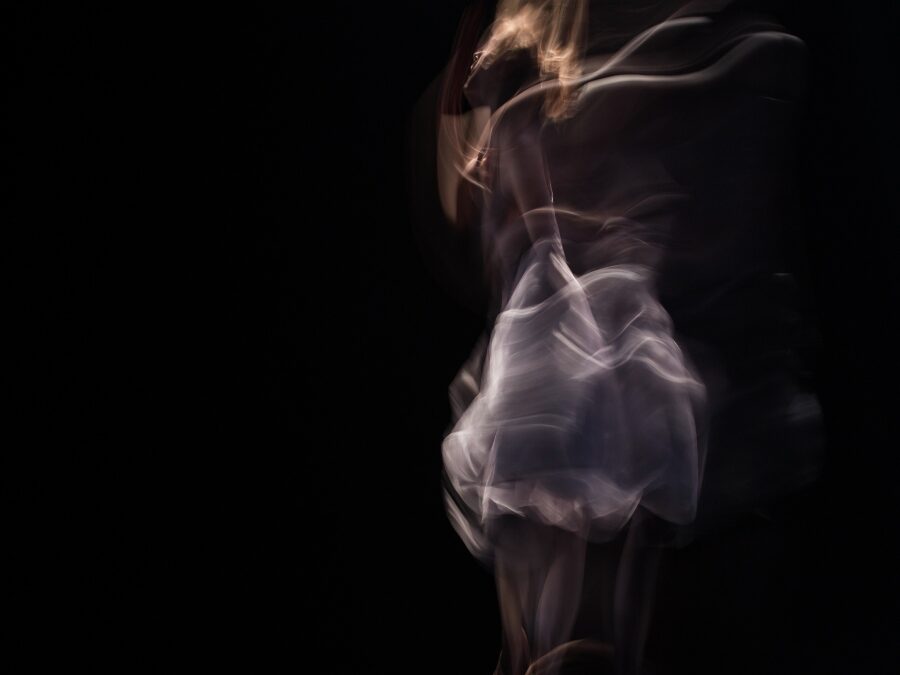
She knocks things over—pyramid-stacked cans in the grocery store, books off the shelf at the library, her father’s glasses from atop his nose. She studied ballet in New York. Or at least that’s what she hopes to do.
At night, she glissades across the Swan Lake tromp l’oeil shimmers on her ceiling. She is graceful, lithe, catlike.
In the daytime, she bumps into lamp posts, people on the street, vendors with neat rings of bagels on wooden staves. Her neighbors shake their heads. Her schoolmates laugh behind their hands. Her mother cries herself to sleep.
The doctors warned them when she was a toddler. A dancer she will never be: Her arches pancaked, her toes pigeon’d, her thighs elephantined. Dream another dream, they insisted.
Still she dances. Still she twirls. Still she spins. Stop moving, her mother, brushing her hair, exhorts.
Still she pirouettes. Still she sautés. Still she pliés. Wake up, her father whispers, it’s time to get ready for school.
She keeps her eyes closed. Still she leaps.
by Joshua Jones Lofflin | May 5, 2022 | flash fiction
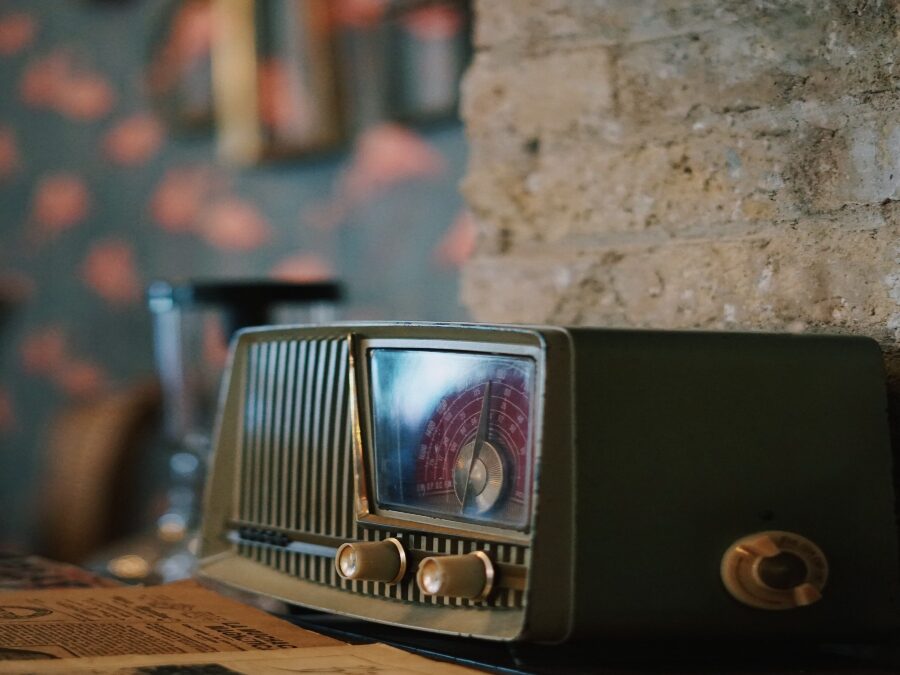
I once held two men at gunpoint. This was on a Sunday, after my wife had returned from mass while I repaired our radio. If I held the copper coils just so, a signal would form out of the static, sometimes a speech by the new president, sometimes an opera. I’d managed to tune into the opening strains of Puccini’s Tosca when the men burst through our door. This wasn’t a shock. Everyone was getting robbed those days, and the police were useless. Even so, I told my wife she should call them. The intruders were very helpful and offered to call for us, offered to get the head of police on the line. ―Don’t you understand who we are, they said.
This was after they’d sized up our sitting room and sat heavily on our sofa, on either side of the flower-shaped stain blooming on the middle cushion. They patted the seat for my wife to join them, but she sat in the hard-backed chair in the corner and kept her eyes lowered. I stood, pointing the gun at each of them in turn. It was a replica, but heavy, and my arms were beginning to tire.
―What kind of gun is that, asked the shorter of the two men. He smiled and flashed a gold tooth.
―I don’t know. It’s my brother’s.
This much was true. My brother had gotten it off a film set. Americans used to make movies in our city, and my brother would show off props and autographs he’d gotten. He got us the chair my wife sat on, an uncomfortable thing, but George Clooney had sat in it. He never told me which star used the replica, but I like to think it was Robert De Niro.
―You don’t know? You never handled it before?
―I’m handling it now, I said and I thought I sounded tough. I thought, my wife must think I’m tough, that I’m just like De Niro. My arms trembled, but only slightly.
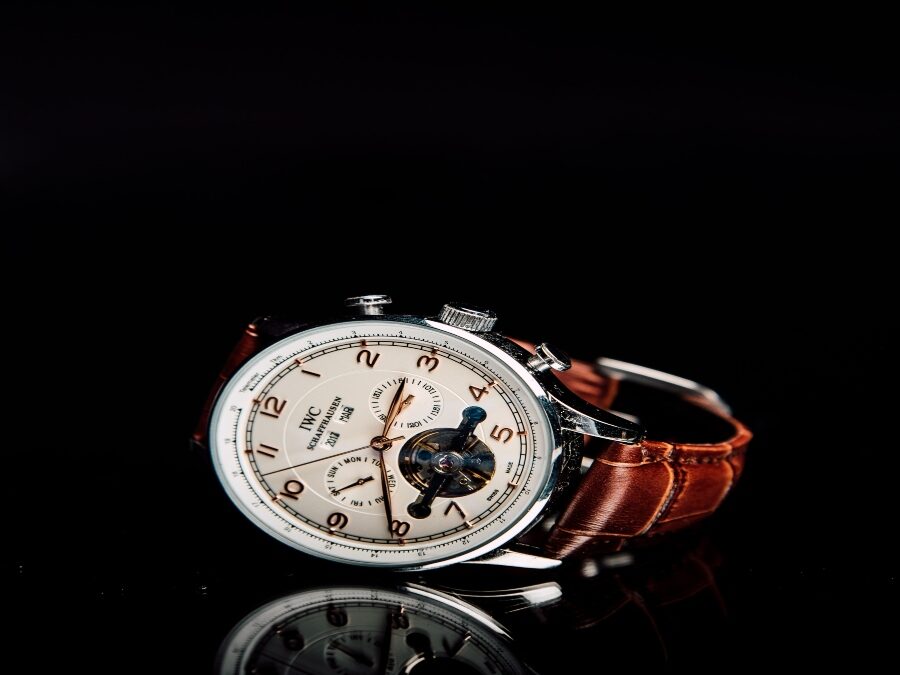
The man nodded and glanced at his watch, an expensive looking thing. I’m sure it was fake. Everyone wore fake watches those days. I did too, until it was stolen, and now I wondered how much time had passed. Tosca was nearing its last act; soon Cavaradossi would face his executioners.
I asked the men if they wanted water. The short man wanted coffee; the taller, green tea with a wedge of lemon. By the time the police arrived, my wife had refilled their cups three times and Cavaradossi lay dying. My arms now shook badly from the weight of the replica, and it’s from that as much as the explosion that made me drop the weapon. The police were dressed like you see in the movies, with face shields and large rifles, and as my nose was getting broken, I thought it was a shame my brother wasn’t there. He loved cop films. He’d seen them all. He could have told me what kind of explosives blew down my door and whether it was zip-ties or handcuffs they bound me with. I wanted to ask so I could tell my brother later, but a sack was placed over my head, and I could hear nothing beyond a shrill ringing.
My ears still rang at the trial, but not so bad I couldn’t hear the charges: unlawful possession of a firearm, unlawful detainment, false reporting of a crime, kidnapping, assault, aggravated assault, assault with attempt to kill, murder, loitering, perjury, discharging a weapon.
―But it was a replica! I cried.
―And contempt of court, the clerk concluded. He said the evidence was incontrovertible. He said there were witnesses.
My brother testified first. He raised his hand and swore that I’d stolen the gun, that I’d stolen from the Americans for years, that it was due to thieves like me that Americans no longer made movies in our city, and wasn’t that why we were so poor? But he whistled his words as if he had no teeth, and even though my eyes were mostly swollen shut, I knew he could not possibly be my brother, that he must be some actor, maybe one of his stuntman friends who were always wearing fake mustaches and dying their hair.
Next, my mother took the stand, leveling her finger at me and saying I was a worthless child, I wet the bed, I never called, I was always skipping mass, and I still hadn’t given her grandbabies. Her finger jabbed the air with each accusation, and I wept at the truth of it all. A uniformed man helped her down from the stand. It was either the tall one or the short one, it was hard to tell. ―Mama, forgive me, I whispered as he escorted her past the dock. ―Haven’t you done enough! he hissed, and I thought I saw a glint of gold in his mouth.
When my wife testified, she spoke in low, tremulous tones. She held up her hand and swore all the charges were true, swore the men had not forced their way through our door, swore they hadn’t torn her dress or taken turns pressing her into the sofa, swore it was lucky the police came when they did, that I was unhinged, that I, I—and here, she brushed her hair from her bruised face as the prosecutor patted her hand, saying go on, go on.
―It was all confusing, she finished, and the judge, in his warm baritone, said she had done well, that she could step down now, and above and around us, the audience burst into applause. Some whistled. Some threw roses. There were shouts of bravo! and encore! above the swell of the orchestra and its deep, rolling timpani. Then the judge sang out his verdict, and I blew my wife a kiss and waited for her to sing the final aria.
by Francine Witte | May 2, 2022 | micro
Like every other night, Finkus creaks the splintery door, slips out of his only shirt and folds it over a chair. He smooths the coarse wool with his calloused hands, wets his thumb and rubs the spots. One, a splotch of mud from when he carried a lady’s valise to a cab. Another one, grease from fixing a wheel on Goldman’s pushcart.
Like every other night, Esther, his wife, looks as empty as bones, and fusses over a stew. A sliver of beef, but mostly the potatoes and carrots that Stein the grocer was going to throw away. Scrape the bad off of everything, he told her, and it will taste like new.
A little girl, she was, in Russia, and one night her father doesn’t come home. Wandered into the wrong part of town and got horse-kicked in the head. Soon after, a smuggled trip to America. Her mother only, and one suitcase between them. Later, she met Finkus, with his smile and his hair and his head of ideas. On her deathbed, Esther’s mother called him a good man, “like your father,” she said.
Like every other night, Finkus slumps onto the floor mattress stuffed with old rags. Too tired to eat. Too weighted down with the illness growing inside of him. The illness that will kick him flat like a horse’s hoof.
Esther will sit alone at the table until the stew cools and wash the plate and put it back in the cupboard. Then, like every other night, Esther will pick up his shirt, and soak spots with hot water and use the kettle steam to smooth out the wrinkles before she sneaks it back over the chair.
And no sooner does she finish, Finkus grunts himself up and comes to the table. Hungry, he is for once. Tonight, won’t be like every other night. Tonight will be the night he tells her about the illness. Isn’t that what a wife is for, he thinks, to share?
He sits down in front of the still-warm plate. He notices his shirt in a way he never has. Cleaner, he thinks, and smoother, too. He looks at Esther for an answer. She looks at him for a smile. Clink of forks on the supper plates. She didn’t ask for this, he thinks, and rather than tell her tonight about the illness, he swallows it down with the stew.
Originally published in Fictive Dream
by JJ Peña | Apr 28, 2022 | contest winner, micro
did you hear about the shooting? my cousin jasmine texts. i tell her no, open up twitter to see if something’s trending. nada. she responds: they shot a girl in her home. she was my friend’s niece. the details: a ten-year-old, a drive-by, some gang shooting up the wrong house, speeding off after unloading, wanted by the cops. i tell jasmine that’s crazy, tragic. where was she hit? i ask, wondering if the girl died fast or slow. all on her side. the side of her head too. she passed on the way to the hospital. i imagine the little girl, one moment in the kitchen, grooving to selena’s bidi bidi bom bom, chewing bubble gum, searching for a night snack, & then, thunderclaps piercing doors & windows & skin: the little girl’s body exploding with black pot-holes, her blood & flesh flying out in fruity-pebbled chunks. she must have been disoriented, heart pounding in her ears—bidi! bidi! she probably didn’t even hear her parents screaming or feel her mother’s hands damning against all the leaking. her last sight must have been her mother’s face, zoo-eyed & blood soaked, cooing, you know i love you. you’re gonna be—& then the world & her heart landsliding into silence. a few minutes later, jasmine follows up with another text: i’m trying to write a poem for her parents, but i don’t know what to say. i give her a writing prompt i once read: pretend you’re a parent who lost a child. imagine what you’d want to hear. write that. i spend the rest of the day thinking, if i were that little girl’s mother or father, i wouldn’t want words, hugs, or photos i’d never seen— i’d want sound, to press my ear to my child’s chest & hear the rise & fall of a loud, palpitating cumbia: bom. bom
by aureleo sans | Apr 25, 2022 | contest winner, micro
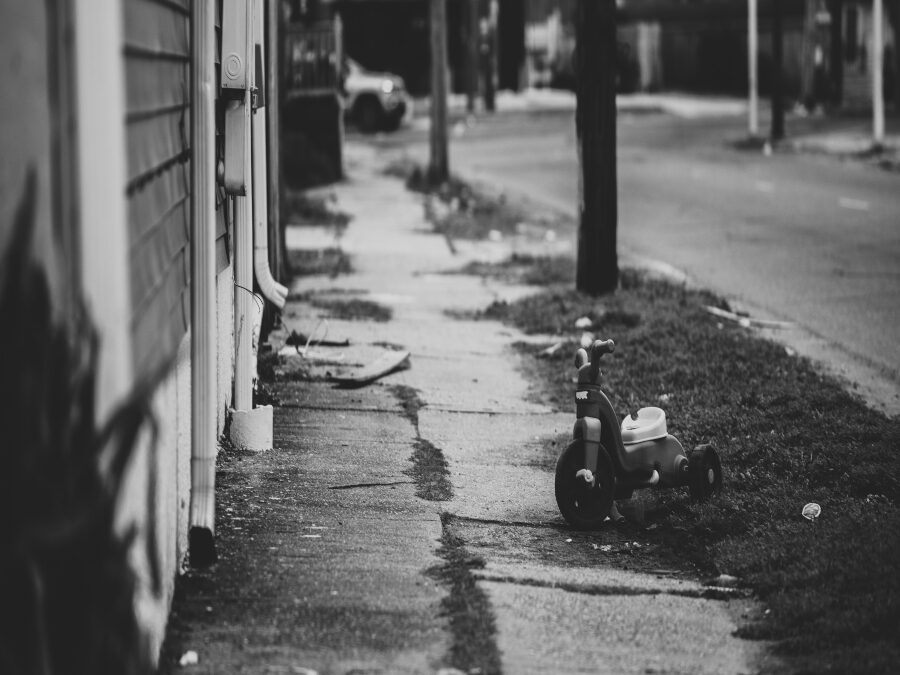
In our neighborhood, the dumpsters peel orange but not like citrus. White liquid seeps from their underbelly. Nothing drinks the dumpster milk. Tomcats fight in the periphery while a family celebrates in gunshots. No one thinks of what happens when the bullets fall. We protest the jet-black bars of the windows and the fence. We don’t want to be prisoners of this world. My brother and I scatter out of our home and into the streets like sparrows, avoiding the sidewalk crack. We don’t want to break our mother’s back. She breaks it every day at the La Quinta, cleaning up after lazy tourists. She brings home jars of barely eaten strawberry preserves. When she isn’t looking, we dip our fingers. We are our own freedom fighters, and we race after the rogue chickens, and the Chow Chow who lives by the Panaderia races after us, guarding his sweets. We cross our hearts he does not have rabies. A storm begins to storm, and the gunshots dissolve in the rain. We lope to the sewer drain that has stopped draining, and splish and splash until our mother screams, “That’s how you get ringworm,” and we Charlie Brown inside.
by Catherine Gammon | Apr 21, 2022 | contest winner, micro
I’m not interested, she said, in restless craving, space-time music, outside combining elements. Images only, she said, with a shake of white hair. Minutes later—on time, she said—life, non-human, began to unravel. The Russian beside her—brave, grassy, invasive—was not performing, in his wise place of silence was intensely not performing. She screamed her shallow line, not yet broken by her own odd thoughts. She waited for an interlocutor, but no one came, only spells from hell and unseen books, beauty brief and dwelling among the pollinators, with its and their bristly hungers, a velvet cloud of flower dust invisible in the wake, their lost apocalypse. At the edge of the world, her world, they sat, watching the garden, a planted intersection, a nest creator, as she dove into irony and he sat firmly in staunch heroics, together awaiting catastrophe, breathing the air of their own absurdity, a romantic generation that believed in freedom, doubt, indeterminate expansiveness, all outcomes tragic, the anti-imperialism of imperialism’s beneficiaries, in conversation between certainty and enemy magic. Pesticide, she said, and for a moment he looked as if he might awaken, respond. An endangered profit system, she said, or prophet—silver and gold didn’t move him. The forest, she said, bark beetles, lover, wind, storm. And her companion sat stoic, blinking. Buckle up, she began, but big cats, gold and silver, ran away with her thoughts. She had a kingly elastic temper, staggering in its theatricality. Dusk arose or fell, arrived, to surround, enclose them. Bats and cicadas, a lonesome pine. There’s more, she said. Or thought. One thing more.
by Patricia Q. Bidar | Apr 18, 2022 | micro
I get lost three times en route to the Oakland Airport, ten minutes from home. I have waited for you through a year of your travels. The infrequent social media posts; the even rarer calls. I arrive late. My daughter, you are so small in your sundress and Doc Martens. You wear a kerchief like a girl in a fable.
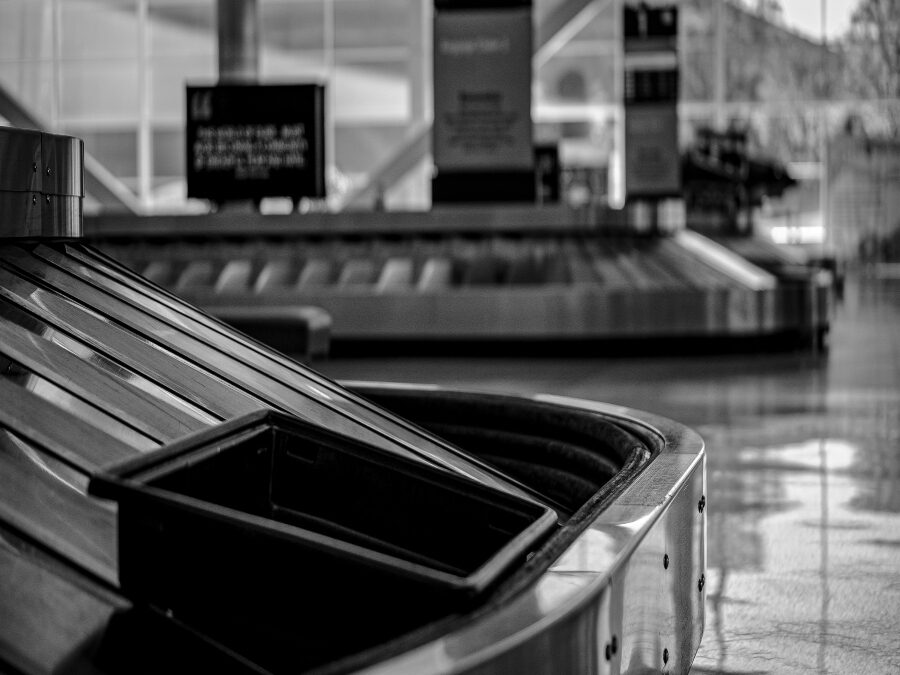
In baggage claim, we hug and you say you are waiting for your guitar to come out. I breathe you in. The suitcases are gone from the grinding silver track. I point out the little office where people go to ask about baggage that has not appeared in the black rectangle; has not begun an oval trajectory. You get your guitar. I ask about the flight and whether you want to get lunch before I return to work. You smell of patchouli. You have changed on a cellular level and on that level, I can no longer claim you as my child, as is my instinct. I feel a sensation like falling backward.
We go for Chinese food. Since I saw you last, you have slept in the car and in a tent and in national parks. In groups and with your boyfriend and his dog, neither of whom we know. You have climbed Pike’s Peak and seen an eclipse and texted that one day you will get an image of it tattooed on your skin. I don’t ask about the citation for vagrancy in Asheville. I don’t ask if you’ve stayed on your medication. I don’t ask whether he treats you well, or how long you will stay.
Instead, I ask you if you want anything at the Health Food store across the parking lot. In fact, I need a few moments to step away. I need to catch up to where we are in this Chinese restaurant that was always your favorite growing up.
You are my child but no longer mine or a child. I want to give you something you need. I want you to accept it and then have this small new connection. I no longer have to choose between bus fare and food, as I did when I was pregnant with you.
I say I will be right back. You touch your palms delicately to the sides of your teacup. You say you will wait.

Recent Comments