by Vic Nogay | Aug 22, 2022 | micro
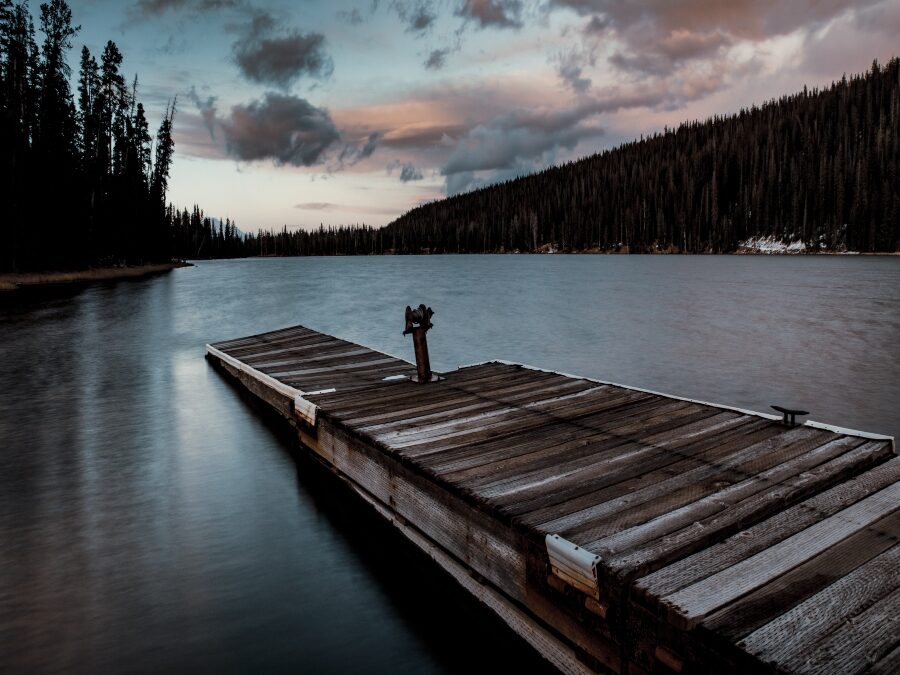
You’re standing with toes far back from the edge, not prepared for a swim that night in Otsego when he sneaks up behind and throws you in from the dock, not out, but off to the side where it’s too shallow. You slice both heels on the zebra mussels, squat-swim to the dock avoiding the rest, heaving god-damn-its and what-the-fucking-hells at a person who knows all the things you hate, like wet jeans, like pranks, like any awful thing you can almost see coming. When you reach the ladder, he’s down on one knee—down but above you. From below him, you can see the deceit in his plea, its illusion of choice. He’s blocking the way, ring in hand, while you tread the depthless water and bleed.
by Kathryne McCann | Aug 18, 2022 | flash fiction
Sometimes you think about her hands.
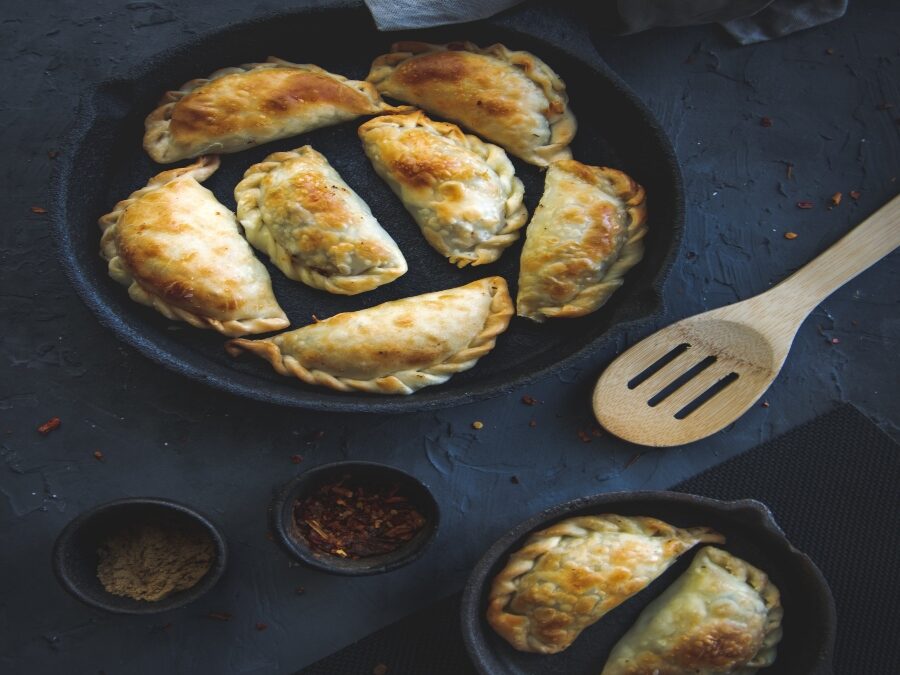
Sometimes, before the sun hits the sky, you sit at the kitchen table, crimping empanadas with your brown, bony hands and wonder if hers are soft and thin, as white woman hands should be.
Sometimes, when you knead the pasty white dough, you wonder if she is paler, and if she too was soft in all the right places. When the sharp smell of coriander and cumin tickles your nose, you wonder if their necks and wrists smell of vanilla and flowers. He would know, you think, as you dig your knuckles deep into the dough, over and over again.
Sometimes, as you prepare the counter space with a sprinkle of harina, you glance at how it settles into the crevices of the pale blue ring that sits on your middle finger. Three blue stones in a line, each separated by diamonds. You picture her eyes sparkling just the same. You remember receiving that ring after woman #3. Or was it #4?
Sometimes, when you hand off the empanadas to the white men from down the block, you begin to think maybe he would love you more if you knew English. But he loves you enough. As the gringos say ‘thank you,’ one of the few words you know, and hand you an envelope filled with money, you wonder if they find you attractive. You wonder if he finds you attractive. The years have not been kind to your aching body.
Sometimes you wish you were younger.
Sometimes you wish you were whiter.
Sometimes you wish you could scrub the dirt color from your skin and find a fresh canvas as smooth as milk underneath. You apply lotion religiously, hoping it will make even the slightest difference when competing against the others. There are always others.
Sometimes you think about your empanadas, the ones you spend hours making and perfecting, just for them to be consumed by the very people who fear you in their neighborhood. You stuff them with beef, olives, hard-boiled eggs and home-grown red peppers, and wonder about the baby boy he stuffed inside woman #6. You only have daughters.
Sometimes, before you knew differently, you prayed that America would be the answer.
Sometimes, as you collect your daughter’s dirty socks from their bedroom floor, you fall into your memories, retreating to a time before you packed everything and left home. You imagine the faded blue house you shared with him, the one that sat on one of the larger hills in Valparaiso, overlooking the sea. Alone, you used to watch the fisherman scoop up muscles and catch salmon and bass from your balcony. You would watch the large red and brown barges crawl across the horizon and wonder if the ship he worked on looked the same. In his absence, you would breathe in deep, allowing the salty air to fill your heart.
Sometimes you hoped all the women would disappear after you made it to the promised land. You had thought that after two years, two long years, breaking his back in exchange for a spot in paradise, he would be ready to put family first. Brooklyn hardly seems like paradise.
Sometimes you look at the solid gold Rolex on his wrist and wonder if jewelry is the only currency he knows.
Sometimes you are sure he lies awake at night dreaming of the days he spent abroad, wooing short skirts and full breasts.
Sometimes, while you sliver the fresh strawberries for his dessert, you wonder if she ever cooked for him, if any of them did. After slicing and slicing and slicing with practiced speed, it is a wonder you haven’t cut yourself after all these years.
Sometimes, as you sprinkle sugar over the plump berries, you grind your teeth, pondering why your goods are never sweet enough. You understand that one can get tired of arroz con pollo when tempted with Norwegian chocolate. Some women are treats while others are reliable. The strawberries are ready at the same time they always are.
Sometimes you try to pretend that the other women do not exist, but each ring, necklace and bracelet reminds you of their fingerprints on his skin, their fingerprints on your skin. They remind you of your children, stacking birthday cards he sent from overseas and postcards filled with empty promises in boxes that they stash beneath the beds they share.
Sometimes you wish he never came back.
Sometimes you wish he would never leave.
Sometimes, many years later, you send your thoughts up to the heavens and hope he is watching you sort through those tainted jewels. You hope he watches you shower your daughters and their daughters with sapphires, rubies, diamonds, and gold. You hope he watches as their fingers and earlobes shimmer with the legacy of his betrayal. Thousands of dollars worth of diamonds and tears, passed on to the next generation.
Sometimes you hope he feels shame, for they know the truth of the jewels they wear.
by Laur A. Freymiller | Aug 15, 2022 | contest winner, flash fiction
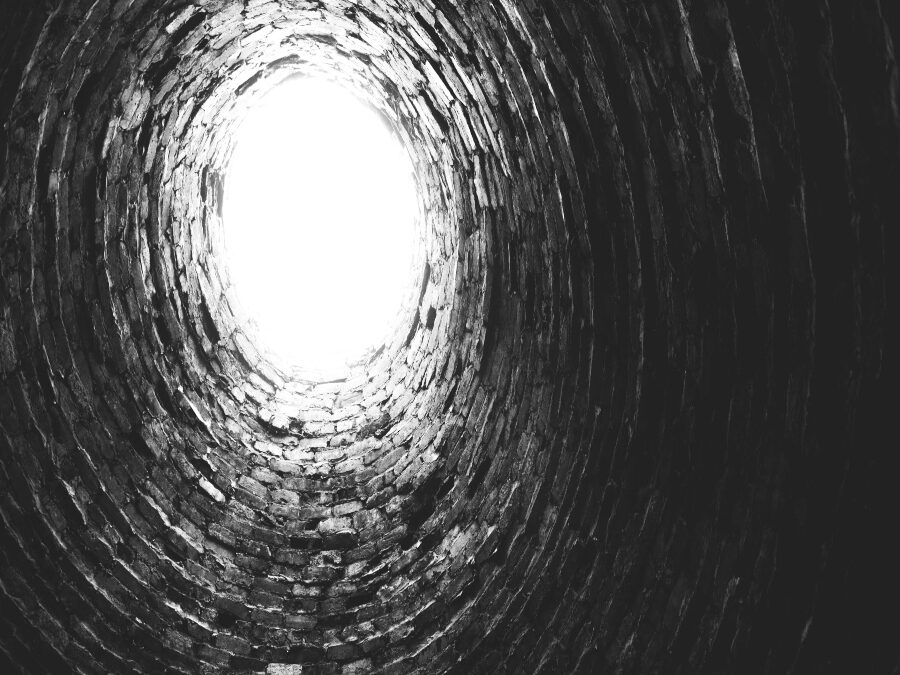
The creature who lives in the well makes noises at night. Small noises as if it doesn’t want to disturb us.
It disturbs me.
Right now, everything disturbs me: taking dishes out of the dishwasher, folding laundry, talking with Rebecca.
“It could be a frog,” Rebecca says.
It’s not a frog.
Truthfully, I haven’t seen it, but then neither has Rebecca. Until we see it, we’re both equally wrong and equally right about what it is.
I know it exists because of the noises. I know it is not a frog because of the scratch marks on the windowpane – neat little crosses etched into the glass.
“Maybe a bird flew into the window,” Rebecca says.
A bird didn’t fly into the window.
When I tell her this, Rebecca shakes her head. She takes off her reading glasses which she wears on a beaded chain. She is thirty-four. I am thirty-one. We own a house in Indiana, and one of us is slowly disintegrating.
“I don’t like to see you obsessing,” she says.
I obsess.
While Rebecca is at work, I stay home. I pull out blank sheets of paper from the printer and line them up on the ground. I take a thin-tipped Sharpie and draw the creature over and again.
Sometimes I draw it as something round and furry. Sometimes it is scaly, slithering, sinister (left-handed). Mostly I draw a faceless, human figure with sharp, thin toes (it walks on tiptoes) and sharp, thin fingers (perfect for etching neat little crosses). The figure stretches long and longer until it fills the floor. Its empty face becomes a black hole and if I don’t lean back, I will be sucked all the way in.
“Tell me what’s wrong,” Rebecca says.
“I can’t,” I say.
“Try,” Rebecca says.
“It’s not anything,” I say. “Or it’s everything. I don’t know.”
“Would it help to get a job?” Rebecca asks.
“I’m trying,” I say.
“You could do anything,” Rebecca says. “You’re so talented.”
“Please don’t use that word,” I say. “It feels so far from where I am.”
Rebecca puts her head in her hands, her elbows on the kitchen table. Outside the creature in the well is silent and the cornfields are eating themselves into darkness.
“It’s exhausting,” Rebecca says to her palms, “trying to get you to love yourself.”
Tonight, the creature is on the roof.
I hear when it moves – bright pinpricks of sound. Spindly toes tapping against shingles, spindly fingers rapping like a polite but insistent visitor.
Let me in. Let me in.
It is testing the roof. It is looking for vulnerabilities.
Rebecca has her arms around me, and I am having trouble breathing. The night is interminable. The day is interminable. The night is interminable after that.
It is Sunday, and Rebecca is visiting her mother in South Bend. I walk out to the well in the backyard. It is surrounded by ragweed and panic grass. I look down the well, tunnel into the unknowable.
The sun is thin today and fighting against the cement-blank sky. I imagine what it would look like to see the sun from the bottom of the well.
The creature starts to make noises. Small noises but getting louder. I can hear its fingers tipping and tapping and picking out crevices in the well-wall and pulling itself up.
I walk back into the house.
It is Monday. Rebecca calls and tells me she will be staying with her mother a little longer.
“I need to clear my head,” she says. “My mom needs help around the house.”
She pauses and then says, “I would ask what you need, but you never tell me.”
“I’m trying,” I say. “I’m trying.”
I am trying, but the creature is in the house.
Everything disturbs me: the taste of water on my tongue; the sound my heart makes; Rebecca calling and me not answering. I am unable to hear her voice above the echoes.
I am lying on the bed. The creature is lying on the ceiling. Direction has become meaningless is up is down.
Dark water drips from where the creature’s face should be.
Rebecca stands at the foot of the bed and watches me.
The creature has wrapped itself around me, holding me tight. Its toes dig into the backs of my heels. Slender fingers caress my throat, draw lines along my jugular, trace lines down my forearms.
The bed is damp, and dark water is welling.
If I could tell you what the problem is, I would.
by Steven Sherrill | Aug 11, 2022 | contest winner, flash fiction
My brother is the smallest man in the world.
I’m not even kidding. Most of the time, he lives in my jacket pocket. One kernel of popcorn will keep him going for weeks. It’s hot in there, in my jacket pocket, and hard to breathe, probably. But he needs so little air. Sometimes, I take him out to impress a girl. It rarely works. When we drive, well, when I drive, I keep him tucked behind one of the plastic air conditioner vent grates. If he complains too much, I just turn the fan up a notch. And, I’ll confess this only to you, on more than one occasion I’ve used him to get out of a speeding ticket. My brother used to ride on the rearview mirror, laughing and swaying to beat the band. But once, he fell into my iced latte. Talked non-stop for three days. Annoying as hell. Don’t tell him this, but I thought he was going to drown, there in my coffee. I thought he was a goner. I got really scared. That’s when I started planning his funeral. Don’t tell him this either. I’ve been adding details ever since. The service. The guestlist. Eulogists out the wazoo. More hibiscus than you can shake a stick at. Violinists to boot. And good god, the foodstuffs. Don’t tell him. You can come. I’ll put you on the invite list. It’s going to blow your mind. It’ll be the biggest funeral in the world.
*
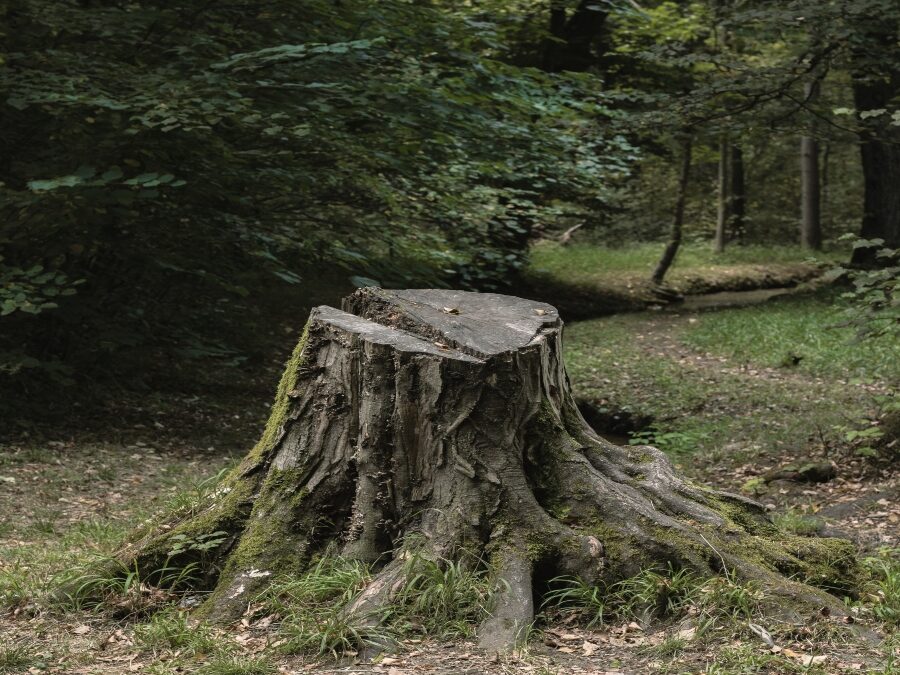
My brother is a tree stump.
Don’t laugh. He’s sensitive about it. My brother is a tree stump. Ash, maybe. Or poplar. I don’t pay that much attention sometimes. Axe-bitten, either way. Speaking of which, I propped a piece of plywood against him, painted a bullseye on it. “Stop it,” he said. Then tripped me with a dead root. He used to make fun of my skinny legs. Our mother never knew what got carved into the bark of his trunk. He’s always after me about the goddamn chipmunks. They won’t leave him alone. But I’m busy, so. When I want him to shut up I whisper pole saw and gaffe. We both fear the word arborist. But not for the same reasons. He did, once, in deep winter, reveal that he wished he was a pine. A pitch pine. Pinus Rigida. Though, maybe he said walnut. I don’t pay that much attention. The best times? After the sun gets low, and there’s no need for shade. I lean against him and we share a beer. We look up and up together and talk about all of his branches.
*
My brother speaks red dirt. Only.
No. Turpentine too, but not so fluently. And only in the hottest part of July. One time he tried to speak to us in drafting pencil and ruler. He got choked on eraser crumbs and we almost lost him. The esophagus is wily and cannot be trusted. One time, in a cave made of packed red clay, he pretended to speak Marine. Ready to die for our country. We almost lost him. If not for the flounder bone caught in our throats, collectively, we would have wailed. That time he joined the choir? Every note, a glazed pot. A cracked vessel. If not for the throats caught in our bones, we would have wept. The mouth is an exit wound. Everything from this point forward will be a lie.
by Josiah Nelson | Aug 8, 2022 | contest winner, flash fiction
They came to town, one riding a lawnmower, the other carrying a leaf blower, their hair shorn tight and crisp like hedges. And their teeth: white, too white, so white they were blue. Flashed those teeth at everyone they passed as they wandered around our town. When our mayor Archibald saw them, he nodded and walked them to our town’s only auditorium.
The one rode onto stage on his lawnmower, the other carrying his leaf blower. Archibald shook their pale hands and said, “I have an announcement to make: They’re taking it from here.”
At first, that didn’t seem so bad. The one just mowed the grass at our parks and fields, while the other followed him, spraying around leaves and mulch.
We weren’t wary enough of their stiff, sharp hair, their ice-blue teeth, the way that lawnmower gobbled things. The way they never stopped working.
Gordon said he’d been walking his dog at 3 a.m. and saw them at Mrs. Neufeld’s, the one whirring around on his lawnmower, the other blowing debris out of her eaves. Said their eyes were white like flashlights. Said he could see them grinning.
In no time, they cleaned up our town—the whole thing, even our yards.
But then things went missing. Houses vanished, one by one, and cars, and parks, and buildings, and streets. And people.
One day, they knocked on my door, and said, “We’re taking it from here.” Before I could reply, the one on the lawnmower smashed through my door and proceeded to ride through my living room, crashing into my couch and bonking over my table, spraying bits of wood around the room like confetti. He kept riding, soon bashing through my rear wall and turning back around; the one with the leaf blower followed him, shooting air at the drywall and dust, causing the detritus to swirl and spin and then, without notice, disappear.
I raised a finger to the one on the lawnmower as he crashed back and forth through my house like I wanted a word, but he just flashed that smile, clean and clear like a siren’s song, and the next thing I knew I was standing in front of these colourful, curved things, these technicolour turtle shells.
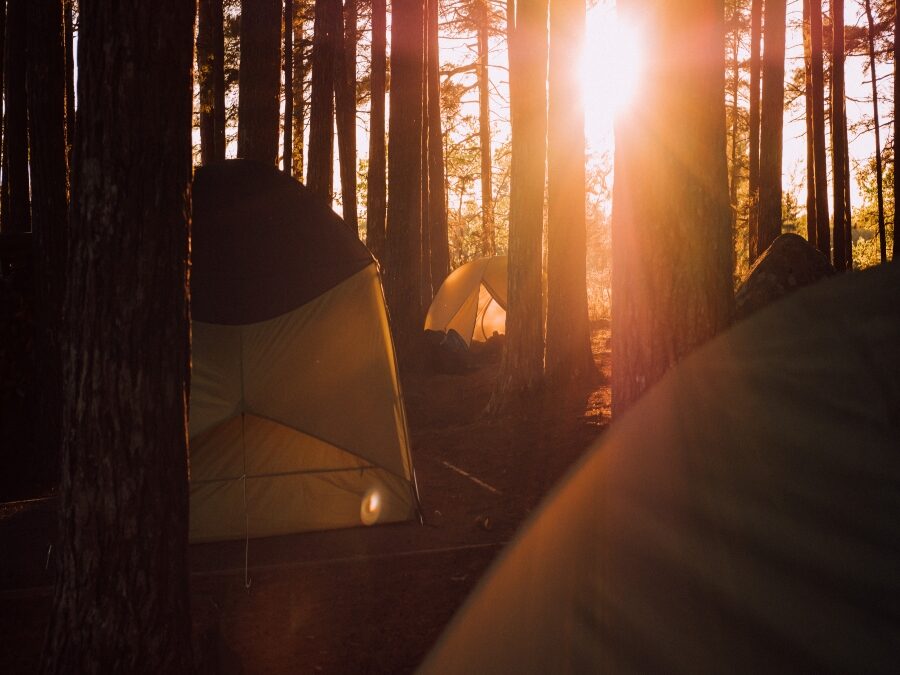
Tents.
Rows and rows of tents, each with a little head peeking out of it, and right next to me, in front of the first row of tents, a sign. It said, “Here.” I turned around and saw our town: west of main looked as it always had, dotted with trees and parks and houses, but east of main looked barren, erased. In the distance, I saw the lawnmower crashing into a car, buzzing right through it like a saw, and the leaf blower flinging the shards of metal into the ether.
As I picked my way through the tents, looking for an empty one, I saw Gordon, I saw Mrs. Neufeld, I even saw our town’s mayor, Archibald. When I passed him, he said, “They’re taking it from here,” and everyone nodded.
Over the next fourteen days, I watched from my tent as the two guys broke down and blew away the rest of our houses and cars, playgrounds and trees, razing everything like they were giving the town a perfect buzzcut, and as they did, people wandered into the tent village and slipped into empty tents. To each person, Archibald said, “They’re taking it from here,” and we all nodded.
Lately, though, there have been no newcomers, no one to say these words to. We’re all here.
And yet Archibald can’t help himself. He still says them.
Actually, he screams them.
Sometimes at night, with my head poking out of my tent like a gopher, watching as the two guys shear and dust the already desolate landscape of our former town, I hear Archibald scream out in his sleep, “They’re taking it from here!”
Recently, right after he screams, I’ve peeled my head back into my tent and whispered, “They’ll take it from here.” Sometimes even twice. “They’ll take it from here.”
I like the shape of the words in my mouth; the way they taste off my tongue.
I don’t think they’ll ever stop working.

by Fractured Lit | Aug 4, 2022 | micro, news
1st: Place: Party in the O.R. by Lannie Stabile
Runner-Up: Through the Window by Susan Wigmore
Runner-Up: Be Prepared by JR Walsh
Shortlisted Titles and Writers
sea hungry by Alvin Park
Exotic by Ina Roy-Faderman
Spit Joined by Tom Weller
Unwound by Tiffany Grimes
If I Had Wings by Claudia Wair
Everything Disappeared by Rita Ciresi
Womb by Jared Povanda
by Rosaleen Lynch | Aug 4, 2022 | flash fiction
The pigeon-pea, that lies under seventeen cardboard mattresses, grew in the stone age, amongst wild animals, and traveled across time and continents, and out of a store-bought box, as others poured into a clay pot to simmer as dahl on my fire, for me to feel it now. I’m tough skinned I’m told, by a father and husband after hidings, before I learn to bark or bite or fly or hide, out of sight, so they can’t take aim, train their weapons on me to hunt and treat me like their prey.
The pigeon-pea, through my cardboard mattresses, digs into my hip, until I move, and now my back, until I move, and now my thigh, until I move, and turn tail, switching round but it catches my shoulder, and I move aside and sleep, until it wakes me, grazing the back of my neck, the light of the factory recycle centre warming my face, like the sun that’s not risen yet on the day.
The pigeon-pea is there, I know, but I can’t find it, though I lift each layer, run my hand along the corrugations, the sounds of the stacking machines starting and I consider starting afresh, finding material for a new bed, seeing as the caretaker lets us take what we like as long as we don’t sleep there past night—a building of cardboard needs just one stray spark—and we’re just cut-outs that will go up with it in flames, we’re not etched into the landscape like the animals of the Sanganakallu, we’re temporary and too easily biodegradable, recycled before we’ve found our first use.
The pigeon-pea used to grow where birds, wild dogs and long-horned sambar deer roamed, around the pottery factories of the Sanganakallu, and fire made the pot it cooked in on the fire, that saved the perishable from the spoil. But new people to the street don’t always know how to use such bounty. Here where cardboard grows, they try to sell it to removal companies for packing, or to recycle, or end up setting it on fire. And even then, I tell them to make logs of it, to roll and bind the cardboard tight and the work is warm while waiting for the fire to light. But some don’t want to work. Some want quick fire and it goes out as they lose interest and move on. Others just want to watch things burn. I used to set things alight, make a bonfire of my life. Rake over the ashes in the morning trying to remember what I’d burned, what I’d razed to the ground in the heights of my ambitions to be free. Now I learn how a factory can make. I learn how to build myself a cardboard house, from the inside out, sustainable, piece by piece, that I will one day inhabit. But for now I use twine to bind my cardboard mattresses into a bed and the newspaper lines on pages, to line the layers, as insulation from the cold concrete of the street. I used to feel nothing, take whatever would make me numb. I could sleep anywhere, without food or heat. Now I have logs and a pot to make a fire and dahl. Now when I sleep, even on seventeen cardboard mattresses, I feel one dried pigeon-pea.
You call me your princess and tell me I have to feel, but now I worry and wonder about these boxes, these cardboard coffins, big enough to make beds and rooms and palatial eco-homes and I ask you how far have we come up the archaeological layers, from Neolithic houses on ash mounds, and rocks bearing bulls in petroglyphs of sun circles with horns or interlocking bulls making a sunflower in Sanganakallu? I tell you that a bull can shake off the yoke that has it plough the same furrows where the bodies of cows are buried, their bones picked clean and broken shards sharing the soil with the sickle blades and ground-stone axes and the pottery pieces that were once earth, that liquid rock of clay, malleable until dried out like the pigeon-pea. And you call me your princess and I tell you—listen. I am my own princess. I am my own pigeon-pea. I am my own Sanganakallu.
by Fractured Lit | Aug 2, 2022 | news
- We Sleep Within the Vast Sadness of the Mountain
- Salty Feet
- Dark Crescent
- How Boys Get Their Wings
- Lair
- Fish Folk
- MY ANALOG
- The Waking Spell
- Home Remedies Or: A Guide for the Afflicted
- Fusion
- the silk farmer
- Nettles
- Skin Beetles
- Ghost Sweat
- It’s Still There
- Cold Comfort
- The Extractions
- The Lioness In Winter
- The Matchstick Girl
- In Spirit
- Man-Made
by Linda Niehoff | Aug 1, 2022 | micro
We were always driving and once in the night in the dark after hours and hours, days even of only night driving, you said to me. We’ve gone a thousand miles. We could have gone to New York by now. We could have gone anywhere. You said it in the dark. It was Cedar Street that ends in nothing. That ends in a creek, a deep ravine, the maple trees closing in around it like a dark lonely mouth. You said it in the night in the dark in the closing in. You say it still when I dream, when I nightmare. I can see it, the glint in your eyes reflecting the disappearing street lamps. The way you turn. Your old red Impala, even though it’s been restored, sounds like that old barn creaking as it cools down from the heat of the day, sounds like that one summer that one time when we snuck up there and the wood crackled all around us in the cooling, like that one time when we almost-
I still smell the leather. The spearmint from the gum you don’t chew, just let flavor your mouth. Then flavor mine when we finally stop driving. When we park at the creek. When the car cools around us and the voice from the radio sings against the blue dashboard lights: We are the only ones, the lonely ones and I’m a cat that’s gray and moves into shadows. That moves into the dark. That curls around you around us around all of this.
That is curling still.
by Bethany Marcel | Jul 25, 2022 | flash fiction
She imagines you dead in the bathtub. The split second you slide under. The gasp. The sputter. She catches you, placing her hands around your tiny waist, your body like a slippery fish. She lifts you up and presses you to her chest.
She imagines you dead as she walks up the stairs with you in her arms.
She imagines you dead when she sees it in her mind only: her foot, cushioned in a sock, slips on the edge, and the two of you tumble down. Two bodies. One big and unwieldy. One so small it would be crushed by the weight of her.
She wants you to sleep. She’s obsessed with the idea of sleep. She fantasizes about it so hard it keeps her awake at night. Sleep, she thinks. Just sleep. When you finally do, she imagines you dead. She checks the clock. 7:30 a.m. You couldn’t possibly sleep so late. Are you breathing? Should she check? She imagines you dead as she tiptoes quietly into your room, as she peers over your crib to find your limbs sprawled out like a teddy bear. When a few seconds later you cry, she breathes, then she whispers it—shit— because now you are the second worst thing: awake.
Anxiety believes if she rehearses tragedy she’ll prevent tragedy. Her therapist tells her this. The anxiety, the therapist says, is telling her body a story. But she’s never liked stories, has never liked the body. Instead, she’s always held to the rough edges of her anxiety. She’s always believed if she holds on tight enough her thoughts might save her.
She imagines you dead at dinner. In the kitchen. When you’re eating the piece of cheese. When you’re eating the piece of meat. When you’re eating the tortilla and the raspberry she’s cut in half. When you’re drinking from the sippy cup and you cough so softly your dad doesn’t even notice. She imagines you dead when your dad says, “She’s drooling a lot” and she looks in your mouth and says, “What’s that?” then reaches in and pulls out a small piece of a nylon dog bone. You weren’t even choking, she thinks, so how could she think you were dying?
She’s your mother. She doesn’t need a reason to imagine you dead.
She imagines you dead when she goes to work and leaves you with the babysitter.
When she goes to work out at the gym and leaves you in the little daycare area with the long staircase and thinks, “Do they know the dangers of staircases?”
She imagines you dead in the summertime: heat exhaustion. In the wintertime: frostbite. She imagines you dead in the car. That half second before she looks in the rearview mirror and sees you smile.
She imagines you dead before all of this. When you’re still part of her. When she’s so used to the feel of your kick against the inside of her body that she presses her hand to her stomach, tracing the movement of you like piano keys. Those days you stopped kicking, briefly, and she first imagined you—
But that was early on. How she already loved you enough to imagine you dead. “I note you equate love with these anxious thoughts,” the therapist says.
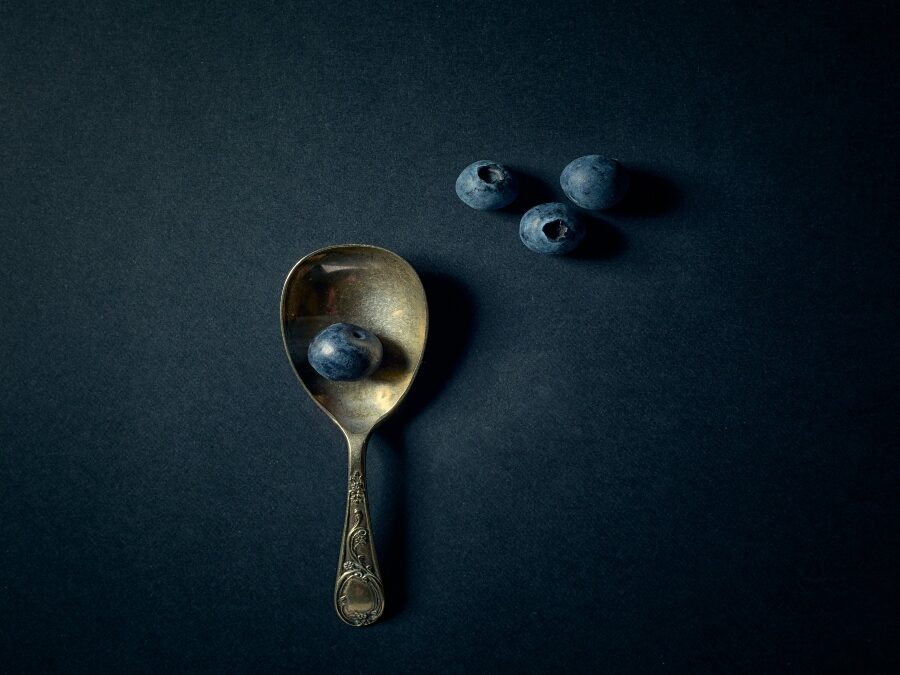
She imagines you dead when you’re even smaller than this. When you’re the size of—she reads it online—a blueberry. She imagines you dead when she goes to pee. When, for months, every time she pees she also pauses, looking for blood in the toilet water. Blood on the toilet paper. She’s waiting for blood because she doesn’t think you are possible. Because she can’t imagine a world kind enough to let you live. Because she can’t imagine her body is kind enough until it is.
Someday, if life is kind, she’ll die before you. Someday, if life is kind, you will be the one to answer the phone call. The hospital room will be stuffy, too small, and not what she deserved. You will remember the silence, the incessant beeping of the monitors. You will slip your hand into hers and hope she knows.
But first, before all of this, she will continue to imagine you: dead, dead, dead, dead. Will she do this for the rest of her life? Imagining all the various ways you might die?
She doesn’t know. For now, what she knows is this. She imagines you dead even as you fill every empty space with life. Each morning, she goes to you. The light in your nursery is golden and promising. She breathes it in, sucking in the life of it.

Recent Comments