by Michele Zimmerman | Dec 15, 2022 | flash fiction
Write down your goals for tomorrow. Write down your goals on a small pocket-sized notepad so that you can take it with you. Don’t make these goals for tomorrow a “to-do” list. Don’t do this because some of the things you’re bound to include in your goals (like “shower”) are never included in other people’s “to-do” lists. “Goals” because that feels softer, more forgiving. Write down your goals and then place the pocket-sized notepad on your bedside table.
When you wake up in the morning, reach over, pick it up, and let it be the first thing you see. Pick up your novel, leaf through a couple of pages while you sip coffee. Savor the few moments you have before the day starts, before you have to start meeting your goals.
Welcome the cat onto your lap, pet the cat underneath the chin. Pet the cat on the top of the head. Do not, under any circumstances, pet the cat on the ears.
Get up and wash your hand with clear, liquid soap when the cat scratches your palm after you have definitely petted her on the ears. Remember to buy more clear liquid soap when it struggles to come out of the nozzle. Write “remember to buy clear liquid soap” on your list of goals.
Do not think about the person you saw at the train station yesterday. Do not write out a message to the person you saw at the train station yesterday. Do not, under any circumstances, send the message. Do not wonder what her life is like, now. Do not wonder who knows her better than you do, now. Do not let your thoughts stray from your goals. Write down all of these “do-nots” into your list of goals. Put down your pen now. Put it down. Do not write out these things. Forget the questions you have, like:
Did you see me across the landing at the train station?
Is that why you left?
Or, did you realize that you were on the wrong platform and suddenly leave to correct the mistake?
Was it too windy for you, over there?
Did your unruly hair catch in the breeze and cover your eyes, so that your reading was interrupted?
What were you reading?
If you saw me, what did I look like to you from across the landing at the train station?
Did you notice me from my walk, or from the way I stand?
Could you see the new tattoos? Even the ones underneath my clothes?
What would you have done, if I had waved?
What would you have done, if I had come up to you and asked what you were reading?
What would you have done, if I hadn’t pretended not to see you?
Would you write about me again?
Are you doing that right now?
Stop that now. Stop wondering these things. These things are not part of, or related to, your goals. Do you know what happens when you abandon the goals? If you abandon the goals list, you spiral. If you spiral, you forget to do important things for work. If you forget to do things for work, your bosses will take notice. If the bosses take notice, they’ll be nice about it at first, and ask if you’re doing okay. If you say you’re okay, they might believe you. If you say you’re okay, they will probably believe you, but they will still keep an eye out for mistakes. If you make mistakes, or forget things, like which shifts you’re supposed to turn up for, they will become stern. They might have conversations with you about responsibility, and trust, and pay rates.
If you don’t get paid $16 per hour, you can’t pay rent. If you don’t get $16 per hour, you can’t eat. If you don’t get paid, you can’t feed the cat that you shouldn’t ever pet on the ears. If you don’t get paid, you will have to ask your older brother for help, and his wife will roll her eyes so hard, you will practically be able to see it through the telephone. If you ask him if she is rolling her eyes, it will start a thing between the two of them, and then he will call you back in a few days’ time and tell you he can’t help you. When he says he can’t do anything for you with an apologetic tone, he will lightly suggest that you ask your parents, and you will recoil and feel like a failure. When he calls, he will speak in low tones, even if his wife is not around, and ask you if you’re doing okay. If you say you’re fine, he won’t believe you. He will wait patiently, quietly, on the line until you start to really tell him the truth. He will ask you, what happened? Did you see her again? Weren’t those goals that your therapist started you on working out well for you?
Throw out those questions you weren’t supposed to write down. Rip that piece of paper out of the pocket-sized notebook and crumple it into a small ball. Throw it into the trashcan. If you miss the trashcan, the cat will think of the ball of paper as a new plaything. The cat will swat the crumpled questions back and forth between her claws, and eventually, the piece of paper will be shredded up into many tiny pieces. Don’t let the cat eat the shreds of paper; she will try. Don’t dwell on what having seen that person at the train station could have been. Don’t think there was a chance of further interaction with her going well for you. Finish the coffee that’s probably cold now. Rinse the mug. Get into the shower. Complete your goals for today. Then, write down your list of goals for the next day. Place it on your bedside table, so when you wake up, it can be the first thing you see.

by Fractured Lit | Dec 14, 2022 | news
- Raising Rabbits
- Will These Elevator Doors Never Open
- Regrets: About Shoes You Did Not Buy
- Hope
- Lost and Found
- Aquatic Mammal
- Anchorite
- A Strange, Silent Relief
- Before The Wave
- Gianni Appleseed
- My husband said, keep baking bread
- Self-Solemnization
- Lights in the Darkness
- Burn It All Down
- Casual Pinch, 1992
- Something Has Replaced My Husband
- Monday
- Everything is softer in flannelette
- Bath
- Cuckoo
- The Plastic Horse
- Tangled Woods
- Girls With Nice Noses
- Ambiguous Birds
- Nick’s Trip to Neurotransmitter Disneyland
- Drapes
- Coexistence
- The Freshwater Seas
- Leftovers Graveyard
- A Lovely Light
- Pelican
- Better Best Babka
- Comedy
- After-words
- Hold Fast
- ‘Death Really Suits You
- Relict Communities
- What It’s Like
- Minnow
- Mirror in the Ghost
by Sarah Rosenthal | Dec 12, 2022 | flash fiction
The whole bird lay naked on the cutting board. Iris had received the wooden board as a wedding present. It held the scars of years and years of tiny careful cuts.
The body hardly looked like a recognizable creature without the head, the feathers, the feet. She could almost forget it had been alive. Iris traced her left index finger over the creature’s skin, a puckered goosebump film over too-pink flesh. She then worked her finger over the pathetic folded wings, the stiff legs pointed towards her. The leg joints had already been severed from the body with a pair of kitchen shears. With one smooth motion, she flipped the carcass, so it lay prone, belly up. Iris held the sturdy kitchen knife in her right hand and considered the spine. It was her first Sunday alone, and she was hungry.
Her husband had been difficult to please. He had been a vegetarian. While Iris spent years as a housewife mastering meatless dishes for him, he had satisfied his appetites with his coworker, the one with creamy skin and cherry lipstick that left bloody grenadine smears on Iris’s sateen pillowcases.
Iris ran her fingers up and down the bird’s backbone. She was good with a knife. Carefully, she dragged the blade down one side of the bone and then the other. The tip of the knife worked through the fat lines with ease, and look how quickly the bones gave way to the steel blade with some light sawing motions. Sss, sss, crunch. With each hack at the animal’s ribs, it became easier for Iris to breathe.
She flipped the body again, so it lay on its stomach, the carcass looser, easier to control. Iris pressed down on the spine with her left hand and both legs with her right arm, pushing all her weight so she crushed the animal, and it lay perfectly flat, making it easier to roast evenly. The body obliged with a satisfying crunch of rearranged bone. She smiled at her work and took the herb butter she’d prepped earlier to rub beneath the skin. That morning she’d grabbed rosemary, thyme, and parsley when she was working out in her garden, and now they perfumed her filthy hands as she caressed it into the muscles, bones, and fat. Once the butter was spread, she washed her hands yet again and noted she really ought to clean out the kitchen sink better: it was still covered with dirt from earlier. Time to cook the bird now. It entered the oven at a blasting 400 degrees.
There was dirt beneath her nails still. She’d done so much digging that morning, and she was so, so hungry. Iris looked out the window at all that freshly turned soil, shook her head at the mess she’d made. They redid the garden a few years back, all his idea of what it should look like, even though she was the one who spent all her time out there growing something out of nothing. Now that she’d destroyed his creation, perhaps it was time for a change. She’d have to replant her rosemary bush, the dill plant, even the roses. There was so much to clean still, in the bedroom and in the garden. But once the meat really got to cooking, once the fat melted off the bones and redistributed itself, once she properly washed her hands and her knife, once she burned the bloody bedsheets twisted open like lips parted, this house would smell like a home again.
by Terri Pease | Dec 9, 2022 | flash fiction
There was a lot of dust on them mens. Me, keepin’ off the wooden sidewalk while keeping an eye, a close eye, mind, on them rowdy boys of Mist’ Showet, all I could see was dusty mens. They wasn’t wearin’ more than rags over they parts, and some not even that. In my head I was studying—to see could I get a half-spoiled bit of sugar to bring back to my pallet. Could maybe the fella what totes barrel for Boss Kerman in the store see somewhat had-a fell on the floor and sweep it up for “out back”. Could maybe put some in a little in a sack I could hide in my dress front. So I was thinkin’ about could I make a little sugar tit for my twins I couldn’t feed when he spat right in front of me, so’s I could see he was there.
The coffle was stopped in the road, driver muttering with the dark ugly over one man on his knees on that road. He swinging his whip on that man, the blood running over his back making streaks in the dust from the quarry where he worked them.
And the spit, landing at my feet is all made me look.
And then I had to stop. I dropped to the dirt, not looking for more than a breath’s time, then reaching for my behind, to worry and scratch like I had some kind of flea on me. I knew it was him, sent to the quarry so he and I would never so much as breathe air in the same place. All cause Master Showet wanted what he wanted.
Mama told me ‘fore I could smell myself good, don’t let no white folks see what you love.
But I thought the wind in the trees stopped when Basie ran by that day. I’d been seeing him round the place my whole life, and he was just one more rusty-behind boy driving hogs and fetchin’ for the stable man. But that day when he came racing round that corner and shouting hog runnin’ move the chirrens, I took two babies by the arms and pushed them into the door of the nearest cabin, then looked and felt myself. Under my arms started to prickle, and my hands went up there. I watched his legs flash by, saw how he fell on that old hog and threw rope round one leg and its neck, so’s it had to follow where he took it or stop its own breath.
And after, anytime, just seeing how Basie could shout those animals to do anything he wanted, made my hands fly up under my arms, made me wish I was a little cow too, or a hog so he could fall on me. And surely Mama called me heifer then. But I was seeing nothin’ and no one but Basie.
I sat in that street. Just scratching like I had nothin’ but fleas, so’s I could worry my dress up to my knees, let him see me, see I knew him, remember how on that one Sunday, sittin’ on the cabin stoop and spittin’ watermelon seeds, I was laughin’ cause I was winnin’, and his fingers got near to my knees, then driver come up with some other hands. Good thing, he say, Master done told me keep my eyes on you, gal.
Boy. Now he talking to Basie and got him pulled up, Basie shirt twisted round his neck, he almost on tippy toes, Boy, I know that stable need you, but we done just found out Boss Nolmann there need you down his quarry more.
And like that Basie was gone.
Basie’s Mama never so much as look at me again, ‘cause all the hands knew Master had to sell that big strong boy was gon’ be a main-hand cause him and me was gettin’ too friendly. And Master had me to the backfield, to the curehouse that night, and load of nights after, and I had them babies done got sold soon as they weaned, a boy, another boy, and one I didn’t know what it was they took it from me so fast to feed on another place, or maybe just drowned it if it look too white. And I makes all my milk now for the babies in the big house.
But I got mine back. I sat in that street just like a heifer and worried that flea ain’t really a flea and drug my dress up so Basie could see I knew he was in that quarry coffle, and that I knew how he had been smiling and spittin’ seeds, and they hadn’t killed him yet. And that he knew I loved him.
by Phillip Sterling | Dec 9, 2022 | flash fiction
The foam pillow, one of several retrieved from his parent’s house after the sale, smelled of Bengay. Meant for the guest bedroom, which his wife at the time redecorated in what she called “Victorian Chic”—an effort, under compromise, to both appropriate and purge the room of gothic memorabilia abandoned (at last!) by the youngest son of his first marriage—the pillow had been remaindered to the upper shelf of the closet, beside the Comedy mask he’d been unable to part with (its mate, Tragedy, featured in the property settlement of the first divorce). When he slept with his head on the foam pillow, he dreamt of leaning back onto the vinyl seats of Mike’s ‘65 Pontiac Bonneville and drag racing along Grand View Parkway in Traverse City, Michigan, and of how Mike would remove the ring-buoy-sized air filter from the carburetor, convinced that it would help them go faster.
The feather pillow, one of two 100% Real Down pillows his second wife left behind, smelled of windowsills—moth dust and insect casings. It languished feebly on “her” side of the queen-sized maple cannonball bed they’d purchased to replace what she’d called “the bridal suite,” a double-sized frame (no headboard) that she’d asked him to donate to the Salvation Army. (“A way to reduce,” she said, “your thinking of anyone else when we screw.”) When he slept on the feather pillow, he dreamt that he was stranded and panicky in an airport in Europe—Brussels, maybe—because he couldn’t locate his nine suitcases, his four kids, his wife, or the bread he’d bought to go with the hard sausage and cheese they’d meant to smuggle back into the States and which was packed already in one of the suitcases the older kids had been instructed to supervise carefully, as packages left unattended would be scooped into what looked to be an industrial floor cleaner modified by a U.N. demolition team, taken out onto the tarmac, and exploded into inedible fragments of porc and Edam.
The other feather pillow (the “match”) anchored the couch in the family room. It smelled a little like the beer he’d spilled when he’d fallen asleep watching a Julia Roberts film—either from the VHS collection his first wife left behind or from the DVD collection his second wife added to—and a little like the fishy breath of the kitten he’d rescued from the county animal shelter (and named “Julia” and raised for nearly a year before its disappearance . . .). He doesn’t dream, when he falls asleep on that pillow. Or at least he doesn’t recall any dreams.
Now it’s summer again. And most nights he can be found in a sleeping bag in the yard, his pillow a rolled-up beach towel. The towel smells faintly of dune grass and coconut oil, though due to more pronounced odors of the neighborhood’s automobile exhaust and recently mown grass, it would be difficult for anyone besides him to smell it. He’s had the towel since college, off-white with a (faded) cartoonish figure of a pink cow laying in the sun, its udders exposed. Below the cow are the words: “Roast Beef.” For years he thought it was funny. When he sleeps with the towel beneath his head, he dreams of his first wife before she was his wife and of how warm her skin had seemed, how lightly damp, the first time she let him—led him—to touch her here, as if the stars would always be aligned just so, as if the source of the light that reached him was not already gone.

by Cara Olexa | Dec 5, 2022 | flash fiction
In a blur, a blind of grass, the horse. Dunes. At your right, ocean collapsing on the edge of Virginia. The flea-bitten mare ahead, returning with her empty saddle. Here comes a horse: head bobbing, miff of sand from lifting hooves, to pause two strides off. The mare, watchful from a red-flecked cheek, and past her, up the beach, you see their horses stop and turn, Aunt Kate and Aunt Kate’s friend with Mikey on the lead behind her. A horse throws, threw, a girl, and she (you, the girl) lands in sand, thumff on her ass on the dune, tumbling. The mare looks at you, on your ass but upright. A girl is thrown but fine. Rolls, sits up, is fine. Miracles happen, every day. Did you think all those bedtime prayers were for naught? Bouncing off your bedroom ceiling? Here, now, on the beach, this is a miracle: three days and five hundred miles ago, you hid in the attic with pencils and waxed paper and traced from your horse book, appaloosas and thoroughbreds and palominos, sweating on dusty knees while the domestic tumult continued below, first floor, second, first, crashes and curses until the sunset in the attic window and you were thirsty and had to pee. Did you never think your prayers would be answered? Your selfish, jealous prayers—tell the truth, did you ever pray for Mom or Dad or the baby, or for Mikey, who’s only six? Tell the truth, you asked God for horses (but did you deserve them? Tell the truth, tell God you left Mikey downstairs while you hid in the attic, every time). That night an ambulance took Mom to Visit Gramma again, and when Mikey whispered Is Mom a drunk? you told him to shut up: You don’t even know what a drunk is, stupid. But this time God said Yes, and lifted you from Pittsburgh by the scruff of your neck. Dad woke you at dawn with a suitcase: Get your clothes on, Meredith. The end of Mom, not known but felt. Dad, dark against your brightening bedroom window, and Aunt Kate smoking in the doorway, ashing into a coffee mug because the ashtrays all broke. Shoes on, Mer, chop chop she said. Big adventure today. Is this what you wanted? You and Mikey climbed into Aunt Kate’s wondrous white Cadillac, but No, your dad’s not coming and No, the baby’s too little—but Don’t worry about the baby, Mer, she’s at your gramma’s (which makes sense, doesn’t it, because isn’t Mom At Gramma’s?). Yes, you prayed, good girl, but did you ever really believe? Now that God has picked you up and dropped you onto the haysilk back of a horse, maybe you will. In the dunes, the flea-bitten mare is watchful, but you’re small, sprawled, so she squares her nose to you to observe the surf. Did you believe in the ocean before you saw it? You knew about the ocean, from school, movies, television, but did you believe? Miracles defy explanation: why doesn’t the ocean run out of waves? Where do they come from? Down on the sand you see one wave, maybe half a dozen, but behind a wave comes a million million more, like this one. This one. This one. The mare lips dune grass. She threw you: you know it, but it happened so quickly you don’t believe it yet. You’re not crying yet. Aunt Kate’s friend points at you; you keep forgetting her name, but it’s her bed-and-breakfast, her flea-bitten mare. Fleabitten doesn’t mean fleas, she said when you insisted this horse is ugly. You wanted the chestnut, but Mikey got the chestnut, so she (the friend) told you that she (the horse) was famous once, won a race, but you were sure she was making it up. Now, Aunt Kate turns her bay gelding, trots down the beach toward you. You’re fine but a moment from now, when she says Mer, are you all right? and you try to tell her, you’ll start crying, tears all over your sandy face (red and ugly as your horse’s). But that hasn’t happened, yet. Right now, it’s still Now: here, now, you look up at what you wanted. A gauze-gray horse in a gauze sky. Ocean folding on a slim blade of shoreline. A horse walks toward you. Miracle: you believe. A horse walks toward you because you believe.

by Dawn Miller | Dec 1, 2022 | flash fiction
From her window seat on the train, Ruth watches the cluster of teenage boys on the platform. They posture in the dusk as a tall girl, black hair swinging in a high ponytail, draws near. As she skirts the group, their boldness swells, and the boys whoop and holler.
Ruth fumbles for a caramel along the bottom of her purse, removes the silvery foil, and pops it in her mouth, sucking hard to savour the sweetness as the girl fades in the distance. Once, Ruth starred in such a vignette.
A wide-shouldered fellow with a full, dark beard takes a seat across the aisle, facing her. He looks so like Thomas when they met a lifetime ago. Broad, powerful hands. Square-shaped nails. She concentrates on the view out the window, but his presence tugs on her, dragging her eyes back. She can almost feel the warmth of his palms against her face. The sharp, muskiness of sweat, moist lips kissing carpentry callouses.
Thomas.
Gone for two years. Each day longer than the one before. She’d prayed she’d go first.
The bearded man’s eyes skim across her face—a glance, less than a whisper. Once his gaze would have lingered over her creamy skin and thick auburn hair tied back with a red velvet ribbon. Once he would have sought her gaze and smiled.
She crunches the last of the candy, sticky bits clinging between her dentures as the train shudders and lumbers forward. The man flashes a sharp look at her and shifts to stare out the window, arms crossed. Heat blooms up Ruth’s chest into her cheeks. He must think her a crazy old bat, gawking like that. She licks her sugary lips, dampening tender cracks resistant to beeswax and aloe, and focuses on the rushing trees and how the moonlight casts ghostly shadows across the landscape.
Thomas called her Luna—beautiful and mysterious as the moon. And now he is the moon, drifting through the heavens, while she is left, pinned to earth like a beetle squirming under glass.
Her children will be shocked at first. Horrified. The room they arranged at the nursing home looked nice enough on the tour. But it is tiny, and she has a lifetime of possessions. Sheila, her oldest, separated her belongings into categories: Give Away, Donate, Take-to-the-Dump, Keep—the size of the piles in ascending order. Like a set of Russian dolls, her world is shrinking.
“Mom told me I’d get the Hummels,” Sheila informed her younger brother, Charles, the last time they came. Poor Charles threw his hands up in the air, giving in as always, a born peacekeeper. Like his father.
Ruth witnessed the exchange from her easy chair. They thought she was engrossed in the fighting on Judge Judy, but she knew what was going on right under her nose. For a moment, she considered snatching the row of porcelain figurines from the display case and smashing them on the linoleum. Snapping the head off “Goose Girl,” making “Apple Tree Boy” plunge from the branches. Thomas bought the Hummels for her, each figure tied to a memory between them. They meant nothing to Sheila. Other than money.
After they left, Ruth took a permanent marker and wrote Sheila or Charles in shaky letters on the bottom of each figurine. Fifty-fifty. Otherwise, Sheila might scoop them all up.
Such a bitter thing to love your child, but not like her very much.
At the next stop, the bearded man disembarks. He stands on the platform, searching right and left. Go where your heart is, Ruth wants to shout. That’s what she’s doing. Writing the final act herself.
The train picks up speed and her heart leaps at the thought of seeing Thomas. She leans forward, willing the train to go faster. The full moon made her decision. Tonight is the perfect night.
Clutching her purse, she readies for the next stop—a sleepy town on the edge of the Saugeen River. Thomas caught many a trout in those waters swirling with hidden life. Many years ago, they attempted to swim there, but the current almost carried her away, and he’d wrapped his muscled arms around her, pulling her close.
She laces her palsied fingers together, bones fragile as a bird’s neck, and inspects the crescent moons at the base of each fingernail. Lunula. She whispers the word, her tongue kissing her palate with each syllable, the word ripe as a berry in her mouth.
She is water, bending to the pull of the moon. To the mystery ahead. To Thomas.
She will become Luna again.

by Kim Parko | Nov 30, 2022 | flash fiction
Agnes rocked us in her boat.
Cradled between waves, we were sleepy. She sang a song from her deepest throat:
A cup will fit perfectly into your mouth. A bowl and a spoon, too. A sun will release brilliance that you must not look at. But a moon will softly glow, will lift your eyes gently to her surface, will guide them to roam her pock-marked face. Agnes prepared us for the passage. She taught us to move through contractions. She taught us to open our fists and how to pull the abyss through our bodies to surface as tears. She summoned the strength of her great muscle to push us out.
The big animals roamed.
Agnes once told us that to kill them was to put a spear through our own bellies. We were mighty with weapons at our hips. Our women howled us to being, and it took us months to open our tight fists, and years longer to use our hands. After the big animals vanished, Agnes doused the cave fire and told us to inhale the smoke into our lungs. She told us to still our cough-wracked bodies on the floor. When the later ones came, they would remark that nowhere in the cave could they find our bones. Just the bones of the big animals covered in sediment with their charcoal outlines galloping the walls.
She woke to songbirds.
She didn’t know which ones; she had forgotten. But in memory, she saw their fins muscle to limbs and pull them to green shores. She saw them crawl through mosses and then gain speed through ferns and cycads as their keratin skin tubed to filaments. She watched them branch into feathers and lift from ancient ground. The birds in her trees sang a familiar song and she wondered what they knew about the end of things. Agnes thought of the empty feeders and the dry birdbaths in the yard. It was an early spring, thick with pollen, empty of bees. As Agnes listened to the singing, the sun fanned its first light from the other side of the mountains.
She drove through the signage asking her to want more, commanding an old hunger misunderstood by her new body.
She waited at stoplights, fiddled with her attention. She drove on. From her periphery, she saw trees blur— a green façade across clear-cut. She feared to drink from every oil-sheened body of water. She stopped here and there to collect a shell or stone or stick. She put them all in a pocket. Once home, she arranged the keepsakes in a circle on the table. She placed a bowl of filtered water in the center for an unknown thirst.
Agnes made a new doll for her daughter out of flesh and plastic.
She fed the doll plastic milk from her breast. She gave the doll tears from the ocean. Everything in the doll was fluid and salt. Membrane and tissue. Blood and plastic. The doll’s skin was another mouth. Her mouth was another ocean. Her food traveled the chain that linked to the sea. The weight of waves crushes plastic-like shells. Everything churned in the ocean is delivered to the shore. Agnes gave her daughter the doll. Her daughter kissed the doll’s cheek and asked her, How many grains of sand are there in the world?
Agnes’s branches came down.
What does she feel? wondered someone. Another did not wonder. Many did not wonder. She was too close to buildings; her roots were a threat to concrete slabs. That is how they built: on unwavering foundations. It was amazing the heights they had accomplished in a few decades. Agnes still had a couple of branches left at nightfall, and she let us weep into her roots through the dark. Morning brought her final dismemberment, and then she was gone in silence. We cried for days until the shimmering knowing of us released the last tear: a clear drop pulling light through its globe.
She said, In this darkness, be weak.
And, May you find weakness in your time of sorrow. And, I will give you weakness. She loosened our muscle cords until they were cobweb wisps. She took out our bones and piled them in a cairn by the river bend. She dissolved our tendons to mist. She disintegrated all of our cells with her molten breath. The wind blew us through the sky and pummeled us to the ground in downdrafts. Because we had no muscles, we met surfaces without resistance. Because our tendons were mist, we moved nothing. Because we had no bones, nothing broke in us.
The men told Agnes to describe the extraction.
She spoke with a quaver that rose from her waters swirling around absence. The men told her, Your body is now our home, and they moved in with their bright fires licking her walls. Agnes packed a suitcase with an assortment of worn shells and broken mollusks and a woolen cap. She stitched leather boots around her transparent feet. She wandered in and out of canyons walled by shattered bone and cooled lava. She came to the cave dogs who surrounded her in musk, licked her homeless body clean. Agnes thatched broken stems on the cave floor and browned grasses in the strong sun outside until their seeds came loose in the breeze.

by Karen McKinnon | Nov 28, 2022 | flash fiction
It is my job to gag her. Mike and some of the others have her pinned to the ground. The rest are watching us. My hand is covering her wildly-moving mouth. She is trying to bite me. This enrages me. I reach my other hand into my coat pocket feeling for the bandana, wondering how the thin strip of cloth is going to muffle the screams I know will come as soon as I relax the pressure of my hand. “If you scream, we’ll kill you,” I say with my most menacing voice into her unblinking eyes.
I am eight or nine, not usually the lead neighborhood sociopath. I am the one who plays Barbie with the boy who stutters. I play jacks with the girl whose hand has been shriveled since birth. I don’t make fun of the kid who will forever talk in a squeaky girl-voice because his doctors slipped when they were removing his tonsils.
I know the rules. We are supposed to shun Sherrie because her parents weigh over 300 pounds apiece. I, alone, have been inside their house, tempted by extravagant ice cream sundaes and ancient Elvis records my parents do not have. I have seen Sherrie’s mother scream at her for leaving the screen door ajar, for crookedly parting her infrequently-washed hair. I know how damaged Sherrie is and why. Yet here I am, adding injury to injury.
Sherrie has a bad habit of trying to tag along. Usually, we ditch her. But today we’ve had enough of her whining. Now we have her tied to the fence in Mike’s backyard. She can see her house through the wood slats, see her father’s car pull into the driveway, see it getting dark. She knows she will be punished for staying out this late. We want her to be grounded. We leave her there to struggle free. We go home to our warm dinners.
It’s Halloween and I put on my cyclops mask and trick-or-treat with everyone until my pillowcase is black from dragging the candy haul around. I know I’m supposed to avoid Sherrie but they live next door and I’m alone and I alone know they’ll have the yummiest treats so I make one last stop. Sherrie’s yard is festooned with steaming cauldrons and scratchy brooms that catch the hem of my costume robe. I tear myself loose and knock on her door. Sherrie’s mom sees my mask and says, “You never looked better,” before thrusting a stuffed goody bag with a witch on it into my outstretched hand.
When I get home my mom looks me up and down and points me at the bathtub. I see myself, hideous in the mirror, and yank at my mask but it doesn’t come off and I can’t get any air and I feel myself dying and wake myself up.
My skates roll fast on the newly poured sidewalks, especially with my dog pulling me by the leash. He doesn’t know to avoid Sherrie and luckily he doesn’t stop when we pass her. But then my skate catches on her foot and I don’t let go and Silky scrapes me another several yards before tiring of dragging me. I look back and the blood-tracks from my skinned knees lead straight to Sherrie’s grin.
It’s a perfect windy day and we are trying to fly from our umbrellas. We hunt the neighborhood for a ladder so we can try from the roof. A crowd starts to form on the side of my house. Once we’re all roof-high, seeing the small boxes of our homes, our swing sets rusting in place, our parents’ unfulfilled landscape dreams, I understand that I am yearning for something outside this place, outside myself, and that catastrophe would be a welcome relief. Sherrie is begging to be let up the ladder. Mike whispers, “Our guinea pig is here” and shouts, “Let her up!” He pops open the biggest umbrella we have and hands it to her. We are all looking over the edge of the roof, gauging the likelihood of a soft landing on the patch of unmown grass. Sherrie holds the umbrella and watches us watching her. I see a hint of defiance on her face about the sacrifice she’s about to make and close my eyes, picturing her flying from my roof to hers and on down the line. And then I feel the jerky push and I am flying and the thrill of escape lasts just long enough.
by K.C. Mead-Brewer | Nov 22, 2022 | micro
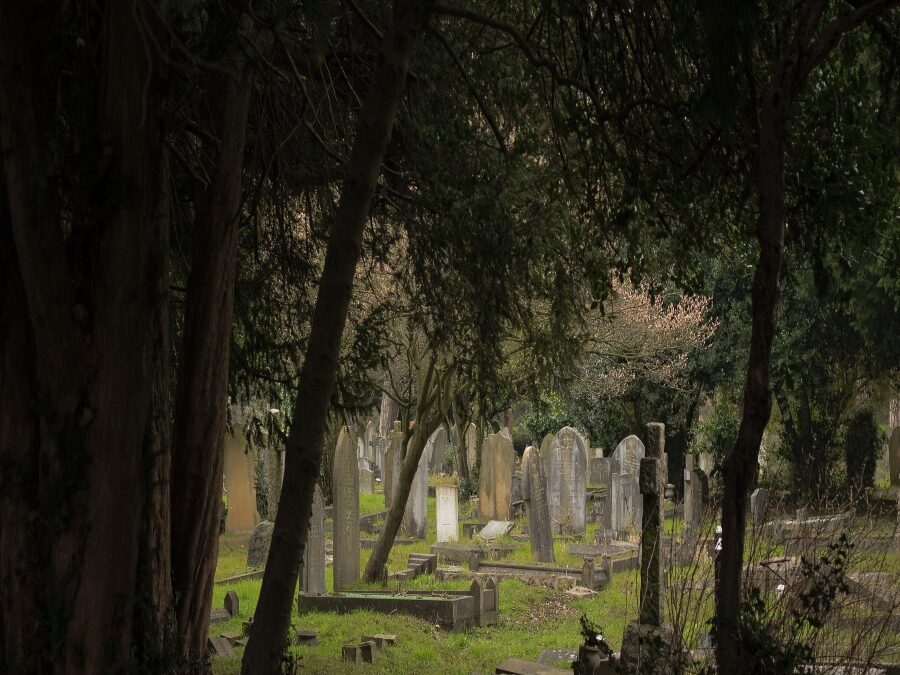
How pointlessly beautiful, a tree. How massive and calm and sometimes crushing and on fire. How a tree’s waving branches remind me of her hair that one afternoon, the breeze, the yellow shore. Everything so different and the same. How gentle, a tree. How full of knots and lumps and growths. How they press at her hospital window. How trees can’t cure cancer, but they still matter, and so maybe one day I can forgive myself for being as useless as they. How quiet, a tree. How peaceful. How they shade brides and graves alike. How, in ASL, the word for ‘tree’ looks like one arm trying to hold something close while the other waves goodbye.

Recent Comments