by Fractured Lit | Feb 12, 2024 | contests

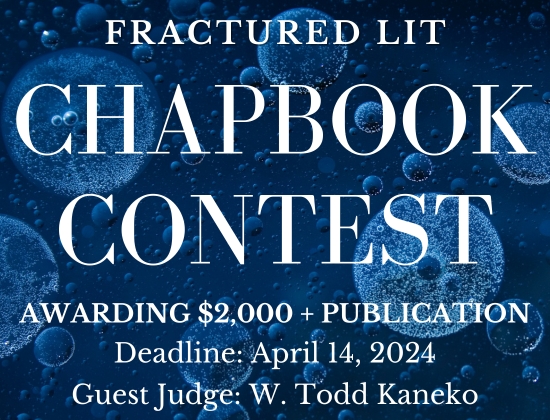
judged by W. Todd Kaneko
February 15 to April 14, 2024
Add to Calendar
submit
This contest is now closed. Thank you to everyone who submitted. We hope to announce a longlist in 12 weeks.
Here at Fractured Lit, some of our favorite books to read are brief but dynamic chapbooks filled to the margins with fantastic flash, microfiction, and the occasional longer story. These short books aren’t just for poets anymore. There’s a particular joy to reading several flash fictions by the same author in a strong, cohesive minicollection. Flash may be short, but it’s so dynamic and deep that it often needs to be read in short bursts, and chapbooks are the perfect place to collect these small but mighty stories!
Submissions are open for the Inaugural Fractured Lit Chapbook Prize from February 15 and April 14, 2024.
Because we know writers are inspired by stories of many lengths, entered chapbooks should be around 70% flash and microfiction, but we’d love to allow space for longer stories for the final 30% of each submitted chapbook. Collections should consist of fiction only. No poetry or creative nonfiction at this time, please.
One chapbook will be selected as our winner by our guest judge, W. Todd Kaneko! The winner will receive a $2,000 cash prize, along with manuscript publication and fifty contributor copies. Our chapbooks are distributed internationally via drop-shipping through Bookshop.org, Barnes & Noble, and other outlets, with 50% royalties. A digital version of the chapbook will be made available to our newsletter subscribers six months to a year after the print publication.
Submissions will be accepted between February 15 and April 14, 2024. Fractured Lit staff will select a shortlist of five to ten chapbooks to pass along to Guest Judge W. Todd Kaneko, who will pick the winner and write the introduction for the manuscript. The winning chapbook will be published in 2025.
All submissions must be single-author prose manuscripts of twenty-five to forty-five pages. Again, we are not interested in poetry or nonfiction for this contest. All manuscripts must be finished: no excerpts, no chapters of a novel, no works-in-progress, or any other incomplete work. Individual pieces may be previously published, but submitted manuscripts should contain some unpublished material. If you have questions or concerns about whether your manuscript would qualify, please email us at contact [at] fracturedlit [dot] com.
“I’m honored and excited to be reading for this contest. Some things I value in flash are concision and compression-there is something so cool about a tightly crafted, efficient piece of prose. I love how flash can tell such big stories with so much less real estate than is found in a longer form story. And chapbooks are awesome in the way they don’t sprawl as much as a book-length work, instead creating a sharper, more focused sequence of pieces. But even so, I try not to go into these kinds of things looking for anything in particular. What I hope is to be surprised by the mix of diverse voices and viewpoints among the submissions; that’s what is really exciting to me, regardless of content or technique or any kind of flash wizardry-I love discovering a voice that is singular among all the other beautiful voices on the contemporary scene. So if I’m being asked what I’m looking for in a submission for this contest, my answer is you, fellow writer. I am looking for your voice and I hope I get to encounter it on the page.” ~~Todd Kaneko
Todd Kaneko is the author of This Is How the Bone Sings (Black Lawrence Press 2020) and The Dead Wrestler Elegies, Championship Edition (New Michigan Press 2023). He is coauthor with Amorak Huey of Poetry: A Writers’ Guide and Anthology (Bloomsbury Academic 2018), and Slash / Slash, winner of the 2020 Diode Editions Chapbook Contest. His poems, essays, and stories can be seen in Poetry, Alaskan Quarterly Review, Los Angeles Review, The Normal School, Hobart, [PANK], Blackbird, The Rumpus, Song of the Owashtanong: Grand Rapids Poetry in the 21st Century, Bring the Noise: The Best Pop Culture Essays from Barrelhouse Magazine, Best Small Fictions 2017 and 2018, and many other journals and anthologies. Kaneko holds degrees from Arizona State University (MFA, Creative Writing) and the University of Washington (BA, English). A Kundiman fellow, his work has been nominated for Best of the Net and the Pushcart Prize. Originally from Seattle, he is currently an associate professor in the Writing Department at Grand Valley State University and lives with his family in Grand Rapids, Michigan.
guidelines
- Manuscripts should include a table of contents (if necessary) and an acknowledgments page listing any previously published material within the manuscript.
- Submitted manuscripts must be between 25-45 double-spaced pages at 12-point font (not including front/back matter, i.e., title page, dedication, table of contents, etc.). For collections, each piece should begin on a new page.
- Manuscripts must contain some unpublished material. Previously published material cannot have been published in any other chapbook or full-length collection. (Work that was included in a multiauthor anthology is permissible.)
- Self-published chapbooks are previously published and are therefore ineligible.
- We are not currently interested in poetry or creative nonfiction chapbooks.
- Only single-author manuscripts will be considered.
- Simultaneous and multiple submissions are allowed, though each submission requires a separate $25 entry fee.
- Writers from historically marginalized groups may submit for a reduced fee of $15 until we reach a cap of 25 submissions in this category.
- The winner receives $2,000, manuscript publication, and 50 contributor copies.
- The second- and third-place finalists will be acknowledged on our website, alongside any honorable mentions.
- The winning chapbook will receive a full editorial review prior to publication.
- If your work is accepted elsewhere, please withdraw your submission on Submittable, or contact us otherwise to let us know the manuscript is no longer available.
- We do not require anonymous submissions for this contest, though the guest judge will read the shortlist anonymized.
- This chapbook contest is open to any writer regardless of past publications.
- International submissions are allowed, provided the work is written primarily in English. Some code-switching/meshing is warmly welcomed.
- Submissions are accepted through Submittable only.
- The contest’s deadline is 11:59 p.m. PST on April 14, 2024.
- Individual stories or essays within the manuscript may be considered for publication.
- Every submission will receive a response by the end of September 2024. The winners will be announced by the end of October 2024.
- Unless specifically requested, we do not accept AI-generated work.
Some Submittable Hot Tips:
- Please be sure to whitelist/add this address to your contacts so notifications do not get filtered as spam/junk: notifications@email.submittable.com.
- If you realize you sent the wrong version of your piece: It happens. Please DO NOT withdraw the piece and resubmit. Submittable collects a nonrefundable fee each time. Please DO message us from within the submission to request that we open the entry for editing, which will allow you to fix everything from typos in your cover letter to uploading a new draft. The only time we will not allow a change is if the piece is already under review by a reader.
OPTIONAL EDITORIAL FEEDBACK:
We know it can be difficult to find engaging and actionable feedback on chapbook-length submissions, so based on our current editorial feedback system, we’ve created a way for you to request comments and inspiration from our seasoned staff readers especially for the chapbook form. Each critique letter will include recommended focus(es) for revision, as well as highlight the overall strengths of the work.
Our levels of feedback for this contest are:
- a two-page letter for up to 3,000 words @ $69, or
- a three-page letter for up to 12,000 words @ $175.
A significant portion of the editorial letter fee is paid directly to your feedback editor. Should your story win, no feedback will be offered, and your fee will be refunded. For questions about the editorial letter fees, please contact us at contact@fracturedlit.com
submit
by Dawn Miller | Feb 12, 2024 | micro
The other girls laugh when she struggles to stand up in the ditch, her mouth edged with dirt. She braces for another blow, but they let her scramble away, and she wonders if her shoulder blades poke strangely from her T-shirt, another mark against her. She runs home, mother at work, to her bedroom tacked with Hello Kitty and Taylor Swift posters, and into the welcoming arms of online messages and quickly snapped photos, only she doesn’t know it’s not a sweet boy, not a good boy at the other end, a boy who’d slip a strand of her tangled hair behind her ear, or cup her damp face so gently she could cry, and whisper not to worry about the girls or the pain of days that follow her wherever she goes; a boy who’ll tell her everything will be all right. She doesn’t know the dark heart that hides behind the blue flicker of screen and murmurs show me your tits, babe, show me, if you love me, you’ll show me.
She’s used to being invisible, walking down school corridors, bumped by people named Tiffany and Brandon, kings and queens who reign the hallways, only the next day, everyone glances at the images on their phones and stares at her, and she knows then it’s over, that nothing can save her, that no one will cup her face and say everything will be all right, that she did it to herself, and if she scratches too hard, her skin will spill dirt. And so she drinks bleach and slices the tender flesh on her thighs with a pin and then a knife used to cut green apples to let the dirt out, always her thighs so her mother won’t see when she gets home at night, exhausted, and later on, she sits with white-haired men in offices who talk nonsense and can’t possibly understand what it’s like to be so young and so old at the same time, how difficult it is to search for love and find only hardness, how the pain swells inside her like a big black balloon, but balloons only stretch so far before they burst.
by Aeriel Merillat | Feb 8, 2024 | flash fiction
I drove to the county hospital to pick up my mother. She was not as I suspected.
They handed her to me in a Tupperware bowl, her spotted tail flicking behind her.
“I think there’s been a misunderstanding,” I said to the bored nurse in glasses behind the desk.
“There’s been no misunderstanding, ma’am,” she pointed to the wristband that was taped to the lid. My mother’s name and birthdate were printed in thick black letters.
The creature splashed under my arm as I put her on the passenger seat and considered her new form. She wasn’t quite a fish, not quite a lizard. Her face round and bloated, her skin a pale translucent pink. A spinely collar wrapped around her neck, dragon-like.
“What are you?” I pressed my nose on the plastic lid and looked down at this creature, no bigger than my hand. She looked both nothing and everything like my mother.
I knew I wasn’t equipped to keep this creature alive. I drove to the closest exotic pet store.
Ralph’s AquaWorld was nestled between a dry cleaner and a nail salon in a half-empty strip mall thirty minutes outside the city.
Hundreds of tanks lined its narrow aisles, glowing under the flickering fluorescents. Transparent jellyfish, multi-colored crustaceans, a melancholic octopus, and a large tank in the back filled with baby alligators.
No one was around. I thought about leaving my mother right there in the middle of Ralph’s and driving away.
When I was ten, my mother took me to Wal-Mart to buy a spotted goldfish. Exactly a week after we brought it home in a plastic bag, I was flushing its limp body down the toilet.
The pink monster floated there, helpless. I cried into the Tupperware, and my mother absorbed my salty tears. How was I supposed to take care of a thing I couldn’t even name?
Five days ago, my mother was placed on a psychiatric hold in the Chattahoochee County Hospital. Before that, I hadn’t spoken to her for months.
I got a call from the grocery store she worked at, a tired woman shouting at me that she hadn’t shown up to work in a week and they were short staffed.
I found her lying in bed with Real Housewives reruns playing on a loop. She was surrounded by five empty orange pill bottles. Red wine soaked her crisp duvet crimson like a Renaissance painting.
I followed the ambulance to the emergency room. The doctors spoke to me like I wasn’t there. No, I couldn’t see her. No, she wouldn’t be released. Yes, it was true she didn’t want to be alive anymore. No, there was nothing for me to do but wait.
The sea horses bounced up and down in their tank, and I thought they looked content. Ralph, a balding man approaching middle age, appeared next to me.
“The legend goes,” he said quietly, “that Xolotl, the god of fire and death, turned himself into a water monster to bury his shame from the other gods.”
The only time I remember my mother happy was on our annual trip to the aquarium. Both of us were fascinated by the creatures that lived in the deep. Every year, we sat on a hard bench and watched bulbous jellyfish float above us. “Did you know humans understand more about space than the ocean?”
She was always trying to find answers to things that had none.
The ocean was dark and endless but also full of magic. This is how I learned that a thing, a person, can hold two truths at once.
I’m not surprised my mother’s depression turned her into a water monster. I’m only shocked it took this long. She had always been unknowable to me, and this new creature that I could not access felt like a befitting form.
I set up the tank Ralph recommended to me, spending hours placing the fake plants in a perfect line and making sure the temperature was exactly sixty-eight degrees Fahrenheit. My mother was particular like that and I still felt a panic at the thought of disappointing her.
When I was done, she sat on her styrofoam rock and watched the latest episodes of her favorite reality show. With the end of my pinky finger, I let small drops of Diet Coke fall into the tank.
I asked her questions about what it was like to be a water monster. I’m an anthropologist, a marine biologist, a scared daughter. I wrote down anything that I thought was an answer, a twitch of a finger, a swish of her tail. I needed to know, in case this happened to me too.
Two weeks went by, and I started to feel guilty that her whole world had been reduced to a four-foot tank. After work, I came home and scooped her up in the Tupperware bowl. I drove us to the aquarium, and when I asked the person selling tickets if I needed to buy one for my mother, she laughed nervously and gave me a discount.
We sat on the hard bench together and watched the jellyfish. “Did you know humans understand more about space than the ocean?” I asked her. She blinked and looked away.
Every day, she seemed less like my mother and more like an amphibian.
In the aquarium parking lot, there was a storm drain that read, “No dumping, drains to waterways.”
I opened the Tupperware and bent down on the concrete. She looked at me, her eyes wide. Her soft pink belly slid into the dark hole in the sidewalk. I waited for her to come back, to poke her head out to say goodbye.
by Jennifer McMahon | Feb 5, 2024 | flash fiction
The pretty cowgirl’s mouth is wild with tameless laughter, and the tassels on her calfskin miniskirt and waistcoat dance to her every move. Standing astride the centre line between four traffic lanes, gun belt and holsters sparkling in the car lights, she aims her pearl-handled pistols high and pow-pows at the fragile moon. When motorists blast their horns and yell abuse at her, she laughs all the wilder and jiggles her hips. Sometimes, she twirls her guns on her trigger fingers, and brings them to bear on faces contorted by frustration. I think she’s the happiest person I’ve ever seen in Cork City, like she’s found just where she belongs in the world.
It’s late evening on the Grand Parade. The Shandon bells curl across the city, syncopated by the more sonorous clangs from nearby Holy Trinity. Over the old stone wall behind me, the River Lee is in full flow, with a bitter wind striking along it. The chill from the steel bench has soaked into me. I should go home. I should wait. On our last call, Peter told me he’d been delayed but promised he wouldn’t be much longer. If I go now and he comes looking for me, he’ll be annoyed. I’m playing mind games, he’ll say, wasting his time. So, I wait, and envy Cowgirl her freedom.
A man walks past me with a burger stuffed into his gaping mouth and a white slime trail of mayo drooling down his chin. My mouth waters at the smell from the chipper down the street, but Peter’s bound to come the minute I go to get something to eat. An old man in a mangy black coat and flaky cap shuffles up to me. An open bottle pokes its head from the brown bag in his left hand. His right snakes towards me, palm up. He mumbles a few words. ‘Any change, love?’ or something like that. I delve into the pocket of my coat, but before I can give him anything, he wanders off, to stand at the edge of the pavement. He’s still for a few moments, watching Cowgirl, then he throws back his head and lets loose a sinister cackle. ‘Look at the mad eejit,’ he roars. ‘Lord, save us,’ then he shakes his head and trudges away.
Cowgirl dances, and the more the pedestrians point and laugh at her, the more the motorists fume, the raunchier her routine becomes. She swings her arms wide, kicks a carefree leg in the air, then the other one, turning, turning. A car narrowly misses her, but she’s undeterred. She cavorts like a lap dancer, hips gyrating, ass wagging. She radiates beauty. She radiates love.
Pow-pow.
Invisible bullets strike cars, buildings, pedestrians.
Pow-pow.
One carves a line straight through my heart.
~~~
Bang. A car glances off Cowgirl. It’s just a tap, but she makes the most of it, clutching her chest and slowly folding to the asphalt. Cars blare. A man gets out and helps her up, then points to the row of benches where I’m sitting. Cowgirl nods. As she limps towards me, he tries to smack her ass, but she twirls and blasts him with her six-shooters.
‘Nerve of that dude,’ she says, as she nears me. ‘Seriously.’ She drops onto the bench beside me and extends a hand. ‘Everyone calls me Sweetie.’
‘Rita,’ I say, taking her hand in mine. Her skin is soft and warmer than I expected.
‘You’ve been sitting here a long time.’
‘You’ve been watching me?’
She nods. ‘Waiting for someone?’
‘Peter. My boyfriend. Are you okay? That car…’
‘I’m fine,’ she says, with a wicked mustang laugh. ‘Why are you waiting for someone who doesn’t want you?’ When I don’t answer, she pats my knee and presses close, to rest her head on my shoulder. ‘You look for what you want in all the loveless places. Believe me, I should know.’
Her words are a bullet-punch in my gut. I want to run, to be away from her unfiltered truth. I want to stay, to savour her unfamiliar warmth. The river gushes past behind us, traffic flows in front. A pub door opens, releasing a violent heartbeat of transient dance fervour. The city rumbles by, ceaseless, uncaring, carrying love and hate and other poisons along its clogged arteries. ‘He’s not coming, is he?’ I say at last.
‘Even if he did, would it be worth it?’
‘Why do you do it? Dance in the traffic?’
She lifts her head, and her amber eyes search mine. ‘Because it must be done.’ And then, she kisses me.
~~~
Someone must’ve called an ambulance because one finds us. The paramedics have no trouble identifying their target. ‘Up to your old tricks, Sweetie?’ one of them asks.
‘Someone has to bring the joy.’
‘No better girl. Come on, we’ll take you in, get you looked over. Off your meds again?’
She stands but ignores the question. ‘Look after my guns for me,’ she says, opening the buckle on her belt. She slips it off and lumps it onto my lap.
‘I’ll get them back to you,’ I promise.
The paramedics support her as she limps to the door of the ambulance. Just before she enters, she turns to me, makes a gun shape with her hands, and fires her last shots. A few moments later, the ambulance strobes blue and pulls away.
I look down at the white of the handles, the cold grey steel, the diamantes on the belt and holsters. When I slip the belt around my waist, it’s heavier than I thought it’d be, but it fits perfectly. I take an uncertain step towards the traffic, then a certain one. The wary moon examines me with its one good eye.
Someone has to bring joy to loveless places.
Pow-pow.
I reckon I’m pretty good at it, too.
by Ali Mckenzie-Murdoch | Feb 1, 2024 | flash fiction
Spirits.
Toria doesn’t speak German, but no language is necessary. Her voice melodious with children or men, she tilts her head and orders our drinks. Gin-tonic, always. Lights sweep the room, shading us ocean-deep. The barman leans in and whispers in her ear.
Starfish.
Toria is mercurial. “I’ve spent so much money from the divorce. This year’s been a sex sabbatical,” she says, listing the men she has screwed. Reflections from a disco ball dapple her face. ‘They complain that women just lie there,’ she says, rattling the ice cubes in her glass. ‘They call them starfish.’
There’s a hairline crack running through her. One knock in the wrong place, and she will smash into pieces.
“I want to dance. You coming?”
I shake my head. The polished floor gleams, hard as a frozen lake. Toria slips into the heaving bodies peppered with lights.
Mining.
Toria’s father is Cuban. She found a paper on his research into the copper mines in Santiago. She could contact him but prefers her memories: a red ukulele, strummed high on his chest; the gap between his front teeth. Toria doesn’t talk about him, but he’s in her long limbs and sallow skin. Her hair swings and resettles after every spin on the dance floor. At rest she is shop-mannequin-calm, but when she moves, she’s feral.
White.
In the ultraviolet light, Toria’s teeth are arctic. She pushes her way to our table, her arms outstretched. I resist. Our hands separate. Hers are clammy, mine are cold. She disappears, swallowed into dry ice and the cloying smell of Red Bull. I will go home without her tonight.
Wild.
When I return, Jakob is writing, the crown of his head illuminated by the reading lamp. “Where’s Toria?” he asks.
I slump on the sofa and rub the sore red line on my feet.
“She picked up some guy.”
Jakob massages the bridge of his nose. “She has something restless. Something wild.”
His eyes catch mine, and he puts on his glasses, rereading what he’s written.
“I can be, too,” I say, biting his neck. He laughs and pulls me onto his lap. I want to sleep, but Jakob’s words flit in the air, trapped birds, feathers scattered, wings beating. She’s wild. Restless. Animal.
Jakob will know how wild I am. How wild I have been.
Intertidal.
A halo of light shudders on the ceiling, and a wisp of frigid air licks my skin, my arms and legs splayed starfish-wide.
by Fractured Lit | Jan 30, 2024 | news
We’re sending these 25 stories off to judge Rion Amilcar Scott! We’re excited to find out what stories he chooses for the winners!
- Siempres & Wedding Cake
- The right to bear arms
- Bethany
- Keratin High
- Love Love
- Salsa
- Camping with Jeff
- In the Next Life, Spring Comes Back
- Kleptomania
- Gem City
- Sacrifice
- Every Thought and Prayer
- Cave Swimming
- Greek
- Jingling Journies
- OUR END IS OUR BEGINNING
- Peripheral Neuropathy
- A Cautionary Tale
- Canarsie Zuhitsu
- I Fell to Earth and Landed in Alaska
- Sideways
- Last Contact
- Ground Beneath the Bars
- The Trouble with Hell
- Cusp
by Grace Kennedy | Jan 29, 2024 | flash fiction
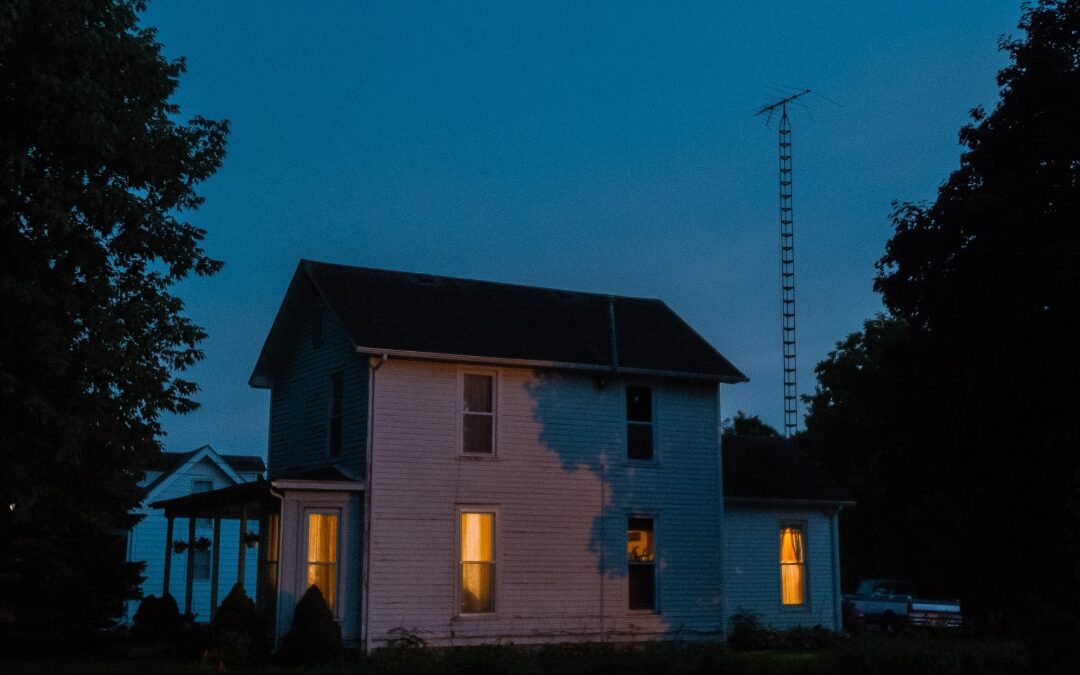
Kate knew it would not work with Ethan when she watched him remove the thinly sliced circles of candied lemon she had carefully arranged on top of the cake. He piled the peels on the side of his plate, mouth puckered, before driving his fork into the now unadorned mass of sugar, flour, and air.
There were other reasons, too. He did not like pickles. Or olives. Anything brined, salted, transformed.
She frowned. She had wanted it to work.
There was an hour until the New Year, and the room was filled with people. She watched from the kitchen, the now decimated cake spilling crumbs onto the counter in front of her, a serrated knife resting in her right hand.
Last year, on New Year’s, she ordered takeout with her friend Charlotte, and they made brownies from a box mix that came out too thin. They watched Scream and didn’t realize it was the New Year until they heard fireworks. They went to the window and waved to a family across the street. Two young boys pressed their bodies to the glass, smiles wide, small red palms leaving handprints on the glass after their parents peeled them away. Down below, a group of four walked along the street, linking arms. Kate watched them laugh, three boys and a girl with a bright red hat. Lingering in the window, Kate asked Charlotte what her biggest fear was and she said, “Forgetting.”
This year, they decided to throw a party. Kate made cake, and Charlotte bought sparklers, and at midnight, they planned to climb up to the roof with all of their friends, and maybe the boys with their small red hands would see them light sparklers from their window and clap.
But it was not midnight yet, and right now Kate was standing in the kitchen, contemplating candied lemon.
She’d met Ethan in April. They went to a Belgian bar and drank ten-dollar beers, and when he kissed her goodnight, he placed his hand on the small of her back, and she thought it was nice. She liked his blonde hair and the way his eyes crinkled at the edges and once they took a trip to the beach and laid on the sand smoking a joint, hiding behind each other’s bodies from the teenage lifeguards roaming up and down the shore. She was high and happy and suntanned. She had wanted that moment to last.
Four years before, on a different New Year’s, she had stayed up until sunrise on another roof with another boy, and mostly, she remembered the selfie they had taken wrapped up in blankets. She wondered if she still had that picture. She opened her phone to swipe back through the years but remembered she had deleted the photo after she sat across from him in Washington Square Diner for the last time.
There are too many New Year’s, she thought.
The day before the party, she smoked a cigarette with Ethan on the fire escape, and he asked her if she’d heard of the ship of Theseus: “If you replace every part of a ship one by one until none of the same parts remain, is it still the same ship?” If you delete every photo on your phone and never see the boys with the small red palms or the girl with the bright red hat, and you keep celebrating every new year and every birthday and time keeps moving, and the people you kiss start to blend together and it does not work out because of lemons or olives or pickles or other reasons like doors slamming in your face — Is it still the same ship?
Kate closed her phone and picked up her drink, champagne simmering. She found Charlotte’s eyes across the room. Charlotte had eaten the whole cake, and her plate was clear.
Charlotte walked over and kissed Kate on the cheek, leaving a sticky patch of berry lip balm on her right cheek. “I wonder what this all adds up to,” Kate said. Charlotte shrugged. Kate picked up the dirty cake plate and began washing it in the sink. They smiled.
by Marilyn Hope | Jan 25, 2024 | flash fiction
#
Freddie goes missing overnight on a Sunday. That week is a blur of search parties and candlelight vigils, porch lights on in such abundance that the nights are as bright as day. We rake the cornfields in regiments of two dozen, flattening the farmland. Deputies Mullen and Mullen ask us questions about the people in Freddie’s life. Did he spend time around adults with hungry smiles? Did he have many friends?
“Just us,” we tell him. Freddie stolen in Comfort’s easy night, casual as a peach from a produce corral. “There’s only us.”
#
We’re the boys of Comfort County. We love tire swings and ten-speed Huffies. We stay out past eight o’clock on long summer evenings, hoarding the dusk, knowing exactly how the light loves us. The six of us represented one-third of Miss Kriebell’s fifth-grade class the year she grouped us together for a landscaping contest, and we won with a rock garden and twelve fringes of bleeding hearts. Fairvale Elementary’s frontage still boasts our efforts, which teems fuchsia with poison every spring. The flowers grew in red this year, though.
We’re older, now. Stronger. We’re mostly out of our braces, and when we walk together in town, folks pause to watch us. We are romantic in a way that Comfort aches for—something of the city, we think, like boys who look stylish in big sunglasses or Prom Kings strolling in step. We are a way out in some small, derivative way.
We watch movies at the twins’ house, sitting too close together. Humid Thursday. Our shins stick together when we shift. Mrs. Kingsley listens to the radio in the kitchen as Knox yells, “Run!” at the television. “Fuck’s sake. She’s dead now. They never run!”
“They’re scared,” Hassan signs. “Their legs are jelly.”
“Their brains are jelly,” says Knox.
“I couldn’t do it,” says Sam Kingsley. “Run, I mean.”
Sam has a way of winding Knox down. Knox sighs, sucking on the end of an unlit cigarette. “I’m not saying I wouldn’t die there, too.”
Mrs. Kinsgley is a vivid, attractive, look-at-me woman. When she steps in front of the TV, we mute it. On the kitchen counter, the radio is frizzing on words like missing and murder that we only hear now that Marion Crane has stopped screaming.
“They found something,” Mrs. Kingsley whispers. “They think it’s him.”
#
We bike to Palos Lake in time to see the police fish the body upright. Porcelain Someone, hair trimmed down to the tenth inch, but still a whisper of blond. Sam cries out when he sees, and the sound splits the summer because the rest of us are silent. “Boys, get back,” John Mullen says, waist-deep in his waders, and we retreat because there’s nothing of Freddie left for us here. Someone stole the dormant man in him, his love of ladybugs, 16.6 percent of us. The sixteen, we’ll never be together.
Freddie was the best of us. We have to reevaluate who we are without him. Michael catches Knox before he faints, but just barely, and for a long time, we are too tired to carry him back home.
#
“They’re wicked,” whispers Deputy Rick Mullen, when he thinks we can’t hear him. “Kids, but wicked.”
It makes Noah smirk from the front desk, where Clara, the dispatcher, is sneaking him sips from her hip flask while she profiles him. Kingsley, she writes, Noah Thomas. Age: 14. Hair: Black. She puzzles over the color of his eyes before penning Gray on the line, a rarity that gives us an edge, which we use like a scalpel. Noah flickers his eyes like new nickels whenever we want something. Today is the Friday after the funeral, and we are raging for answers, so we ask Clara if she will take our mugshots.
“I’ll find some film,” she says, disappearing into the back room. The door taps shut behind her.
We slip off our chairs and spread out through the station. “Obituaries, photos, police reports,” says Noah, fanning a stack of files across the desk. “Quick. Anything you can find.”
A boy in Pocket went missing two days ago. No one will talk to us about it, but the Pocket PD has been in and out of Comfort ever since, taking notes over diner breakfasts of coffee and cherry pie.
Hassan raps the desk twice to get our attention. Underneath our profiles—Name: McMannus, Hassan; Height: Room to grow—he has found a newspaper clipping from the Pocket Pioneer.
The missing boy’s name is Maxwell Munn. He is luminously blond, like Freddie and Knox, has grinning eyes, a gap between his front teeth. Pocket-charming, we decide. A certain crude charisma about him, small-town but substantiating. If he lived in Comfort, we’d let him be our friend.
“It’s light hair, then,” says Noah.
Knox’s pale bangs quiver as he laughs. “You don’t know shit. You’re no safer than I am.”
“Least I’m not next.”
Hassan sees shadows under the door and flicks two fingers outward on each hand: hurry. We rush the folders back into stacks. Noah folds the article three times and slips it up one sleeve. We’re in our seats again by the time John and Rick open the door.
“Sorry, boys,” says John. “No new news. Run along.”
Clara backs out of the supply room, opening a box of film. “Wait,” she says, words slurred. “Let me do this.”
She photographs us one at a time with the station’s black-and-white instant camera. There’s an accidental brilliance in her lighting, the shakiness of her inebriated grip. We are overexposed. More than ourselves. Clara pins our Polaroids to the town map, and we laugh at this dangerous new geography: take a left at Michael’s eyelashes, then straight on until you reach the end of Sam’s smile. We are your landmarks now. We’ll find you when you’re lost.
#
Freddie, we promise you this much: retribution. Home. Rest. Memories. Blood. Bereavement. Hair.
by Fractured Lit | Jan 25, 2024 | news
Once again, we had trouble deciding which stories should make the longlist, so here are 51 stories in contention! We’ll be back shortly with the shortlist!
- Siempres & Wedding Cake
- The right to bear arms
- Mud Angels
- Bethany
- Keratin High
- Peasant Legs
- The Eulogy You Write for Your Mother When She’s Given You Every Last Piece of Herself (And Made You a Cannibal)
- Under a Wild Full Moon
- Love Love
- The Joker & Me
- Winter Took It
- Salsa
- Camping with Jeff
- Yarn Craft
- The Bravery of Fashionable Folks
- BEGGING BOWLS
- In the Next Life, Spring Comes Back
- Kleptomania
- Gem City
- Sacrifice
- Every Thought and Prayer
- Lift Boy
- Cave Swimming
- The Year of the Grass People
- Greek
- Jingling Journies
- Death on a Hot Day
- Arborist Anthem
- OUR END IS OUR BEGINNING
- The Basalt Queen and Blood-stained Chess-cloth
- Nettles
- The Art Of The Fright
- Raina
- Peripheral Neuropathy
- A Cautionary Tale
- Canarsie Zuhitsu
- The Loudouts
- I Fell to Earth and Landed in Alaska
- El Pobrecito on Católico Street
- Sideways
- Last Contact
- All Saints
- Wargames: the Squealing Pig
- Ground Beneath the Bars
- A Life Outside
- The Warmth of Embers
- Cow-Pasture Bisexual Anthem
- The Midnight Revolt at Bertrand’s Year-Round Christmas Store
- The Trouble with Hell
- Cusp
- Death and Dying
by Moisés R. Delgado | Jan 22, 2024 | flash fiction
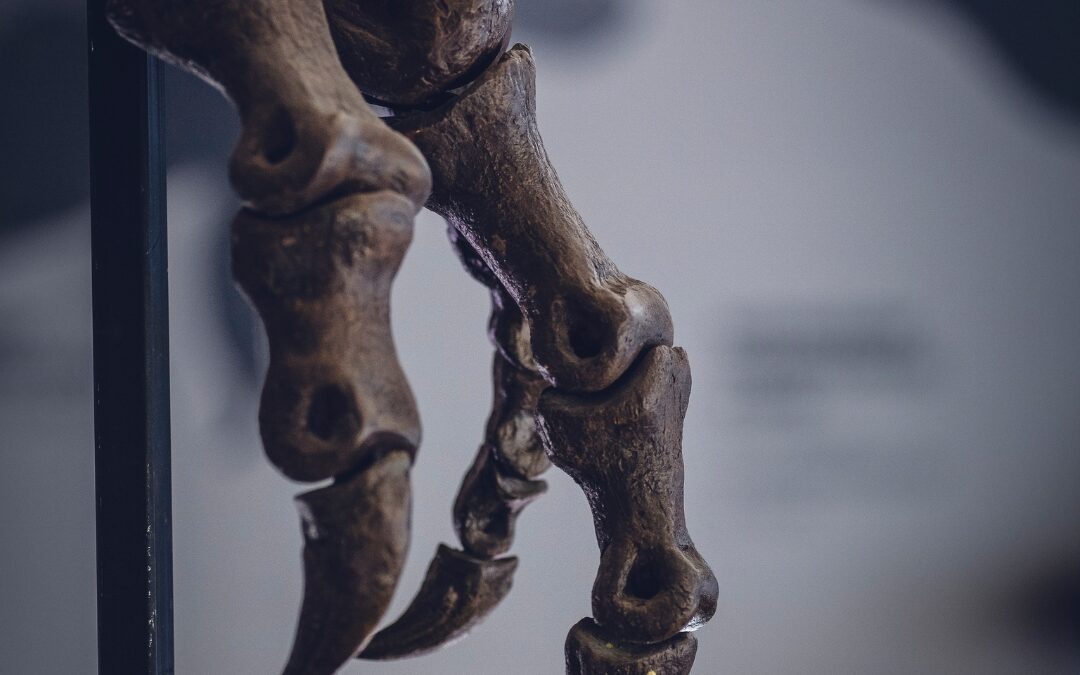
That July, all our dreams were bones. T-rex bones, kneecap bones, bones larger than our house, bones of a dinosaur yet to be discovered that we’d name banopolis peelopolis so we could laugh when archeologists said it on the Discovery Channel. We were ravenous for treasure. Emily down the street had brought a shark tooth home from her trip to Florida, and we hated Emily. Shark tooth this, shark tooth that, shark tooth around her wrist, shark tooth around her neck, shark tooth in a ponytail, shark tooth, shark tooth, shark tooth. We dug a hole in our backyard. If we found some bones, then we could rub them in her face. We could sell them to a museum. Become millionaires. Leave Nebraska for some place, any place, like our mom sometimes still wanted. But all we unearthed was dirt and worms and more dirt. We could have given up, but Ruby and I were again sort of, kind of praying. Our mom had brought Jesus home, two years after our dad’s death. Not Jesus on the cross, but Jesus from Guadalajara. He was a bald man, but he made our mom happy, and if our mom was happy, then we had faith. And faith or luck or both sent us a food delivery bot. We woke up to its front wheels skirting and whirling but failing to escape the hole we had dug. It was splattered in mud. So, we hosed it down and prayed it wouldn’t short circuit and light our backyard ablaze. And thank the Lord, or maybe good engineering, there was no fire, just a shiny bot that Ruby and I put a leash on and paraded up and down the street. It wasn’t a bone fit for a big red dog, or a bone that would land us a three-story home off on some coast, but it did ruin Emily’s day. Her shark tooth was a dirt-caked, face-down penny on the sidewalk. We were the talk of the neighborhood. Our pet didn’t shit on the carpet. Our pet had a boxy body and large boxy LED lights that blinked and could lead us back home in the darkest of nights. Our pet could travel at an impressive 7 mph. Our pet didn’t bark or bite. Our pet beeped and booped. Our pet liked jolts of electricity for breakfast and dinner. Our pet would live in the backyard in a small wooden doghouse, if our mom allowed us to keep it that is. And we hoped she would. But while we tried to convince our mom to let us keep the food delivery bot, it wandered off. Ruby blamed me, and I blamed her. If only we hadn’t hosed it down, then we could’ve chased after muddy tracks. But it was gone. And Ruby was to blame. And I was to blame. And the bot was off in Colorado, skiing down the highest and snowiest mountains. Or the bot was down in Kansas City doing whatever people in Kansas do. Or further south, in Mexico. Because bots don’t need passports. Bots don’t need to worry about their tongues being all thorned when speaking Spanish. Or it was further, further south, swimming with Emily’s sharks. Or further, waddling with penguins. Or further and further and further, eventually circling back, deciding Nebraska was home after all.

Recent Comments