
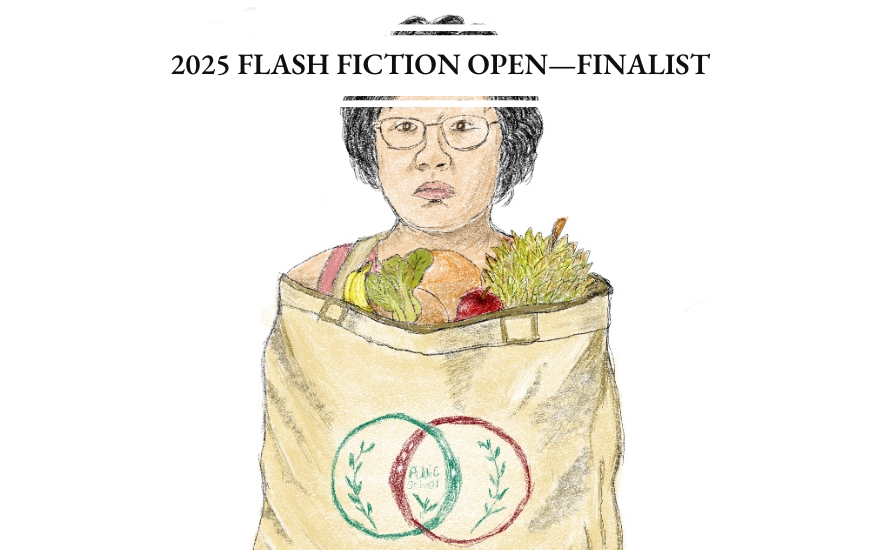
Ah Ma carries apples, bananas, chunks of bok choy, oyster mushrooms, lychees, dragon fruits, raspberries, Chinese broccoli, ground chicken, and five-spice powder. Her straps are sturdy, tested many times. We cram as many groceries as possible into her, and still, she does not break. She carries it herself because no one else wants to.
We never buy plastic bags. They cost extra, and they’re bad for the environment.
In our one-bedroom apartment, Ah Ma unpacks the groceries and minces carrots, onions, and garlic. She tosses them in a wok and gives it a practiced swirl. The sizzle flares, then softens to a hush. From the small balcony garden, she adds spring onions and tomatoes into the mix. The spice aroma weaves its way in between our laughter as we fold paper cranes at the kitchen table.
She keeps freshly cut fruits in the old 1-litre yogurt container. She has skinned the grapes, apples, and oranges for us. The peels stay in her bag.
Ah Ma keeps everything.
Our long braids, she had cut off in childhood, collect dust at the bottom of her bag. Cradled in our patched-up baby rocker, rests a leftover specimen cup with baby teeth. Mended pajamas with washed-out butterfly prints lie folded in the corner beside pink, velcro shoes with threadbare soles, balanced atop the roller skates that we never mastered. A stack of crayon-scribbled cards leans against our school project, pieced together with popsicle sticks, Styrofoam, and handwritten labels. A tangled heap of VCR tapes of our old favourite TV shows, Chinese drama DVDs, CD games, and scratched cassettes of folk songs presses in from the sides.
Ah Ma does not complain while carrying these items.
She folds our Disney princess T-shirts and knee-high socks, and irons our faded floral and checkered dresses—all bought on sale at the local Zellers.
She sweats over the kitchen wok. She mops the vinyl floor with a tattered rag and scrubs the toilet. She cleans the dishes with a crumbling sponge and the diluted dish soap stored in an empty shampoo bottle. She dusts off our schoolbooks on the bookshelf.
All so that we can study.
Ah Ma still made room to tuck the piano into the bag, even though it was too heavy, too large. It stretched her rims like a taut elastic. We play half-heartedly, because it was not our idea, but we play anyway because she likes to listen. She wasn’t able to play herself.
We didn’t notice the little items she hoards. We throw away the take-out containers, the Ziploc bags, and the elastic bands from produce without thinking. She saves them all.
As the years wear on, small holes fray at the edges of Ah Ma. The bag grows heavier, and we offer to help clean it out.
“We don’t play with these toys anymore. We can throw them away,” we say. We point to the old Lego pieces, the hardened playdough, the mini-chemistry kit, the bent Barbie doll, the flattened, stuffed animals.
“No! We cannot throw away. They can still be used. Your children can use them.”
The small holes widen. Things start to fall out. So, she takes out her sewing kit and mends herself.
“It can still be used. We cannot be wasteful,” she says.
We went off to college.
Stretch marks crease along the handles. The once brightly painted logo of our old elementary school has flaked and peeled, dissolving into a greenish blur.
We found jobs in the corporate bank. We earn our own money now.
“Let me carry some of that for you,” we volunteer. She nods and pulls a few things from the bag. She only gives us what we can carry.
Yesterday, we went to the same Asian grocery store where we used to go and bought durian. Her threads stretch thin under its weight. But she held on for us.